
Method for predicting activation energy using an atomic fingerprint descriptor or an atomic descriptor
- Summary
- Abstract
- Description
- Claims
- Application Information
AI Technical Summary
Benefits of technology
Problems solved by technology
Method used
Image

Examples
example 1
Construction of Database of Atomic Fingerprint Descriptors
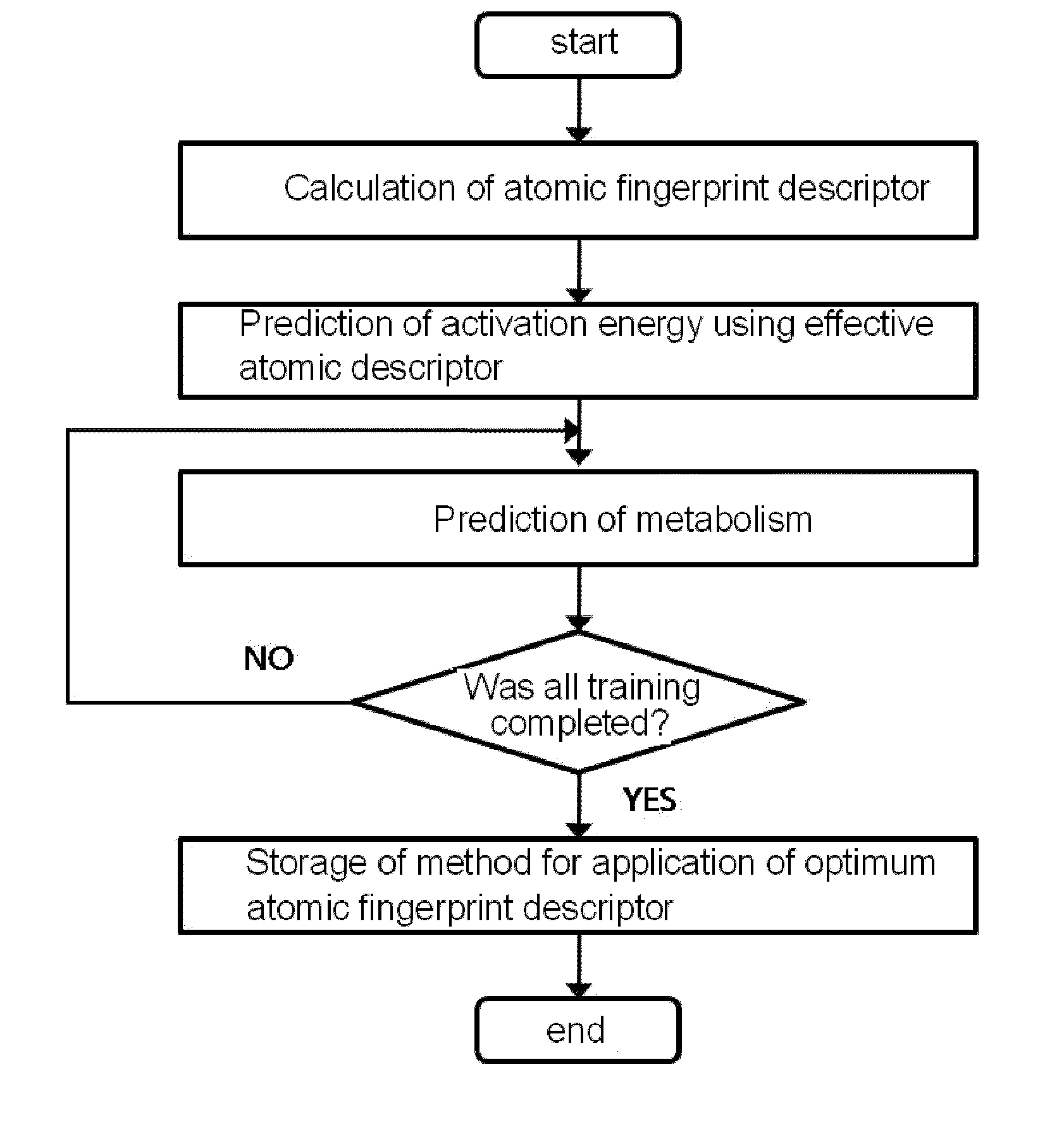
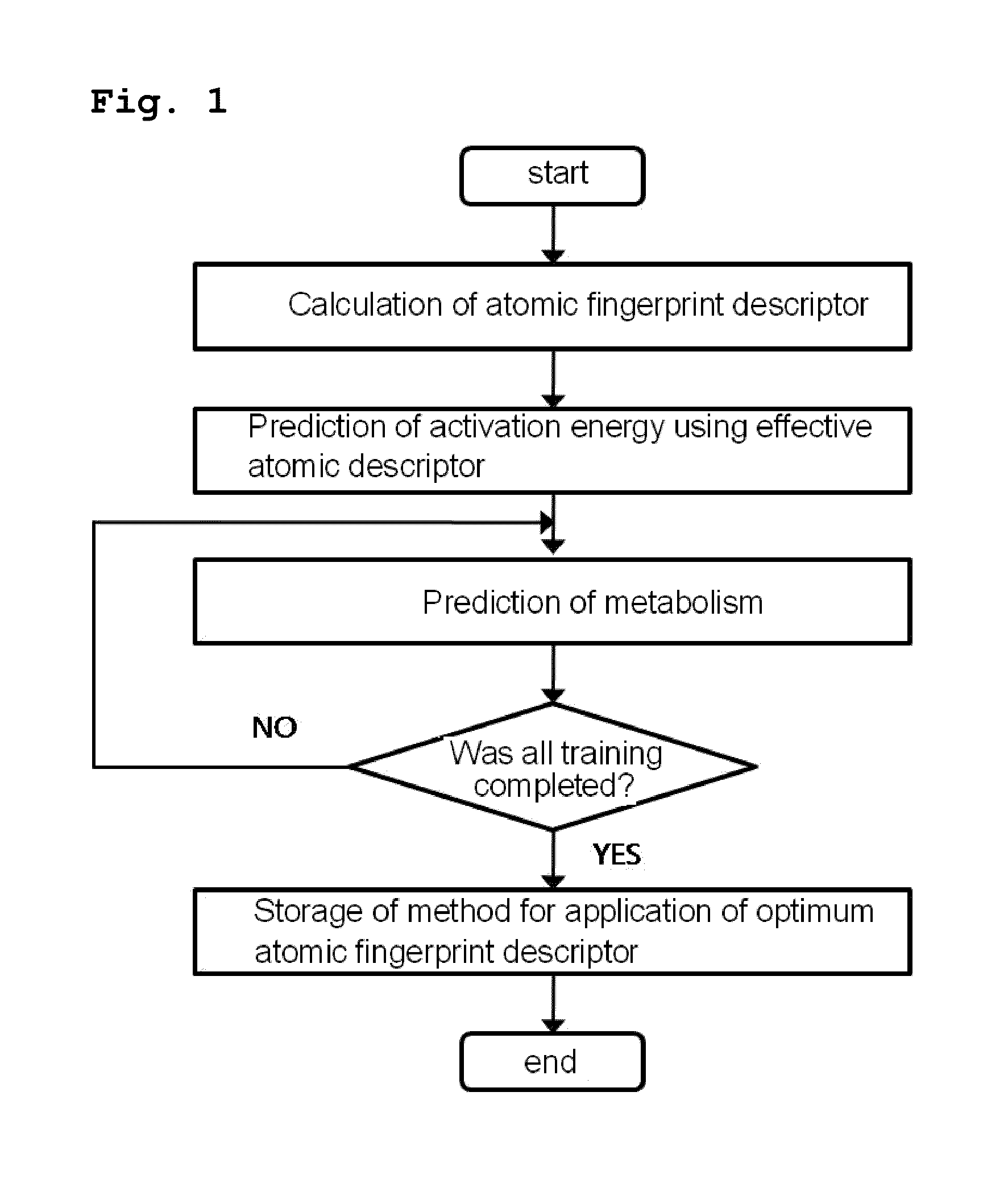
[0073]As shown in FIG. 1, the present inventors constructed a database of atomic fingerprint descriptors through a training method comprising the following steps (see FIG. 1):
[0074](i) calculating the atomic fingerprint descriptor of a substrate, which is represented by the following equation 1;
[0075](ii) predicting activation energy for an atomic position using an atomic descriptor;
[0076](iii) predicting cytochrome P450-mediated metabolism using the predicted activation energy; and
[0077](iv) comparing the predicted metabolism with experimental metabolism and storing whether the predicted metabolism occurs:
Xabc [Equation 1]
wherein X is the chemical symbol of an atom; a is a bond order that indicates the number of atoms bonded; b is a ring indicator that indicates whether the atom is part of a ring; and c is an aromatic indicator that indicates whether the atom is an aromatic atom.
[0078]Using the above-constructed database of...
example 2
Prediction of Metabolite of 2-Methoxyamphetamine Using the Prediction Method of the Present Invention
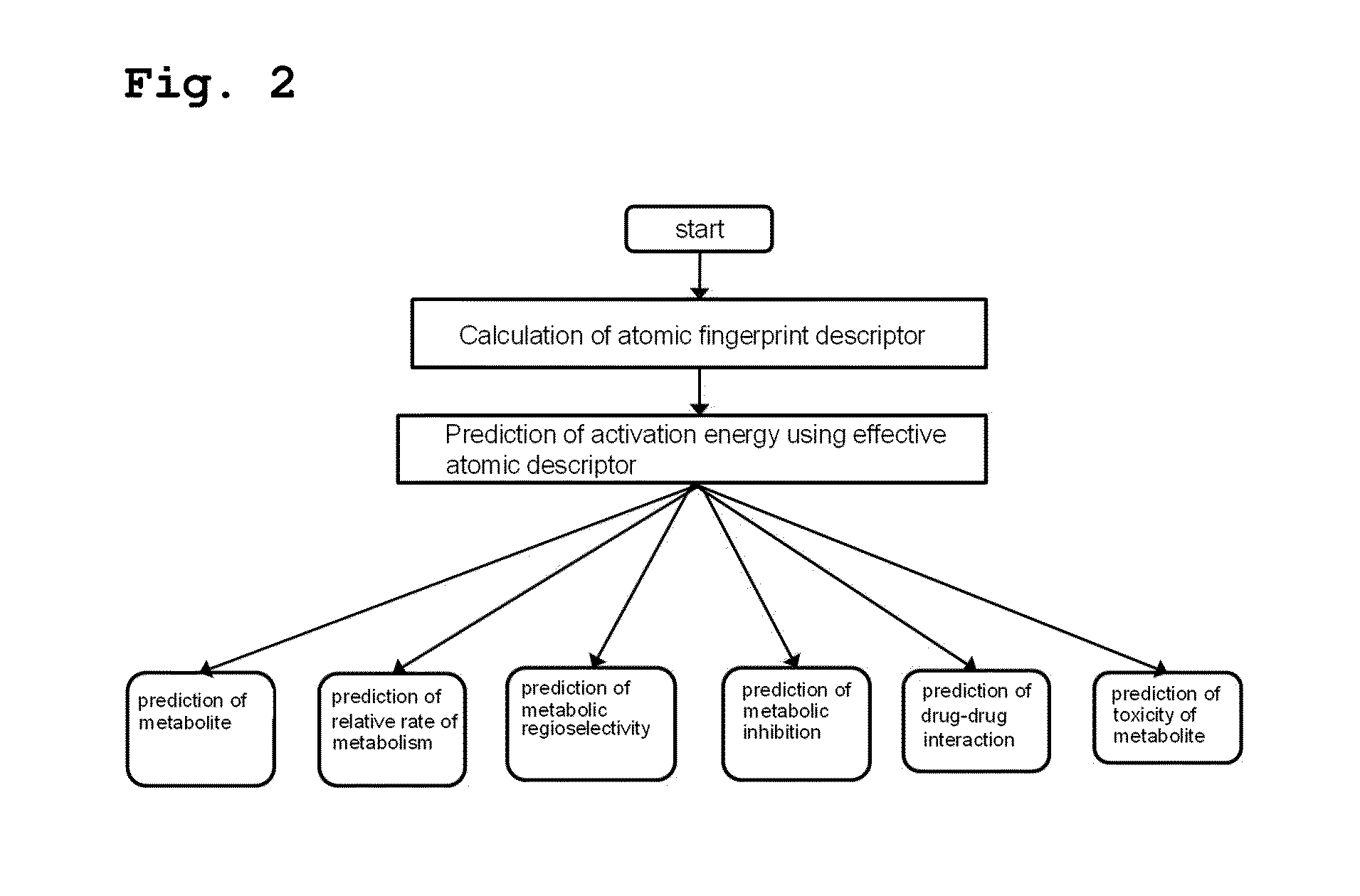
[0080]As shown in FIG. 2, the present inventors predicted activation energy using a method comprising the following steps (see FIG. 2):
[0081](i) calculating the atomic fingerprint descriptor of a substrate, which is represented by the following formula 1;
[0082](ii) comparing the calculated atomic fingerprint descriptor with the data, constructed by the method of Example 1, to select an atomic position where cytochrome P450-mediated metabolism can occur; and
[0083](iii) predicting activation energy for the selected atomic position using an atomic descriptor:
Xabc [Equation 1]
wherein X is the chemical symbol of an atom; a is a bond order that indicates the number of atoms bonded; b is a ring indicator that indicates whether the atom is part of a ring; and c is an aromatic indicator that indicates whether the atom is an aromatic atom.
[0084]After predicting the activation energy of 2-meth...
example 3
Prediction of Metabolite Using Only Reactivity Prediction Model
[0089]A metabolite was predicted only with a reactivity prediction model without considering the binding possibility of a substrate. When analysis was carried out using a method of selecting two positions having the highest possibility, a predictability of about 62-70% was generally shown.
TABLE 4Results of metabolite prediction carried outusing only reactivity prediction modelNaNcbNc / N (%)CYP1A214410170.1CYP2C91198369.7CYP2D61469162.3CYP3A419612865.3aNumber of substrates used in training;bNumber of substrates that accurately reproduced an experimentally known metabolism.
PUM
 Login to View More
 Abstract
Description
Claims
Application Information
 Login to View More