
Control system for doubly-fed induction machine
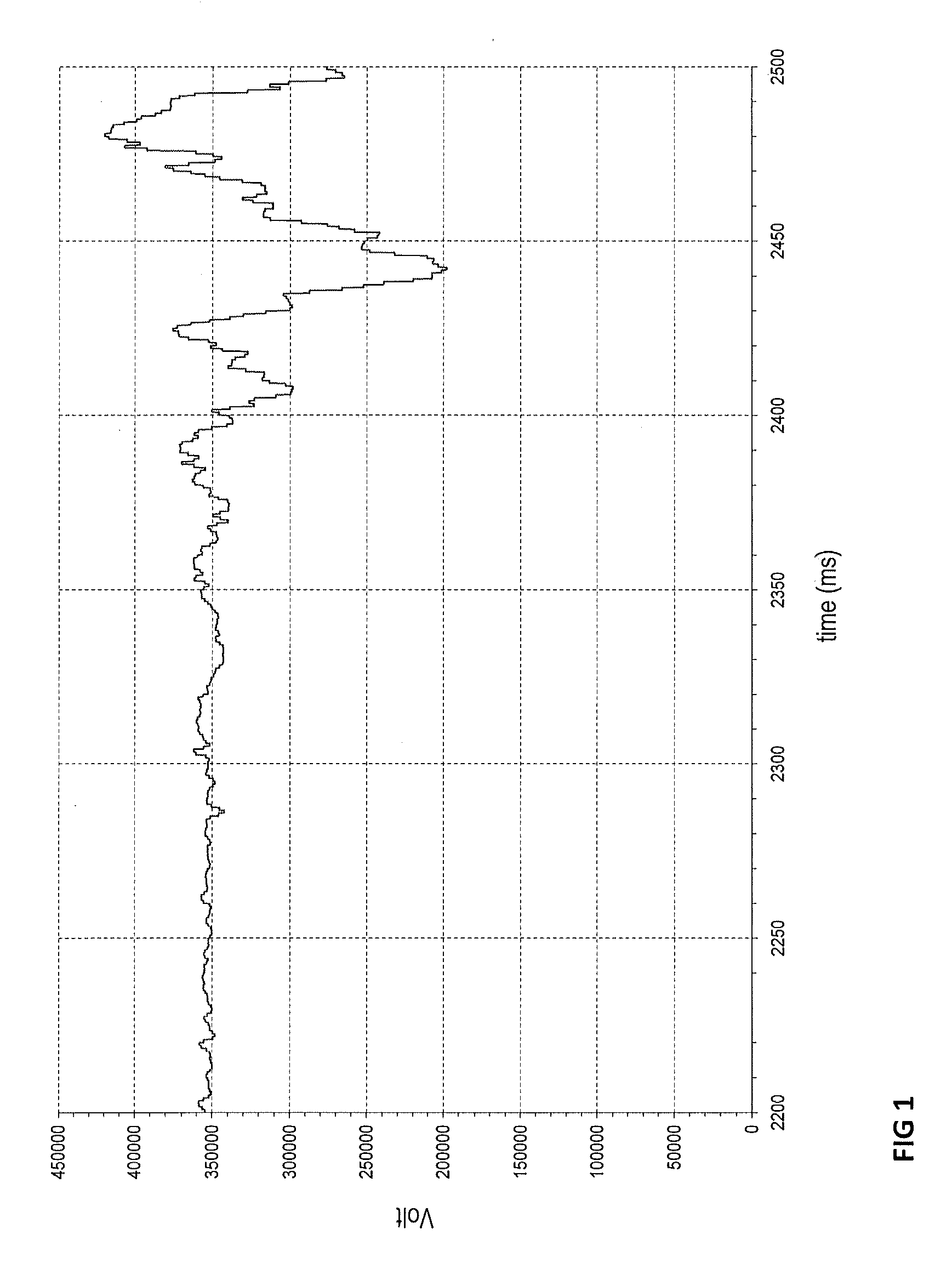
a control system and induction machine technology, applied in the direction of motor control for motor oscillation damping, electric generator control, dynamo-electric converter control, etc., can solve the problems of limiting the transmission of generated power, permanent damage, and no clear means of damping the resonance in the paper
- Summary
- Abstract
- Description
- Claims
- Application Information
AI Technical Summary
Benefits of technology
Problems solved by technology
Method used
Image

Examples
Embodiment Construction
[0017]Exemplary embodiments of the present disclosure provide a method and an arrangement for implementing the method so as to solve the above issues in connection with doubly-fed induction generators.
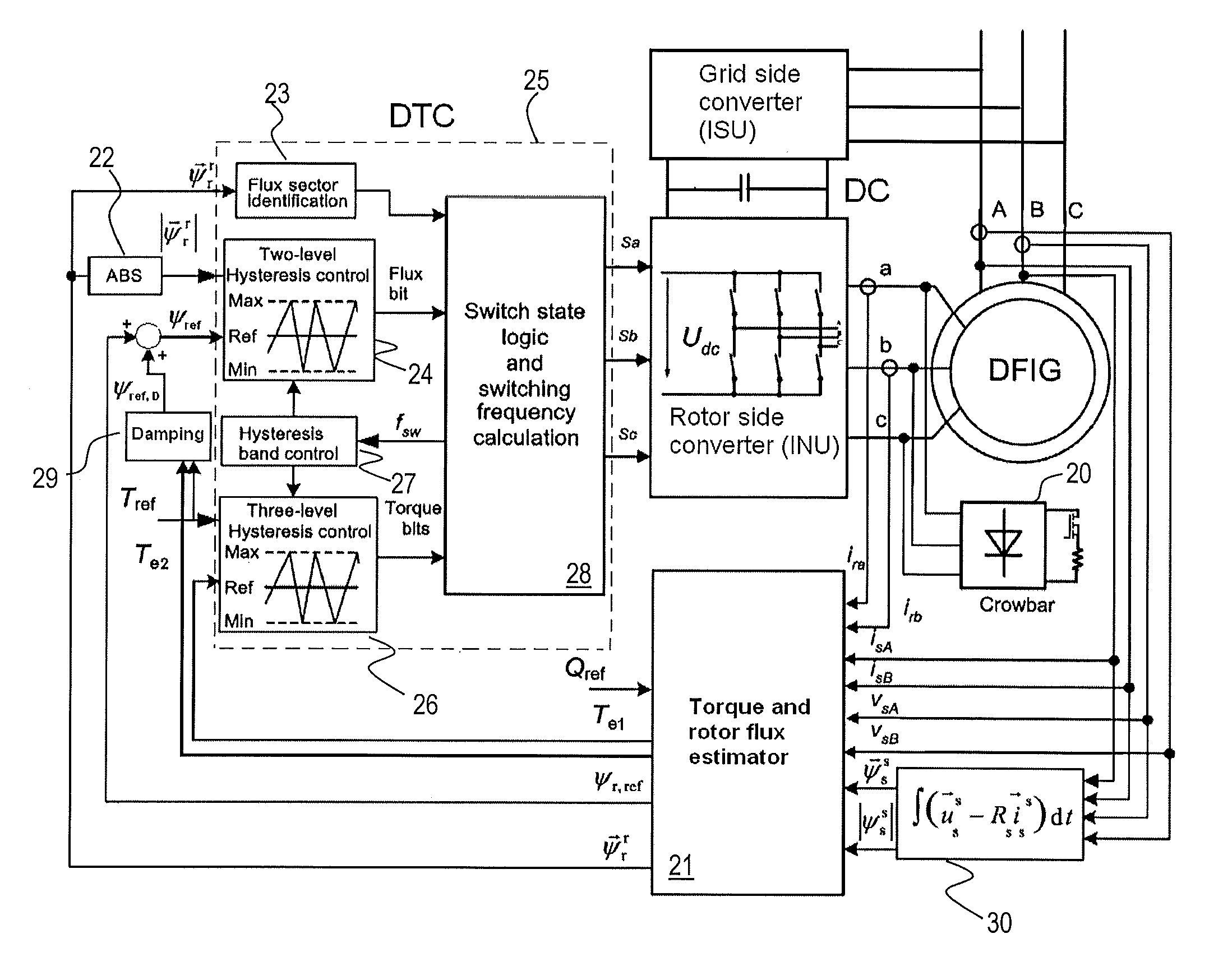
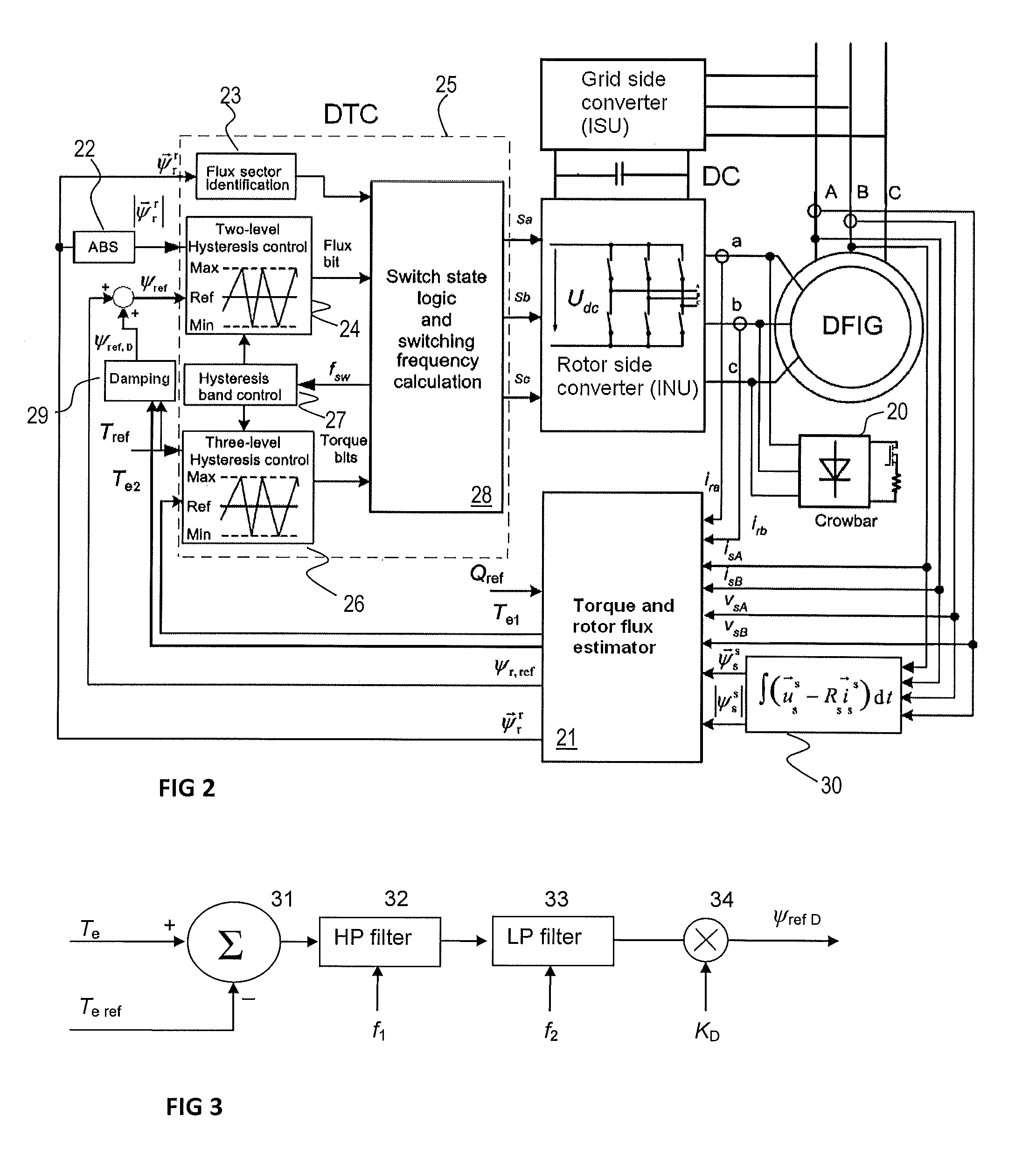
[0018]Exemplary embodiments of the disclosure are based on the idea of modifying a rotor flux reference in the control system controlling the rotor flux. The modified rotor flux reference can be obtained by summing a damping signal to a signal that can be used as a rotor flux reference. The modified rotor flux signal is then used in the control as the reference signal.
[0019]The damping signal can be formed on the basis of an estimated machine torque or another signal having similar characteristics.
[0020]An advantage of the method and arrangement is that it can damp effectively sub-synchronous oscillations so that the network can be used securely and the production of power can be stable.
[0021]A further advantage is that it can be used throughout the whole speed range for stabilizing th...
PUM
 Login to View More
 Abstract
Description
Claims
Application Information
 Login to View More