Heat transfer bridge

a heat transfer bridge and heat transfer technology, applied in the direction of basic electric elements, semiconductor devices, lighting and heating apparatus, etc., can solve the problems of reducing the insulating properties of materials, affecting the operation of transformers, and aging of insulating materials, so as to improve the cooling effect of transformers, increase the capacity of operating transformers, and improve the effect of cooling

US20130048254A1Inactive Publication Date: 2013-02-28LIVINGSTON TROY W
7 Cites 17 Cited by

Patent Information

Authority / Receiving Office
US · United States
Patent Type
Applications(United States)
Current Assignee / Owner
Publication Date
2013-02-28
Estimated Expiration
Not applicable · inactive patent

Smart Images

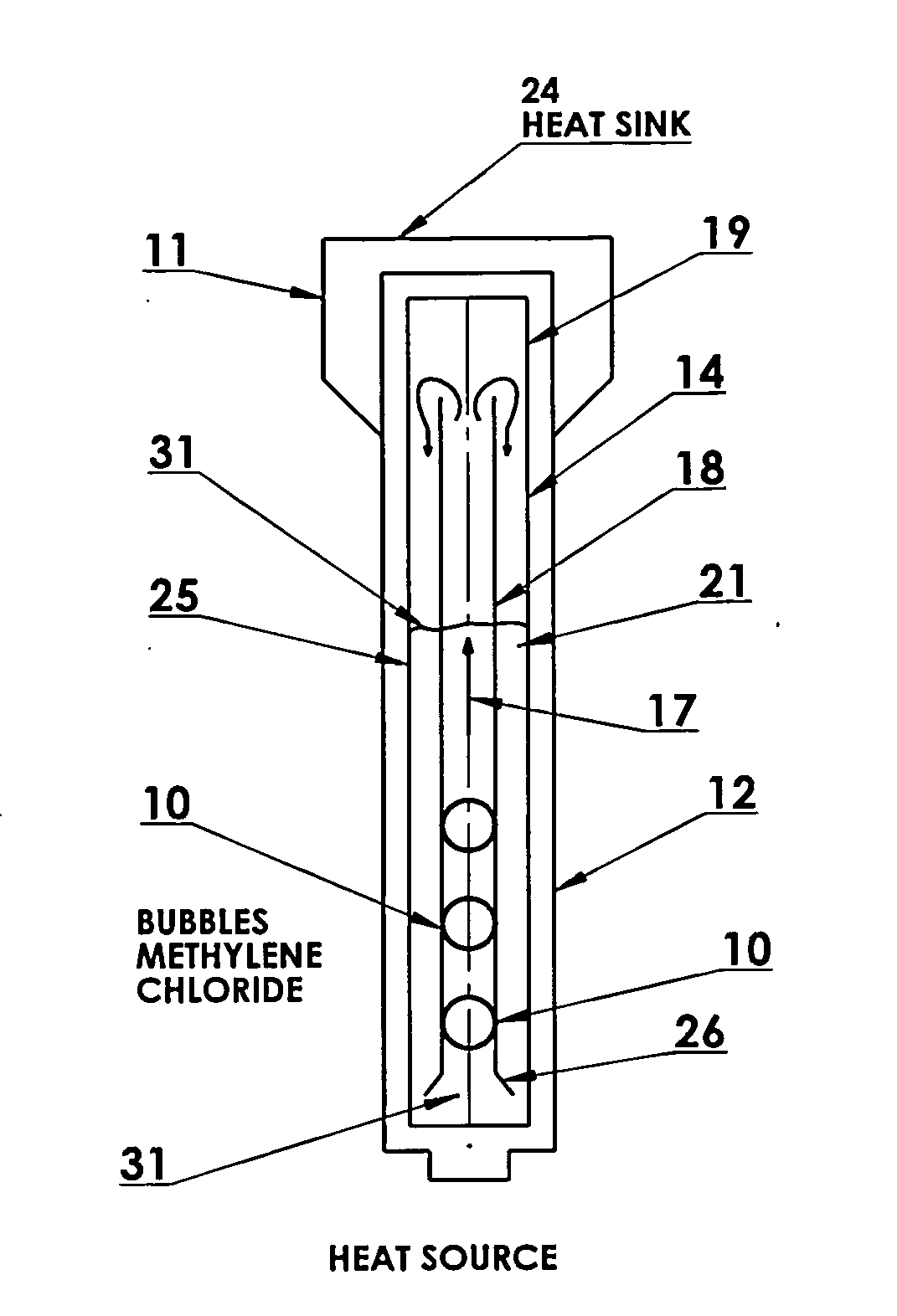
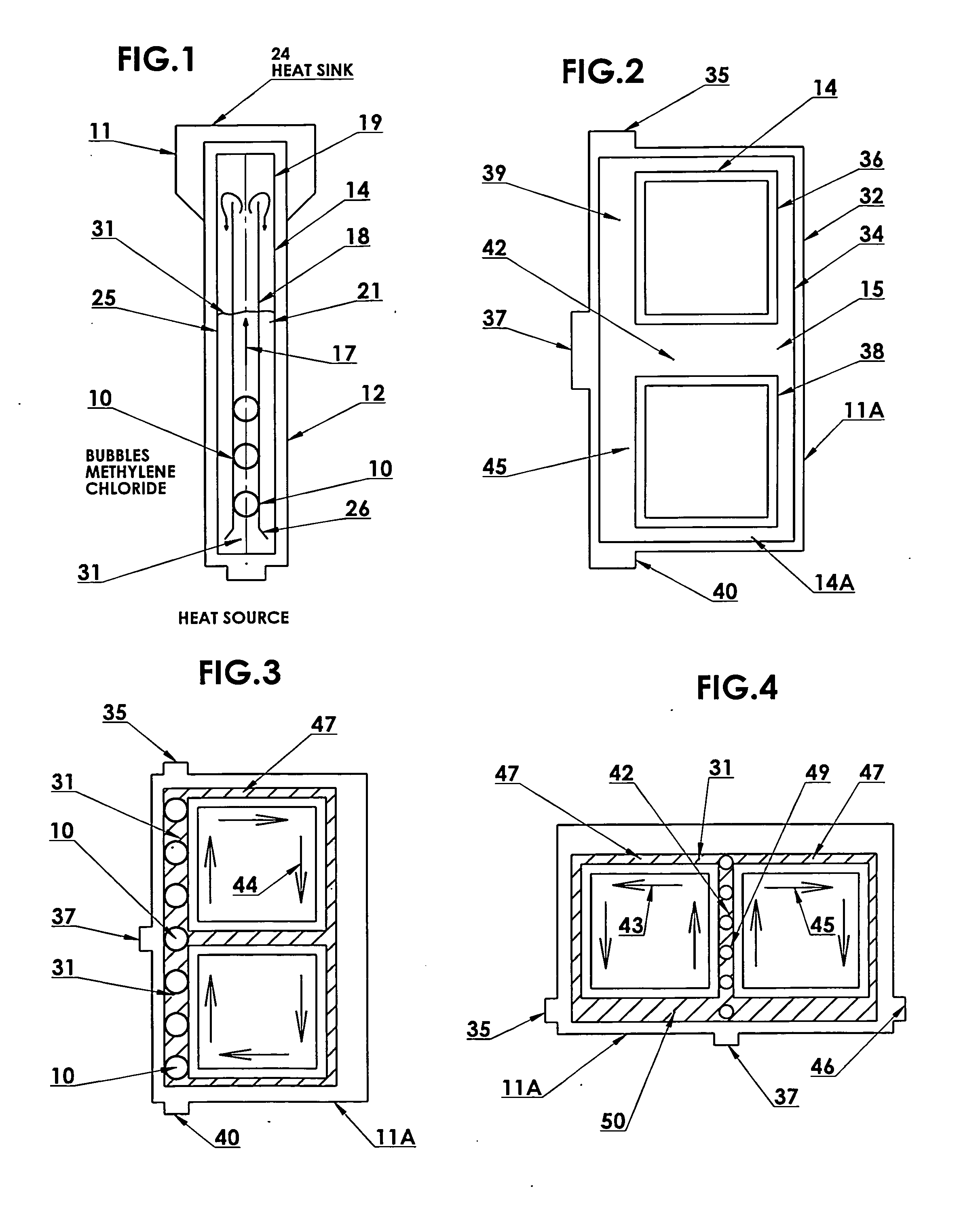
  • Figure 1
    Figure 1
  • Figure 2
    Figure 2
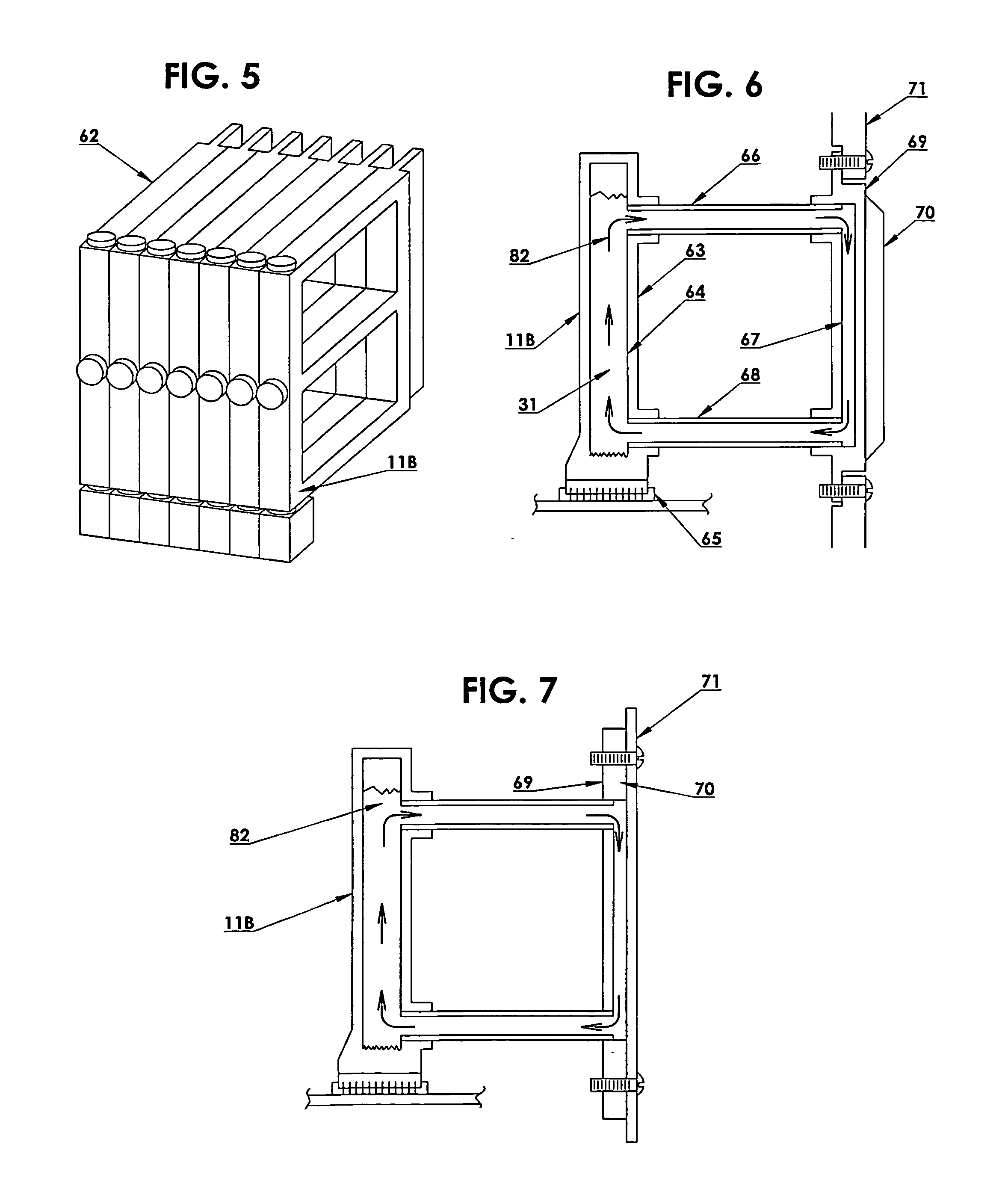
  • Figure 3
    Figure 3
Patent Text Reader

Abstract

A heat transfer bridge for absorbing heat from electronic circuits and electrical distribution transformers to thereby cool said components is disclosed. The heat transfer bridge includes a passive pump for pumping a fluid having a low boiling point that readily creates bubbles when heated to its boiling point. The bubbles are directed via selected flow paths to effectively push or drive the fluid from adjacent a heat source such as an electronic circuit or transformer to heat dissipating components such as cooling fins. In one embodiment, the fluid in the inventive heat transfer bridge comprises a fluid comprising metallic slurry that provides many times the heat dissipation rate as compared to a clear fluid.
Need to check novelty before this filing date? Find Prior Art

Description

BACKGROUND OF THE INVENTION

[0001] This utility application claims the benefit of the earlier filing date of the provisional application of the same title, “Heat Transfer Bridge”, Ser. No. 61 / 575,946 having a filing date of Aug. 31, 2011 and of the same inventor, Troy W. Livingston.

[0002] The present invention relates to system for removing heat from heat generating components, and more particularly to a method and system for removing heat from electronic circuit boards, electronic chips and transformers.

[0003] As is well known in the electrical industry, circuit boards and electronic chips and transformers create unwanted heat during operation. Heat build-up may cause a circuit board or transformer to malfunction or burn up and cause the entire system to also malfunction or to short out. The problem has become even more acute due to the fact that circuit boards have become smaller and / or more highly populated with components thus causing the source of heat to become more intense. Accor...

Examples

Embodiment Construction

[0052]As alluded to above, one of the problems for developing circuit boards and IC chips, is the need for dissipating the heat generated by the components which operate at higher output / wattage. Further a problem for dissipating heat from circuit boards and IC chips is that the boards and chips are mounted in various orientations and in environments which may restrict air flow. The restricted and oft times minimal air flow will reduce the cooling capacity of hot surface and heat sinks / dissipating structure. The electronic junctions used in circuit boards are very small, therefore to be effective as a heat dissipation module, a module heat must efficiently absorb and dissipate heat energy from this small area.

[0053]It has been found that liquid cooling for circuit boards and IC chips is one of the most effective ways of cooling these components. It is standard practice to utilize pumps and compressors and refrigeration cycles to provide the liquid flow in a closed loop to carry the ...