
Bioleaching bioreactor with a system for injection and diffusion of air
- Summary
- Abstract
- Description
- Claims
- Application Information
AI Technical Summary
Benefits of technology
Problems solved by technology
Method used
Image

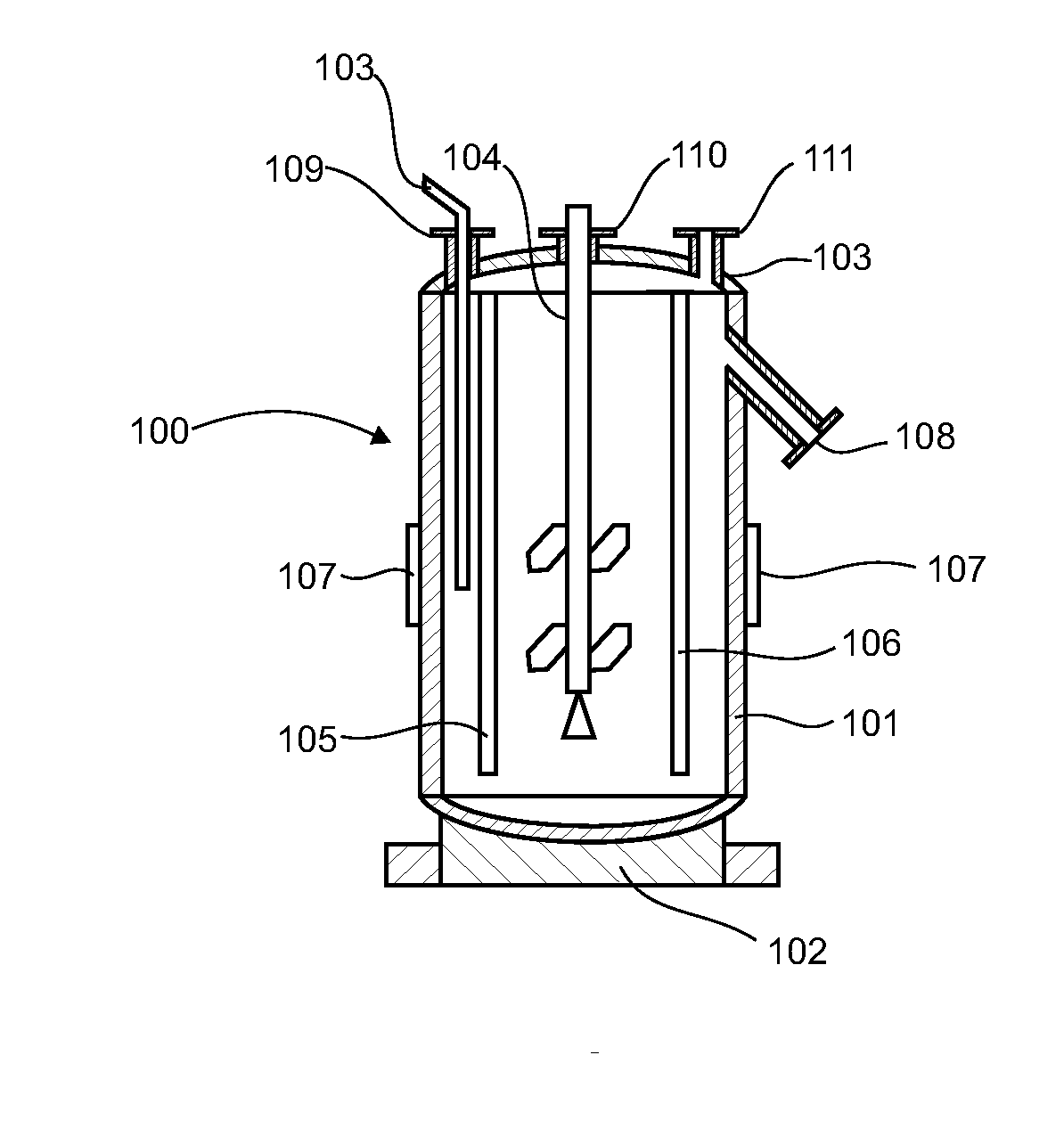
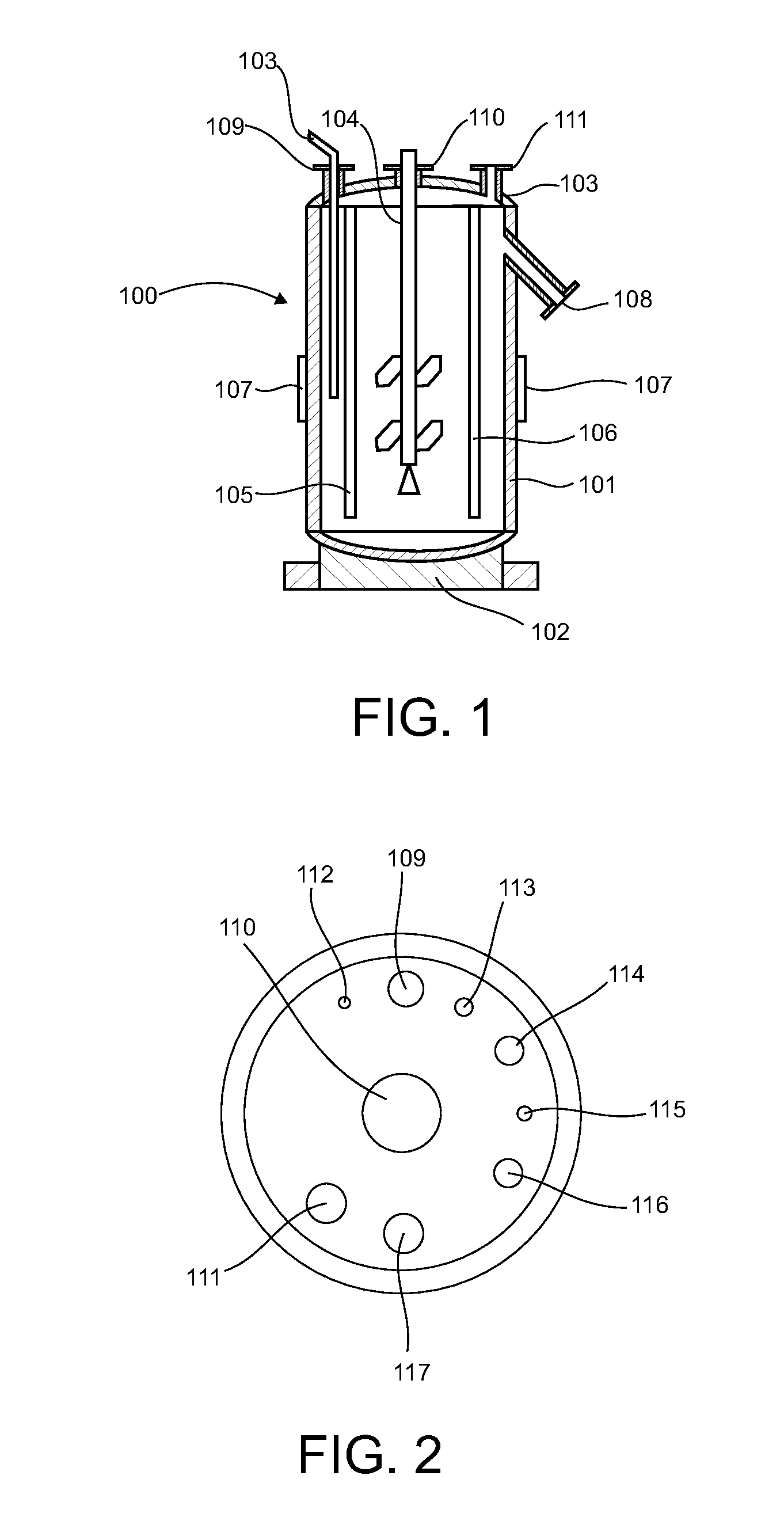
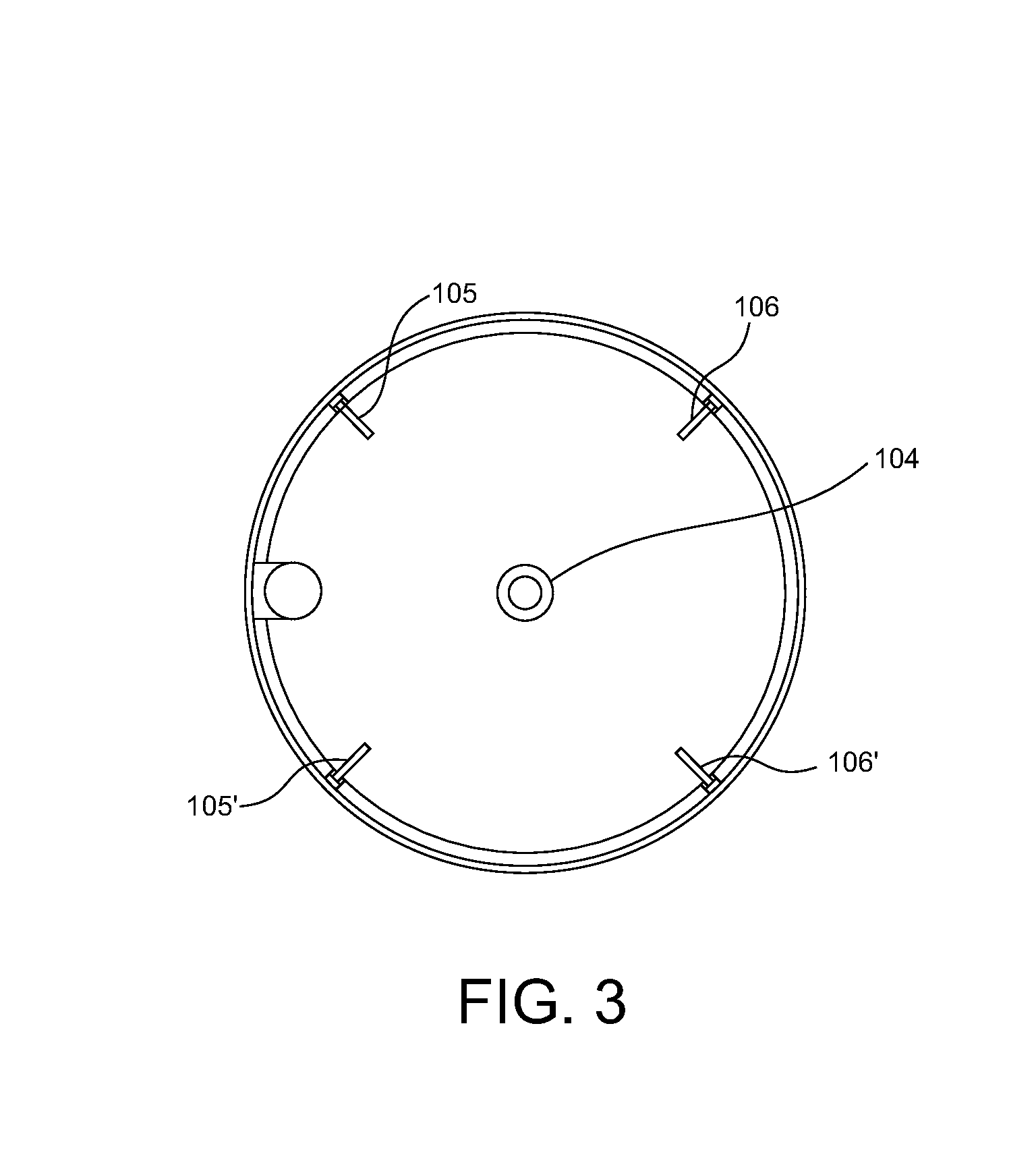
Examples
example 1
[0064]An assay in a 200 liters bioreactor was made, with the purpose of validating the solid percentage homogeneity in the bioreactor core, carrying out diverse tests varying the drivers number, as well as the injection flow of an air / water mixture.
[0065]To this end, 200 liters of water was fed to the bioreactor, and 40 kg of zinc concentrate was added having a particle distribution with a p80 of 120 microns.
[0066]The stirring speed was set to 300 RPM and the tests were carried out modifying the drivers number, further varying the injection flow of the air / water mixture.
[0067]The water solid concentration average was measured (wt %) at 5 different deeps, obtaining the results shown in Table 1:
TABLE 1wt %Water / air mixtureConditionDrivers numberInjectionAssay 11Yes20%20%Assay 21No20%20%Assay 32Yes20%20%Assay 42No20%20%
[0068]The obtained results show an excellent stability of the solid dispersion, even if a single driver is used, what would allow to reduce the operation costs at an ind...
example 2
[0069]An assay was made with the purpose of validating the air injection efficiency, by varying the air / water mixture injection flow.
[0070]To this end, 200 liters of water was fed to the bioreactor and 10 kg of Iron concentrate was added with a particle distribution having a p80 of 20 microns.
[0071]It was maintained at constant temperature of 70° C. and a fix stirring speed of 300 RPM with a single drive for stirring.
[0072]The air / water mixture ratio was maintained constant to values of 1 m3 of air per each 0.05 liters per minute (LPM) of water. The original reactor design is of 200 LPM injection of the air / water mixture and the parameter to control the flow is the concentration of Dissolved Oxygen (DO) in the pulp with bacteria present, which has to be maintained around 2 ppm. Tests were made modifying the air / water mixture flow and the DO was monitored.
[0073]The obtained results are shown in Table 2:
TABLE 2Mixture flow inDissolved OxygenConditionLPMppmAssay 12003.50Assay 21503.45A...
PUM
| Property | Measurement | Unit |
|---|---|---|
| Temperature | aaaaa | aaaaa |
| Temperature | aaaaa | aaaaa |
| Temperature | aaaaa | aaaaa |
Abstract
Description
Claims
Application Information
 Login to View More