
Rotational sensor and methods therefor
- Summary
- Abstract
- Description
- Claims
- Application Information
AI Technical Summary
Benefits of technology
Problems solved by technology
Method used
Image

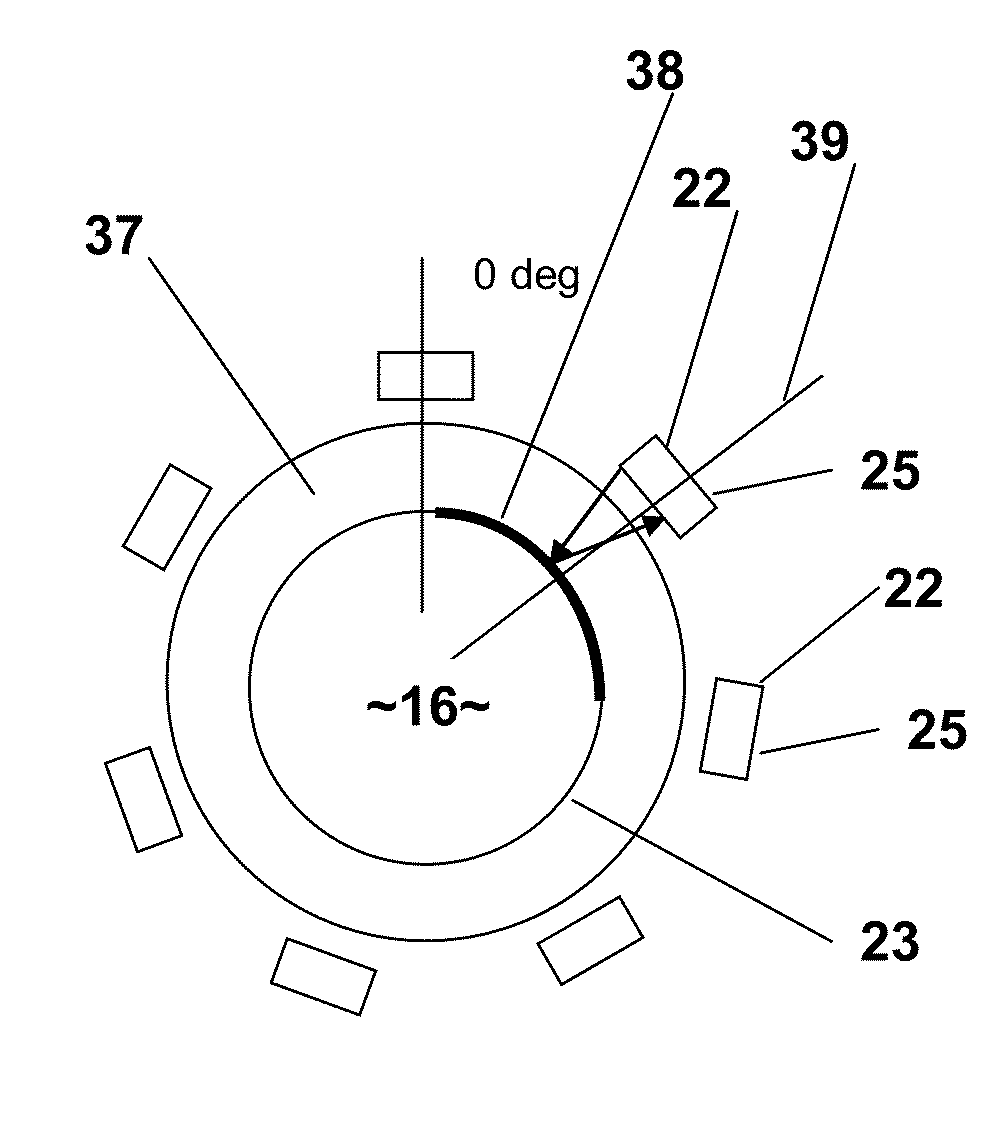
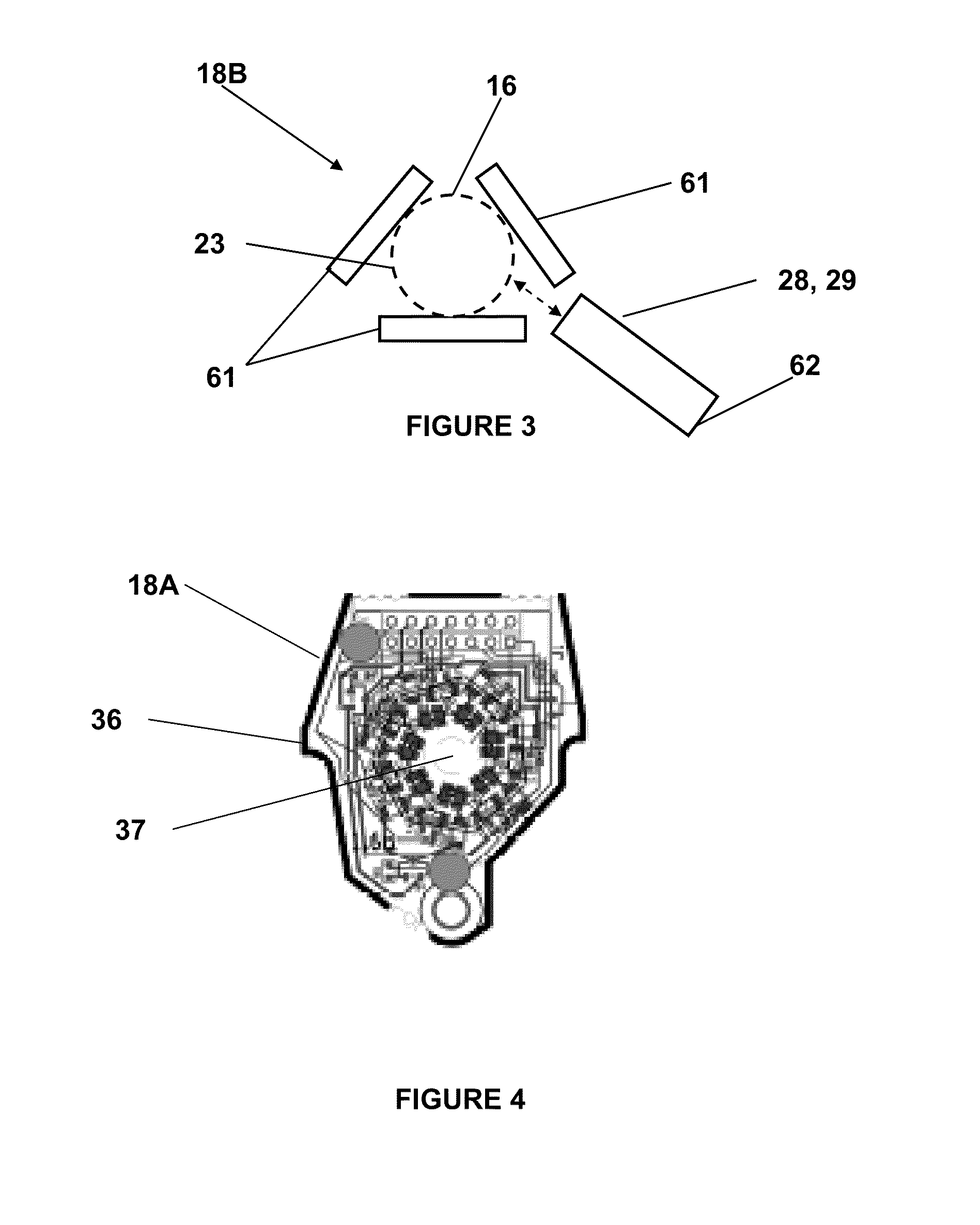
Examples
Embodiment Construction
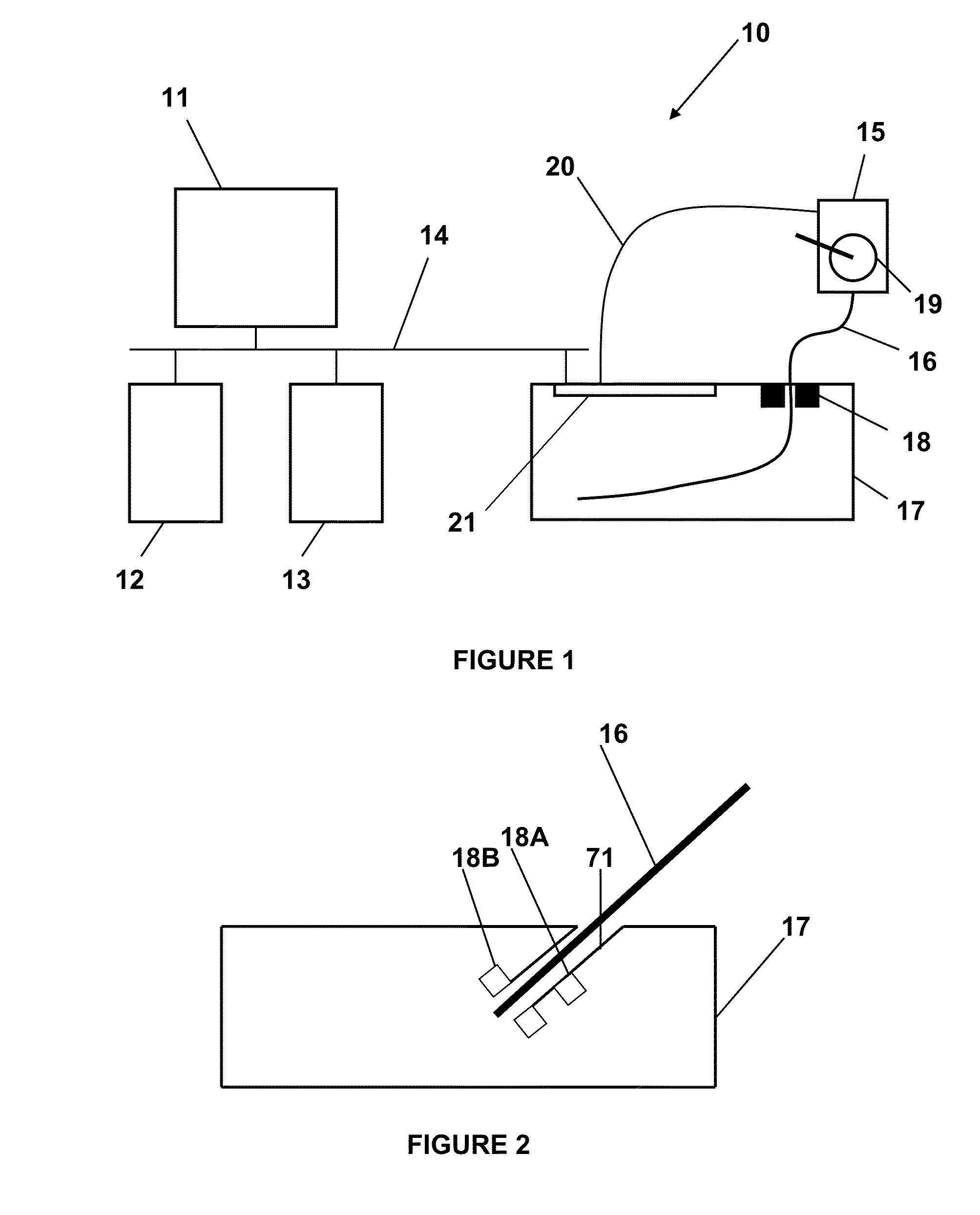
[0140]Preferred embodiments will now be described with reference to FIGS. 1 through 7B.
[0141]FIG. 1 is a schematic diagram of a system 10, according to one embodiment (in this case an endoscopy simulator) that may use the present invention of a rotational sensor 18. System 10 includes display 11, processor 12, memory 13, bus 14, handset 15, tube (object) 16, housing 17, sensor 18, control 19 (as will be appreciated, multiple controls may be provided and positioned as desired), wire 20 and circuit 21.
[0142]Display 11, processor 12, memory 13 and bus 14 are preferably embodied by a conventional personal computer but purpose-built devices with more specific functionality are within the scope of the invention. Any display may be used such as monitors, projectors and viewing lenses adapted to provide images therethrough and mimic those used for real endoscopic procedures. While a single display is shown, any number of displays may be used to enable others to view the user's operation. Th...
PUM
 Login to View More
 Abstract
Description
Claims
Application Information
 Login to View More