
Cathode active material for secondary battery, method of manufacturing the same, and cathode for lithium secondary battery including the cathode active material
a secondary battery and active material technology, applied in the direction of final product manufacturing, sustainable manufacturing/processing, cell components, etc., can solve the problems of high raw material cost, low structural stability, and limit the application of high-capacity batteries for electric vehicles, so as to improve cycle characteristics and conductivity and density. , the effect of improving the quality
- Summary
- Abstract
- Description
- Claims
- Application Information
AI Technical Summary
Benefits of technology
Problems solved by technology
Method used
Image

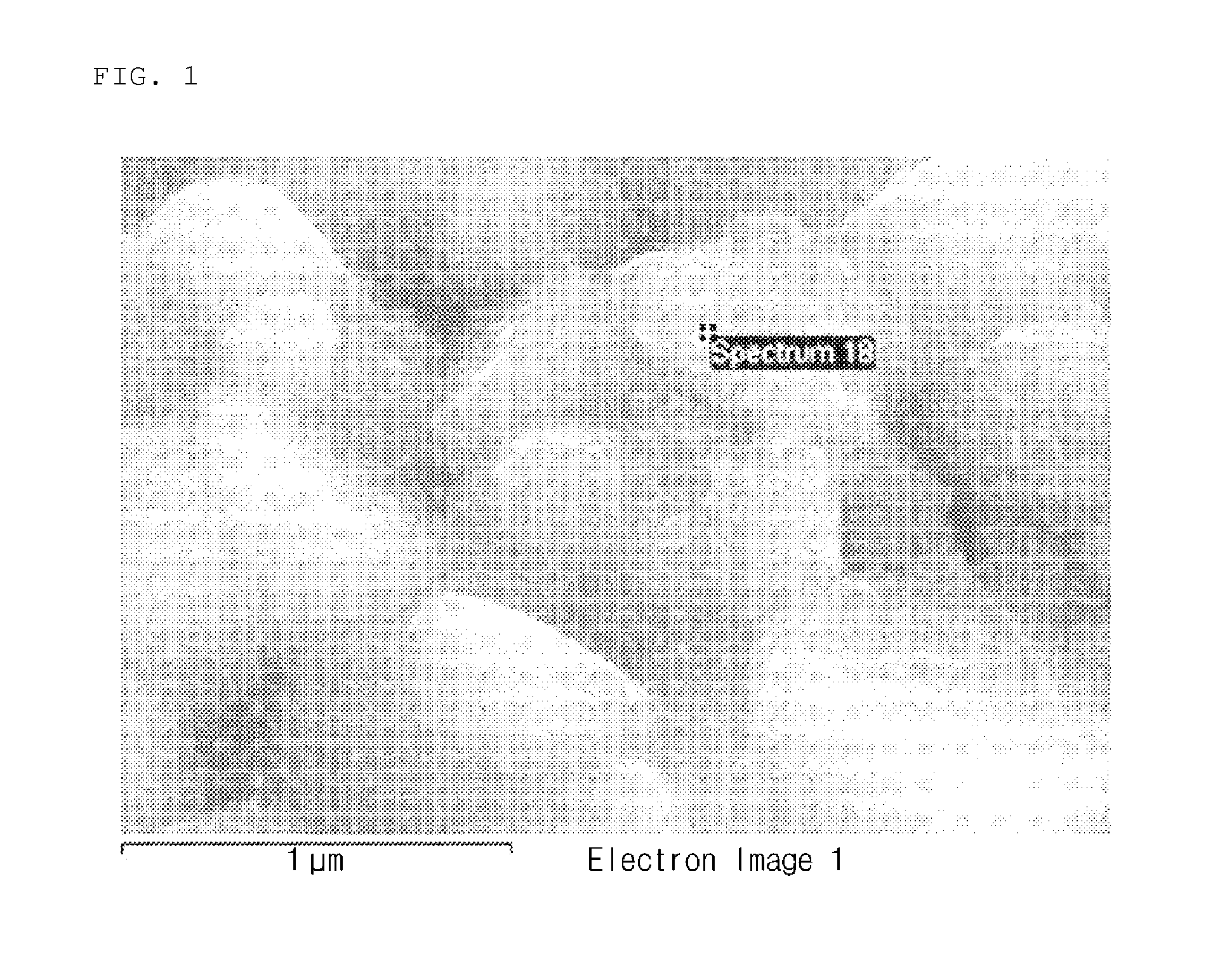
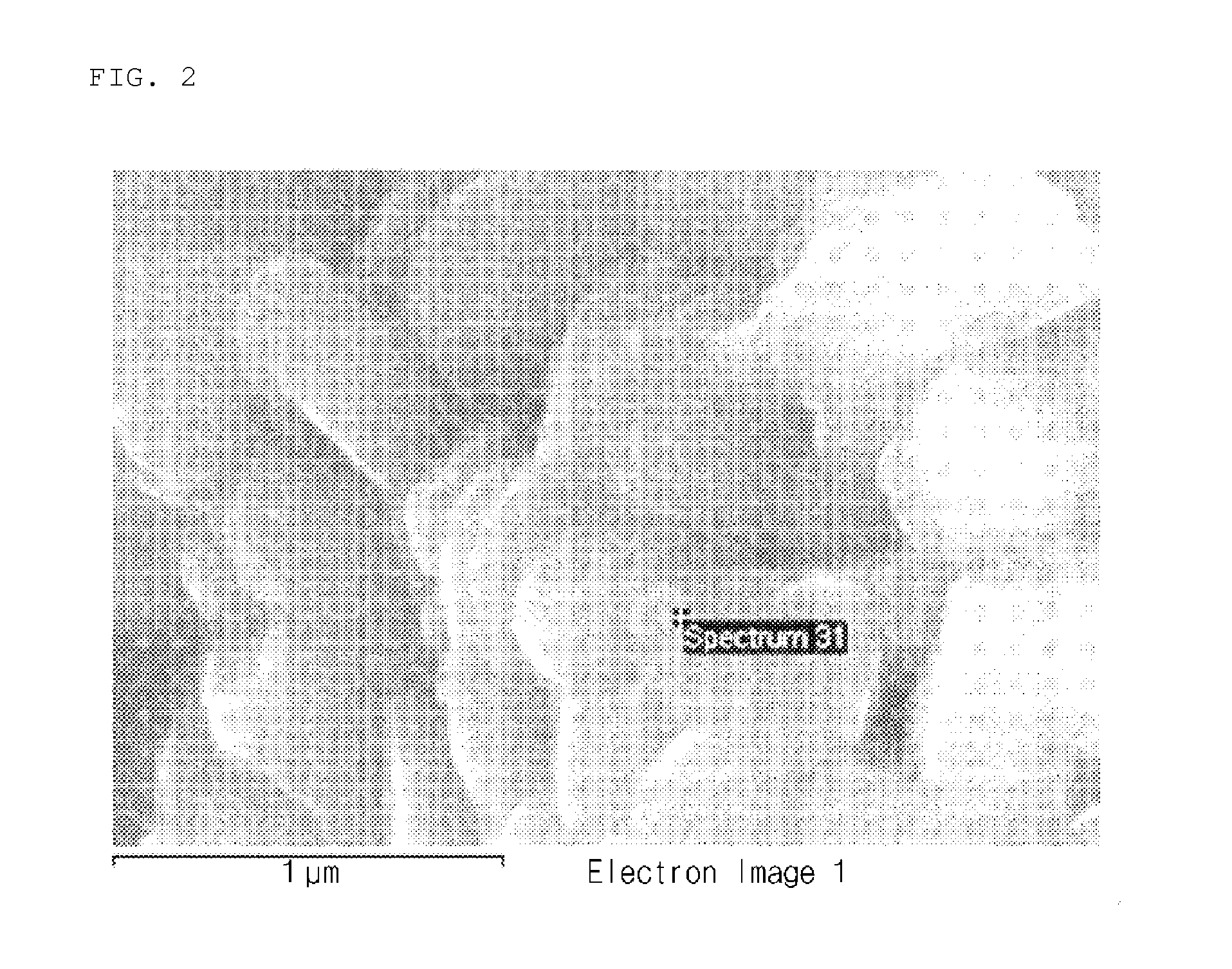
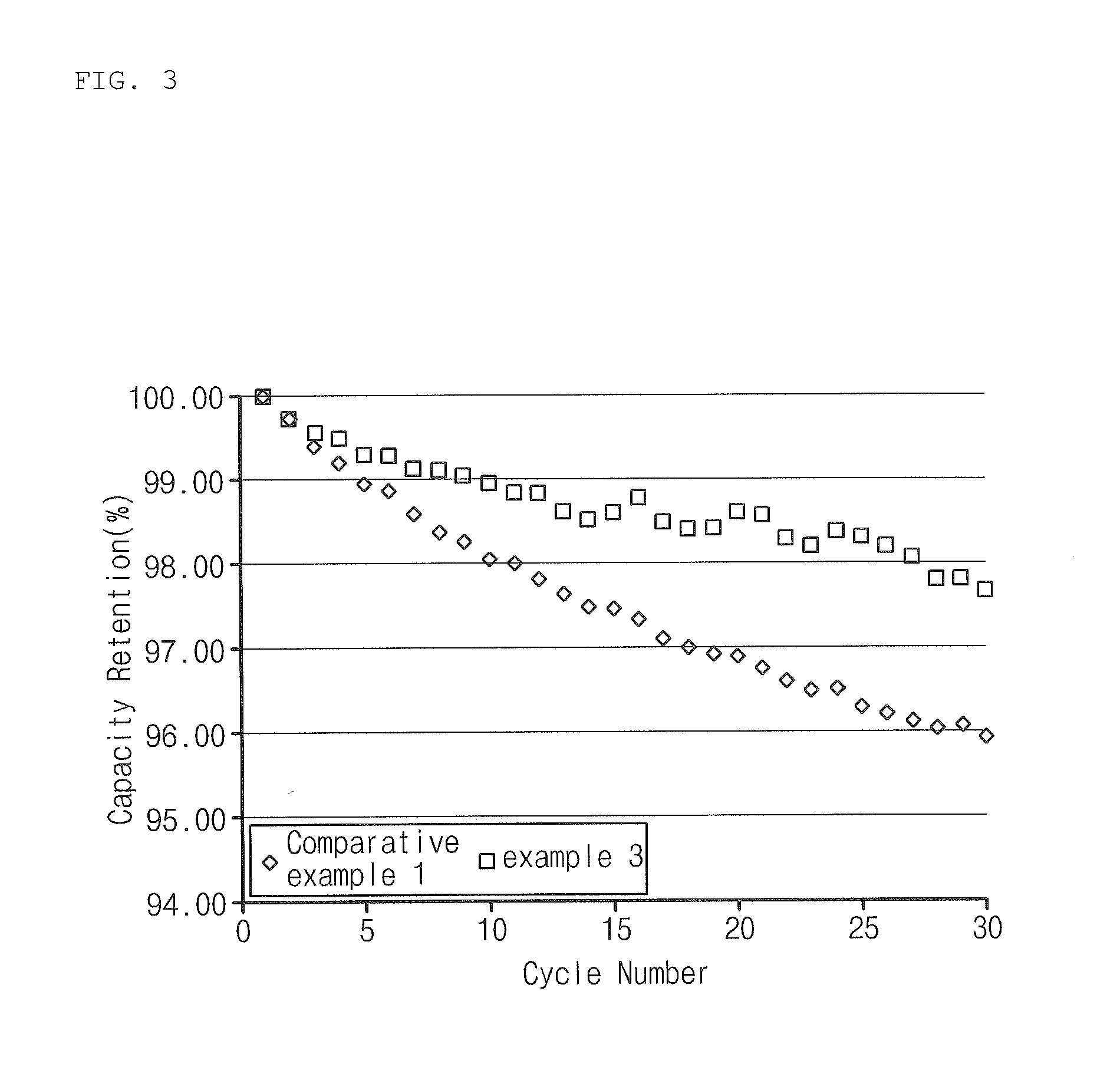
Examples
preparation example 1
Preparation of Metal Glycolate Solution
[0079]40 g of zirconium nitride (ZrN) and 10 g of citric acid (C6H8O7) were stirred in 200 g of an ethylene glycol (C2H6O2) solution to prepare a mixed solution. The mixed solution was primarily heated at a temperature of 150° C. for 5 hours, and then secondarily heated at a temperature of 180° C. for 1 hour to prepare a zirconium glycolate solution.
preparation example 2
Preparation of Metal Glycolate Solution
[0080]30 g of titanium isopropoxide (Ti(OCH(CH3)2)4) and 10 g of citric acid (C6H8O7) were stirred in 200 g of an ethylene glycol (C2H6O2) solution to prepare a mixed solution. The mixed solution was primarily heated at a temperature of 150° C. for 5 hours, and then secondarily heated at a temperature of 180° C. for 1 hour to prepare a titanium glycolate solution.
preparation example 3
Preparation of Metal Glycolate Solution
[0081]20 g of calcium acetate (Ca(C2H3O2)2) and 10 g of citric acid (C6H8O7) were stirred in 200 g of an ethylene glycol (C2H6O2) solution to prepare a mixed solution. The mixed solution was primarily heated at a temperature of 140° C. for 5 hours, and then secondarily heated at a temperature of 180° C. for 1 hour to prepare a calcium glycolate solution.
PUM
| Property | Measurement | Unit |
|---|---|---|
| total thickness | aaaaa | aaaaa |
| temperature | aaaaa | aaaaa |
| temperature | aaaaa | aaaaa |
Abstract
Description
Claims
Application Information
 Login to View More