
Multi-State Attenuator
a multi-state attenuator and attenuator technology, applied in the field of electronic circuits, can solve the problems of not providing for handling high-power signals, or providing flexibility in design for various applications, and achieves the effects of low insertion loss, minimal effect on chip area and power dissipation, and high input power
- Summary
- Abstract
- Description
- Claims
- Application Information
AI Technical Summary
Benefits of technology
Problems solved by technology
Method used
Image

Examples
Embodiment Construction
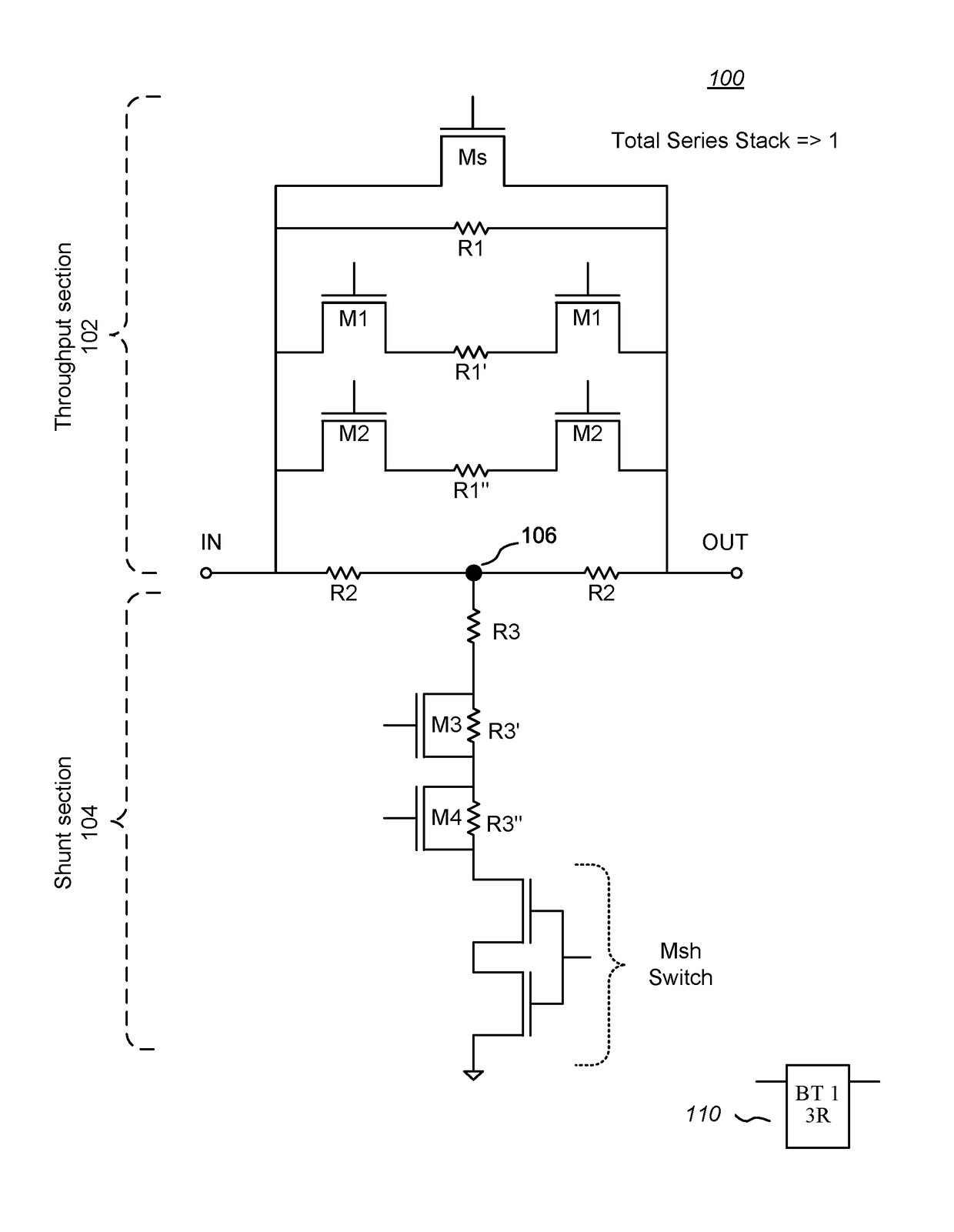
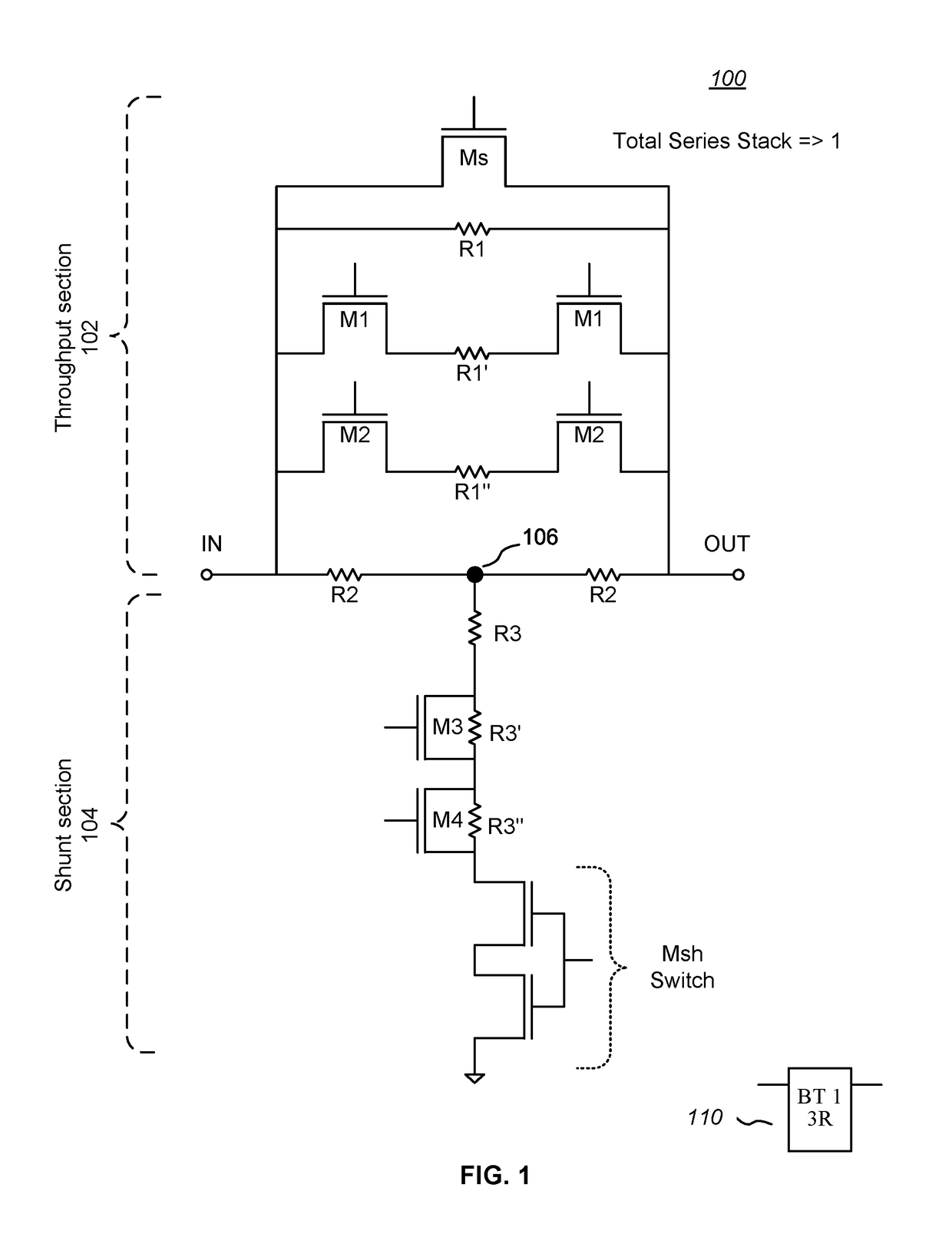
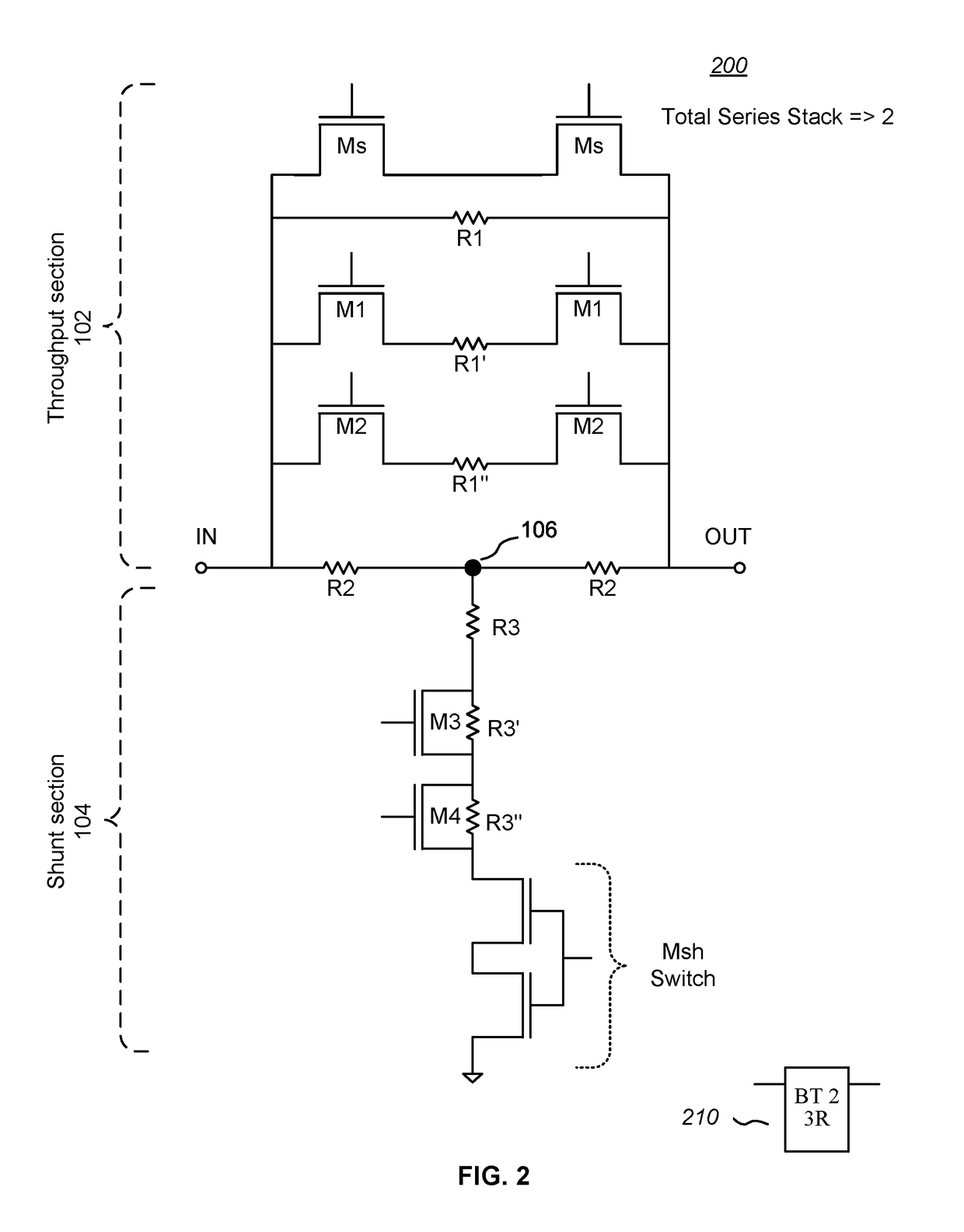
[0032]In many applications involving RF signals and in which attenuators are used, it is important to be able to handle high input power but with low insertion loss and parasitic effects, and with minimal effect on chip area and power dissipation on an integrated circuit (IC) die (or “chip”). Such applications include, for example, antenna-transceiver RF signal paths and low noise amplifiers (LNAs) in radio-based systems, such as cellular telephones, WiFi, and the like. The present invention is directed to providing several multi-state attenuator configurations which are capable of handling high power signals, have low insertion loss and parasitic effects, have few or no glitches between state transitions, have minimal effect on chip area and power dissipation on an IC chip, and provide flexibility of design for various applications.
[0033]More particularly, the present invention includes bridged-T type, pi-type, T-type, and L-pad type multi-state attenuator configurations each havin...
PUM
 Login to View More
 Abstract
Description
Claims
Application Information
 Login to View More