Crossbar resistive memory array with highly conductive copper/copper alloy electrodes and silver/silver alloys electrodes
a resistive memory and crossbar technology, applied in the field of resistive random access memory, can solve problems such as rram generation defects in thin oxide layers
- Summary
- Abstract
- Description
- Claims
- Application Information
AI Technical Summary
Benefits of technology
Problems solved by technology
Method used
Image

Examples
Embodiment Construction
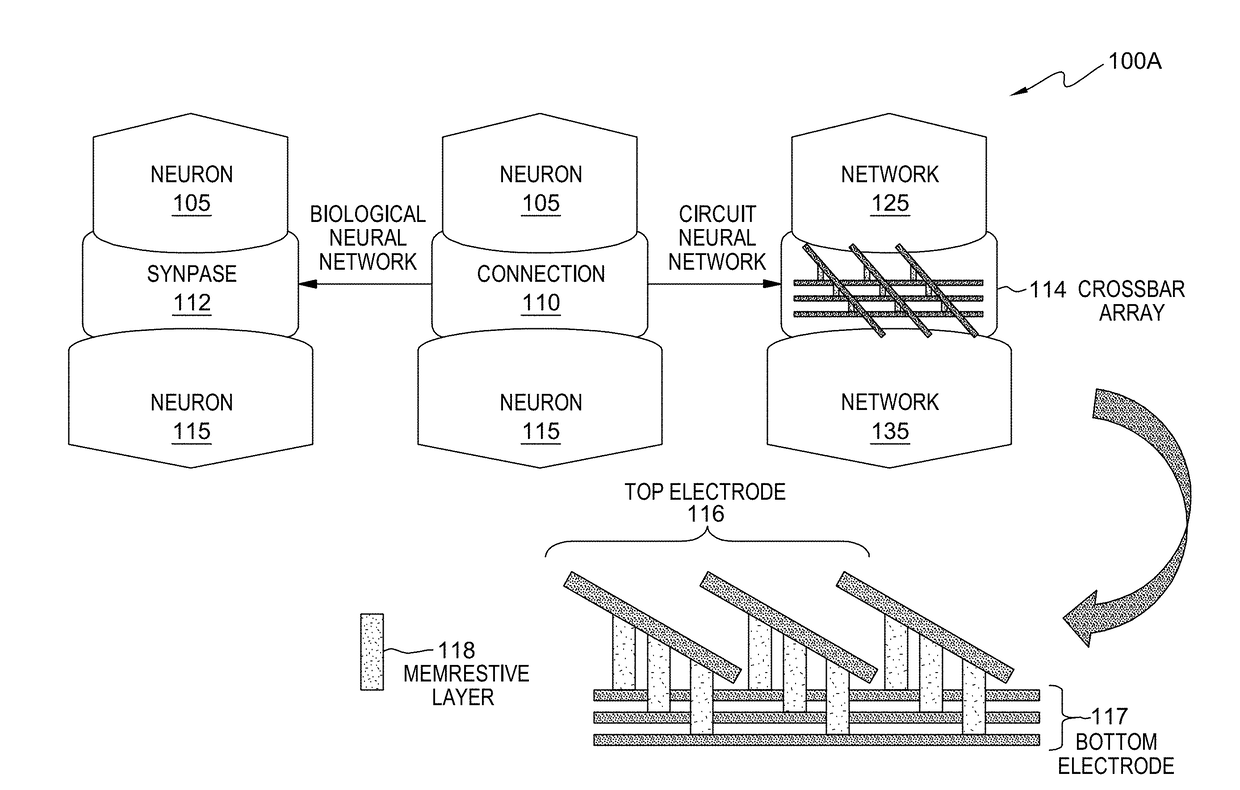
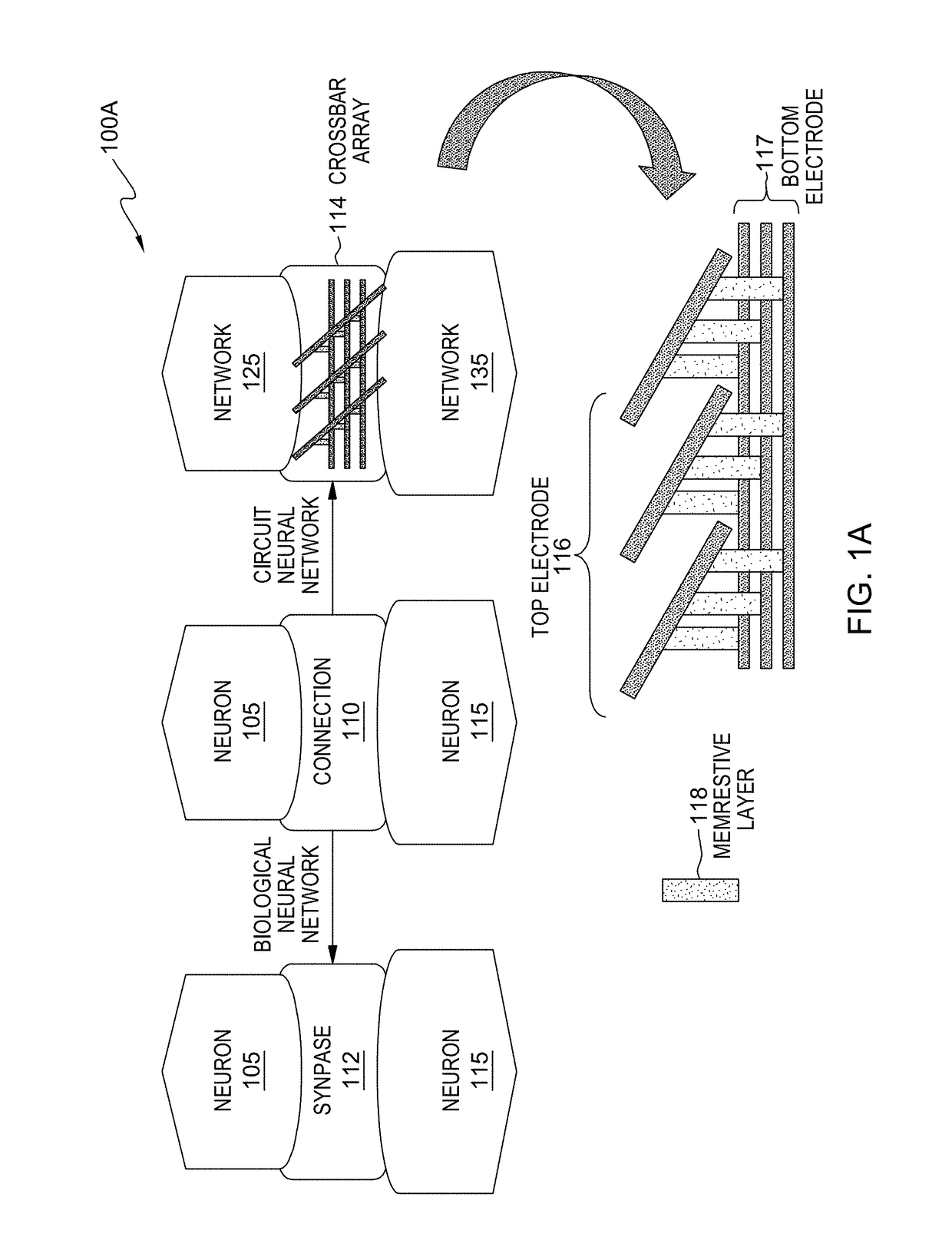
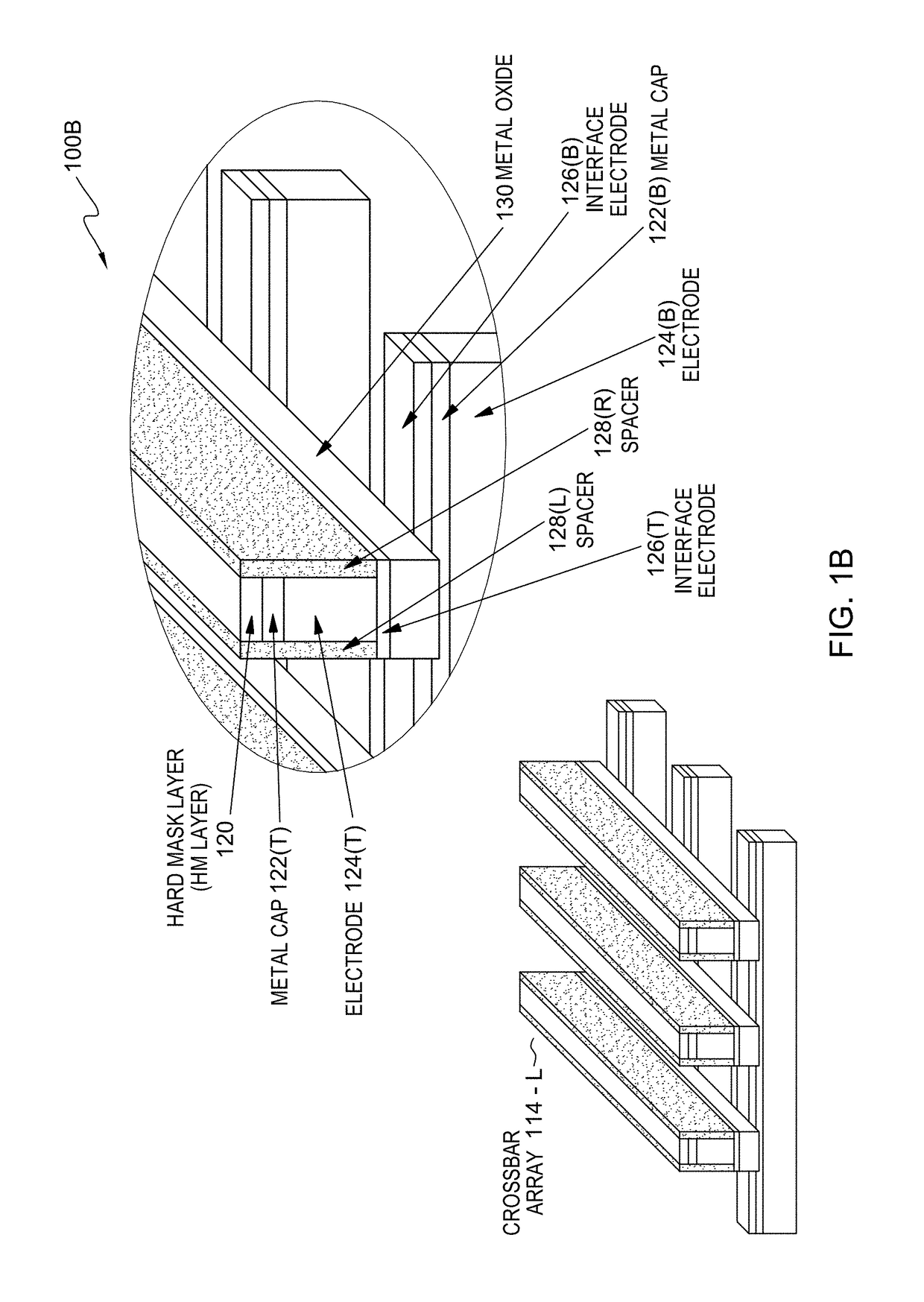
[0014]Neuromorphic computing is directed towards the use of very-large-scale integration (VLSI) systems containing electronic analog circuits to mimic neuro-biological architectures present in the nervous system. RRAM is considered as a promising technology for electronic synapse devices or memristors for neuromorphic computing as well as high-density and high-speed non-volatile memory applications. The methods and systems of the present invention enable the coexistence of highly conductive electrodes and a small active area (i.e., 4F2, where F is the minimum feature size accessible by lithography within a RRAM cell). More specifically, a novel crossbar array structure with a highly conductive electrode and large grains (i.e., crystallites or microscopic crystals within a material) provide lower line resistivity at a smaller line width. Furthermore, embodiments of the present invention enable the contact area of crossbar array structure to be relatively small (e.g., 4F2) relative to...
PUM
 Login to View More
 Abstract
Description
Claims
Application Information
 Login to View More