The
disadvantage of this known method and device is that the
isolator remains functional only within a certain range limited by the
wavelength, because the
magneto-optical
crystal remains transparent only to certain wavelengths.
Moreover, the price of the
magneto-optical
crystal is relatively high.
Clearly this is almost impossible to embody.
The
disadvantage of this known method and device is that it is practically impossible to produce a device with mechanically controlled half-wave plates while an electrically controlled device with electro-optical crystals is a very complex and impractical solution.
Moreover, despite the fact that electro-optical crystals can have fast controls they are not suitable for high-frequency switching, because they easily get overheated.
In addition, the electro-optical crystals used to produce the device are expensive.
As a result, there is a constructive interference of the light beams propagating in forward direction and a destructive interference of the light beams propagating in backward direction in the two branches of the interferometer.
The
disadvantage of this known method and device is that it is suitable only for use in integrated schemes and only under low average radiation power.
It is rather complicated to produce the
isolator of the kind suitable for use under high average radiation power.
Another disadvantage of this known method and device is that it is based on the Mach-Zehnder interferometer which makes it necessary to ensure that the
optical path length be equal along both branches of the interferometer and do it at a much greater accuracy than when determining the length of the radiation wave and make sure that it does not change with time.
The disadvantage of this known method and device is that the
magneto-optical material used for the purpose of the device remains transparent only within a limited
wavelength range.
Moreover, in case of some wavelengths the
Verdet constant, which defines the rotation angle of polarization depending on the
magnetic field, is simply not big enough.
Moreover, the price of the magneto-optical material is relatively high.
Another disadvantage of this known method and device is that it is based on the Mach-Zehnder interferometer which makes it necessary to ensure that the
optical path length be equal along both branches of the interferometer and do it at a much greater accuracy than when determining the length of the radiation wave and make sure that it does not change with time.
This is rather complicated to ensure in case of non-integrated Mach-Zehnder interferometers, therefore, it is complicated to create a powerful non-reciprocal transmission device by using this method.
Moreover, the cost price of the device is lower compared to other analogous devices with the same parameters, because no magneto-optical crystals are used to produce it.


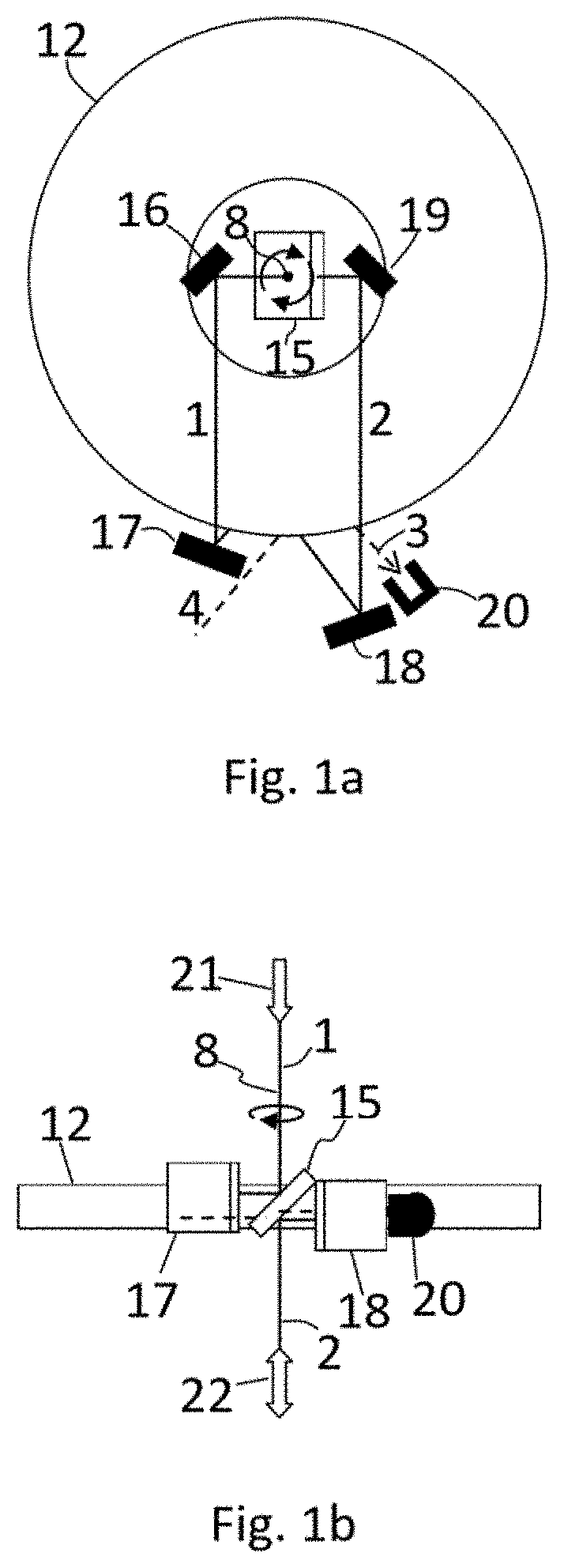
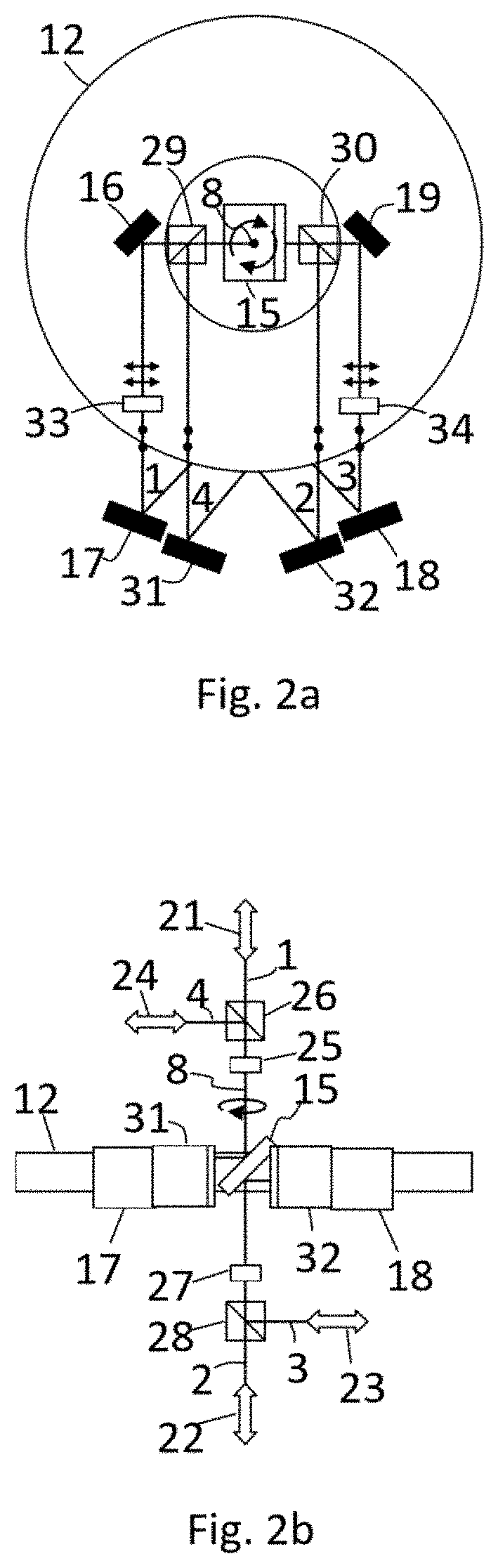
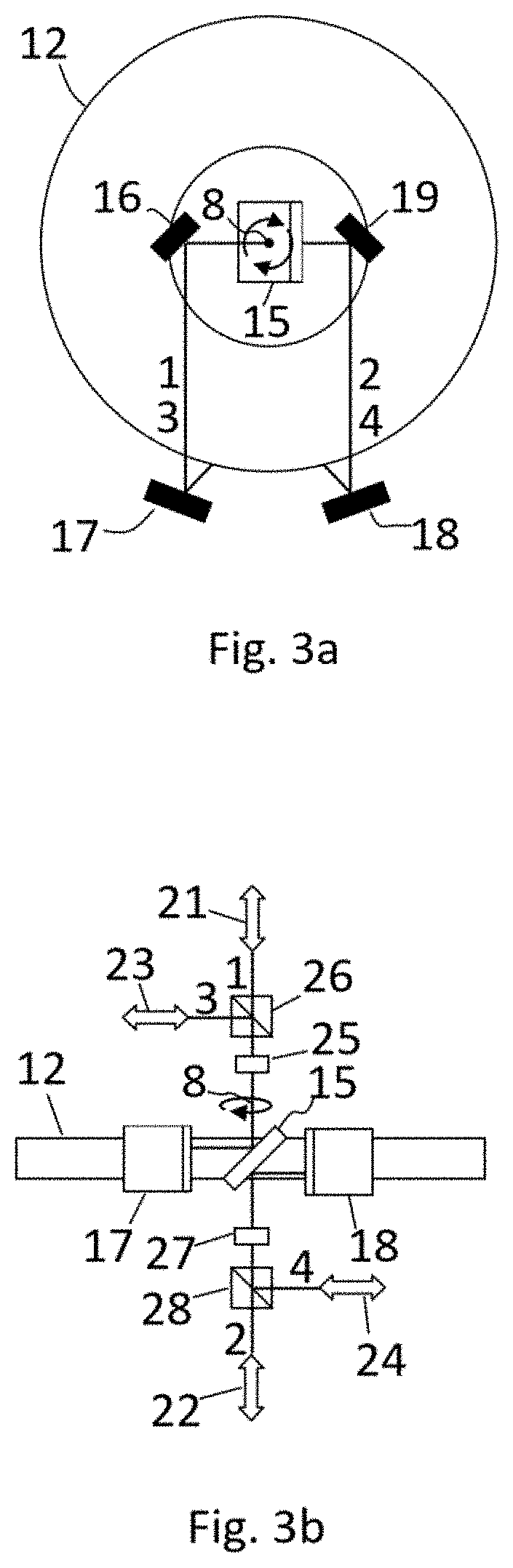
 Login to View More
  Login to View More