
Artificial contractile structure
a contractile structure and artificial technology, applied in the field of artificial sphincters, can solve the problems of reducing the efficiency of the cuff so designed, requiring additional devices, and complicating surgery, so as to prevent the dissection of the vaginal wall, reduce the friction of the tensile elements, and facilitate folding.
- Summary
- Abstract
- Description
- Claims
- Application Information
AI Technical Summary
Benefits of technology
Problems solved by technology
Method used
Image

Examples
Embodiment Construction
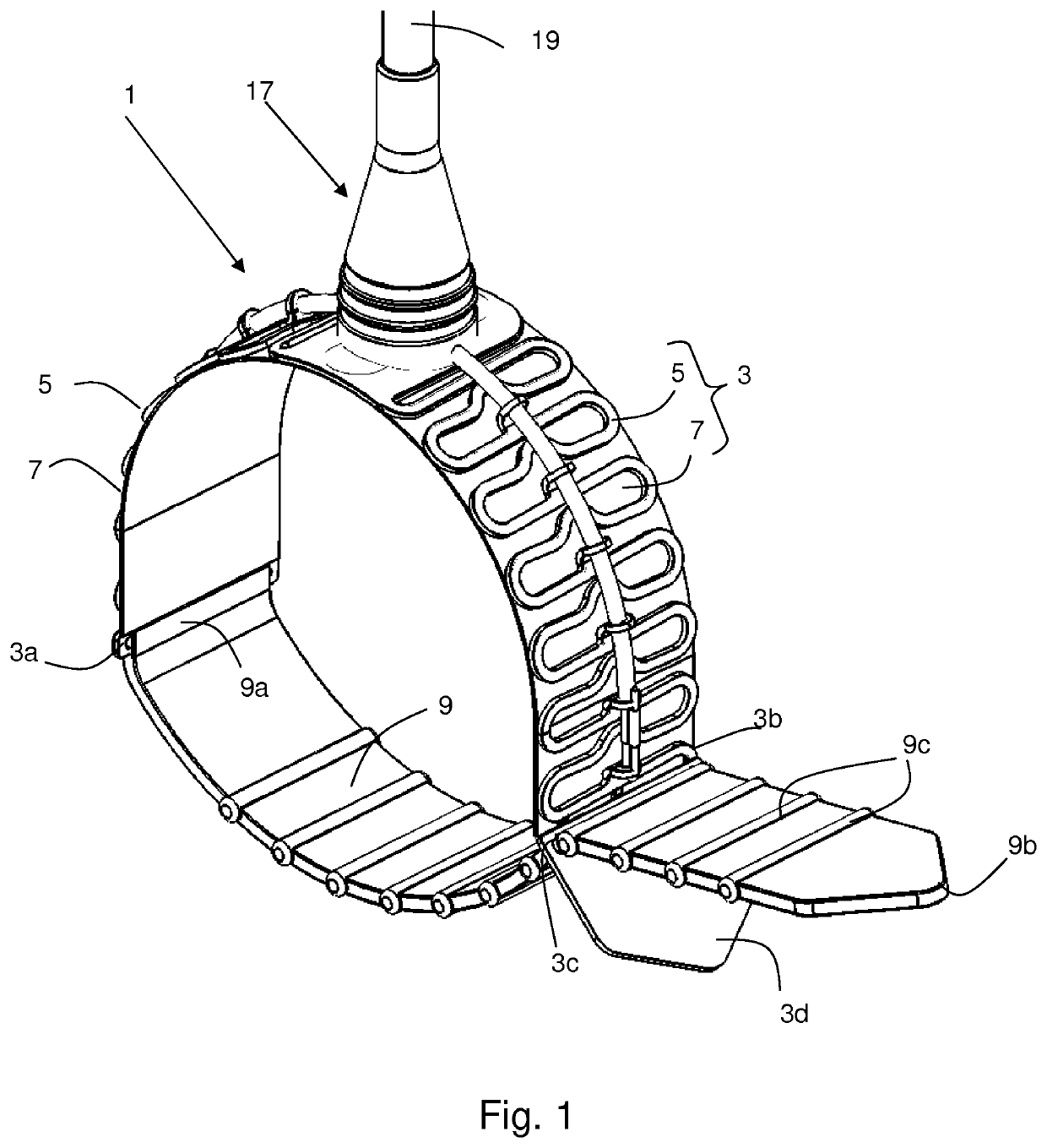
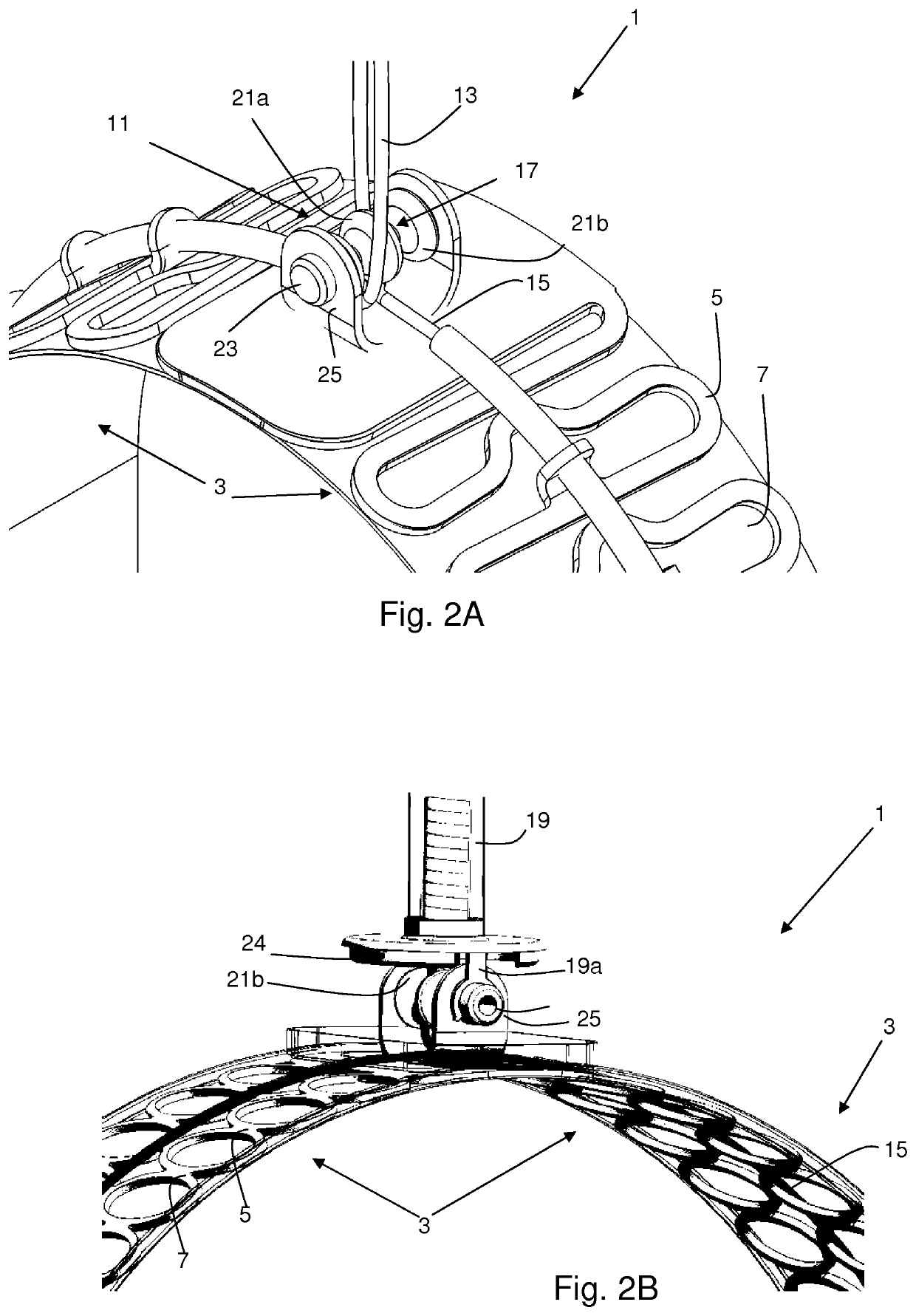
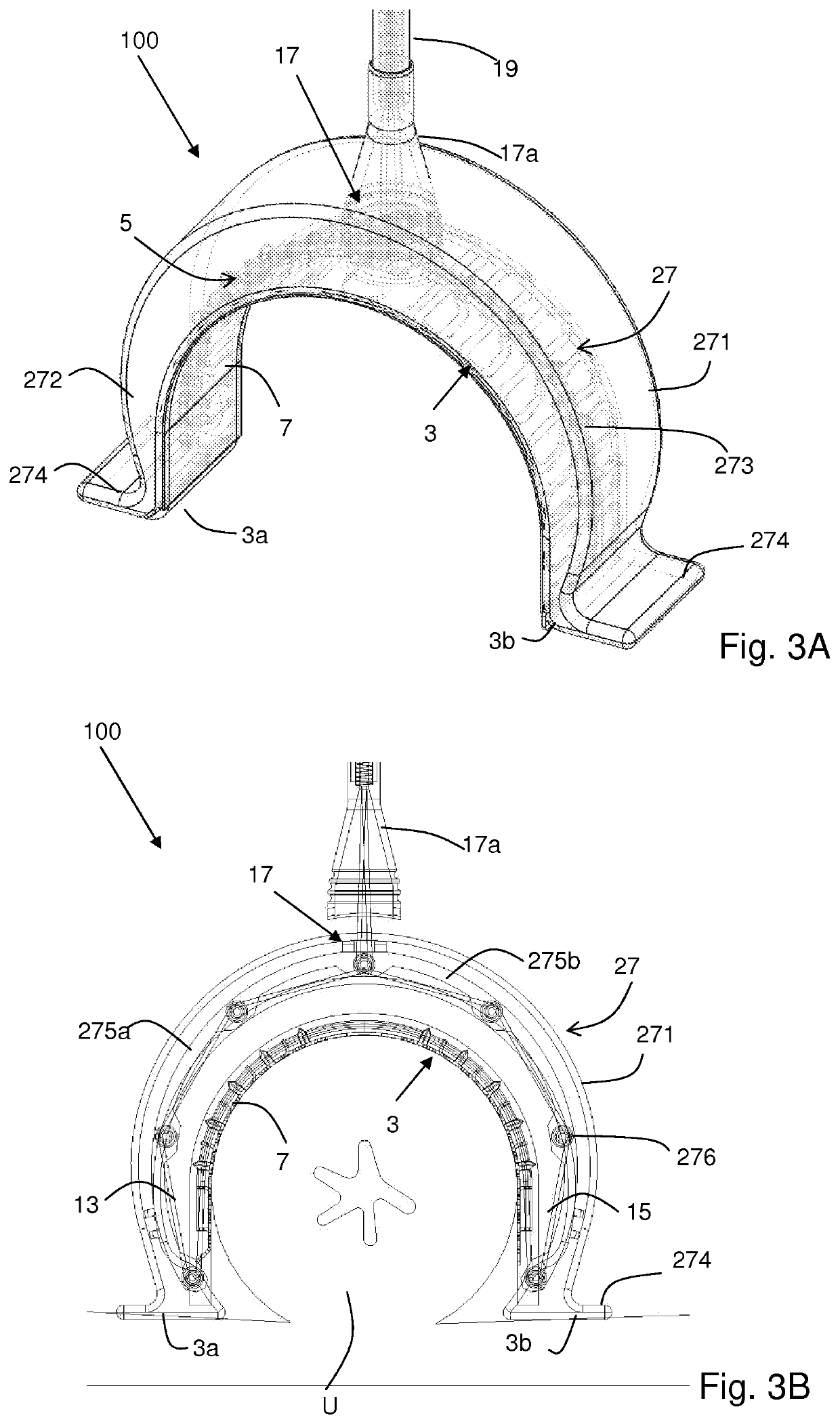
[0050]FIG. 1 illustrates an artificial contractile structure 1 according to the invention. Such artificial contractile structures are often referred to as “cuffs”, and this term will be used interchangeably with “artificial contractile structure” in the following description for ease of readability.
[0051]The cuff 1 comprises an elongated member 3, i.e. a long, relatively thin member which may be a strip of substantially flat cross-section or may have a V-shaped, U-shaped or corrugated cross-section (or similar), comprising a resilient core 5 and a biocompatible outer sheath 7. The elongated member 3 would typically be considered as being substantially flat, even if it comprises longitudinal corrugations or other similar structures; in other words, “flat” is not to be construed as being synonymous with “planar”.
[0052]In the illustrated embodiment, the resilient core 5 is formed as a lattice of a resilient, elastic material such as a metal, however certain polymers such as SMPs (Shape...
PUM
 Login to View More
 Abstract
Description
Claims
Application Information
 Login to View More