
Light shading composite film and preparation method and application thereof
a composite film and light shading technology, applied in the field of light shading composite films, can solve the problems of affecting the blocking effect, easy blistering and falling off of the coating, and deterioration of the drapability and air permeability of the coated fabric, and achieves easy industrialization production, low cost, and high production efficiency.
- Summary
- Abstract
- Description
- Claims
- Application Information
AI Technical Summary
Benefits of technology
Problems solved by technology
Method used
Image

Examples
example 1
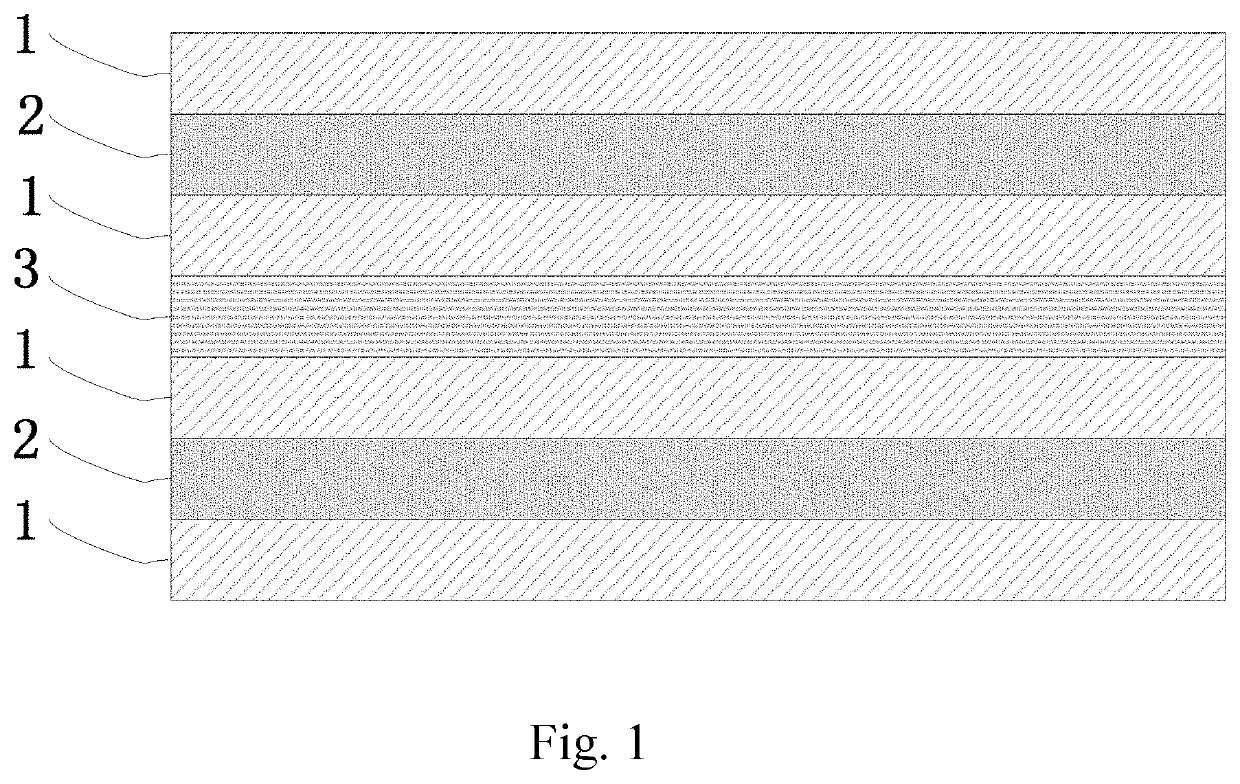
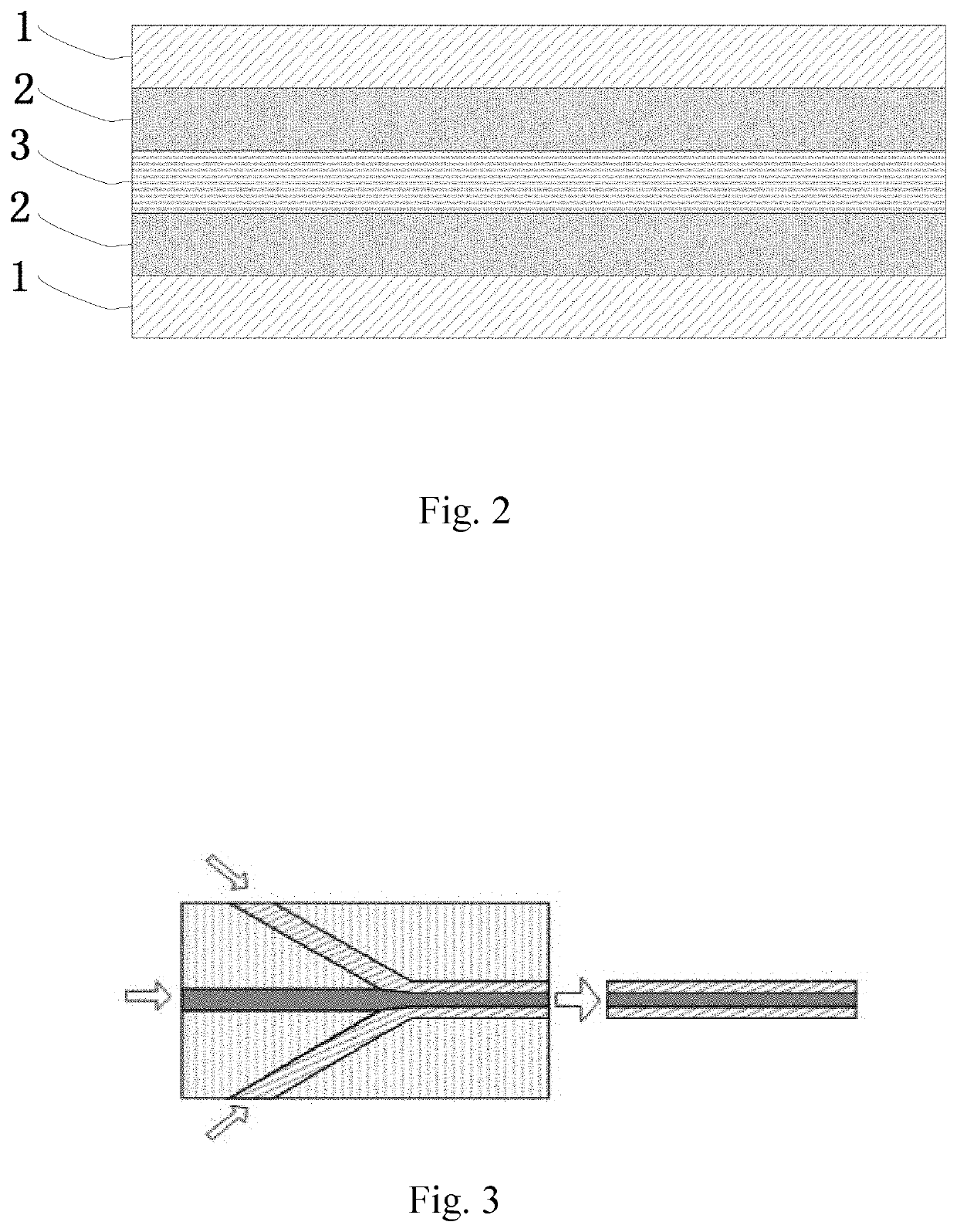
[0054]The dried PE resin raw material was mixed with the light-reflective particles and the light-absorptive particles, respectively, wherein the weight ratio of the PE resin to the light-reflective particles was 64:35, and the weight ratio of the PE resin to the light-absorptive particles was 69:30, and then 1.0 parts by weight of a dispersant EHBA was added. After well mixing, the mixtures were added into a three-screw extruder, ensuring that the light-reflective particle mixed resin, light-absorptive particle mixed resin, and light-reflective particle mixed resin were respectively guided to the upper, middle and lower layers of the mouth of the extrusion mold, as shown in FIG. 3.
[0055]The temperature of the three-screw extruder was controlled so that the temperature in the feed heating region was 30° C. higher than the melting point of the resin, and the temperature of the three-input co-extrusion T-shape mold was controlled to be 25° C. higher than the melting point.
[0056]The fi...
example 2
[0059]The dried PE resin raw material was mixed with the light-reflective particles and the light-absorptive particles, respectively, wherein the weight ratio of the PE resin to the light-reflective particles was 70:29, and the weight ratio of the PE resin to the light-absorptive particles was 64:35, and then 1.0 parts by weight of a dispersant EHBA was added. After well mixing, the mixtures were added into a twin-screw extruder, ensuring that the light-reflective particle mixed resin and the light-absorptive particle mixed resin were respectively guided to the upper and lower layers of the mouth of the extrusion mold, as shown in FIG. 4.
[0060]The temperature of the twin-screw extruder was controlled so that the temperature in the feed heating region was 30° C. higher than the melting point of the resin, and the temperature of the two-input co-extrusion single-line mold was controlled to be 25° C. higher than the melting point.
[0061]The film extruded by the two-input co-extrusion si...
example 3
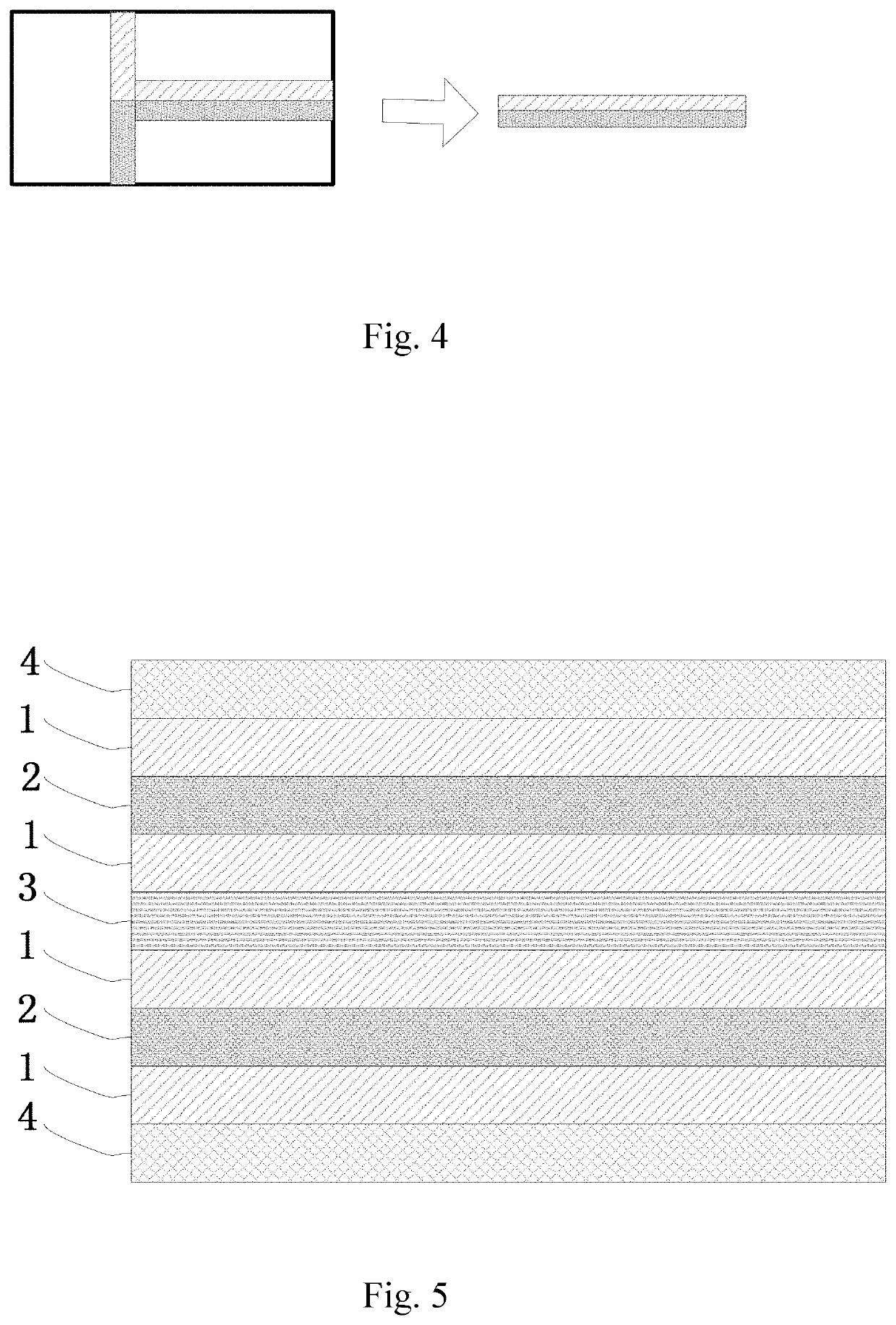
[0076]In this example, the light blocking composite film in Example 1 is used to prepare a double-sided composite light blocking fabric having PET fabrics on both sides of the light blocking composite film. The preparation method comprises:
[0077]First, performing a preliminary corona surface treatment on the light blocking composite film in Example 1;
[0078]Second, melting a moisture curing reactive type polyurethane hot melt adhesive at 95° C., injecting it into a thermal laminating machine to laminate a surface of the light blocking composite film with a PET fabric, and curing for 24 h;
[0079]Third, laminating another surface of the light blocking composite film with a PET fabric using the moisture curing reactive type polyurethane hot melt adhesive, and curing for 24 h to obtain a double-sided composite light blocking fabric.
PUM
| Property | Measurement | Unit |
|---|---|---|
| thicknesses | aaaaa | aaaaa |
| thicknesses | aaaaa | aaaaa |
| thicknesses | aaaaa | aaaaa |
Abstract
Description
Claims
Application Information
 Login to View More