
Replaceable trolling motor transducer
a technology of trolling motor and transducer, which is applied in the direction of marine propulsion, vessel construction, instruments, etc., can solve the problems of transducer failure, transducer failure from internal electrical or mechanical problems, and inoperable sonar depth finders, etc., to achieve the effect of reducing noise and disruption of water
- Summary
- Abstract
- Description
- Claims
- Application Information
AI Technical Summary
Benefits of technology
Problems solved by technology
Method used
Image

Examples
Embodiment Construction
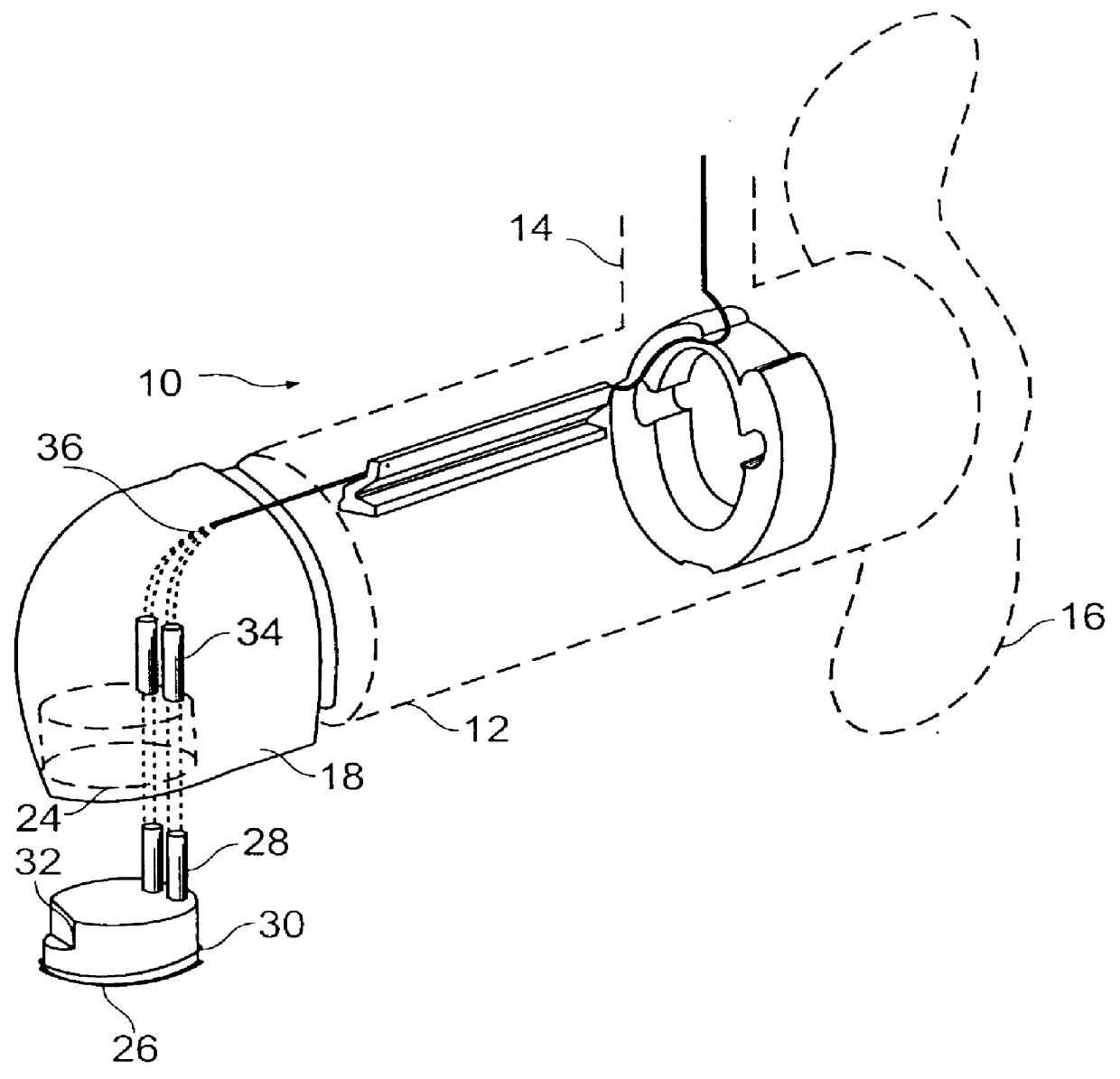
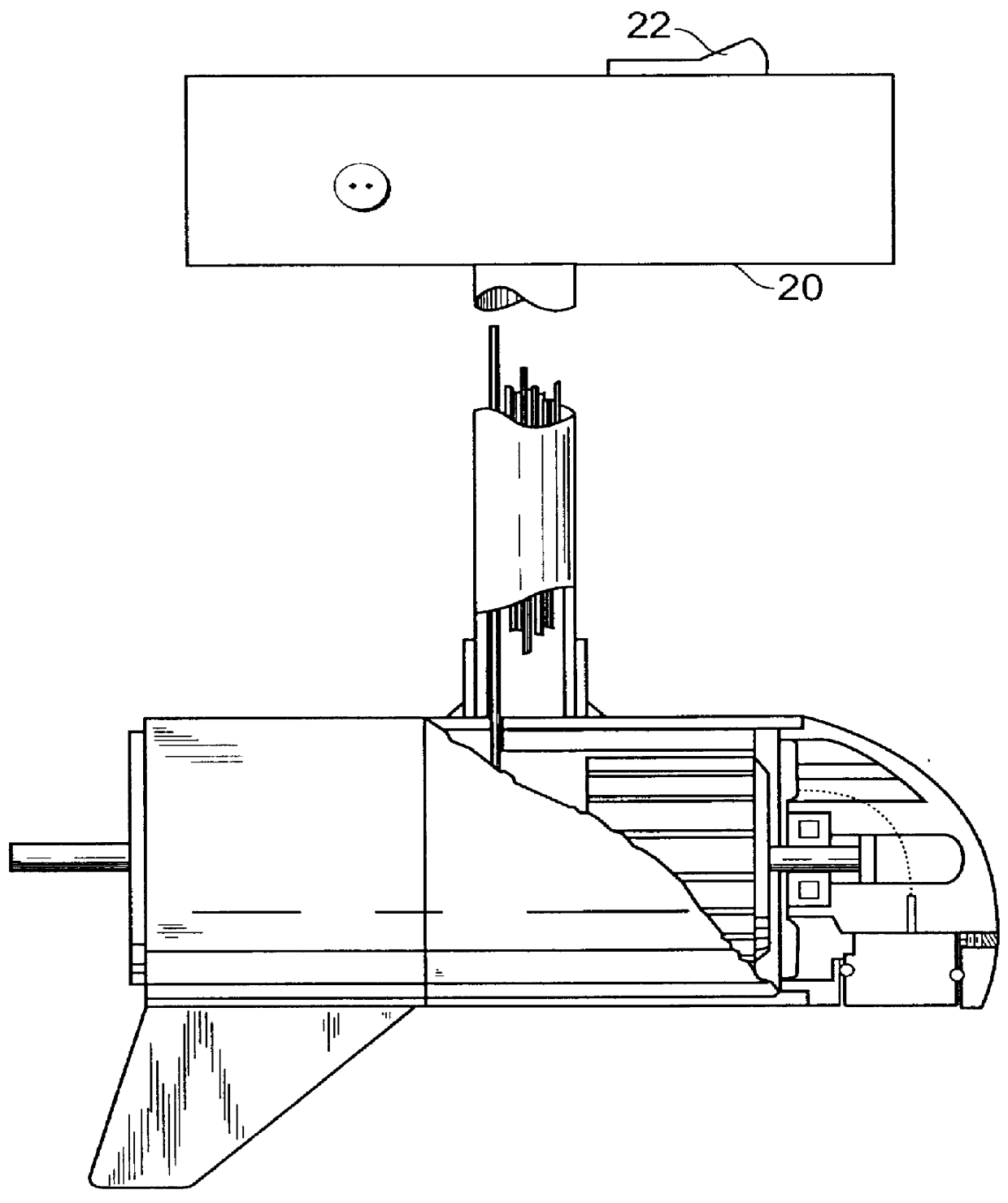
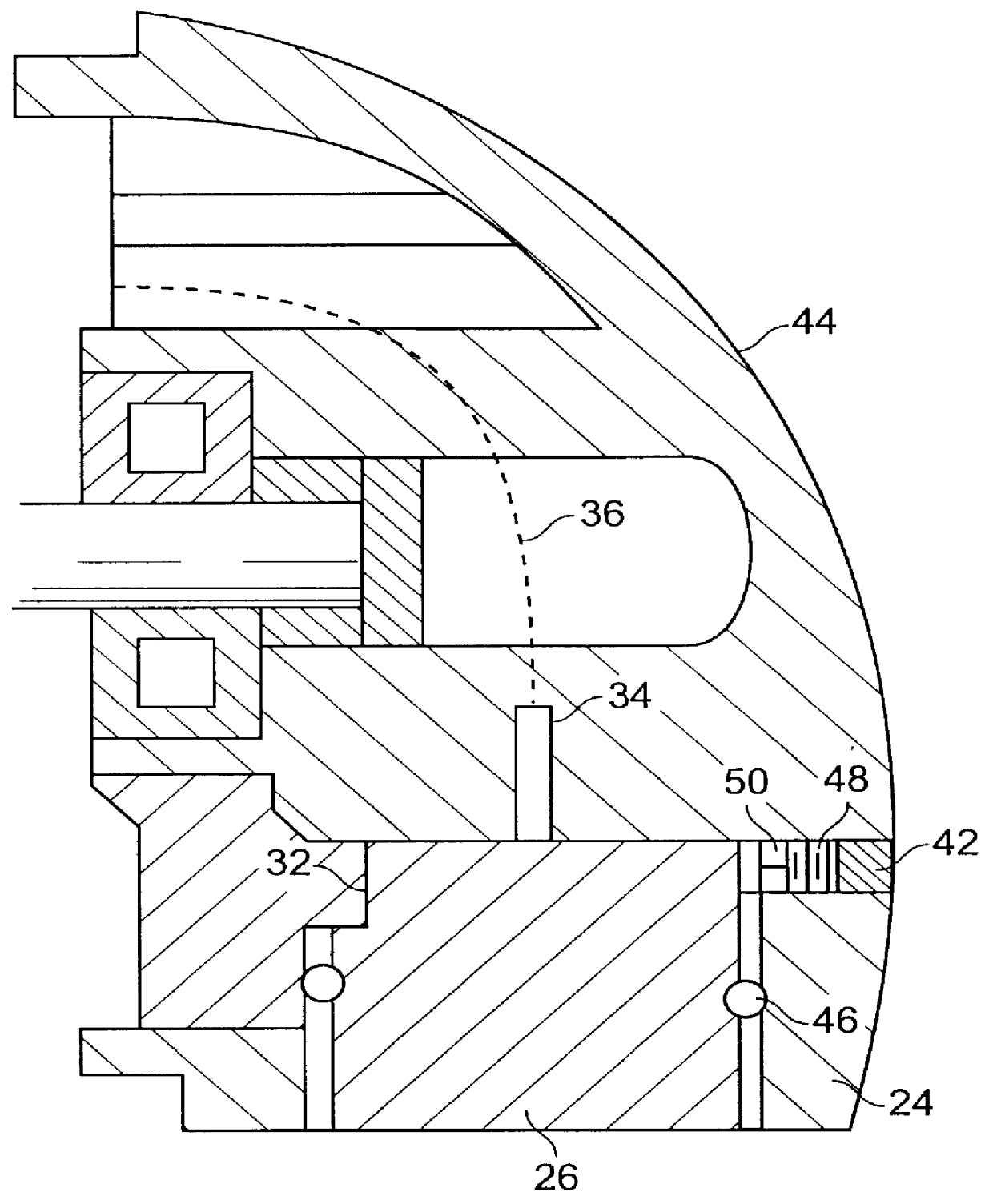
According to the present invention, the trolling motor is provided with a nose-cone or end cap for the motor housing which incorporates the transducer mounting. This nose-cone or end cap may also provide a mounting for a bearing which rotationally supports one end of the motor shaft. On the lower side of the nose-cone or end cap, a cylindrical recess is provided which is of a size just slightly larger than that of the transducer puck. A pair of electrical contacts are provided in the recess for receiving corresponding terminals on the transducer puck for connecting the transducer crystal to the depth finder control head.
A cylindrical transducer puck is provided, and has a flat end face which will be flush with the bottom of the nose-cone after the puck has been inserted into the recess. An O-ring surrounds the cylindrical puck to seal the puck inside the recess and keep water from entering into the motor housing when the motor is submerged for use.
Although the O-ring provides a very...
PUM
 Login to View More
 Abstract
Description
Claims
Application Information
 Login to View More