Method and combustor for combusting hydrogen

US6267585B1Inactive Publication Date: 2001-07-31DAIMLER CHRYSLER AEROSPACE AIRBUS
17 Cites 72 Cited by

Patent Information

Authority / Receiving Office
US · United States
Current Assignee / Owner
Publication Date
2001-07-31
Estimated Expiration
Not applicable · inactive patent

Smart Images

  • Figure 1
    Figure 1
  • Figure 2
    Figure 2
  • Figure 3
    Figure 3
Patent Text Reader

Abstract

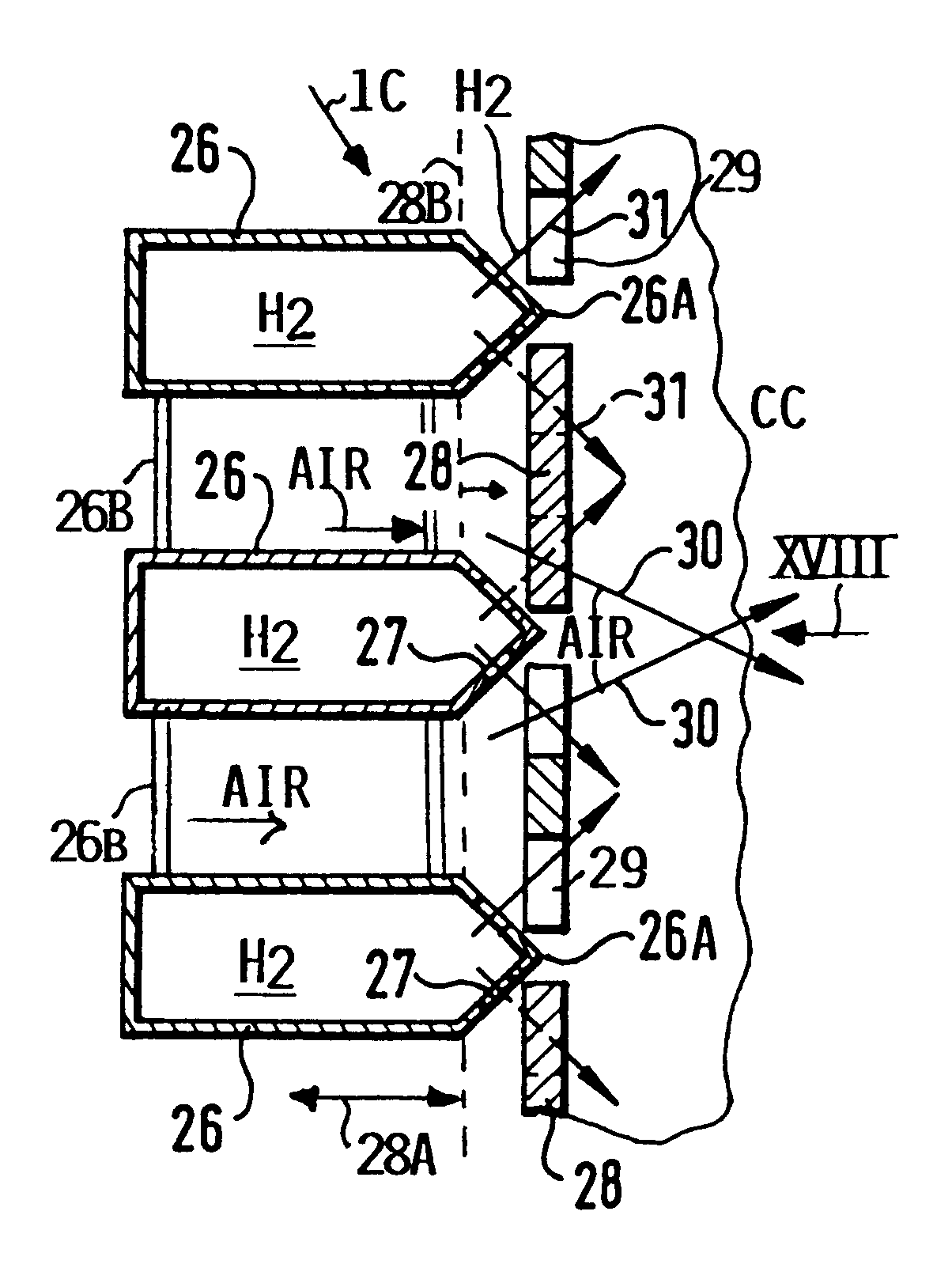
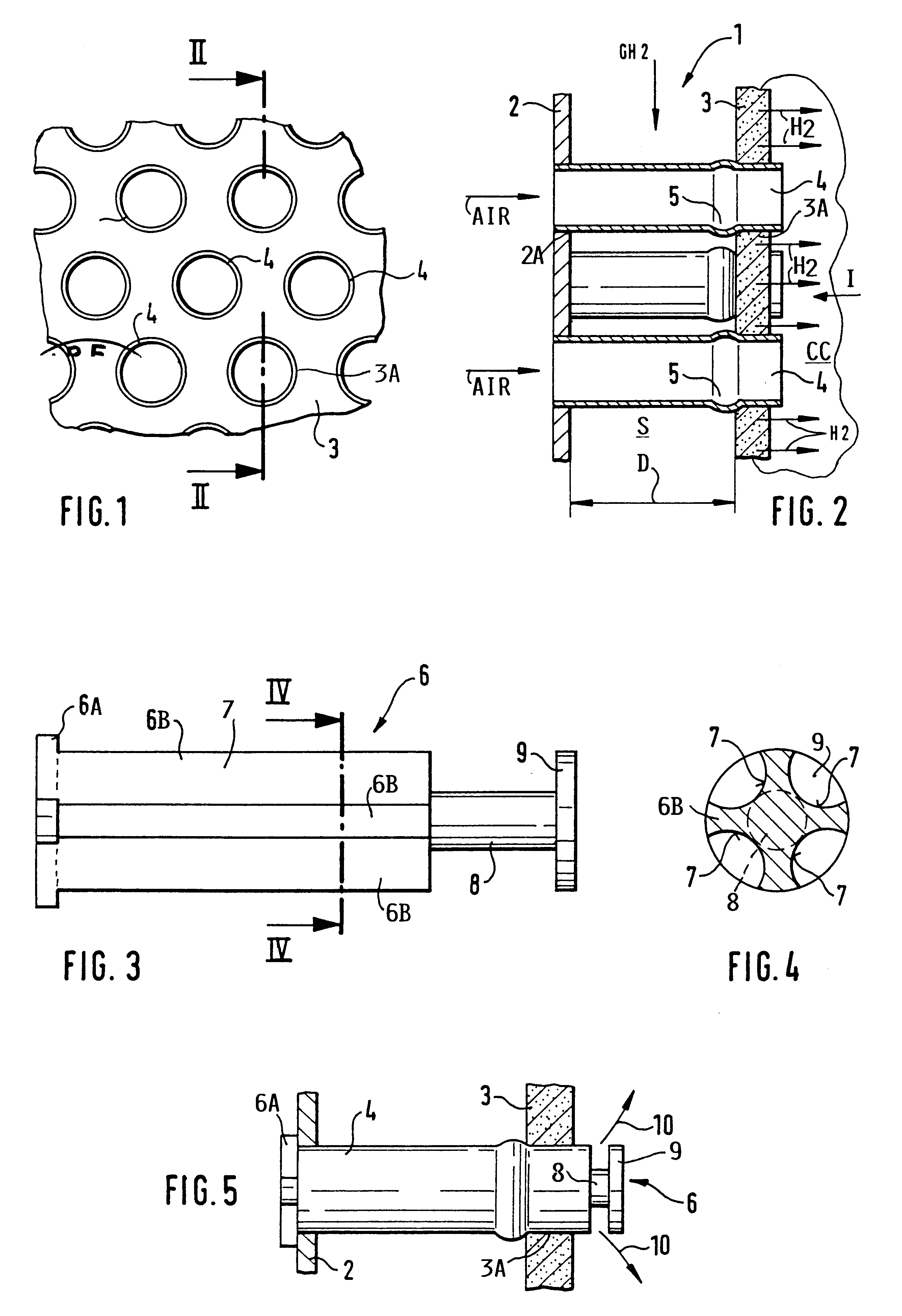
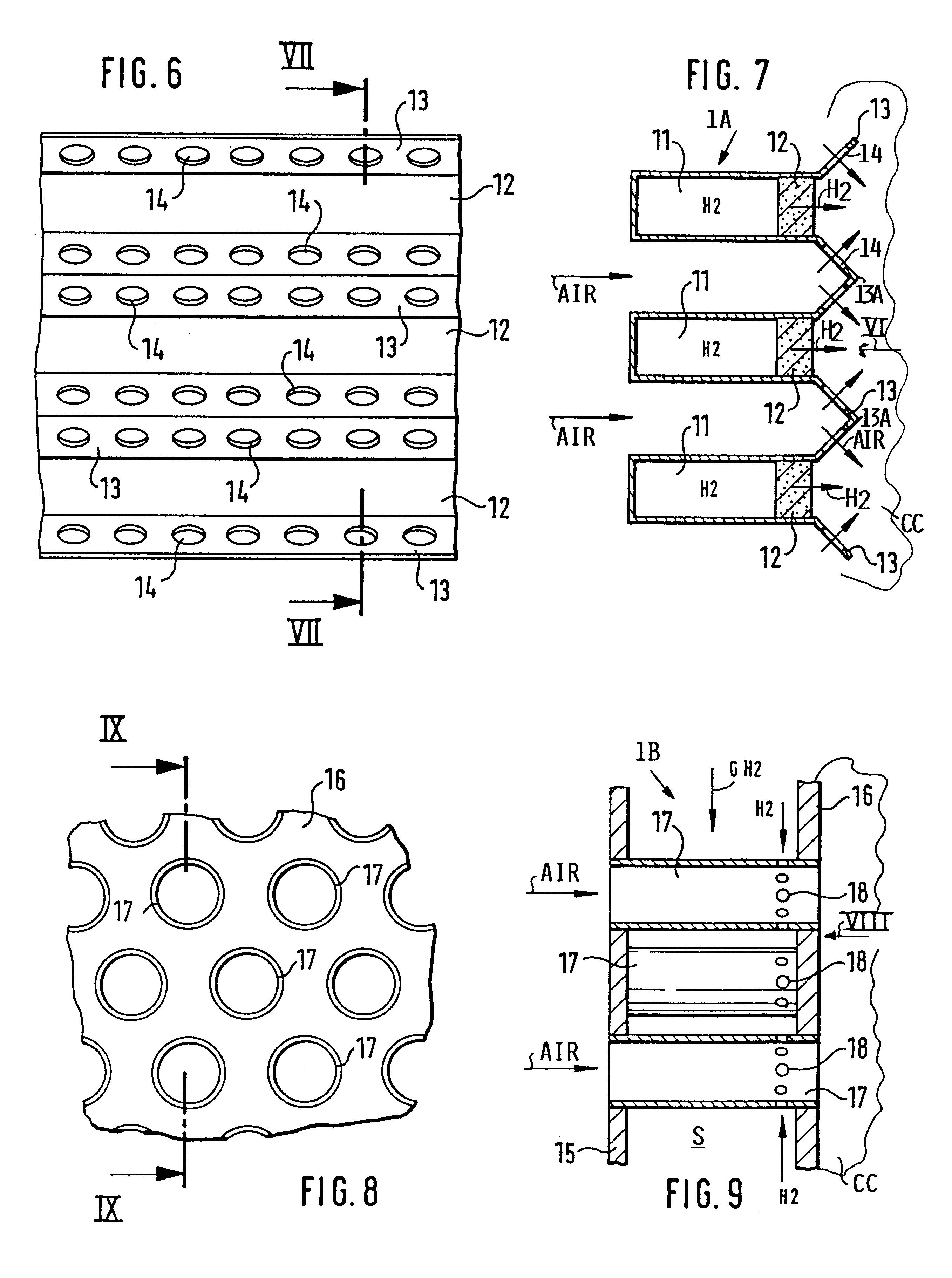
A plate burner for combusting hydrogen with air as an oxidizer forms a wall portion of a combustion chamber for example of a gas turbine. The plate burner is so constructed that air and hydrogen are separately guided to the downstream surface area facing into the combustion chamber for forming a large number of diffusive microcombustion flames, thus achieving a very low mixing scale simultaneously with a high nixing intensity. The number of diffusive micorcombustion flames is so selected that the NOx content in the exhaust gas from the combustion chamber is at the most 10x10-6 cubic foot per cubic foot of exhaust gas. The hydrogen enters the entrance area into the combustion chamber either through a porous wall, and air is injected into the hydrogen environment to form inverse diffusive microcombustion flames or the hydrogen is injected through a multitude of fine holes into high velocity air jets forming regular diffusion flames. In both instances, the formation of NOx in the exhaust gas during combustion is reduced to the above level or below.
Need to check novelty before this filing date? Find Prior Art

Description

The invention relates to a method and burner or combustor for combusting hydrogen by diffusion combustion using air as an oxidizer. This method and combustor are especially useful in connection with gas turbine combustion chambers in aircraft engines.BACKGROUND INFORMATIONThe use of hydrogen (H.sub.2) as fuel for burners of all kinds, for example for combustors in combustion chambers of gas turbines, has the advantage of an especially high reactivity and thus an extraordinary large stability in the combustion. This stable combustion is achieved even if there is an excess air supply as is the case in the combustion chambers of gas turbines.Publications relating to combustion techniques by Heywood and Mikus show that a reduction in the formation of nitrogen oxides (NO.sub.x) can be achieved in combustion flames with a sufficiently high air excess if the mixing quality of air and fuel is increased. According to Heywood and Mikus, the NO.sub.x formation can be minimized by a completely ...

Examples

Embodiment Construction

The invention will first be explained with reference to FIG. 24 which illustrates test results performed with a gas turbine engine model A 320 APUGTCP 36-300. FIG. 24 shows the content of NO.sub.x in cubic foot.times.10.sup.-6 per cubic foot of exhaust gas as a function of the flame density per square inch of the combustor surface facing into the combustion chamber. The tests were made under atmospheric conditions which means that the absolute Nox levels measured in the tests are based on atmospheric burner entrance conditions. The combustor had a surface area of 67.9 square inches facing into the combustion chamber. In its original conventional form the combustor had six air injection nozzles distributed over the combustor surface providing 0.088 diffusion flames per square inch. Tests were run with the conventional combustor using hydrogen fuel in one test and kerosene fuel in another test. The NO.sub.x content in the exhaust gas was the same for both fuels, namely as shown at poi...