[0021]Thermally insulating the outer baffles and outer surfaces of the frame to avoid
heat losses to the outside air.
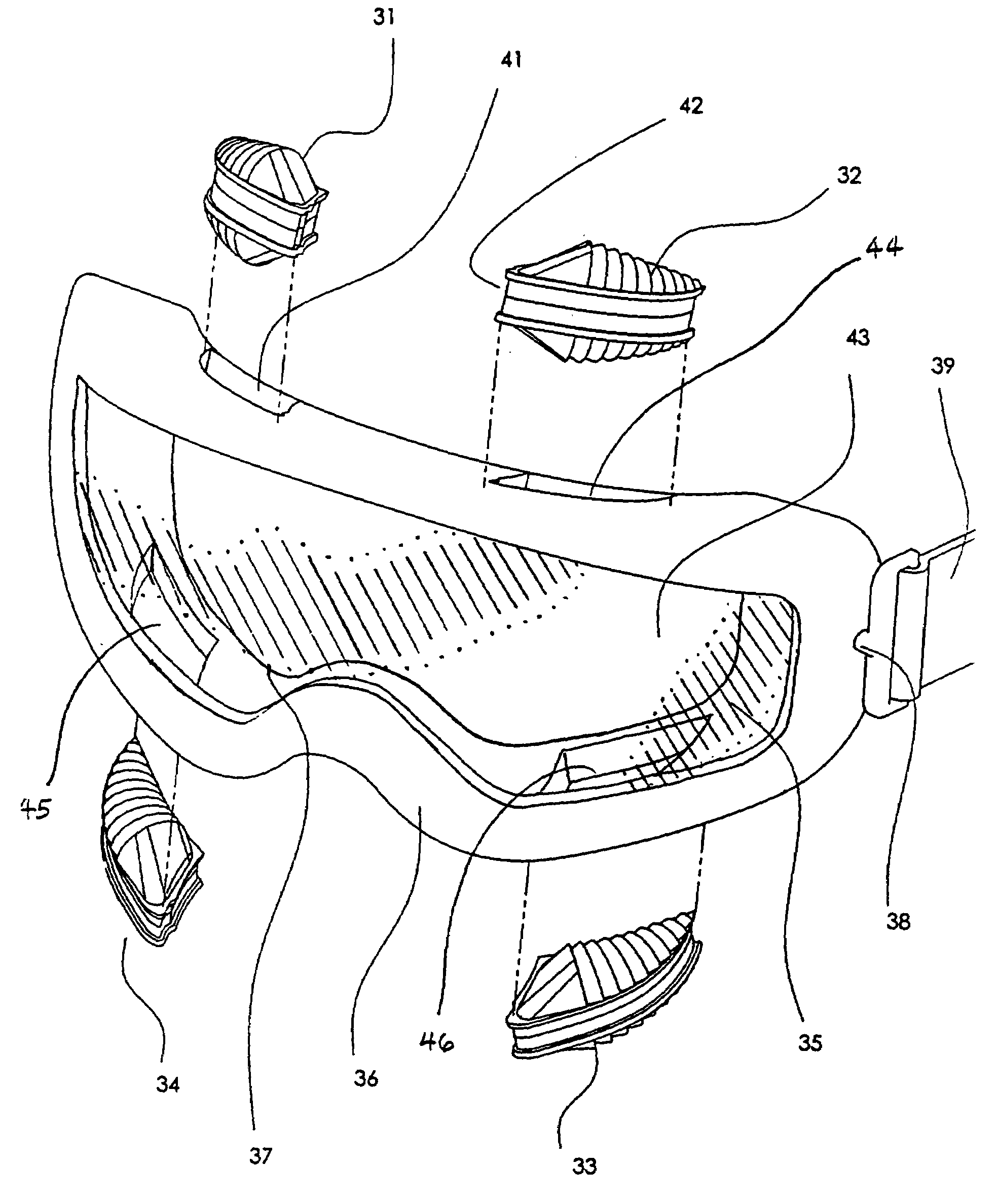
[0023]Another feature is to form an upper air outlet channel with low
flow impedance, block
snow ingress, move
liquid water away from the face-
lens space, and are shielded from airflow effects outside the goggle. The upper air vent does not significantly need to have
heat transfer from the body to clear the lens. It does help to avoid condensation in the top exit and makes a small contribution to the
chimney effect. The two critical functions of the upper outlet is to let the
moisture laden warm air vent out to the
atmosphere and prevent, dust,
snow, or
liquid water from getting back into the goggle. A
condensed water channel to wick or draw
condensed water can be created in the upper vents to move water off the top of the goggles.
[0025]By using electrostatic
filtration the smaller
ice crystals or particles can be attracted to the filter effectively increasing the
filtration capacity without increasing the airflow resistance of the filter. When the air is very cold the ice particles can bounce off the
open cell foams and not condense. Therefore, the electrostatic filter can hold the ice particles to the surface of the electret fibers until they either melt, or
conglomerate with other particles and improve the airflow characteristics of the goggle while still obtaining a high degree of particulate
filtration.
[0026]
Electret filtration uses materials such as
polypropylene,
polystyrene,
polycarbonate, and FEP TEFLON, poylvinylidenefluoride (PVF2) that, in intermittent contact with a strong
electric field or
corona discharge, become charged and thereby have a permanent
electric field or a
resonance time in the order of years1. When the particles of micron and sub-micron dimensions are in the presence of the
electric field of the electret, due to the intrinsic charge of
small particles, they will be attracted to the surface of the electret and stick. While most of the micron dimension and smaller particles typically will be charged, the uncharged particles can be charged and accelerated with strong electric fields.
High voltage corona discharges from
metal points and small
diameter wires, sharp plate edges, or plates can be used to charge the dust and allow it to be attracted to filter surfaces. The
dust particles are attracted to the surrounding surfaces. Once they are on the surface of the electret they can
conglomerate with other particles and effectively are removed from the air
stream. Long lifetime charged electret filtration products for air filters have been used for many years to remove airborne dust particle with enhanced performance over the range of 0.1 to 2 microns micron
diameter particles (U.S. Pat. No. 4,883,052).
[0028]To obtain a high
figure of merit for a filter, low
energy expenditure and high maximum filter velocity is desirable. Thus, it is best to minimize the flow velocity through the filter, by having the largest possible area for the filter with the largest possible pore aperture dimension in the pores of the filter while still having sufficient depth to attract the particles. Folded and
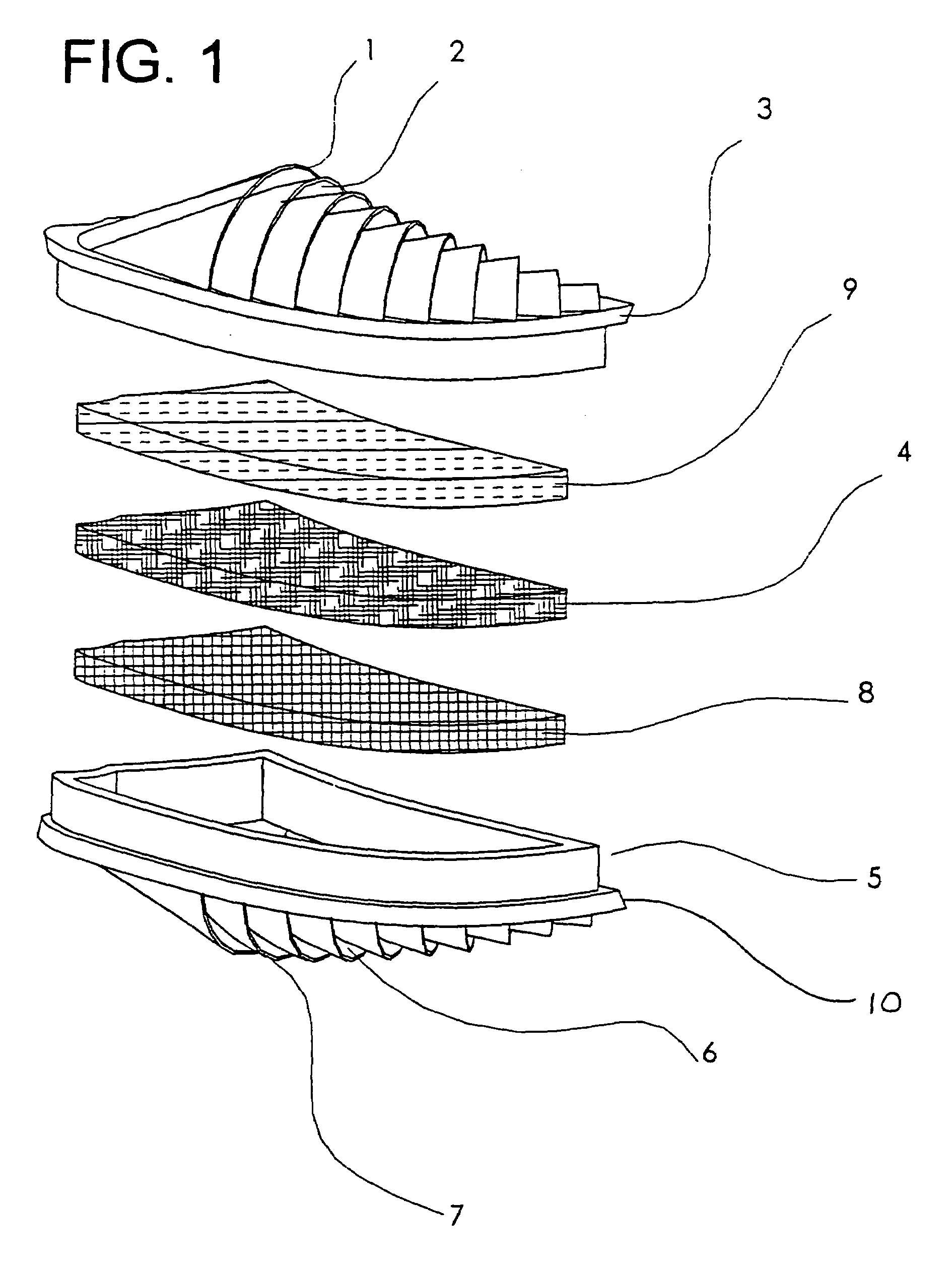
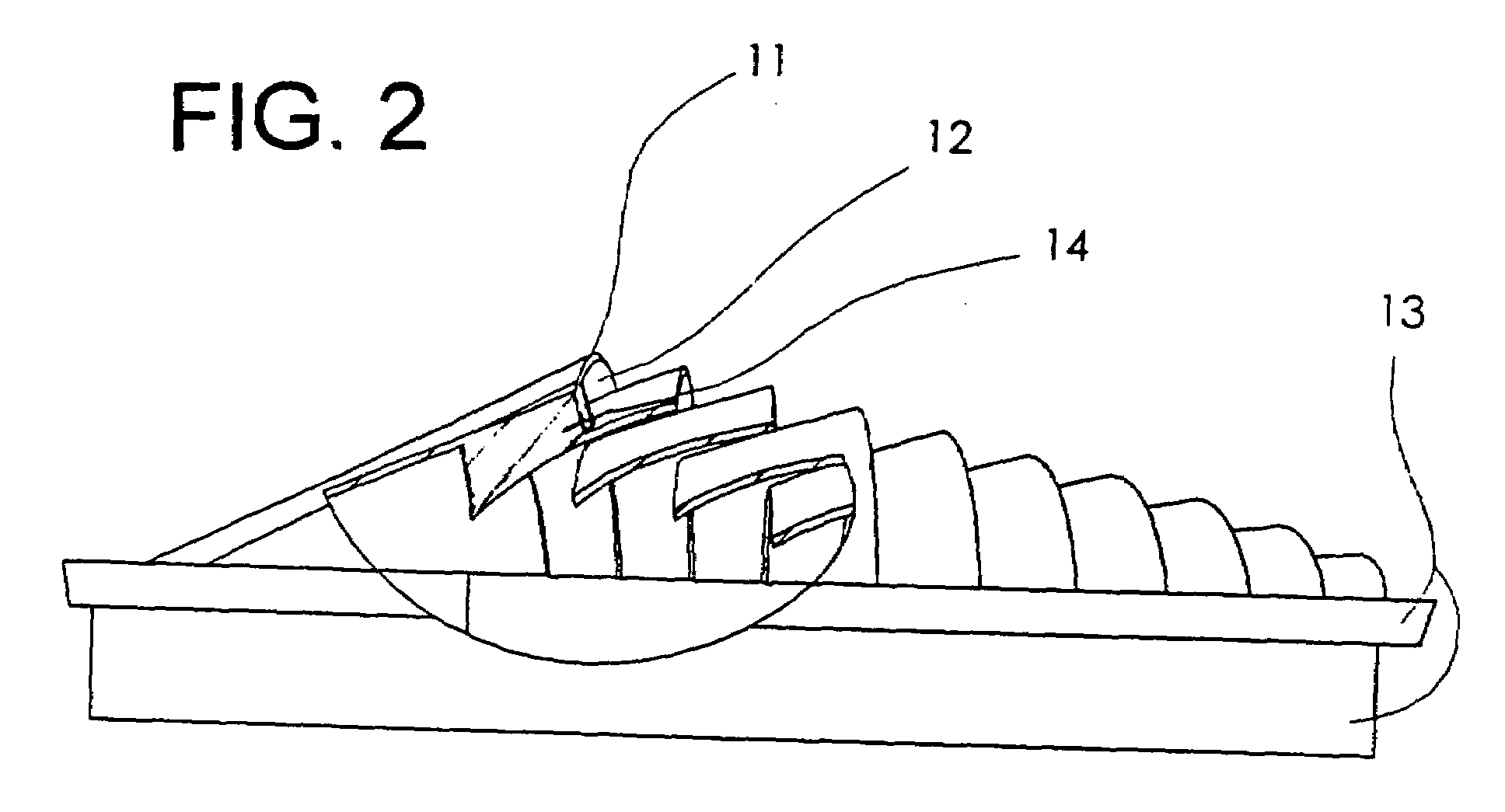
large pore filters, and large area filters are better than thin flat small pore filters. In designing the filters for eye wear filtration, they should maximize the cross-sectional area to the flow and depth. The filters may fill much of the perimeter area between the lens and the face to maximize the flow area. Filters can consist of charged
honeycomb or corrugated electret structures,
open cell charged electret foams, sheets of electrets, molded parts, a liner around the perimeter of the lenses, or loosely packed fibrous electrets.
[0029]By combining efficient electret filtration with thermal
heat transfer in the frame of the goggle, more dust-free and non-
fogging goggles or glasses can be achieved. In this invention by forming the outer baffles, filters and outer surfaces of the frame with low
thermal conductivity materials, and by forming the perimeter of the goggles, forming the outer baffles, filters and outer surfaces of the frame with low
thermal conductivity materials, the perimeter of the goggles reduces
heat losses. Forming the interior baffles, filter and inner frame surfaces with thermally
conductive materials increases the
heat transfer from the face to incoming air and inner lens. This reduces fogging by increasing the temperature of the inner lens and increases the
moisture removal rate. Thus, the combined efficient electret filtration and
thermal transfer leads to an improved dust exclusion and non-fogging
eyewear.


 Login to View More
  Login to View More