
Treatment of congestive heart failure
a congestive heart failure and vasopressin technology, applied in the field of congestive heart failure treatment, can solve the problems of increased systemic vascular resistance, decreased cardiac output, and decreased mechanical ability to pump blood, so as to promote increased fluid clearance, reduce sodium excretion, and maintain electrolyte balance
- Summary
- Abstract
- Description
- Claims
- Application Information
AI Technical Summary
Benefits of technology
Problems solved by technology
Method used
Image

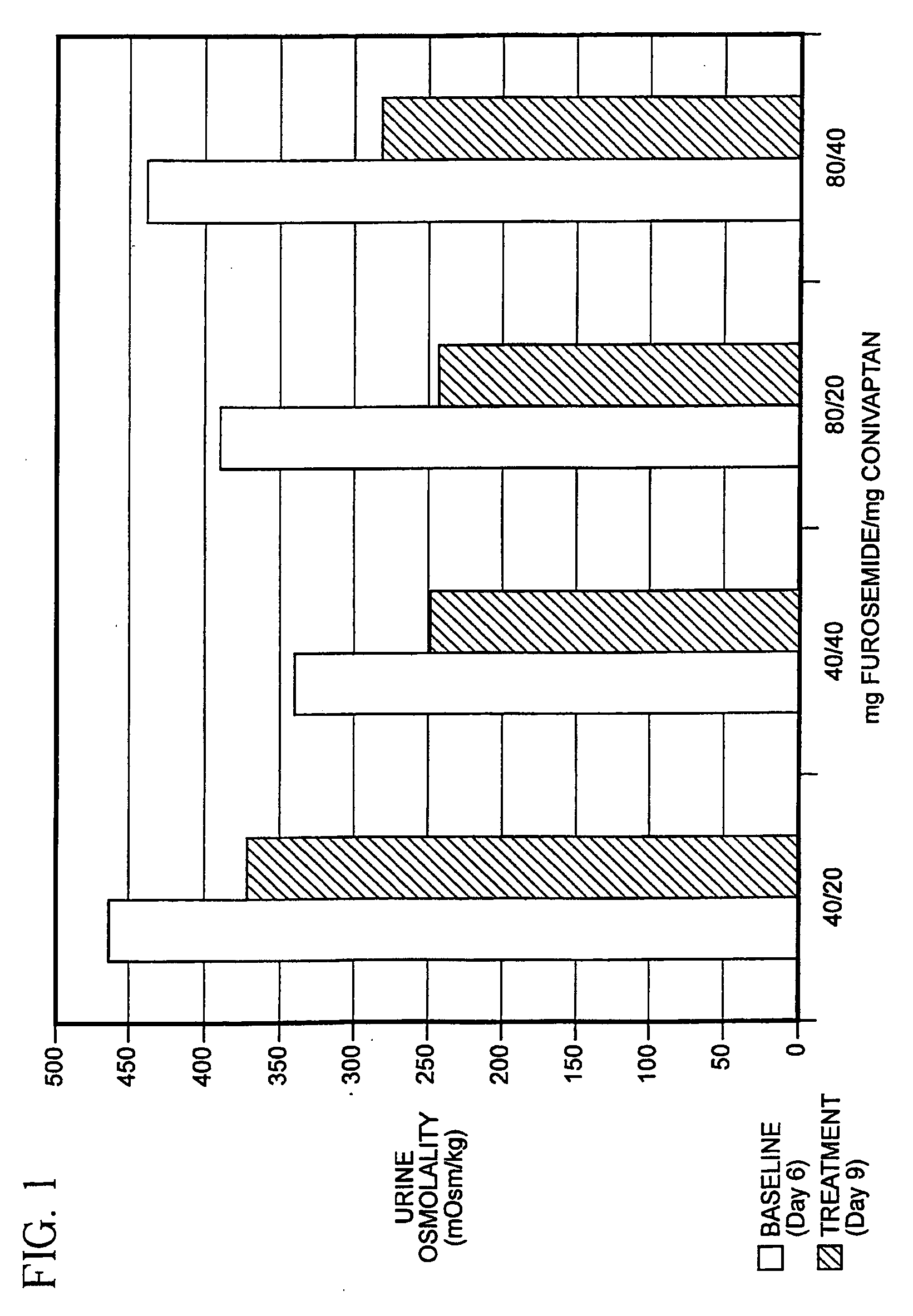
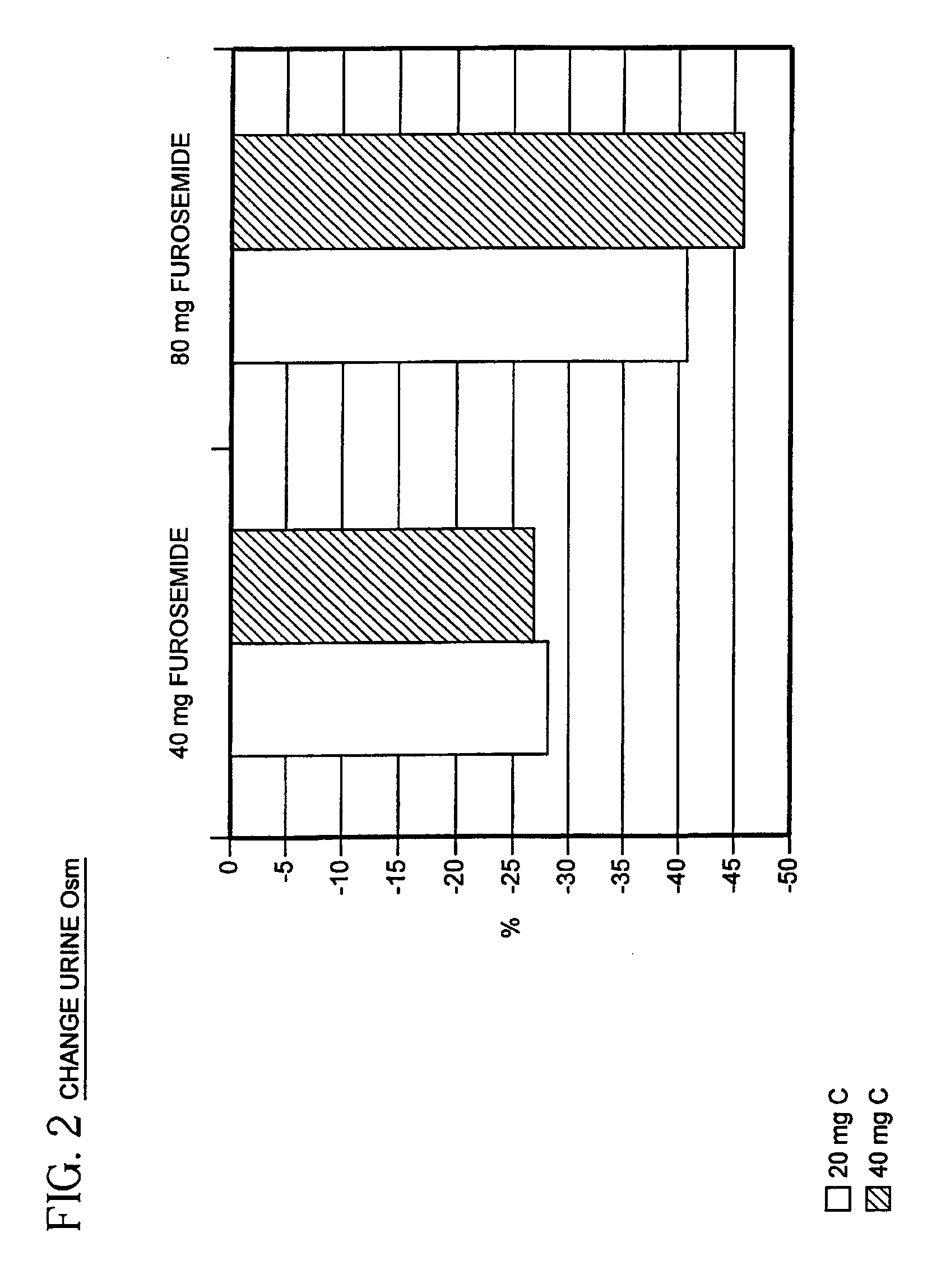
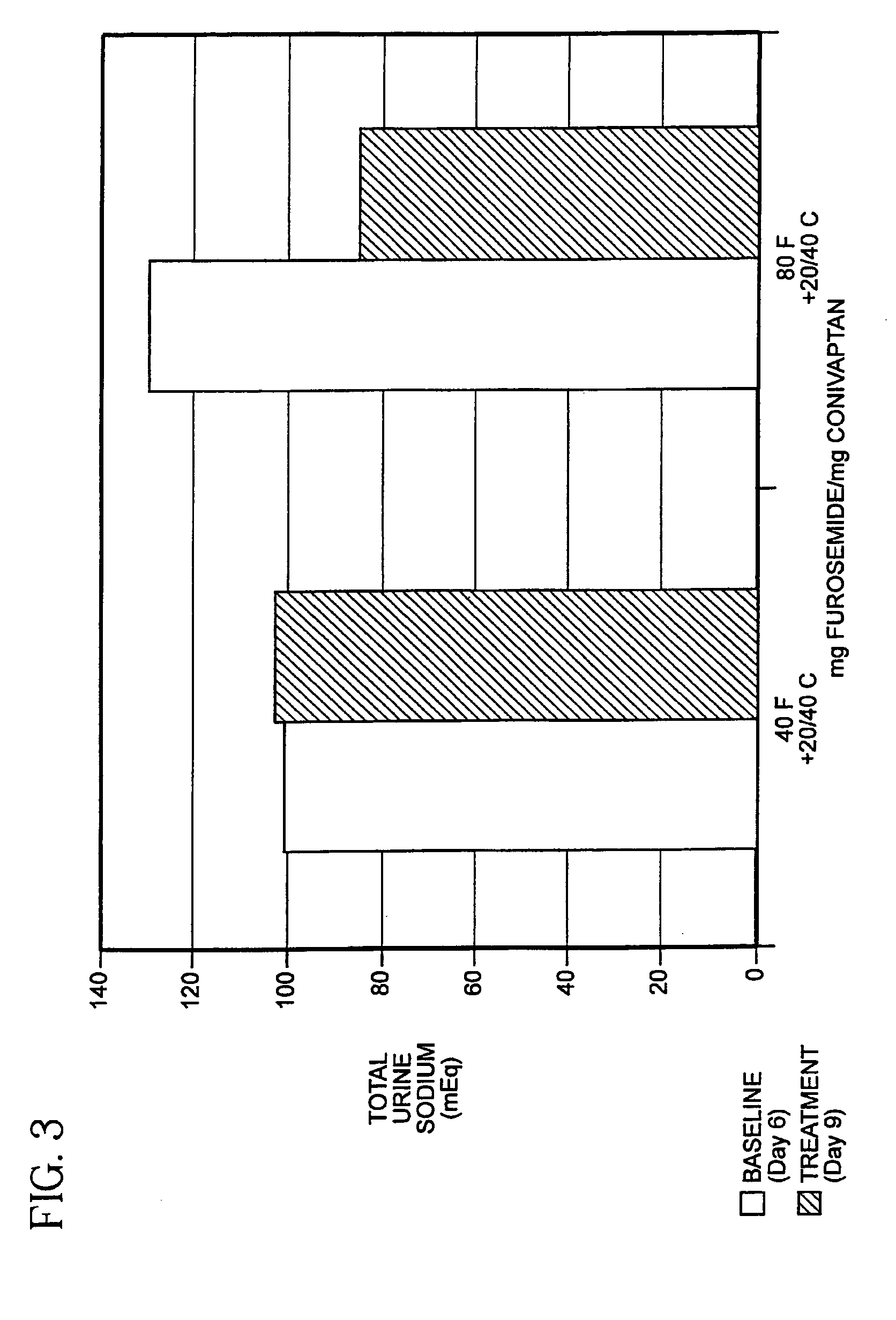
Examples
Embodiment Construction
[0038]The ability of a combination of a diuretic agent together with a vasopressin antagonist to reduce electrolyte imbalance and to treat CHF has been established in a controlled clinical trial.
[0039]Preclinical pharmacologic studies have demonstrated potent binding of YM087 conivaptan to AVP receptors and antagonism of the vascular and renal effects of AVP. YM087 has high affinity for V1A- and V2-receptors with pKi (negative log of the binding inhibition constant) of 8.20 for human V1A-receptors and 8.95 for human V2-receptors expressed in COS-1 cells.
Clinical Pharmacology
[0040]YM087 given orally to rats antagonizes the AVP-induced pressor response (V1A antagonism) in a dose-related manner, with the dose that reduced the AVP response by 50% (ID50) being 0.32 mg / kg; ID50 for a similar experiment using intravenous (IV) YM087 in dogs was 0.026 mg / kg. In conscious dogs, oral YM087 (0.03 to 0.3 mg / kg) increased urinary output (V2 antagonism) and reduced urinary osmolality (from 1500 to...
PUM
| Property | Measurement | Unit |
|---|---|---|
| time | aaaaa | aaaaa |
| time | aaaaa | aaaaa |
| time | aaaaa | aaaaa |
Abstract
Description
Claims
Application Information
 Login to View More