Static timing analysis with design-specific on chip variation de-rating factors

a timing analysis and design-specific technology, applied in the field of timing analysis of integrated circuit designs, can solve the problems of inability to run the computer, the integrated circuit designer may not be familiar with ssta tools, and the tool life may be longer, so as to reduce the run time of timing analysis

US8762908B1Inactive Publication Date: 2014-06-24CADENCE DESIGN SYST INC
10 Cites 6 Cited by

Patent Information

Authority / Receiving Office
US · United States
Patent Type
Patents(United States)
Current Assignee / Owner
Publication Date
2014-06-24
Estimated Expiration
Not applicable · inactive patent

Smart Images

  • Figure 1
    Figure 1
  • Figure 2
    Figure 2
  • Figure 3
    Figure 3
Patent Text Reader

Abstract

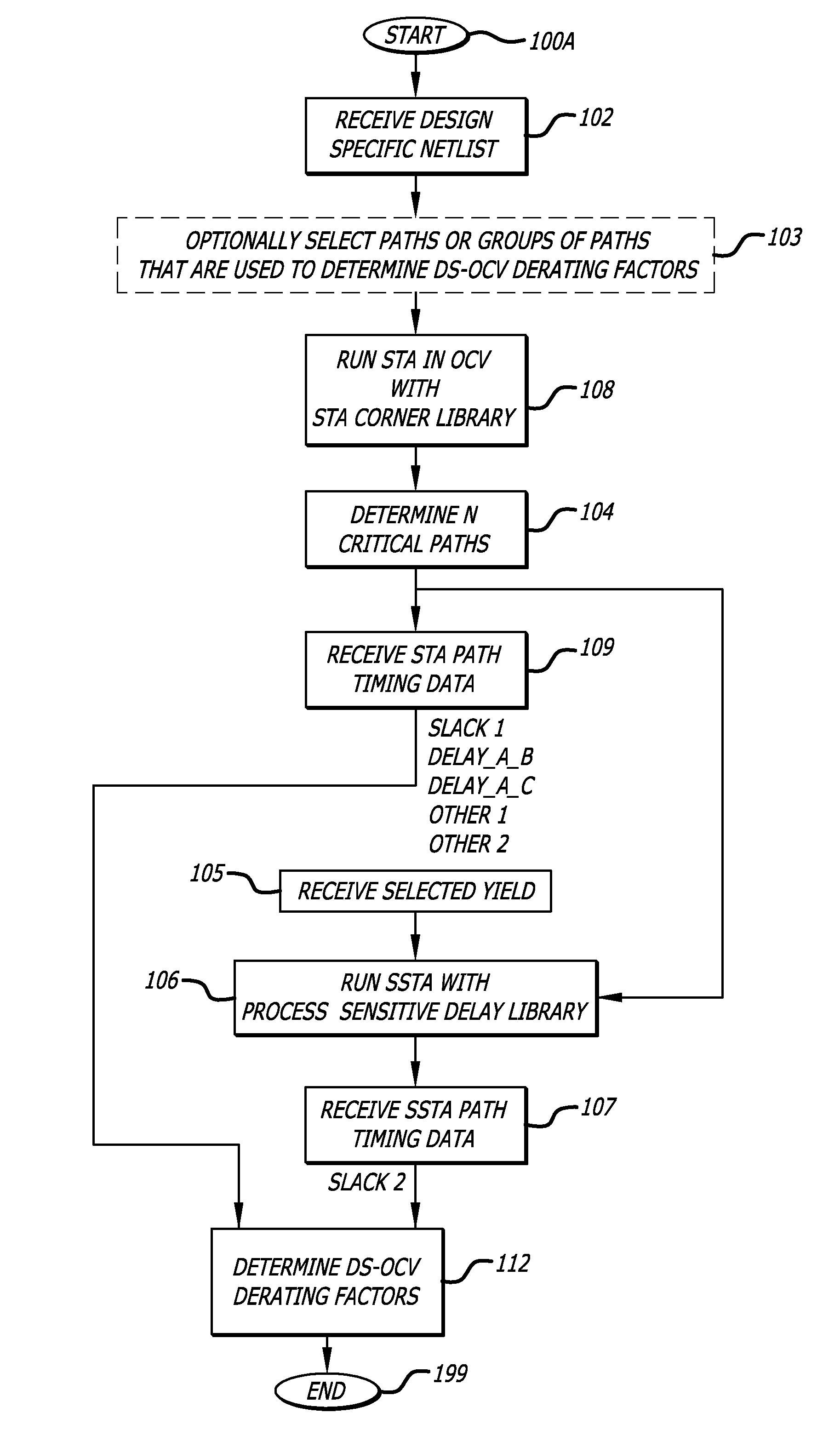
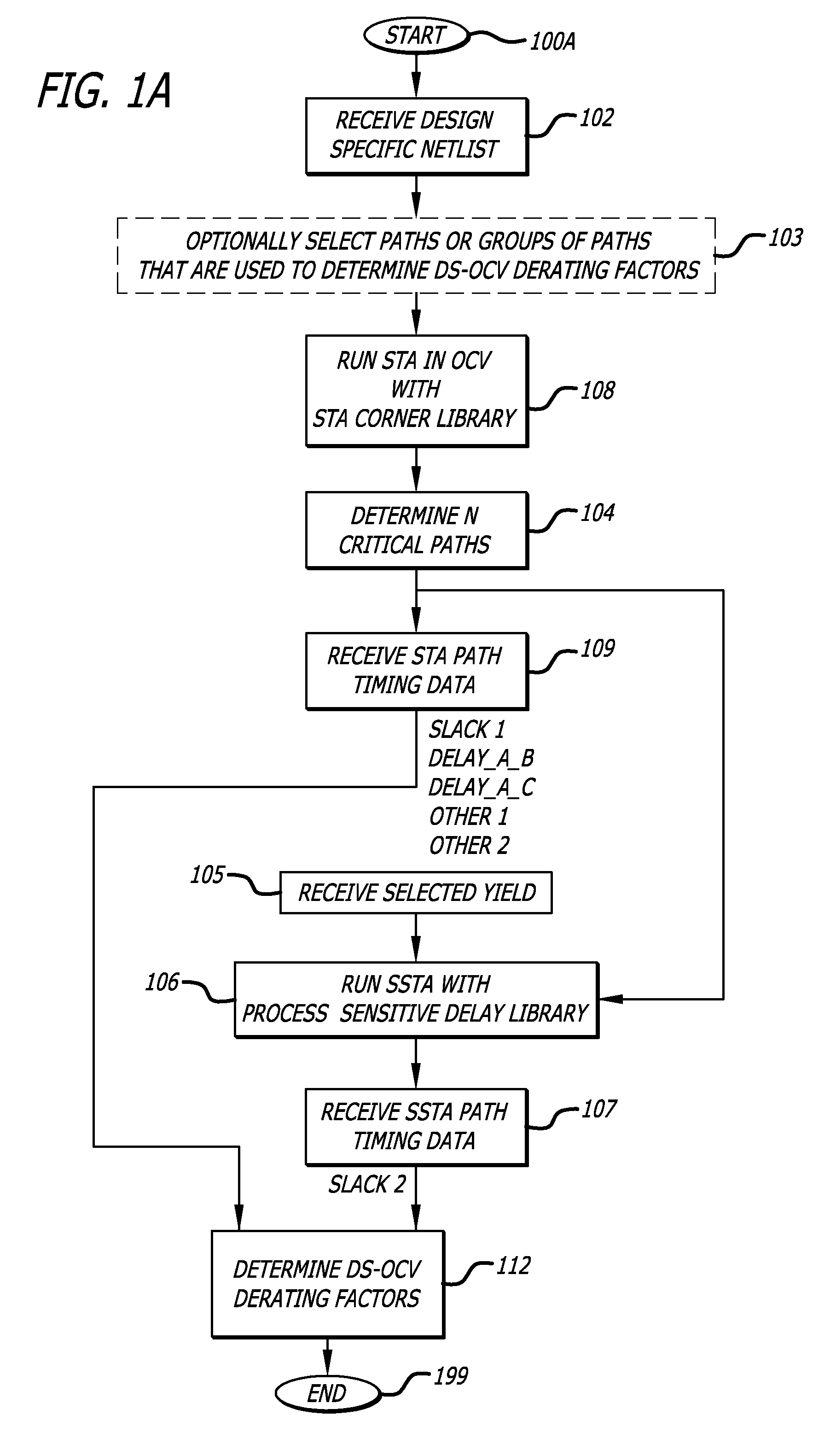
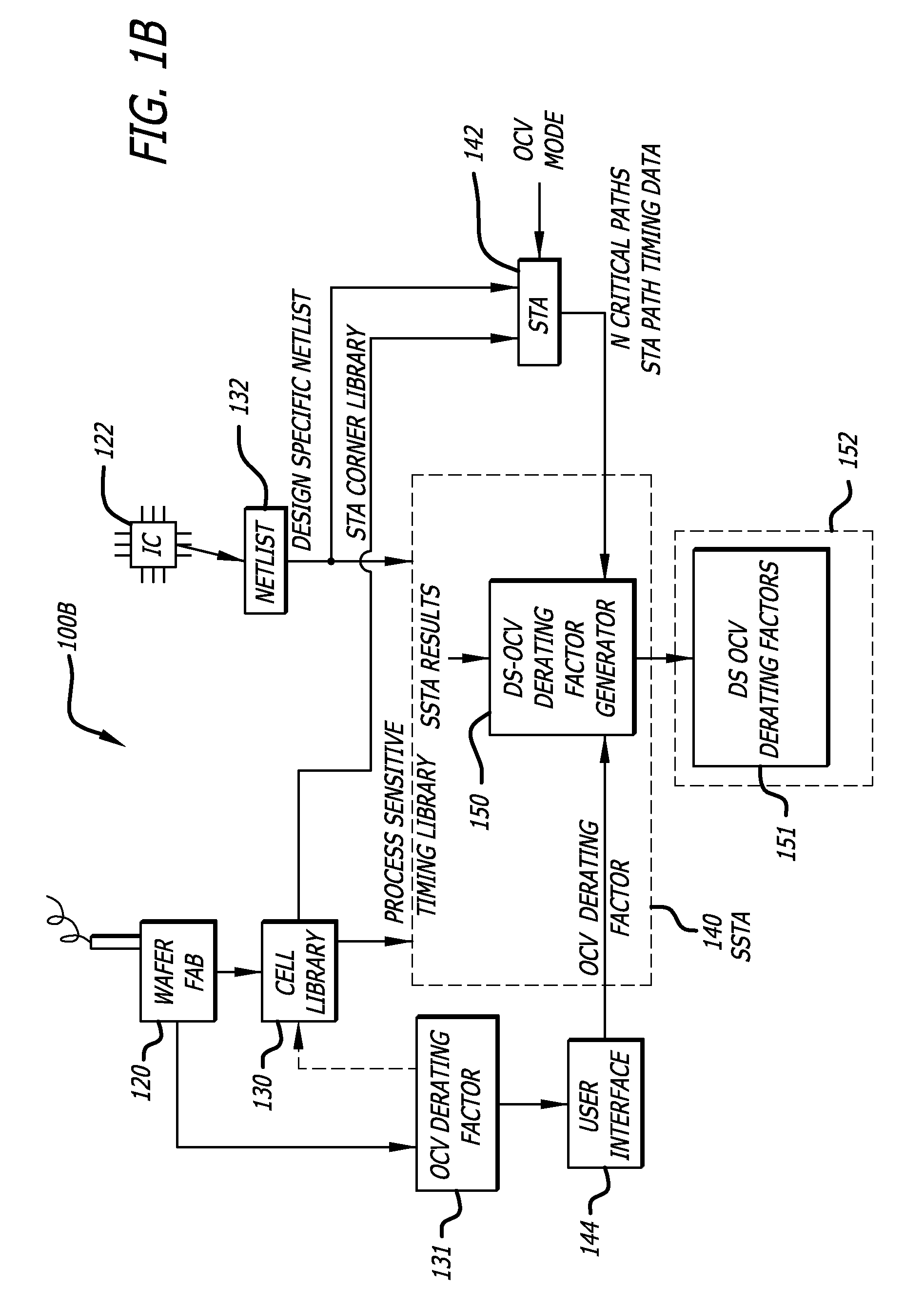
In one embodiment of the invention, a method of analysis of a circuit design with respect to within-die process variation is disclosed to generate a design-specific on chip variation (DS-OCV) de-rating factor. The method includes executing a static timing analysis (STA) in an on-chip variation mode using a process corner library. Collecting timing information of the top N critical timing paths. Executing a statistical static timing analysis (SSTA) on the N critical timing paths using timing models characterized for SSTA with sensitivities of delays to process variables. Compare the two timing results and deriving DS-OCV de-rating factors for the clock / data paths to be used in a STA OCV timing analysis to correctly account for the effects of process variations. A user may select to specify DS-OCV de-rating factors for paths or groups of paths and achieve an accurate timing analysis report in a reduced amount of run-time.
Need to check novelty before this filing date? Find Prior Art

Description

CROSS REFERENCE TO RELATED APPLICATIONS

[0001] This application claims the benefit of U.S. Provisional Application No. 61 / 267,010; entitled DESIGN-SPECIFIC ON CHIP VARIATION DE-RATING FACTORS FOR STATIC TIMING ANALYSIS OF INTEGRATED CIRCUITS; filed on Dec. 4th, 2009 by inventors Hongliang Chang et al.FIELD

[0002] The embodiments of the invention relate generally to timing analysis of integrated circuit designs.BACKGROUND

[0003] Semiconductor fabrication and manufacturing technologies continue to advance and allow an increase in the number of integrated circuits on a die and across a wafer. Identical circuits on a wafer or within the same die may have different performance characteristics due to fabrication or manufacturing process variations.

[0004] Some of the fabrication or manufacturing process variations can be accounted for by using a corner-based static timing analysis approach. The fabrication processes can be characterized by running test chips, circuits designed to capture the proc...

Examples

Embodiment Construction

[0018]In the following detailed description of the embodiments of the invention, numerous specific details are set forth in order to provide a thorough understanding of the embodiments of the invention. However, it will be obvious to one skilled in the art that the embodiments of the invention may be practiced without these specific details. In other instances well known methods, procedures, components, and circuits have not been described in detail so as not to unnecessarily obscure aspects of the embodiments of the invention.

[0019]The embodiments of the invention include a method and system to statically analyze timing for design-specific on chip variations (DS-OCV).

Variations that Influence Timing

[0020]Variations that effect timing characteristics of an integrated circuit can broadly be categorized into two classes, process variations and environmental variations. Process variations result from perturbations in the fabrication process that change the values of parameters such as ...