
Hybrid polymer/metal plug for treating chondral defects
a technology of metal plugs and polymers, applied in the field of surgical systems for treating osteochondritis, can solve the problems of advancing arthritic condition, poor bone anchorage, excessive wear of opposing surfaces, etc., and achieve the effect of optimal anchoring and repair of chondral defects
- Summary
- Abstract
- Description
- Claims
- Application Information
AI Technical Summary
Benefits of technology
Problems solved by technology
Method used
Image

Examples
Embodiment Construction
[0016]The present invention provides an implant for treatment of chondral defects. The novel implant allows for repair of chondral defects without the need to harvest autograft or allograft implants, while providing bone fixation through bone ongrowth and / or ingrowth, minimizing wear, closely matching the compliance of human tissue, and preserving the opposing cartilage surface.
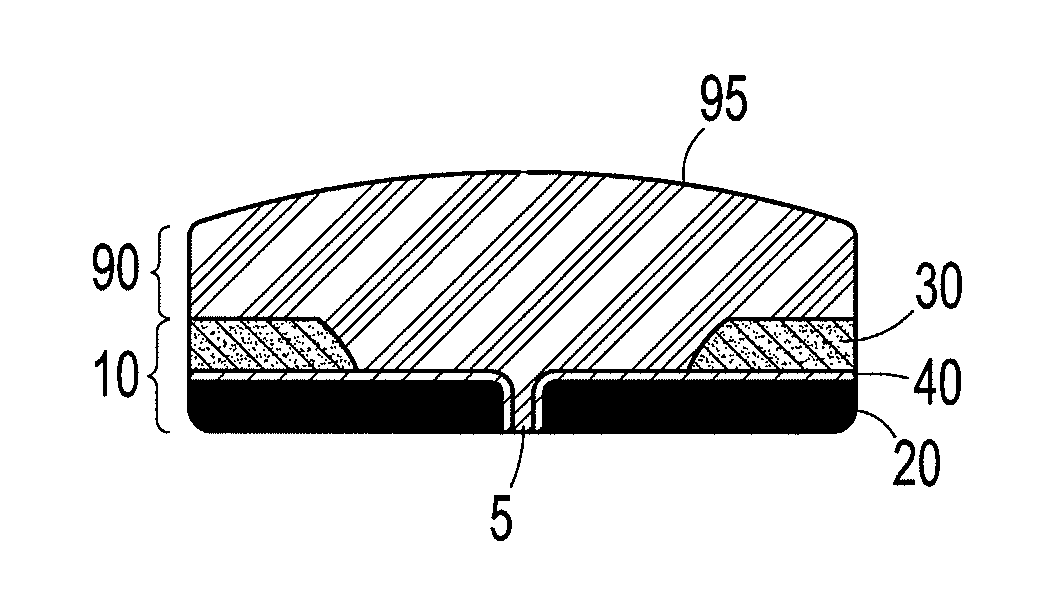
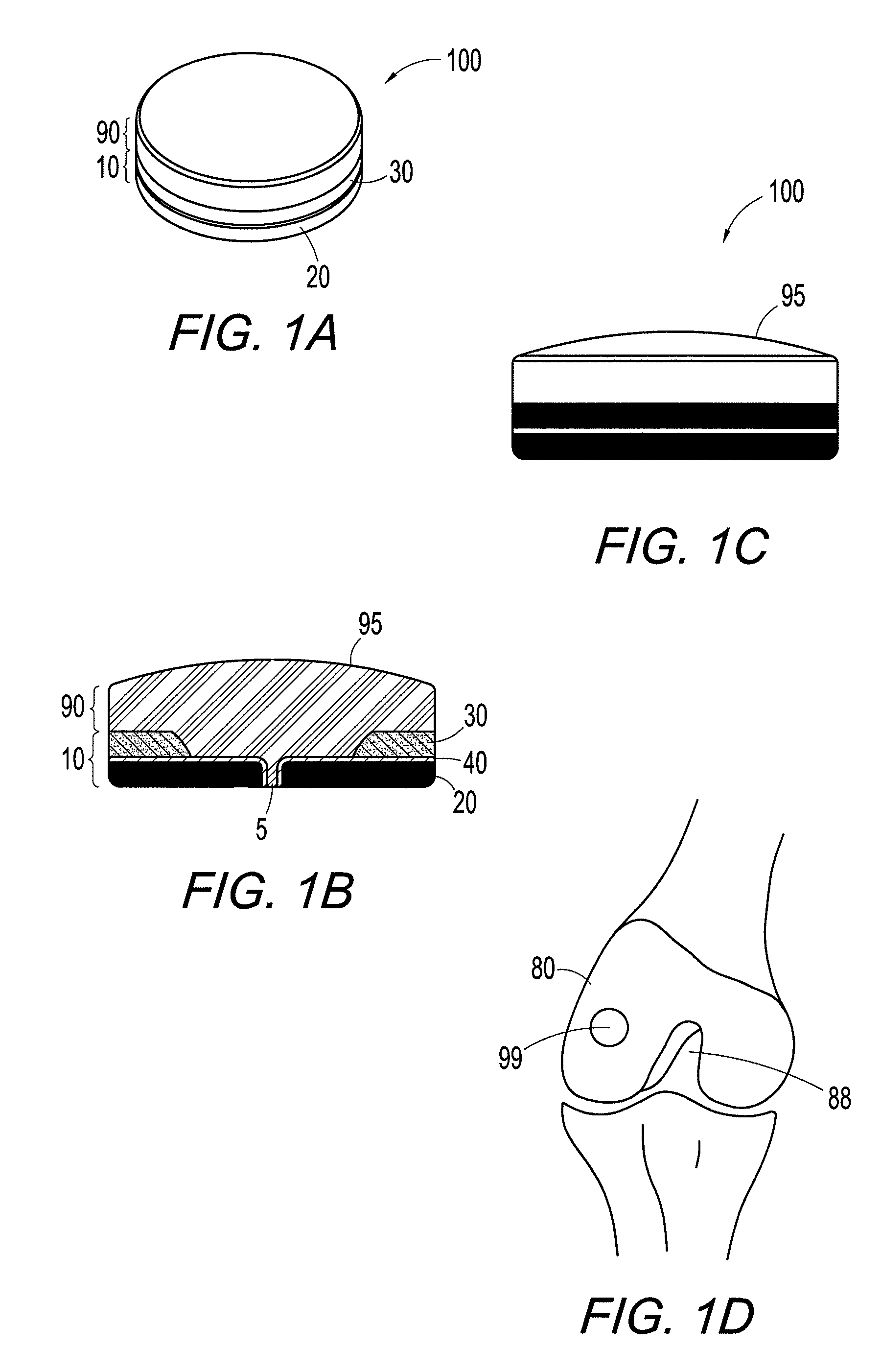
[0017]In an exemplary embodiment, the implant includes a base allowing for bone ongrowth and / or ingrowth and a top attached to the base, the top being formed of a material having a compressive resistance similar to that of the cartilage. In exemplary embodiments, the material of the top is a polymer (such as polycarbonate urethane, for example) that has a modulus of elasticity about equal to that of the cartilage. The base may comprise a porous substrate for bony ingrowth formed of metal or PEEK and having a pattern porosity about similar to the porosity of cancellous bone. One side of the top attaches to the...
PUM
| Property | Measurement | Unit |
|---|---|---|
| thickness | aaaaa | aaaaa |
| height | aaaaa | aaaaa |
| diameter | aaaaa | aaaaa |
Abstract
Description
Claims
Application Information
 Login to View More