Multi-target-spot siRNA recombinant slow virus carrier for acquired immune deficiency syndrome gene therapy
A recombinant lentivirus, multi-target technology, applied in gene therapy, antiviral agents, genetic engineering, etc., to achieve effective HIV replication, delay virus escape, and inhibit HIV replication
- Summary
- Abstract
- Description
- Claims
- Application Information
AI Technical Summary
Problems solved by technology
Method used
Image

Examples
Embodiment 1
[0057] Example 1: Conservative Analysis of siRNA Target Sequences Targeting HIV Genes
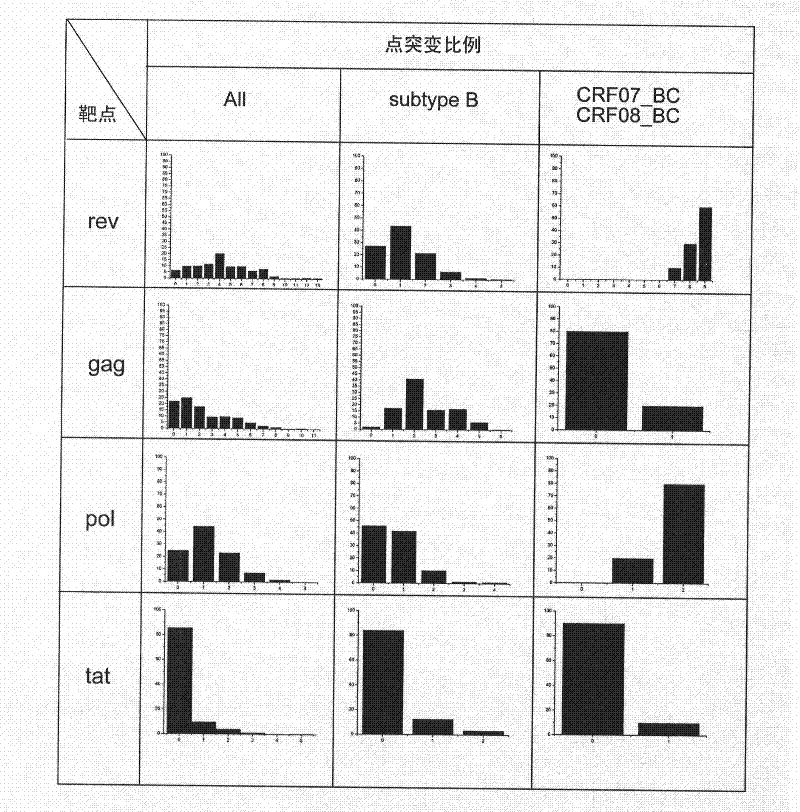
[0058] In order to clarify the conservation of the siRNA target sequence selected by the applicant in the main epidemic strains of HIV in China, the applicant applied the Primalign software in the Los Alamos HIV Sequence Database (http: / / www.hiv.lanl.gov / content / sequence / QUICK_ALIGN / QuickAlign.html) conducted sequence conservation analysis on the selected 4 siRNA targets including rev, gag, pol, and tat ( figure 1 ). The analysis results showed that among the above four analysis objects, the conservation of tat siRNA target sequence was the highest among different HIV strains.
[0059] The siRNA target sequence selected in this embodiment is as follows (the CCR5 target sequence is attached in this table):
[0060] target gene Target sequence (5'--3') Length (bp) references Rev. ACTTACTCTTTGATTGTAAC 19 Arteaga et al., 2003 Gag GTAGCAACTCTTCTATTGTGTA ...
Embodiment 2
[0061] Example 2: Construction of siRNA recombinant lentiviral vector
[0062] 2.1 Transformation of lentiviral vector pLentiLox 3.7
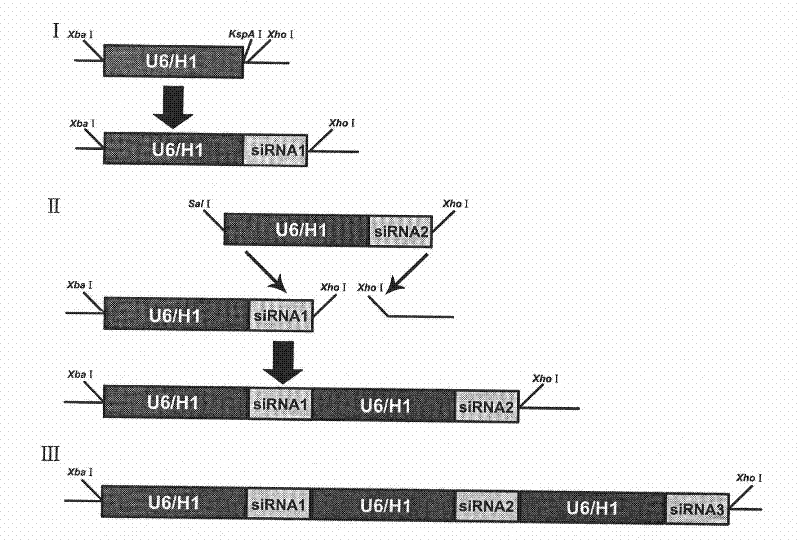
[0063] The lentiviral vector modified by the applicant is pLentiLox 3.7 (Rubinson and Dillon, Nature Genetics, 2003). The vector contains a mouse U6 promoter to control the expression of siRNA, and also contains a reporter gene EGFP for flow cytometry sorting. In order to make the lentiviral vector more suitable for human-related experimental research (such as research on AIDS gene therapy), and to avoid homologous recombination caused by a single promoter of the tandem siRNA and the loss of the siRNA expression box, the applicant added the The murine U6 promoter of the vector was replaced with the human U6 promoter and the human H1 promoter respectively (the human U6 promoter and the human H1 promoter were obtained from Ambion’s products pSilencer2.0_U6 and pSilencer3.0_H1 by PCR), after transformation The lentiviral vectors were named pLLU6...
Embodiment 3
[0093] Example 3: Inhibitory Ability of siRNA Recombinant Lentiviral Vectors to HIV Replication
[0094] pNL4-3.Luc.R-E-(Landau NR, Viology, 1995) was transformed on the basis of HIV full-length clone pNL4-3: Firefly luciferase gene (LucF) was inserted into nef gene, 2 frameshifts Mutations resulted in deletion of Env and Vpr in this clone.
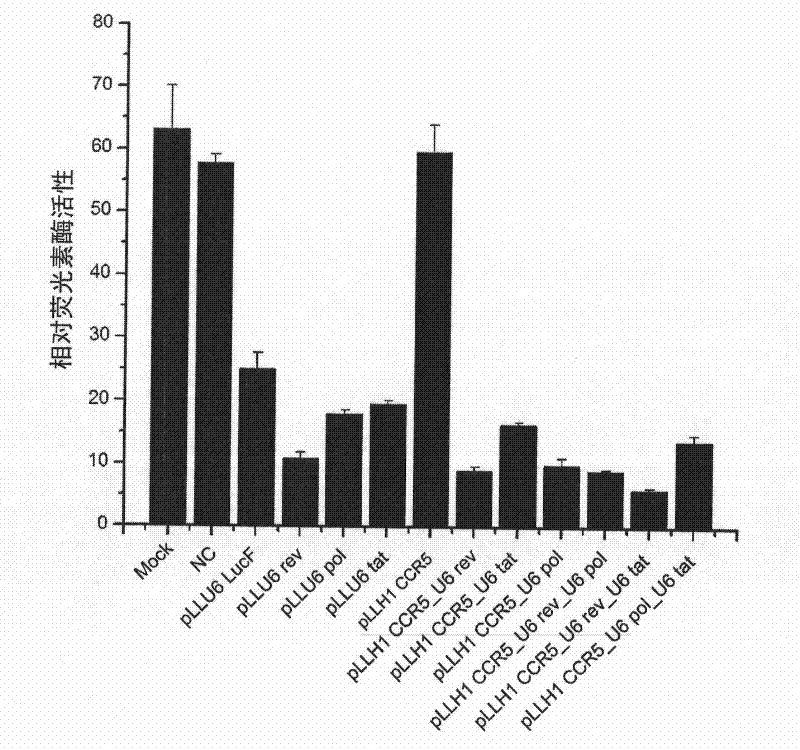
[0095] The applicant co-transfected HEK-293T cells with the above siRNA recombinant lentiviral vectors and pNL4-3.Luc.R-E- and pRL-TK (Renilla luciferase expression plasmid, purchased from Promega), and detected the relative fluorescence after 24 hours Sulfase activity, the results are as follows image 3 As shown (Note: pNL4-3.Luc.R-E-replication level can be represented by Firefly luciferase activity; Renilla luciferase activity value is used as an internal reference; NC is a negative control). The results show that each siRNA recombinant lentiviral vector has different degrees of inhibitory effect on HIV replication, and the combined...
PUM
 Login to View More
 Abstract
Description
Claims
Application Information
 Login to View More