Large-diameter multi-pass pin-less friction stir processing method for fabricating fiber-reinforced metal matrix composites

A friction stir, composite material technology, applied in metal processing equipment, welding equipment, manufacturing tools, etc., can solve the problems of complicated pressurizing equipment, long construction period, expensive, etc., to improve the appearance flatness, strengthen the forging effect, and avoid waste. Effect

CN102319954AInactive Publication Date: 2012-01-18XI AN JIAOTONG UNIV
6 Cites 17 Cited by

Patent Information

Authority / Receiving Office
CN · China
Patent Type
Applications(China)
Current Assignee / Owner
Publication Date
2012-01-18
Estimated Expiration
Not applicable · inactive patent

Smart Images

  • Figure 1
    Figure 1
  • Figure 2
    Figure 2
  • Figure 3
    Figure 3
Patent Text Reader

Abstract

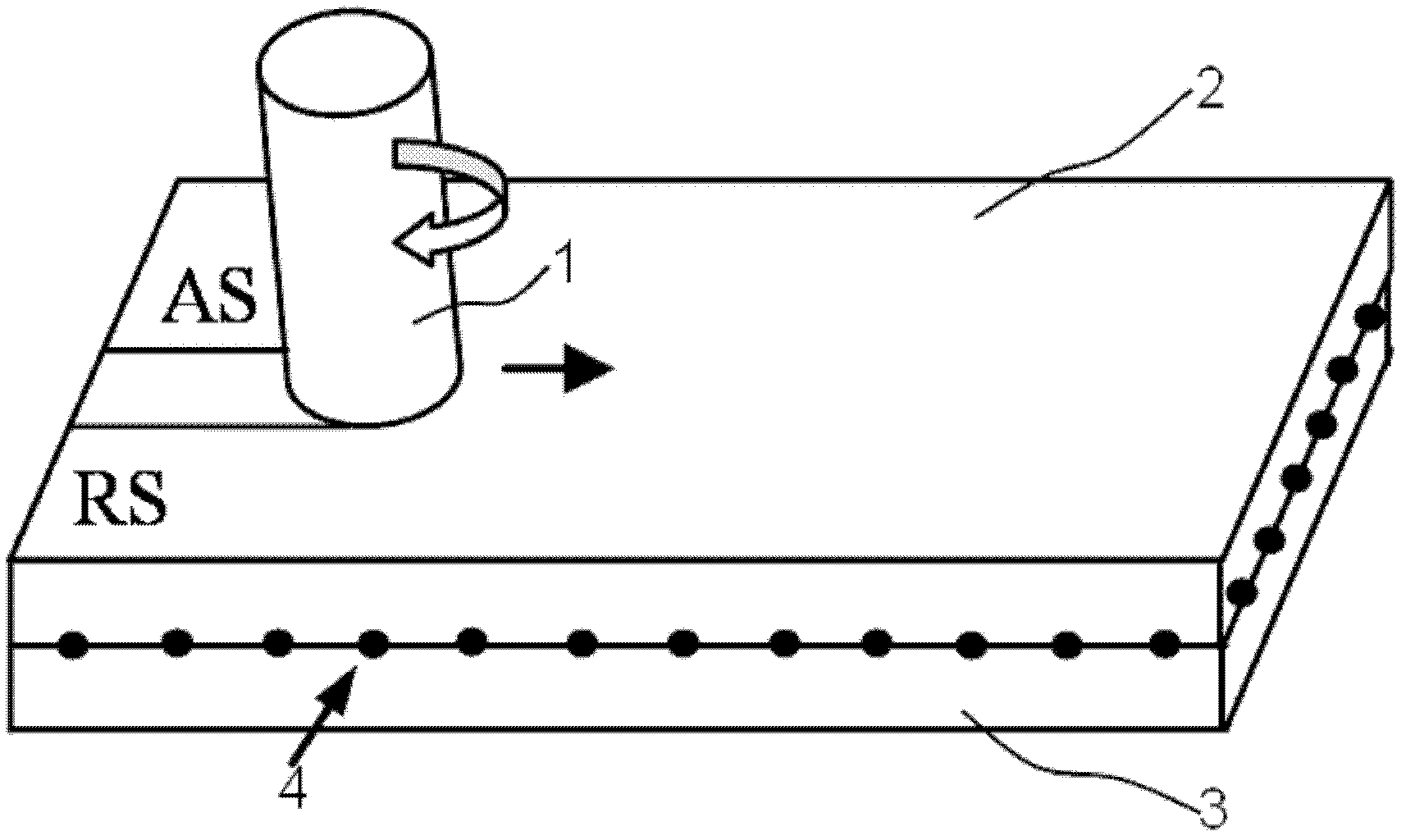
The invention discloses a large-diameter multi-pass pin-less friction stir processing method for fabricating fiber-reinforced metal matrix composites. Firstly, metal matrix sheets are ground and cleaned in advance; secondly, a preprocessed fiber net or unidirectional fiber bundle is clamped between the two metal matrix sheets in a prearranging manner, and needs to be completely covered and sufficiently protected by the covering sheets; meanwhile, a pin-less friction stir tool is slightly inclined and mounted; the pin-less stool is started to rotate to rub the surface of the covering sheet and move, a plastic deformation gradient field generated by the forging and torsional effects of the shoulder is utilized, consequently, not only can the oxide skin of the metal matrix interface be broken, but also the metal matrix which heats to be softened can plastically flow around the fibers to wrap the fibers, and thereby the fiber / matrix and the matrix / matrix interfaces can be compactly combined. A pin-less stir head with a large diameter more than 40mm to 50mm is adopted to carry out multi-pass multi-layer friction stir processing, and thereby a large, thick fiber-reinforced metal matrix composite plate can be produced. The addition of brazing filler metal can solve the contradiction between fiber injury and interface bonding improvement.
Need to check novelty before this filing date? Find Prior Art

Description

Technical field:

[0001] The invention belongs to the field of welding, and relates to a method for preparing metal-matrix composite materials by stirring friction, in particular to a method for preparing fiber-reinforced metal-matrix composite materials by large-diameter multi-channel needle-free friction-stir processing. Background technique:

[0002] The remarkable advantage of continuous fiber-reinforced metal matrix composites is that the strengthening effect is extremely significant, far exceeding the performance of the metal matrix. This is because the load in continuous fiber-reinforced metal matrix composites is mainly borne by high-strength fibers, and the main role of the matrix is Adhesive and fixed reinforcement; good plasticity to transmit and distribute load; protect matrix from environmental damage -38, 80-84.]. The metal matrix usually exists continuously and densely surrounds any reinforcement, while the fibers are distributed in the matrix in an independen...

Examples

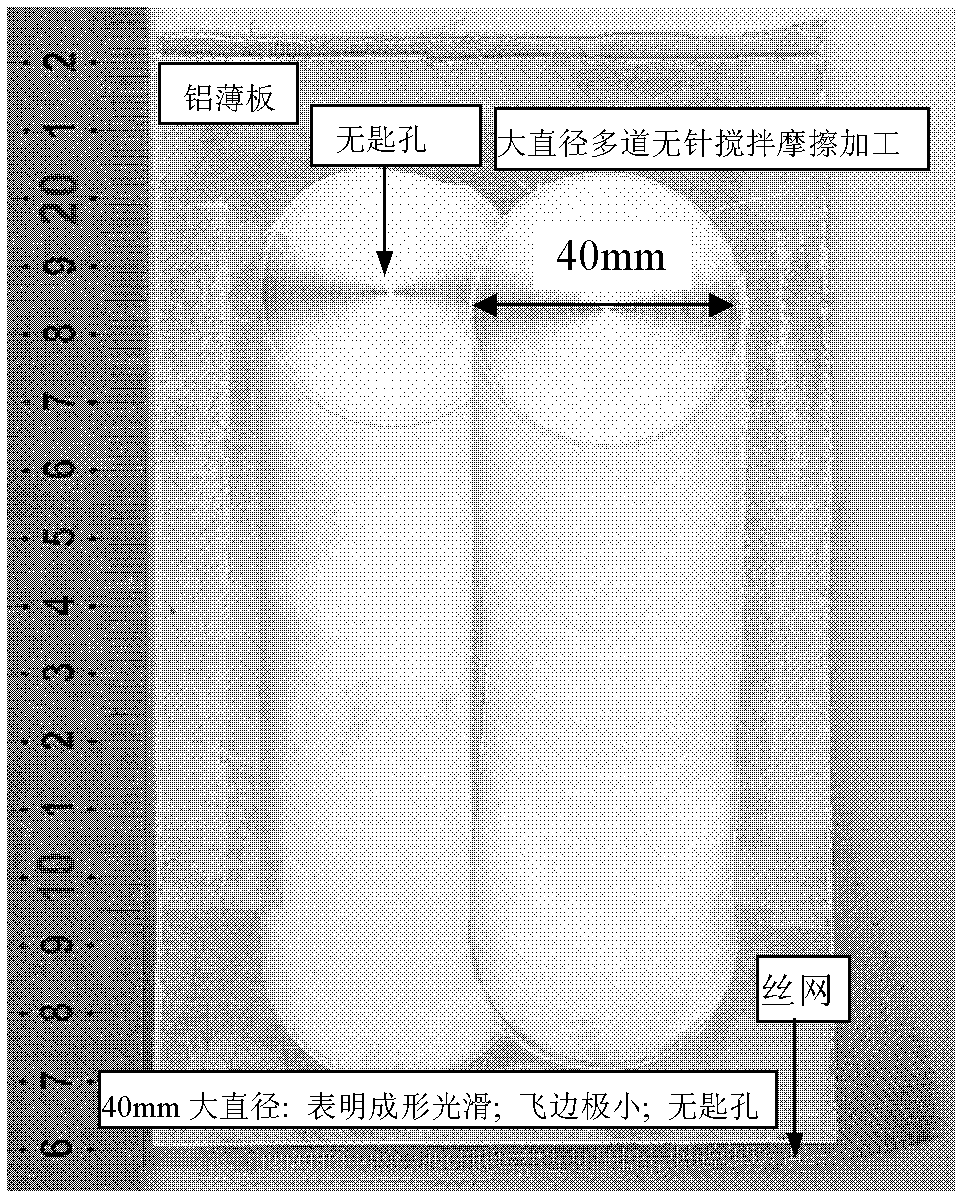
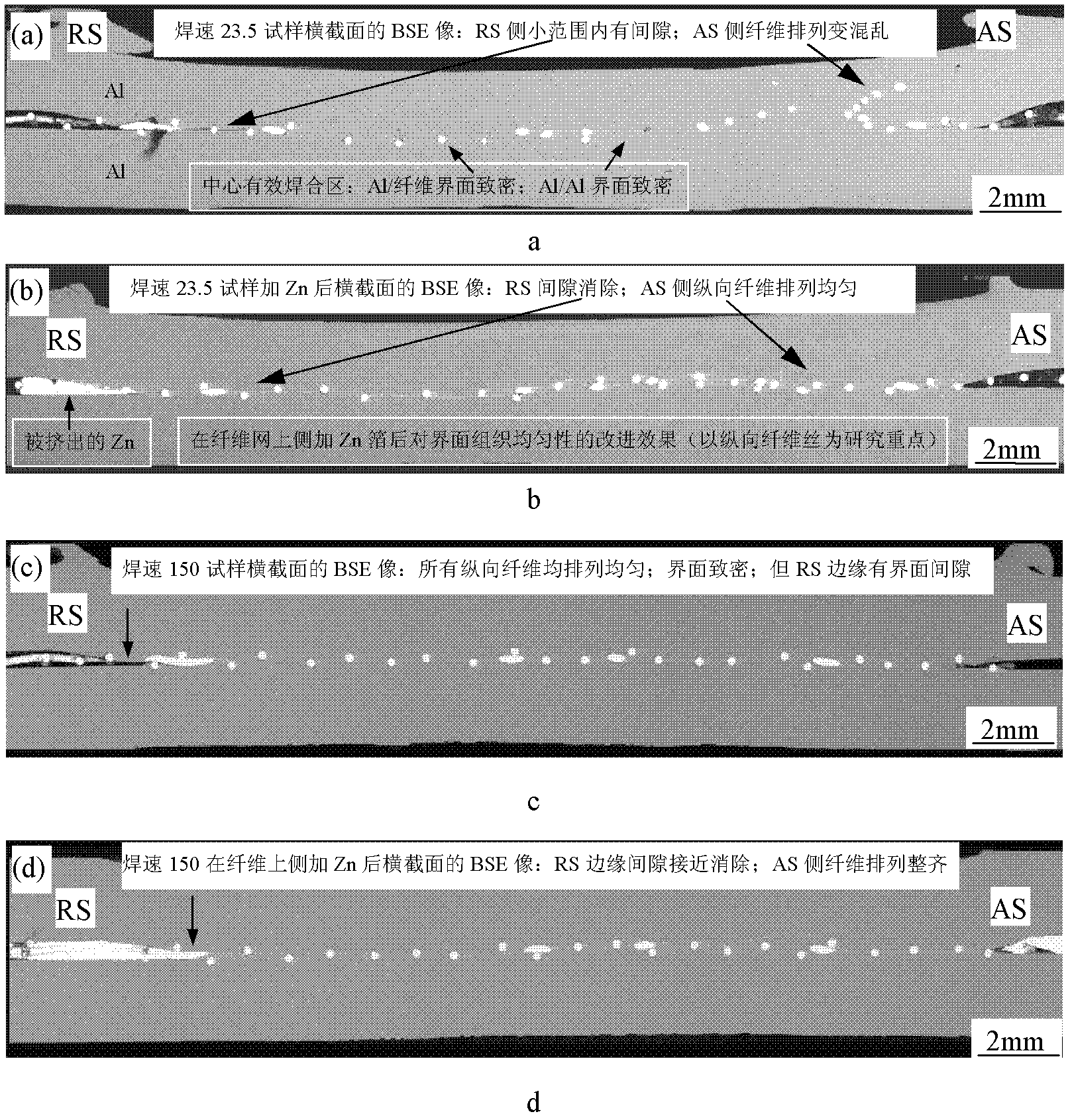
Embodiment Construction

[0029] The present invention is described in further detail below in conjunction with accompanying drawing:

[0030] A specific embodiment is introduced below. In order to save the test cost, the metal substrate used is a commercially available 1.8mm thick pure aluminum plate, and the reinforced body used is a commercially available galvanized steel wire mesh (wire diameter about 150 μm). Cut the aluminum plate into a large sample of 160×100×1.8mm and a small sample of 1000×60×1.8mm. The large sample is welded with a 40-50mm large-diameter multi-channel needle-free cylindrical friction stir tool (limited by the power of the laboratory machine tool - 7.5KW, the large diameters selected in the embodiment are 40 and 50mm; while the usual friction stir welding The diameter of the shoulder is mostly 15-20mm, which is far smaller than the 40-50mm large diameter adopted in the embodiment of the present invention), which is used to study the surface forming influencing factors and th...