
Friction generator
A technology for triboelectric generators and electrodes, which is applied in the directions of triboelectric generators, layered products, chemical instruments and methods, etc., can solve the problems of low power generation efficiency of the device, inability to collect and convert irregular kinetic energy, etc., and achieve huge commercial use. and practical potential, easy processing, low cost effect
- Summary
- Abstract
- Description
- Claims
- Application Information
AI Technical Summary
Problems solved by technology
Method used
Image

Examples
Embodiment Construction
[0016] Below, the specific implementation manners of the present invention will be further described in conjunction with the accompanying drawings.
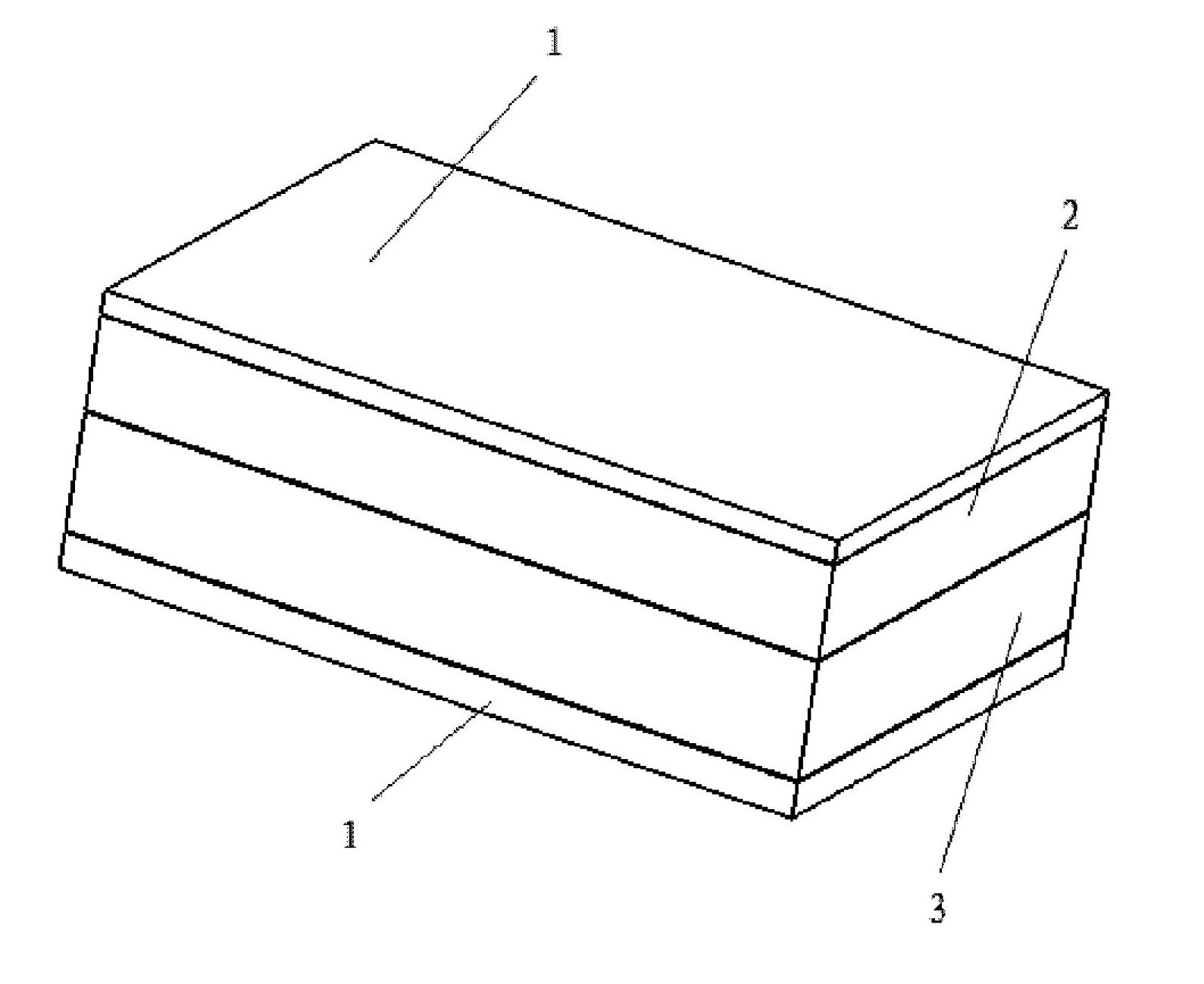
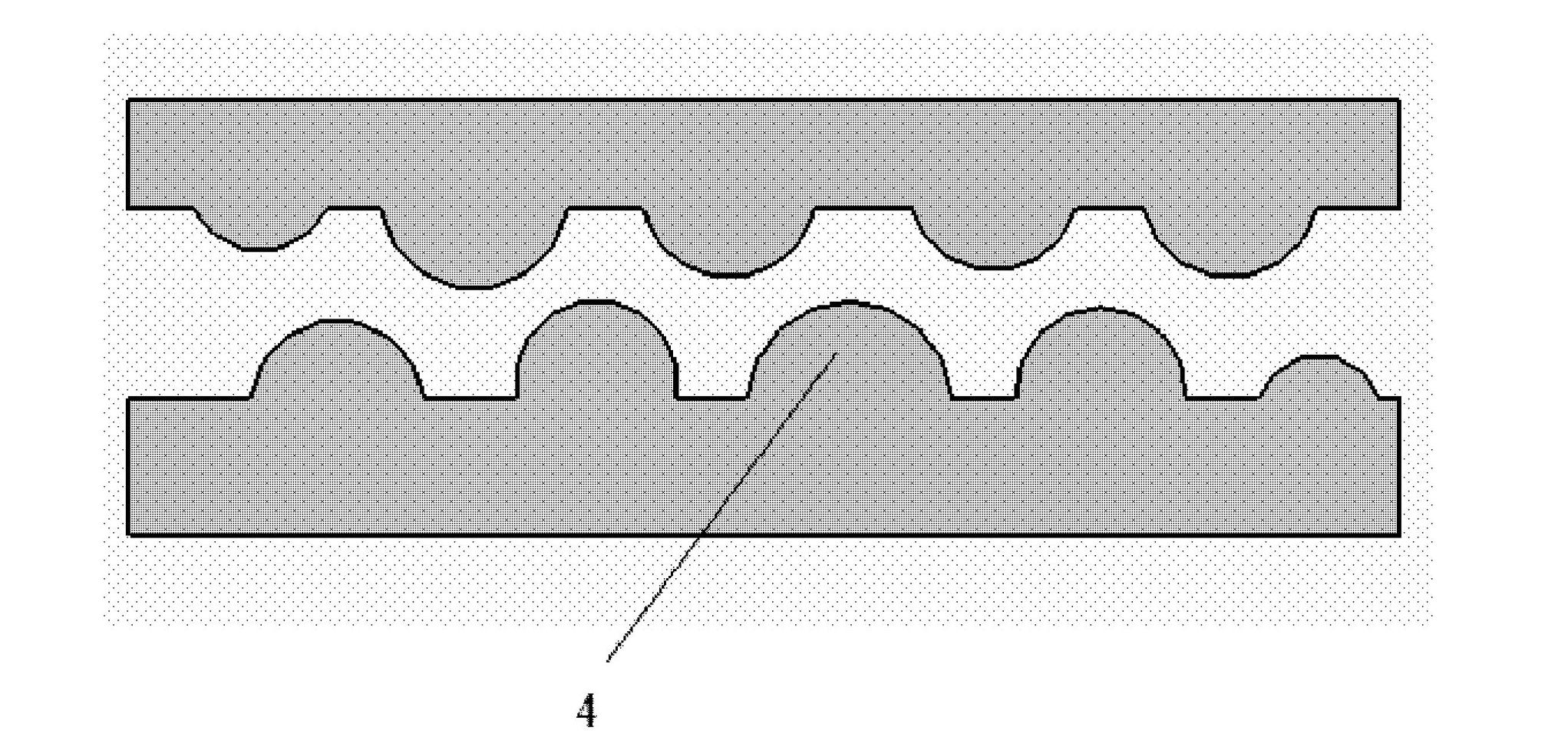
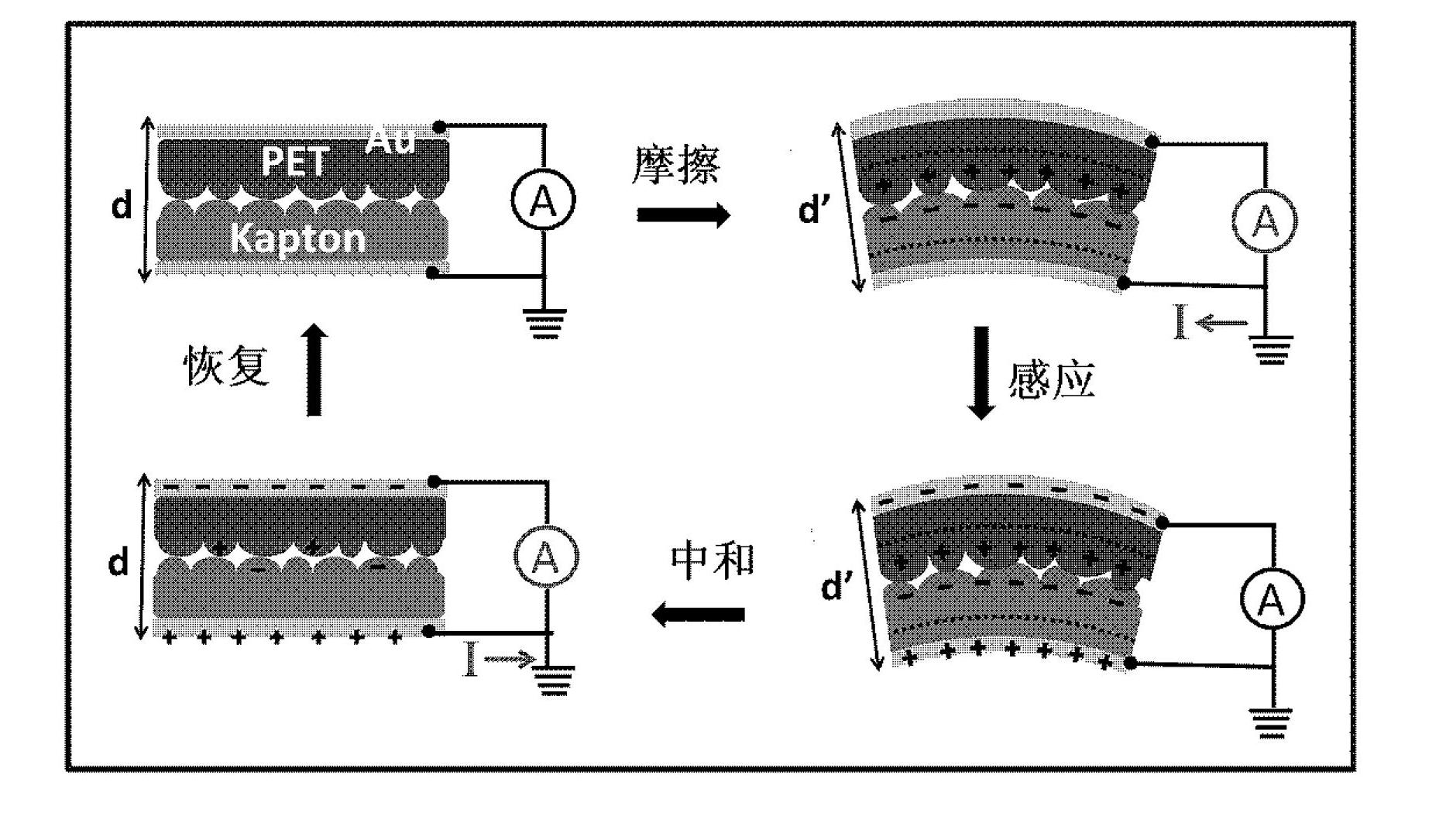
[0017] attached figure 1 Represents a typical structure of a polymer-based triboelectric generator. The triboelectric generator is like a sandwich structure consisting of two different polymer sheets stacked on top of each other without any adhesive between the layers. Such as figure 1 As shown, a rectangular (4.5cm×1.2cm) polyimide film (thickness 125μm, DuPont 500HN, attached image 3 Kapton) as the first electrode polymer insulating layer 4, placed on the second polymer insulating layer 2 flexible polyester film substrate (thickness 220 μm, attached image 3 in PET). The two short edges of the device were sealed with common tape to ensure proper contact between the two polymer insulating layers. The two surfaces of the top and bottom of the structure are coated with an alloy metal film 1 (thickness 100nm, attached image...
PUM
 Login to View More
 Abstract
Description
Claims
Application Information
 Login to View More