

Microfluidic chip for detecting early leukemia
A microfluidic chip and early detection technology, applied to laboratory containers, fluorescence/phosphorescence, laboratory equipment, etc., can solve the problems of unfavorable detection, high cost, large amount of blood samples, etc., to improve detection accuracy and detection efficiency, and the effect of reducing detection cost
- Summary
- Abstract
- Description
- Claims
- Application Information
AI Technical Summary
Problems solved by technology
Method used
Image

Examples
Embodiment Construction
[0018] The present invention will be further described below in conjunction with the accompanying drawings and embodiments.
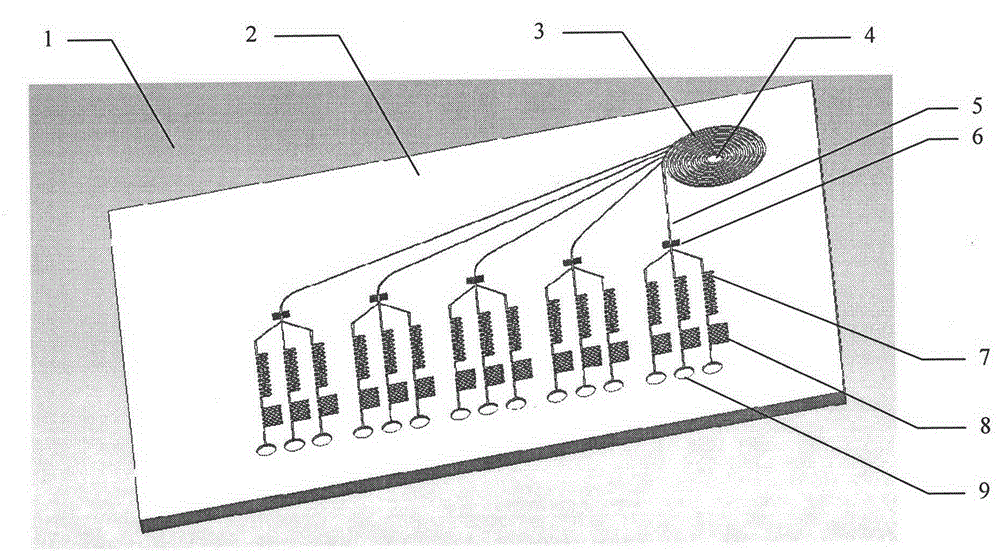
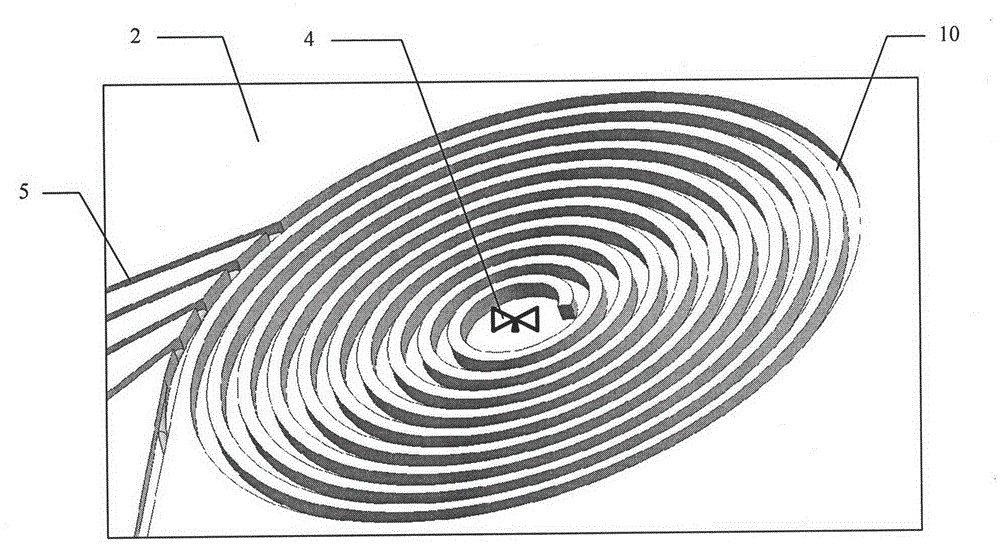
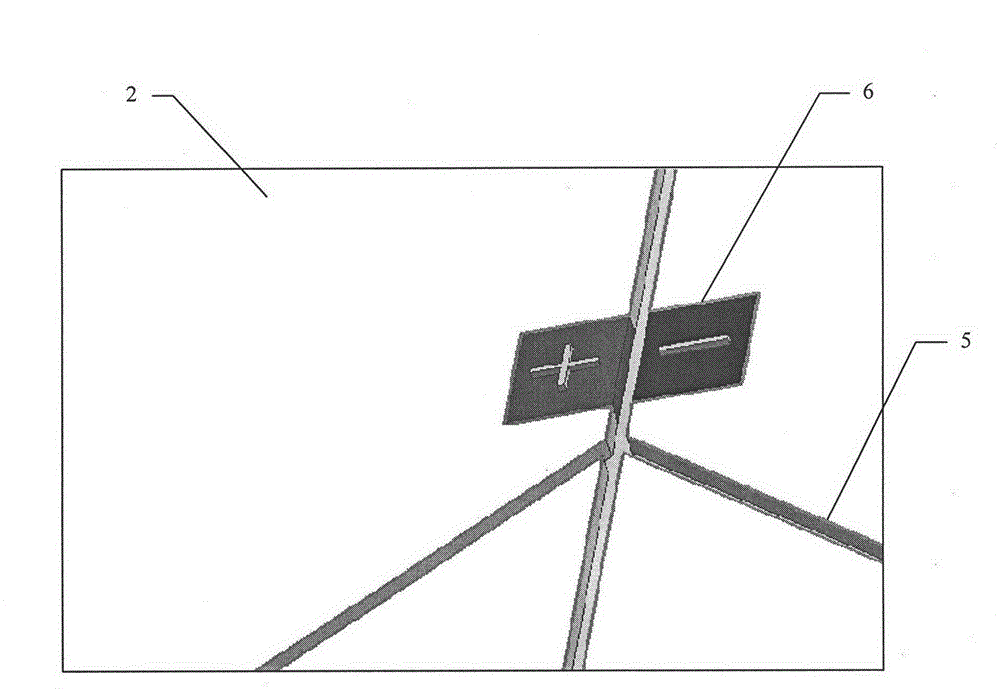
[0019] see Figure 1 to Figure 3 : A microfluidic chip for early detection of leukemia, firstly take a small amount of blood from a patient, and add it to the sample injection control pump device 4 in the center of the cell sorting element 3 of the microfluidic detector 2 on the substrate 1 through a capillary tube, Flow into the spiral sorting channel 10. The blood flows along the helical sorting channel 10 whose channel width gradually expands in the helical direction, and the cells in the blood will walk in different parts of the helical sorting channel 10 under the action of centrifugal force according to the size of the cells in the blood, realizing the classification in the helical sorting channel 10 Carry out cell sorting, and finally the remaining cells flow out of the helix along the tangential direction and enter the channel 5; perform cell s...
PUM
 Login to View More
 Abstract
Description
Claims
Application Information
 Login to View More