
Water planting nutrient solution for watercress
A technology of hydroponic nutrient solution and calcium nitrate tetrahydrate, which is applied in the field of soilless cultivation nutrient solution and watercress hydroponic nutrient solution, can solve the problems of yellowing leaves and hindering the growth of watercress, so as to promote the growth of vegetables and reduce the growth of watercress. The probability of yellow, the effect of formula science
- Summary
- Abstract
- Description
- Claims
- Application Information
AI Technical Summary
Problems solved by technology
Method used
Image

Examples
Embodiment 1
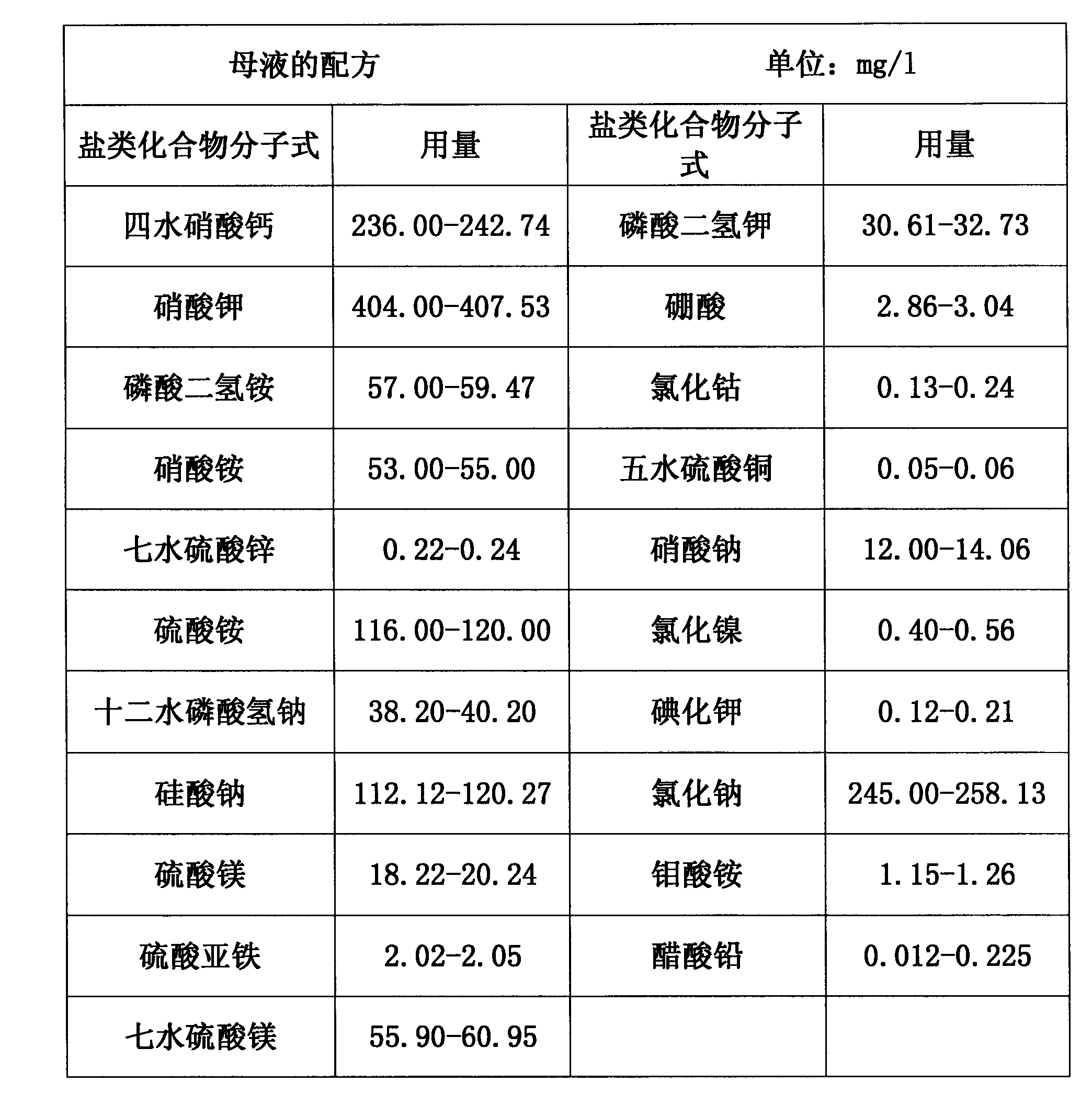
[0012] Each 1000ml of the watercress hydroponic nutrient solution contains 239.37mg of calcium nitrate tetrahydrate, 405.77mg of potassium nitrate, 58.24mg of ammonium dihydrogen phosphate, 54.00mg of ammonium nitrate, 0.23mg of zinc sulfate heptahydrate, 118.00mg of ammonium sulfate, and 12 Sodium hydrogen phosphate water 39.20mg, sodium silicate 116.20mg, magnesium sulfate 19.23mg, ferrous sulfate 2.04mg, magnesium sulfate heptahydrate 58.43mg, potassium dihydrogenphosphate 31.67mg, boric acid 2.95mg, cobalt chloride 0.19mg, five Water copper sulfate 0.06mg, sodium nitrate 13.03-14.06mg, nickel chloride 0.48mg, potassium iodide 0.17mg, sodium chloride 251.56mg, ammonium molybdate 1.21mg, lead acetate 0.02mg.
Embodiment 2
[0014] Each 1000ml of the watercress hydroponic nutrient solution contains 236.00mg of calcium nitrate tetrahydrate, 404.00mg of potassium nitrate, 57.00mg of ammonium dihydrogen phosphate, 53.00mg of ammonium nitrate, 0.22mg of zinc sulfate heptahydrate, 116.00mg of ammonium sulfate, and Sodium hydrogen phosphate water 38.20mg, sodium silicate 112.12mg, magnesium sulfate 18.22mg, ferrous sulfate 2.02mg, magnesium sulfate heptahydrate 55.90mg, potassium dihydrogen phosphate 30.61mg, boric acid 2.86mg, cobalt chloride 0.13mg, pentahydrate Copper sulfate 0.05mg, sodium nitrate 12.00mg, nickel chloride 0.40mg, potassium iodide 0.12mg, sodium chloride 245.00mg, ammonium molybdate 1.15mg, lead acetate 0.012mg.
Embodiment 3
[0016] Each 1000ml of the watercress hydroponic nutrient solution contains 242.74mg of calcium nitrate tetrahydrate, 407.53mg of potassium nitrate, 59.47mg of ammonium dihydrogen phosphate, 55.00mg of ammonium nitrate, 0.24mg of zinc sulfate heptahydrate, 120.00mg of ammonium sulfate, and Sodium hydrogen phosphate water 40.20mg, sodium silicate 120.27mg, magnesium sulfate 20.24mg, ferrous sulfate 2.05mg, magnesium sulfate heptahydrate 60.95mg, potassium dihydrogen phosphate 32.73mg, boric acid 3.04mg, cobalt chloride 0.24mg, pentahydrate Copper sulfate 0.06mg, sodium nitrate 14.06mg, nickel chloride 0.56mg, potassium iodide 0.21mg, sodium chloride 258.13mg, ammonium molybdate 1.26mg, lead acetate 0.025mg.
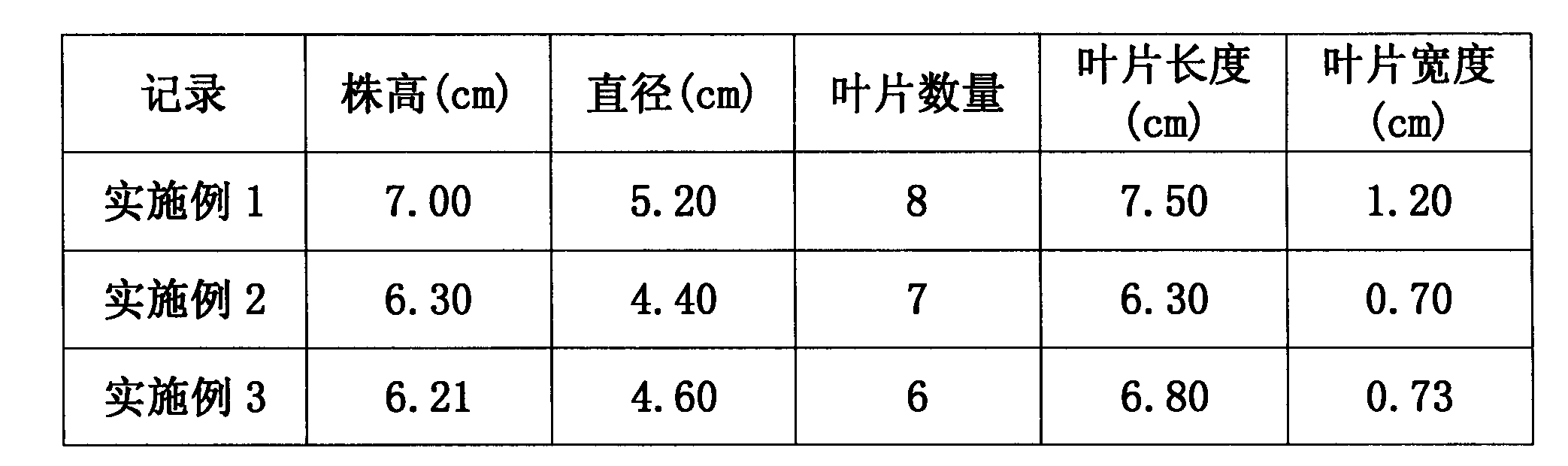
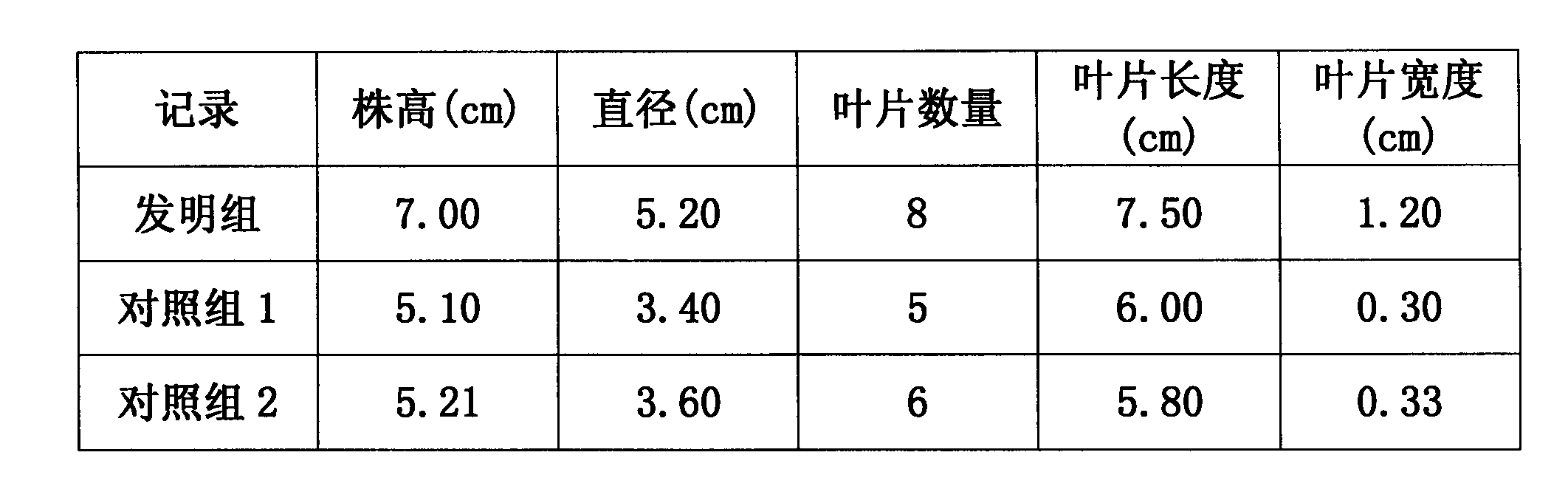
[0017] Described experimental group (embodiment 1, embodiment 2, embodiment 3) selects the watercress plant of identical size and shape, they are placed in identical suitable environment and cultivate one month, record the growth of three groups of experimental plants after ...
PUM
 Login to View More
 Abstract
Description
Claims
Application Information
 Login to View More