Due to the fact that domestic research and development of this
robot is less, the
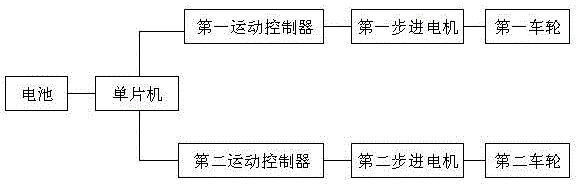
reading level of international rules is relatively low, and the relative level is relatively backward. The structure of the microcomputer mouse developed is as follows: figure 1 , running for a long time found that there are many security problems, namely:
[0008] (1) The eyes of the microcomputer mouse use ultrasonic or general
infrared sensors, which makes the microcomputer mouse misjudge the surrounding maze when it sprints quickly
[0009] (2) As the
actuator of the microcomputer mouse, a
stepper motor is used, which often encounters the problem of missing pulses, resulting in errors in the memory of the sprint position
[0010] (3) Due to the use of stepping motors, the body heats up more seriously, which is not conducive to fast sprinting in large and complex mazes
[0011] (4) Due to the use of relatively low-level algorithms, sprinting in the maze generally takes 15-30 seconds, which makes it impossible to win in real competitions
[0012] (5) Due to the frequent braking and starting of the microcomputer mouse during the fast sprint process, the
workload of the single-
chip microcomputer is increased, and the single-
chip signal processor cannot meet the requirements of the fast sprint of the microcomputer mouse
[0013] (6) Relatively, some relatively large plug-in components are used, which makes the microcomputer mouse relatively large in size and cannot meet the requirements of fast sprinting
[0014] (7) Due to the interference of unstable factors in the surrounding environment, especially the interference of some surrounding light, the
microcontroller controller often appears abnormal, causing the microcomputer mouse to lose control, and the anti-interference ability is poor
[0015] (8) For the microcomputer mouse with differential speed control, it is generally required that the control signals of the two motors should be synchronized, but it is difficult to do it for a single single-
chip microcomputer, which makes the microcomputer mouse go back and forth when driving on a straight road. Compensation, especially for high-speed sprinting, the microcomputer mouse sometimes wobbles a lot in the maze
[0016] (9) Due to the influence of the capacity and
algorithm of the single-chip microcomputer, the microcomputer mouse does not store the information of the maze, and all the information will disappear when encountering a power failure, which makes the entire sprint process impossible to complete
[0017] (10) Due to the influence of the capacity of the single-chip microcomputer, the existing microcomputer mice basically only have two power driving wheels, and the two-wheel differential mode is used to drive, which makes the
system have higher requirements for the two-axis
servo, especially for straight-line navigation. The speed and acceleration should be strictly consistent, otherwise the straight-line navigation will fail, causing the microcomputer mouse to hit the wall;
[0018] (11) The center of gravity of the two-wheeled microcomputer mouse
system shifts backward during acceleration, making the front of the mouse light and floating. Even on a good road, the microcomputer mouse will slip, which may cause the phenomenon of hitting the wall, which is not conducive to the development of high-speed microcomputer mice.
[0019] (12) If the improper design of the two-wheel micro-
computer mouse system causes the center of gravity to shift forward during normal driving, the
positive pressure on the driving wheels will decrease. At this time, the micro-
computer mouse system is more likely to slip and deviate, resulting in navigation failure.
[0020] (13) If the two-wheel microcomputer mouse system is improperly designed during normal driving and the center of gravity is sideways, the
positive pressure on the two driving wheels will be different, and the degree of slippage of the two wheels will be inconsistent during a
quick start, and the track will deviate instantly. Wheels with low
positive pressure may slip, making turning difficult
[0021] (14) Due to the use of two power wheels to drive, in order to meet the acceleration and deceleration in complex states, the power of a single
drive motor is relatively large, which not only occupies a large space, but also sometimes in some states with relatively low energy requirements The phenomenon of "big horses and small carts" appears, which is not conducive to the
miniaturization of the microcomputer mouse body and the energy saving of the microcomputer mouse system


 Login to View More
  Login to View More