AI technical title is built by Patsnap AI team. It summarizes the technical point description of the patent document.
A glass coating, water-based technology, applied in the field of coatings, can solve problems such as damage to human health, poor tolerance, poor toughness and wear resistance, and achieve the effect of improving production efficiency and shortening baking time
Active Publication Date: 2014-08-06
惠州市华昱美实业有限公司
View PDF3 Cites 17 Cited by
Summary
Abstract
Description
Claims
Application Information
AI Technical Summary
This helps you quickly interpret patents by identifying the three key elements:
Problems solved by technology
Method used
Benefits of technology
Problems solved by technology
[0003] 1. Most of the glass coatings currently on the market are oil-based coatings. The film-forming substances are mainly from petrochemical products, and the solvents are mostly organic solvents, which often contain toxic substances such as formaldehyde, free TDI and xylene. These substances are used in glass coatings. It is continuously emitted during the production process and use process, which not only causes environmental pollution, but also damages human health;
[0004] 2. Oily glass coating, after curing, has poor resistance and dull appearance;
[0005] 3. Most of the existing glass coatings, including the existing non-oily glass coatings, generally have the problem of poor toughness and wear resistance
Method used
the structure of the environmentally friendly knitted fabric provided by the present invention; figure 2 Flow chart of the yarn wrapping machine for environmentally friendly knitted fabrics and storage devices; image 3 Is the parameter map of the yarn covering machine
View more
Image
Smart Image Click on the blue labels to locate them in the text.
Viewing Examples
Smart Image
Click on the blue label to locate the original text in one second.
Reading with bidirectional positioning of images and text.
Smart Image
Examples
Experimental program
Comparison scheme
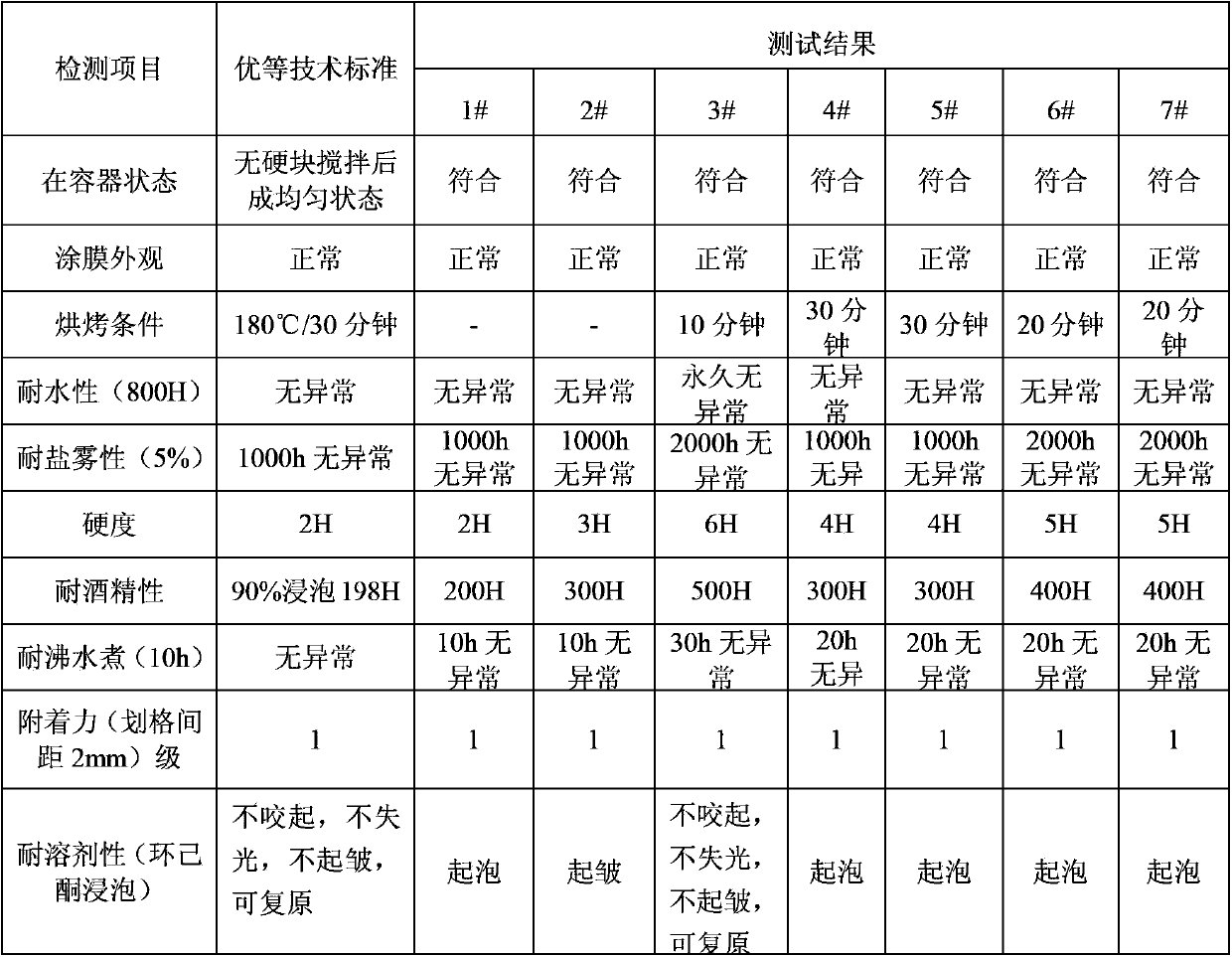
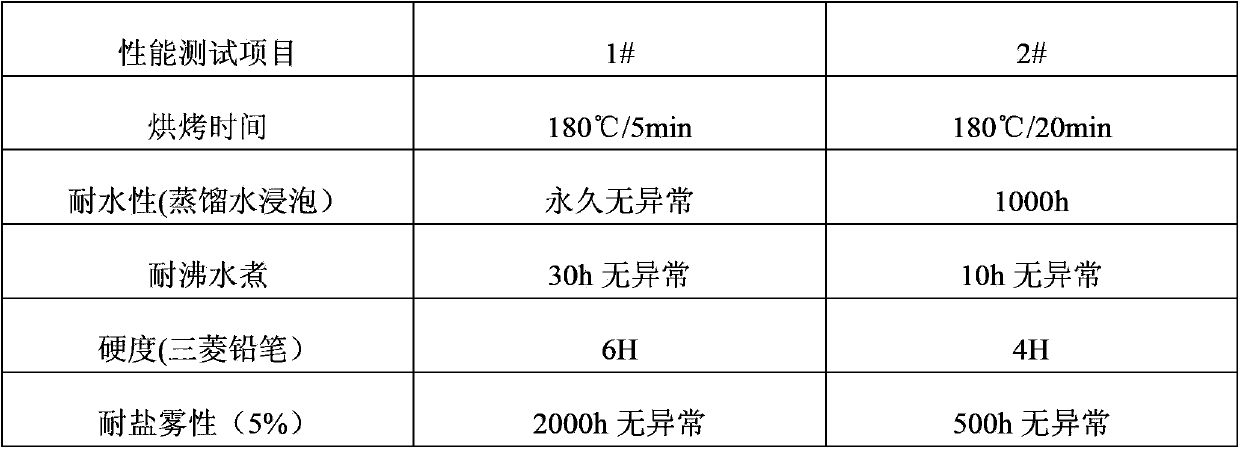
Effect test
Embodiment 1
[0054] A preparation method of water-based glass coating, the specific operation steps are: adding the components acrylic resin, epoxypolyurethanesynthetic resin, coupling agent and amino resin in the formula to the reaction container and mixing in sequence, and using a stirrer at a stirring speed of 1200r / min After stirring and dispersing at the speed of 20 minutes, add wetting agent, leveling agent, thickener and defoamer to the dispersed mixed components in sequence, stir and disperse for 15 minutes at a stirring speed of 800r / min, and then add curing Agent and deionized water, stirring and dispersing for 5 minutes at a stirring speed of 300r / min, the finished water-based glass coating can be obtained. Components in the present invention all adopt existing products, which can be the product models listed in the present invention, but are not limited to the product models in the present invention.
[0055] In the present invention, the acrylic resin is a water-based acryli...
Embodiment 2
[0066] Same as Example 1, the difference is:
[0067] The mass percentages of acrylic resin, epoxypolyurethanesynthetic resin, coupling agent, amino resin, wetting agent, leveling agent, thickener, defoamer, curing agent and deionized water are: 32%, 28%, 1%, 13%, 0.1%, 1%, 0.5%, 0.4%, 9%, 15%.
Embodiment 3
[0069] Same as Example 1, the difference is:
[0070] The mass percentages of acrylic resin, epoxy polyurethane synthetic resin, coupling agent, amino resin, wetting agent, leveling agent, thickener, defoamer, curing agent and deionized water are: 35%, 30%, 2%, 15%, 0.2%, 1.2%, 1%, 0.5%, 10%, 5.1%.
the structure of the environmentally friendly knitted fabric provided by the present invention; figure 2 Flow chart of the yarn wrapping machine for environmentally friendly knitted fabrics and storage devices; image 3 Is the parameter map of the yarn covering machine
Login to View More
PUM
Login to View More
Abstract
The invention relates to a water-based glass coating, and belongs to the technical field of coating. The invention provides a water-based glass coating, which comprises the following components by mass percentage: 30%-40% of acrylic resin, 25%-35% of epoxypolyurethanesynthetic resin, 1%-3% of a coupling agent, 10%-20% of amino resin, 0.1%-0.3% of a wetting agent, 1%-2% of a leveling agent, 0.5%-2% of a thickening agent, 0.2%-0.8% of a defoaming agent, 8%-12% of a curing agent and the balance of deionized water. The water-based glass coating of the invention shortens the baking time, improves production efficiency, highlights super abrasion resistance and high hardness on the promise of high adhesion, water resistance and alcohol resistance, and fills the gaps of the domestic water glass coating in special fields.
Description
technical field [0001] The invention relates to the technical field of coatings, in particular to a water-based glass coating. Background technique [0002] With the continuous improvement of people's living standards, the pursuit of beauty is also more intense. Colored glass coatings meet the needs of the market with their unique bright and colorful decorative effects. Glass coatings have good adhesion and can be coated on wine bottles, The surface of daily-use glass products such as perfume bottles, lighting glass, art glass, etc., makes it colorful. Though existing glass paint can satisfy people's demand to a certain extent, it still exists following shortcoming: [0003] 1. Most of the glass coatings currently on the market are oil-based coatings. The film-forming substances are mainly from petrochemical products, and the solvents are mostly organic solvents, which often contain toxic substances such as formaldehyde, free TDI and xylene. These substances are used in gla...
Claims
the structure of the environmentally friendly knitted fabric provided by the present invention; figure 2 Flow chart of the yarn wrapping machine for environmentally friendly knitted fabrics and storage devices; image 3 Is the parameter map of the yarn covering machine
Login to View More
Application Information
Patent Timeline
Application Date:The date an application was filed.
Publication Date:The date a patent or application was officially published.
First Publication Date:The earliest publication date of a patent with the same application number.
Issue Date:Publication date of the patent grant document.
PCT Entry Date:The Entry date of PCT National Phase.
Estimated Expiry Date:The statutory expiry date of a patent right according to the Patent Law, and it is the longest term of protection that the patent right can achieve without the termination of the patent right due to other reasons(Term extension factor has been taken into account ).
Invalid Date:Actual expiry date is based on effective date or publication date of legal transaction data of invalid patent.


 Login to View More
  Login to View More