
Detection reagent for mycoplasma bovis antibody and preparation method thereof
A technology for detection of mycoplasma bovis and antibodies, which is applied in the fields of botanical equipment and methods, biochemical equipment and methods, biological testing, etc., can solve the problems of unpublished, lack of epidemiological information, complicated operation steps, etc., and avoid storage time Short, easy to store for a long time, high hemagglutination titer effect
- Summary
- Abstract
- Description
- Claims
- Application Information
AI Technical Summary
Problems solved by technology
Method used
Image

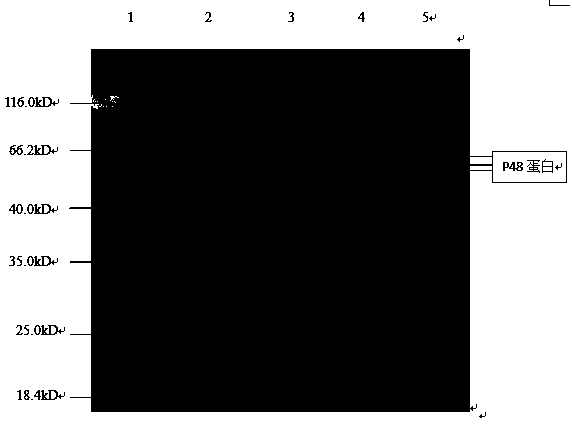
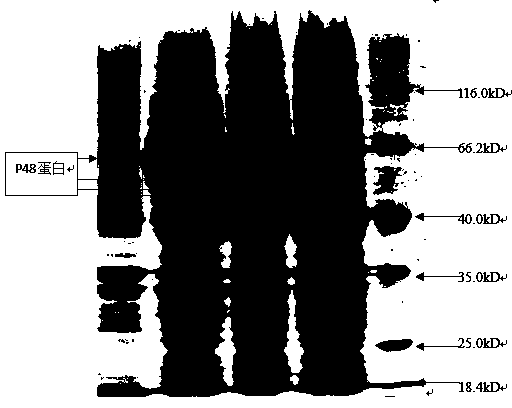
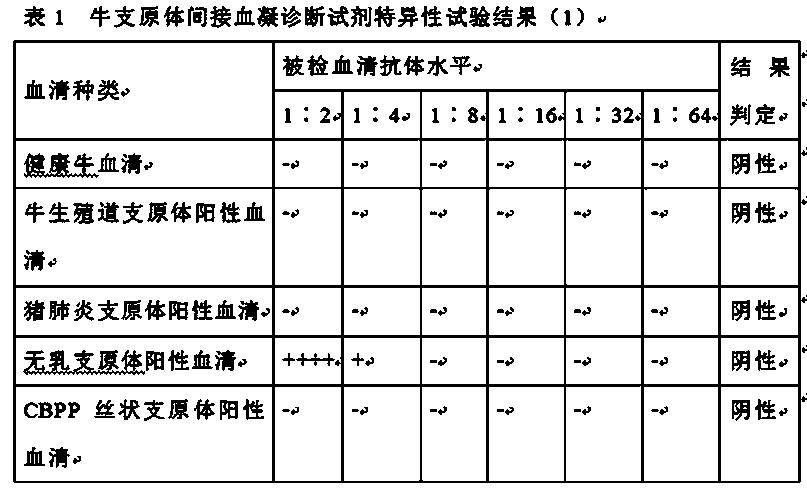
Examples
Embodiment Construction
[0014] The present invention is explained in detail below in conjunction with examples.
[0015] 1. Preparation of recombinantly expressed fusion protein antigen of Mycoplasma bovis P48
[0016] a. Synthesis of p48 gene of Mycoplasma bovis and identification of recombinant plasmid
[0017] The codons of the published Mycoplasma bovis p48 gene (Genebank: NC_014760.1) were optimized according to the preference of codons in Escherichia coli, and four TGAs expressing tryptophan (UGA ) was optimized to TGG (UGG), because this codon is a stop codon in Escherichia coli, and at the same time, restriction sites BamH I and Xho I were added at both ends, and the optimized gene sequence is SEQ ID № 1 ;
[0018] The optimized p48 gene sequence was synthesized into the pet32a expression vector plasmid by Invitrogen Company. After the synthesis, it was identified by sequencing and enzyme digestion, and the positive recombinant plasmid after successful identification was named Pet32-a(+)-p4...
PUM
 Login to View More
 Abstract
Description
Claims
Application Information
 Login to View More