In foreign countries, key-type draft walkers, single longitudinal axial flow, and double longitudinal axial flow platforms are mainly used. As a traditional threshing and
separation technology, key-type draft walkers are still the mainstream platform of grain combine harvesters, but in the design Structurally, it satisfies the performance of grain threshing and separation, but it is not suitable for direct harvesting of corn kernels
[0005] At the same time, there are two main methods of corn
machine harvesting in my country: one is to use an ear picking and peeling
machine to pick off the ears and peel off the
bract leaves. After the ears are dried in the sun, they are threshed by a corn thresher. Many, the loss of grain is large, which increases the cost and is not conducive to large-scale production; one is to use the corn
combine harvester to directly harvest the corn grain through the replacement of the threshing mechanism and other accessories. This method has high efficiency and improves the utilization of the harvester. rate, therefore, direct harvesting of corn kernels is increasingly becoming a trend for
machine harvesting of corn
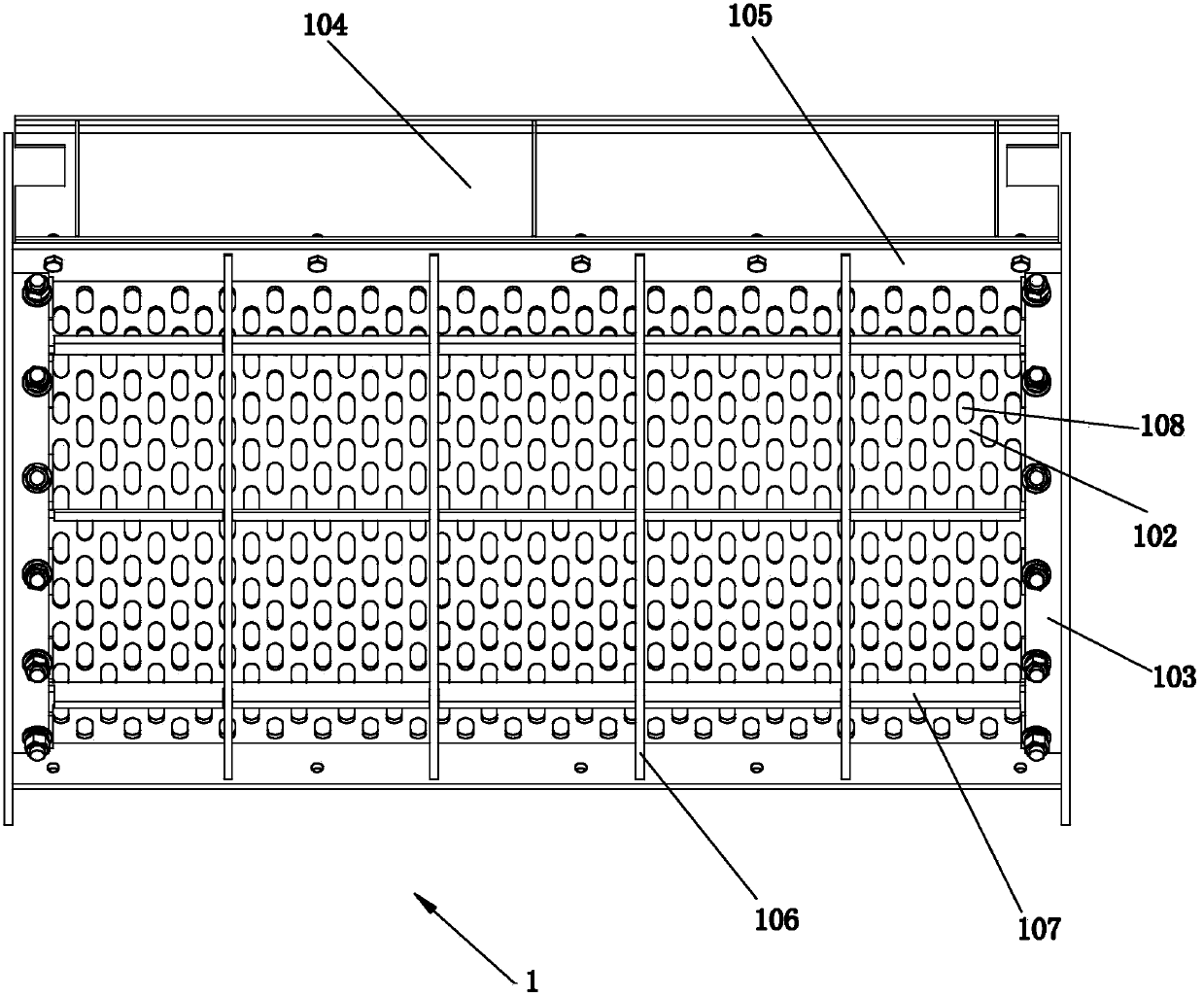
[0006] At present, there are two main types of threshing concave plates used in corn grain threshing and separation devices: one is the grid type threshing concave plate represented by the patent: 201320875300.5, and the transverse diaphragm formed by flat steel has a cross
diameter of 6-16mm Made of round steel, the
sieve hole is rectangular, the
sieve hole rate is about 40%-70% (the ratio of the total area of the
sieve hole to the total area of the threshing concave plate), the removal rate is high, the screening rate is high, and the adaptability is wide. However, the diaphragm has edges and corners and protrudes from the threshing concave plate body, which leads to a high
breakage rate, especially when the
moisture content of corn kernels is high in direct grain harvesting, and the strength of the threshing mechanism of this structure is poor, and it is easy to deform and damage , leading to high maintenance costs; one is the
punching threshing concave plate represented by the patent: 201120234108.9, the holes are round holes or long holes, the hole
diameter is 15-17mm, the sieve hole rate is about 32%, the manufacturing process is simple, The removal rate is high and the
breakage rate is low, but the corn grains passability is poor, the screening rate is low, and the whole threshing concave plate is integrated with other parts, the stability and maintenance convenience are poor, and the threshing gap cannot be adjusted. has greater limitations on
[0007] Moreover, there are three main types of threshing teeth currently used in corn grain threshing and separation devices: one is plate cutter teeth, which have strong grasping and
combing threshing effects, and have better adaptability when crops are fed unevenly, but they are not suitable for corn grains. The damage is greater; one is the short and thick
conical teeth, which cause less damage to the corn kernels, but the threshing efficiency is low; the other is the threshing tooth disc, which has a strong threshing ability and high threshing efficiency, but the reliability is relatively low. Low
The above three threshing gears require the
moisture content of corn kernels to be less than 18%. If the
moisture content is higher than this level, the
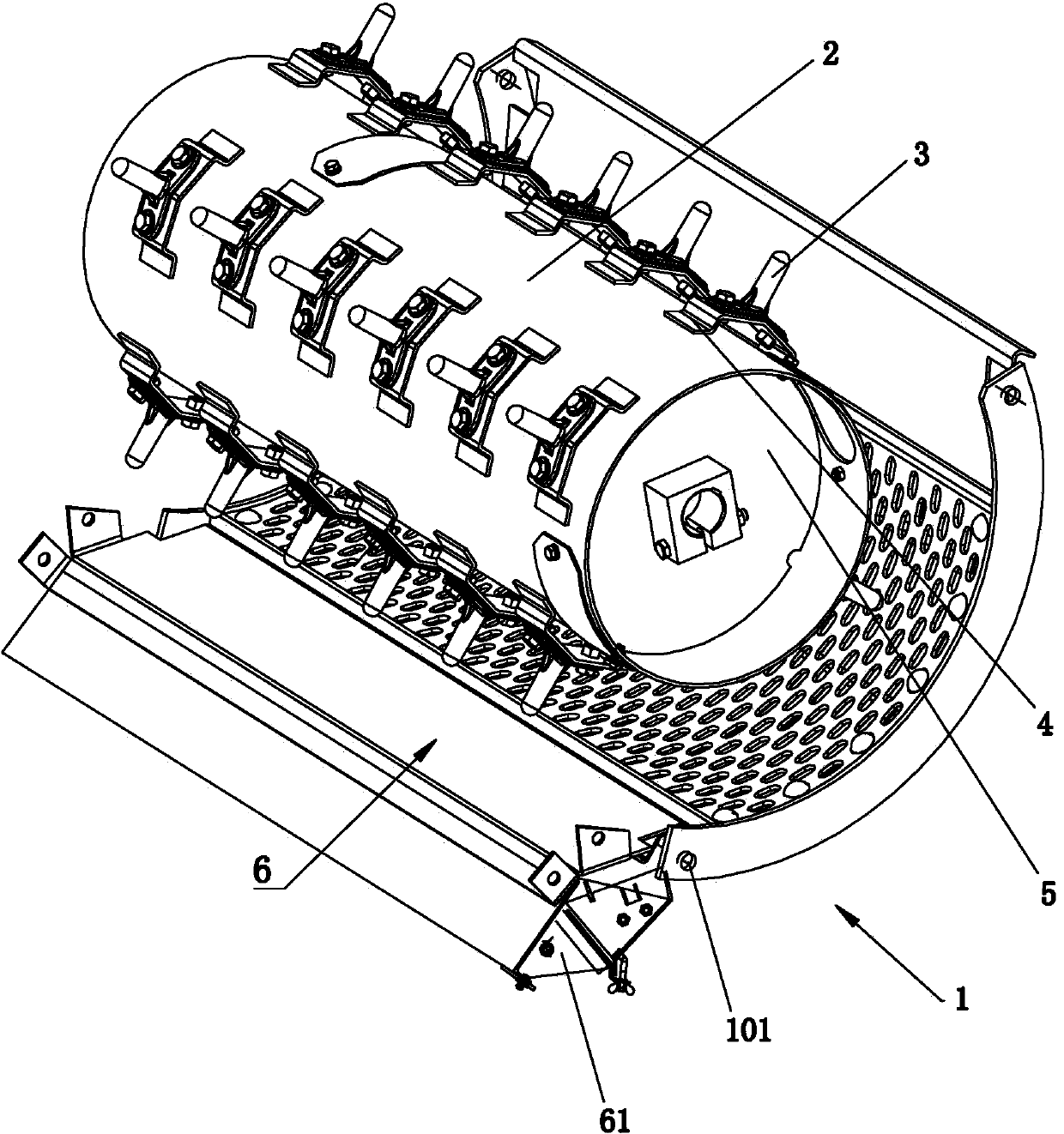
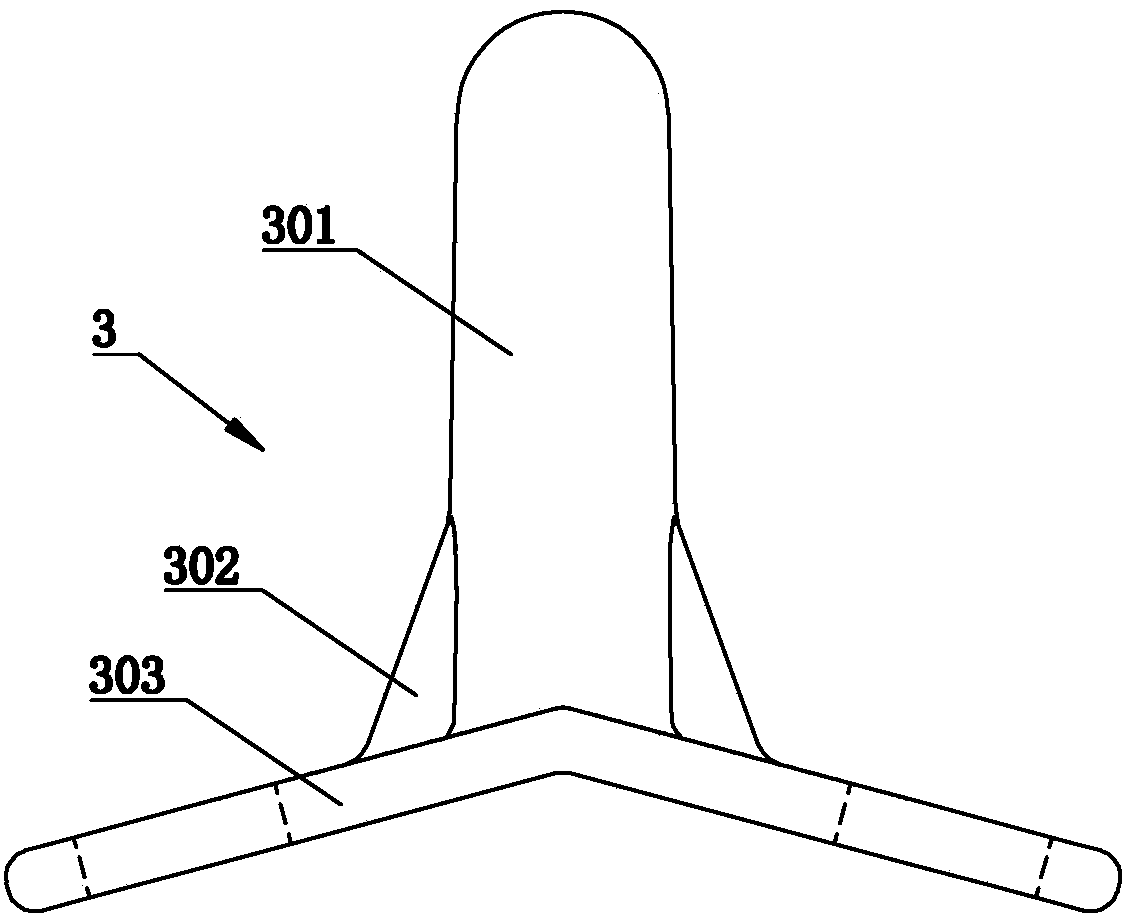
breakage rate of the kernels will be greatly increased; there are three main types of threshing rollers used in combine harvesters: one is nail The toothed roller has strong grasping ability, strong adaptability when the crops are fed unevenly, and strong threshing ability; one is the grained rod roller, which has better threshing performance, but poor adaptability when the crops are fed unevenly, and is easy to threshing. The clogged roller; one is the rod-toothed roller, which crushes the ears of corn and threshes the kernels by
extrusion. The threshing performance is better and the crushing rate is lower; The problem of high crushing rate. The threshing teeth of the rod-toothed drum are short rod teeth, which are machined parts. The upper end is a spherical cylinder, and the lower end is assembled on the gear rod by threads. The cost of use is relatively high, and the existing drum body is spliced, consisting of multiple plates spliced together, which is difficult to manufacture and poor in reliability


 Login to View More
  Login to View More