

Coiled-coil structure protein 8 capable of inhibiting HIV-1 and its application
A coiled-coil structure, HIV-1 technology, applied in the field of biomedicine, can solve problems such as drug resistance, inability to completely cure AIDS, and HIV side effects
- Summary
- Abstract
- Description
- Claims
- Application Information
AI Technical Summary
Problems solved by technology
Method used
Image


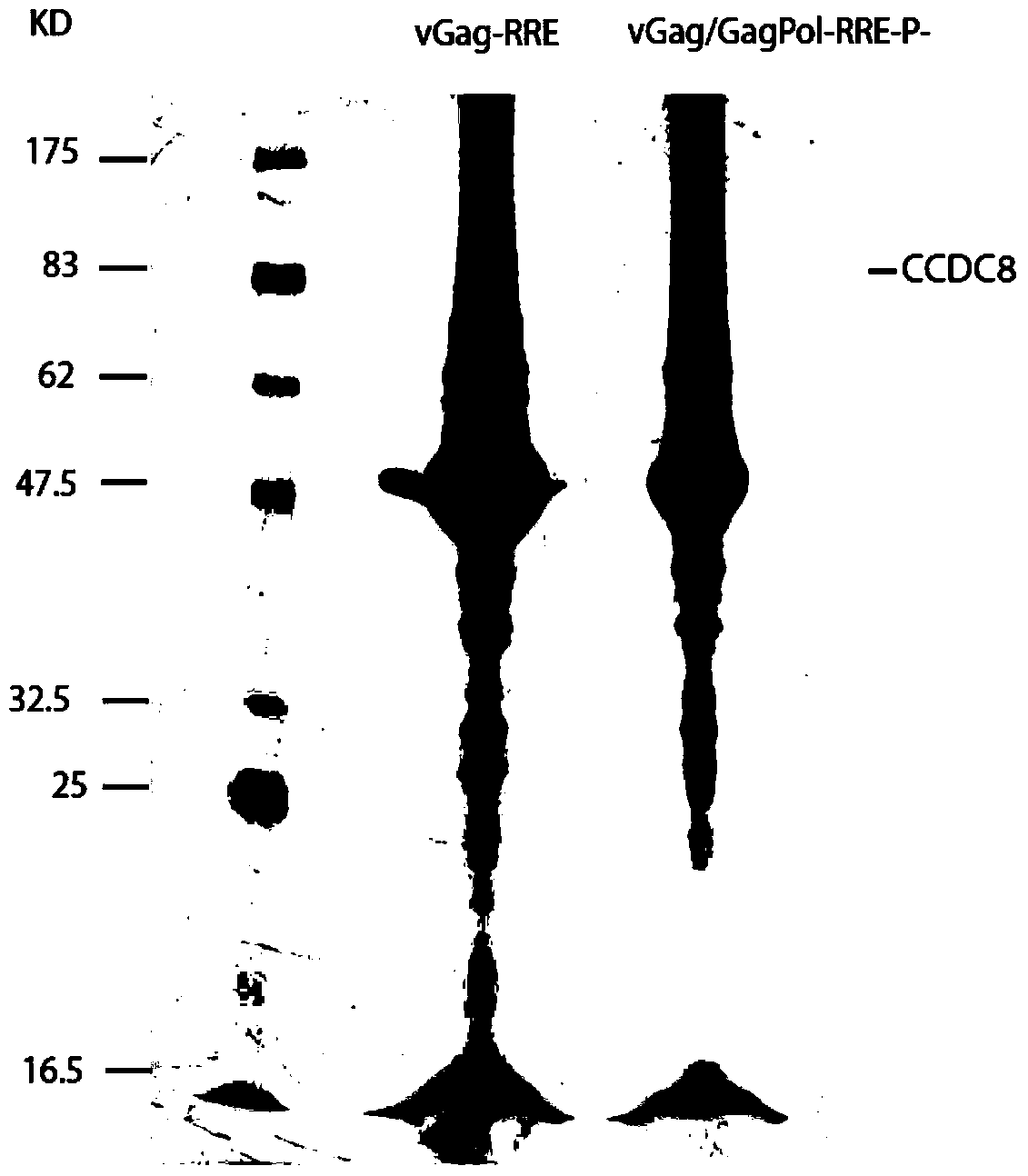
Examples
Embodiment 1
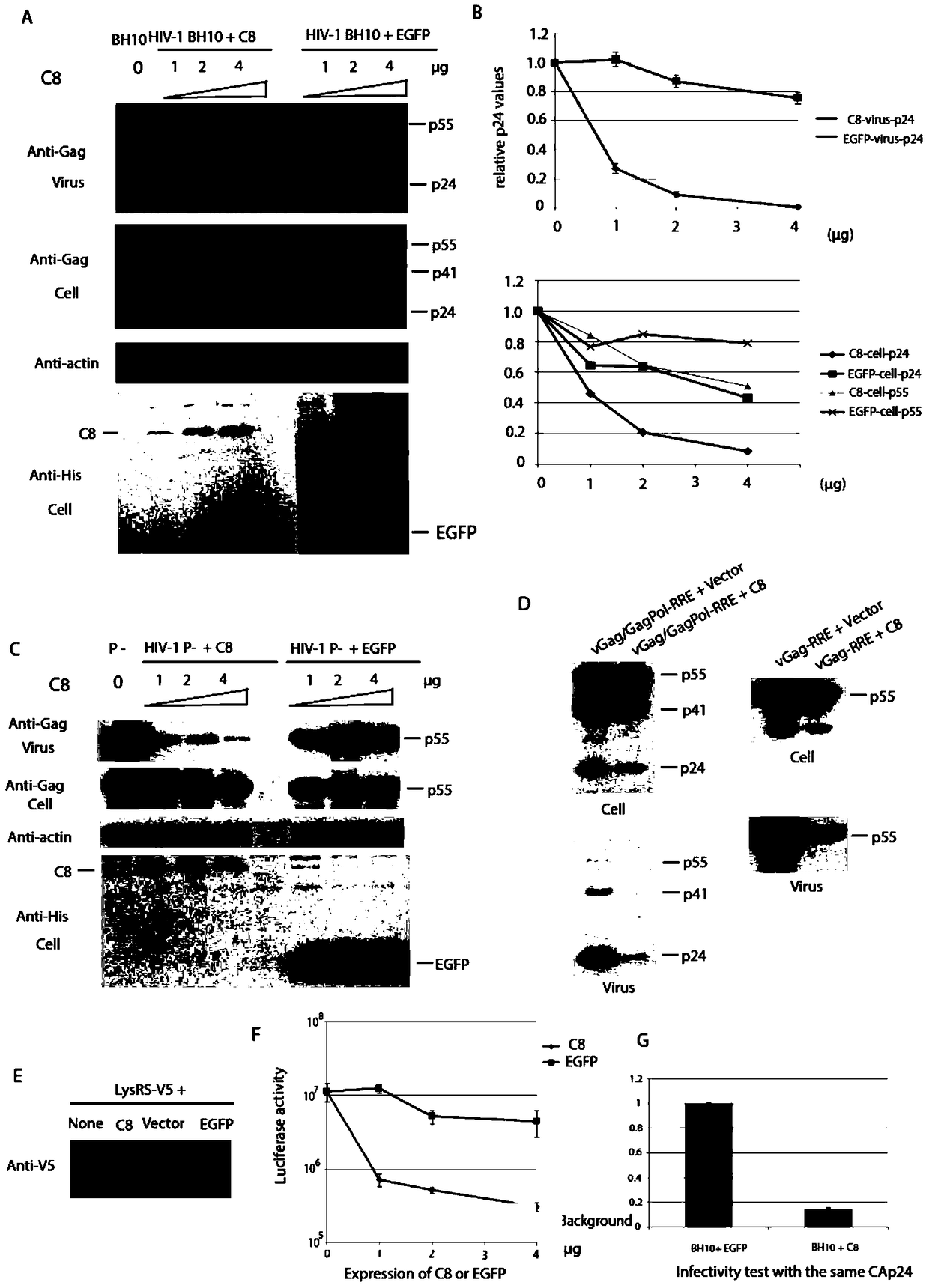
[0024] Example 1, HIV-1 resistance experiment of CCDC8
[0025] First, the plasmid pTT5-SH5-CCDC8 expressing CCDC8 was constructed. The vector pTT5-SH5 was constructed by Yves Durocher, Biotechnology Research Institute, Montreal, Canada and the vector sequence was provided. Using the method of reverse transcription polymerase chain reaction (RT-PCR), the primers are TT-CCDC8-BamHI and TT-CCDC8-EcoRI (as shown in Table 1) to amplify CCDC8, and the amplified product is treated with restriction endonuclease After digestion with BamHI and EcoRI, clone into pTT5-SH5 vector. The CCDC8 sequence was confirmed by Invitrogen (SEQ ID No.1), and the protein sequence was translated according to the triple codon rule (SEQ ID No2).
[0026] Then, HEK293T cells (CRL-11268, ATCC) were cultured in DMEM medium supplemented with 10% serum and penicillin in a 37°C incubator containing 5% carbon dioxide. After recovery, the cells are cultured for two weeks and can be used after being stabilized....
Embodiment 2
[0034] Example 2, CCDC8 can cause polyubiquitination and degradation of HIV-1 Gag
[0035] CCDC8 interacts with Gag, OBSL1 and Cul7. Checking the literature shows that CCDC8 is related to 3M syndrome, a genetic disease. 3M syndrome is an autosomal recessive genetic disease, mainly characterized by short stature but normal intelligence. Using exome sequencing, 70% of patients had mutations in the E3 ligase Cul7, 25% had mutations in OBSL1, and 5% had mutations in CCDC8. 3M syndrome and in vitro co-immunoprecipitation experiments linked CCDC8, OBSL1 and Cul7 together, suggesting that they are in a cellular pathway. We also found that OBSL1 or Cul7 alone had no anti-HIV-1 effect ( Figure 6 A). Our co-immunoprecipitation experiments also showed that HIV-1Gag interacted with CCDC8 ( Figure 6 B), Cul7 also interacts with CCDC8 and OBSL1 ( Figure 6 C). The specific method is as follows. After 48 hours of transfection, the cells were lysed with the following buffer (20mM Tri...
PUM
 Login to View More
 Abstract
Description
Claims
Application Information
 Login to View More