
A kind of preparation method of organoid spheroid
An organoid and spheroid technology, applied in the field of organoid spheroid preparation, can solve problems such as the uneven shape and size of organoids, affecting the accuracy and repeatability of prediction results, and the inability of high-throughput preparation of organoids to achieve the modeling cycle The effect of short, low cost, high throughput production
Patent Information
- Authority / Receiving Office
- CN · China
- Patent Type
- Patents(China)
- Current Assignee / Owner
- Publication Date
- 2021-10-08
Smart Images
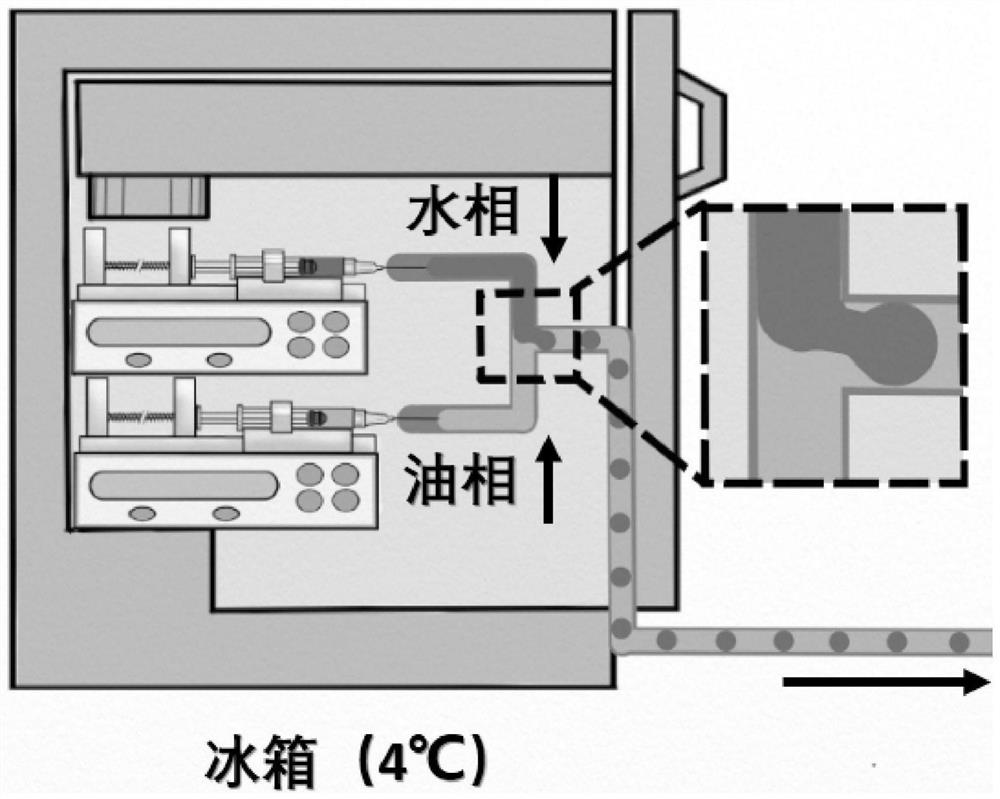
Figure 1 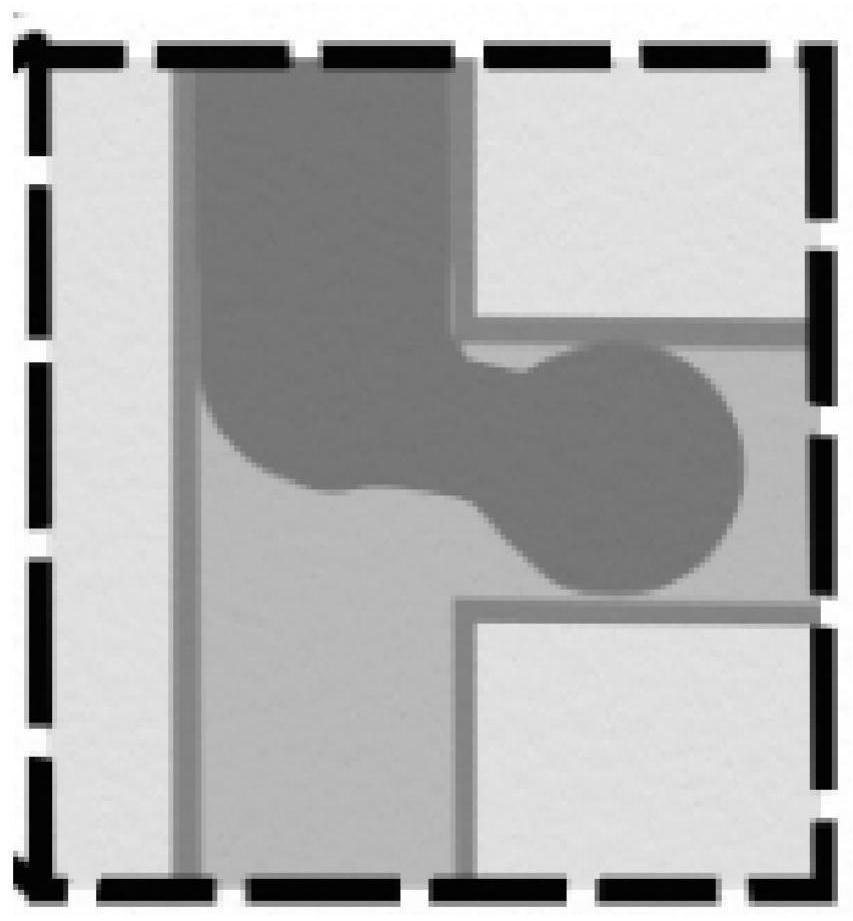
Figure 2 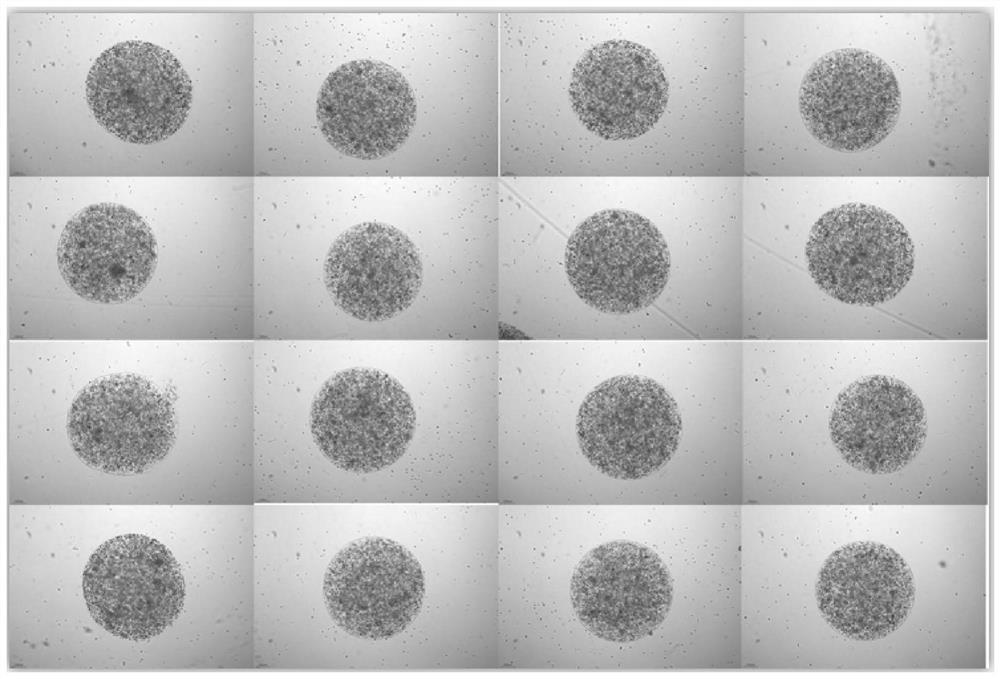
Figure 3
Abstract
Description
technical field
[0001] The invention belongs to the field of medical devices and relates to a method for preparing organoid spheroids. Background technique
[0002] Organoids are multicellular clusters constructed by three-dimensional (3D) culture in vitro, which have the ability of self-renewal and self-organization, and maintain the characteristics of the physiological structure and function of their source tissues. Tumor organoids are organoids derived from tumor tissues, which are new and powerful tools for studying tumor biology. Organoid technology is the fastest-growing type of in vitro culture technology in the past decade, and was once hailed as one of the most important scientific advances in 2013. In 2014, Lancaster and Knoblich formally made a systematic scientific definition of organoids, laying a theoretical foundation for the future development of organoid technology.
[0003] The current organoid culture technology is to encapsulate pluripotent embryonic st...
Examples
Embodiment 1
[0049] This embodiment provides a method for preparing organoid spheroids, comprising the following steps:
[0050] Use the primary cell extraction method to extract primary cells, and count the cells; in 4°C environment, 2.0×10 6 Mix one primary cell with 100 μL matrigel, inject it into a 1mL syringe, inject fluorine oil into another syringe, place the fluorine oil and matrigel in two syringe pumps and put them in a 4°C refrigerator; It is a 800μm polytetrafluoroethylene (PTFE) tube, and the two tubes are merged into a polydimethylsiloxane (PMDS) three-way device to obtain cell spheroids, and then the three-way device is connected to another PTFE tube with a diameter of 800 μm, and the entire platform Place in a refrigerator at 4°C; the flow rate of the injection pump containing Matrigel is 20 μL / min, and the flow rate of the fluorine-containing oil injection pump is 50 μL / min, and then the cell spheroids are placed at 37°C with a concentration of 5% CO 2 The solidification ...
Embodiment 2
[0053] This embodiment provides a method for preparing organoid spheroids, comprising the following steps:
[0054] Use the primary cell extraction method to extract primary cells, and count the cells; in an environment of 4°C, 5.0×10 6 Mix one primary cell with 200μL Matrigel, inject it into a 1mL syringe, inject fluorine oil into the other syringe, place the fluorine oil and Matrigel in two syringe pumps and put them in a 4°C refrigerator; It is a 800μm polytetrafluoroethylene (PTFE) tube, and the two tubes are merged into a polydimethylsiloxane (PMDS) three-way device to obtain cell spheroids, and then the three-way device is connected to another PTFE tube with a diameter of 800 μm, and the entire platform Place in a refrigerator at 4°C; the flow rate of the injection pump containing Matrigel is 25 μL / min, and the flow rate of the fluorine-containing oil injection pump is 55 μL / min, and then the cell spheroids are placed at 37°C with a concentration of 5% CO 2 The solidifi...
Embodiment 3
[0056] This embodiment provides a method for preparing organoid spheroids, comprising the following steps:
[0057] Use the primary cell extraction method to extract primary cells and count the cells; in an environment of 4°C, 1.0×10 6 1 primary cell and 80 μL of Matrigel were mixed thoroughly, injected into a 1mL syringe, and the other syringe was injected with fluorine oil. The fluorine oil and Matrigel were respectively placed in two syringe pumps and placed in a 4°C refrigerator; the syringes were respectively connected with diameters It is a 600μm polytetrafluoroethylene (PTFE) tube. The two tubes are merged into a polydimethylsiloxane (PMDS) three-way device to obtain cell spheroids, and then the three-way device is connected to another PTFE tube with a diameter of 600 μm. The entire platform Place in a refrigerator at 4°C; the flow rate of the injection pump containing Matrigel is 15 μL / min, and the flow rate of the fluorine-containing oil injection pump is 45 μL / min, a...