Deep trench isolation technical method

A process method, deep groove technology, applied in electrical components, semiconductor/solid-state device manufacturing, circuits, etc., to reduce challenges, reduce difficulty, and save masks

CN110379765AActive Publication Date: 2019-10-25SHANGHAI HUAHONG GRACE SEMICON MFG CORP
3 Cites 3 Cited by

Patent Information

Authority / Receiving Office
CN · China
Patent Type
Applications(China)
Current Assignee / Owner
Publication Date
2019-10-25

Smart Images

  • Figure 1
    Figure 1
  • Figure 2
    Figure 2
  • Figure 3
    Figure 3
Patent Text Reader

Abstract

The invention discloses a deep trench isolation technical method. The method comprises that a silicon oxide layer and a silicon nitride layer are formed in the surface of a semiconductor substrate successively; a photoresist is defined to etch the silicon oxide layer and the silicon nitride layer, an area to form a deep trench is opened, and the trench of certain depth is formed by etching downwards; a linear oxide layer is formed in the trench, and polycrystalline silicon is filled; polycrystalline silicon is etched back; a furnace tube is oxide to form a silicon oxide layer; the silicon oxide layer and the silicon nitride layer are removed; epitaxial growth is carried out; the silicon oxide layer is formed; polycrystalline silicon is filled; the polycrystalline silicon in the epitaxial surface and the deep trench are etched back; and the silicon oxide layer in the epitaxial surface is removed by etching. According to the technical method, part depth of trench is formed before epitaxial deposition technology, the subsequent trench is formed by using the characteristic of selective growth of the epitaxial deposition technology, the difficulty of dry etching is reduced, challenge totrench pore-filling is reduced, and a zero-layer mask can be omitted.
Need to check novelty before this filing date? Find Prior Art

Description

technical field

[0001] The invention relates to the field of semiconductor device manufacturing, in particular to a deep trench isolation process method for nodes below the 0.18 μm BCD process. Background technique

[0002] Trench filling is a particularly critical step in semiconductor manufacturing. At present, silicon dioxide and its derivatives are widely used in trench filling due to their good film properties. Traditional preparation techniques include spin coating (Spin on Glass), sub-atmospheric pressure chemical vapor deposition (SACVD: Sub Atmosphere Chemical Vapor Deposition), plasma chemical vapor deposition (PECVD: Plasma Enhanced Chemical Vapor Deposition) and high-density plasma chemical vapor deposition. Vapor deposition method (HDPCVD: High Density Plasma Chemical Vapor Deposition), etc. The usual trench structure has a depth of no more than 1 micron and an opening of less than 0.25 micron (the size of the opening is fixed). Such a structure can be filled ...

Examples

Embodiment Construction

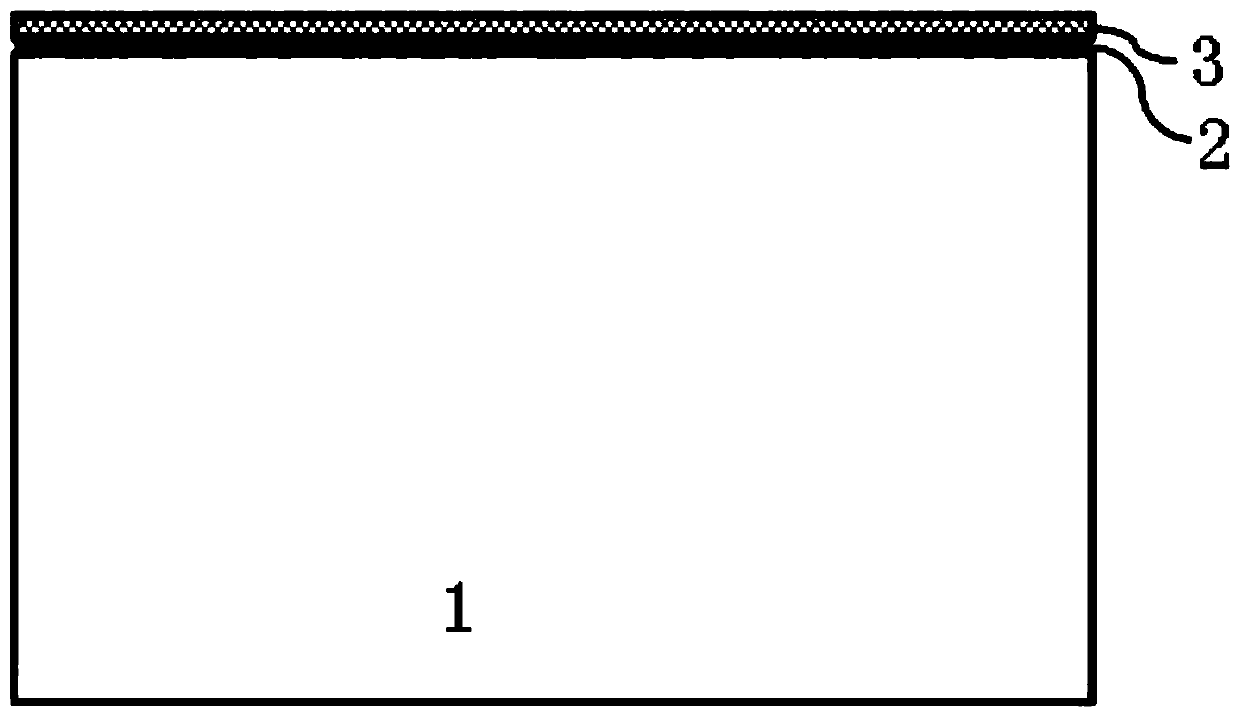
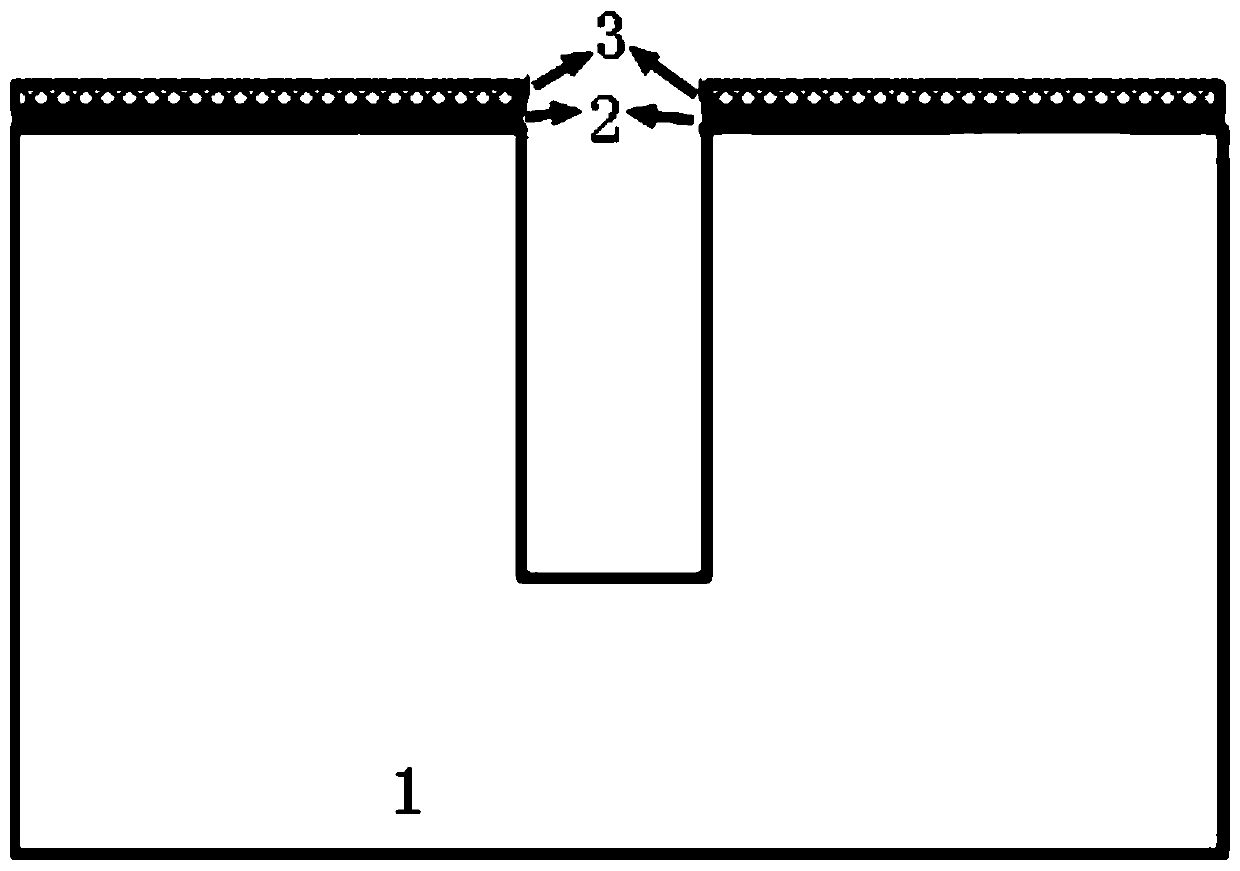
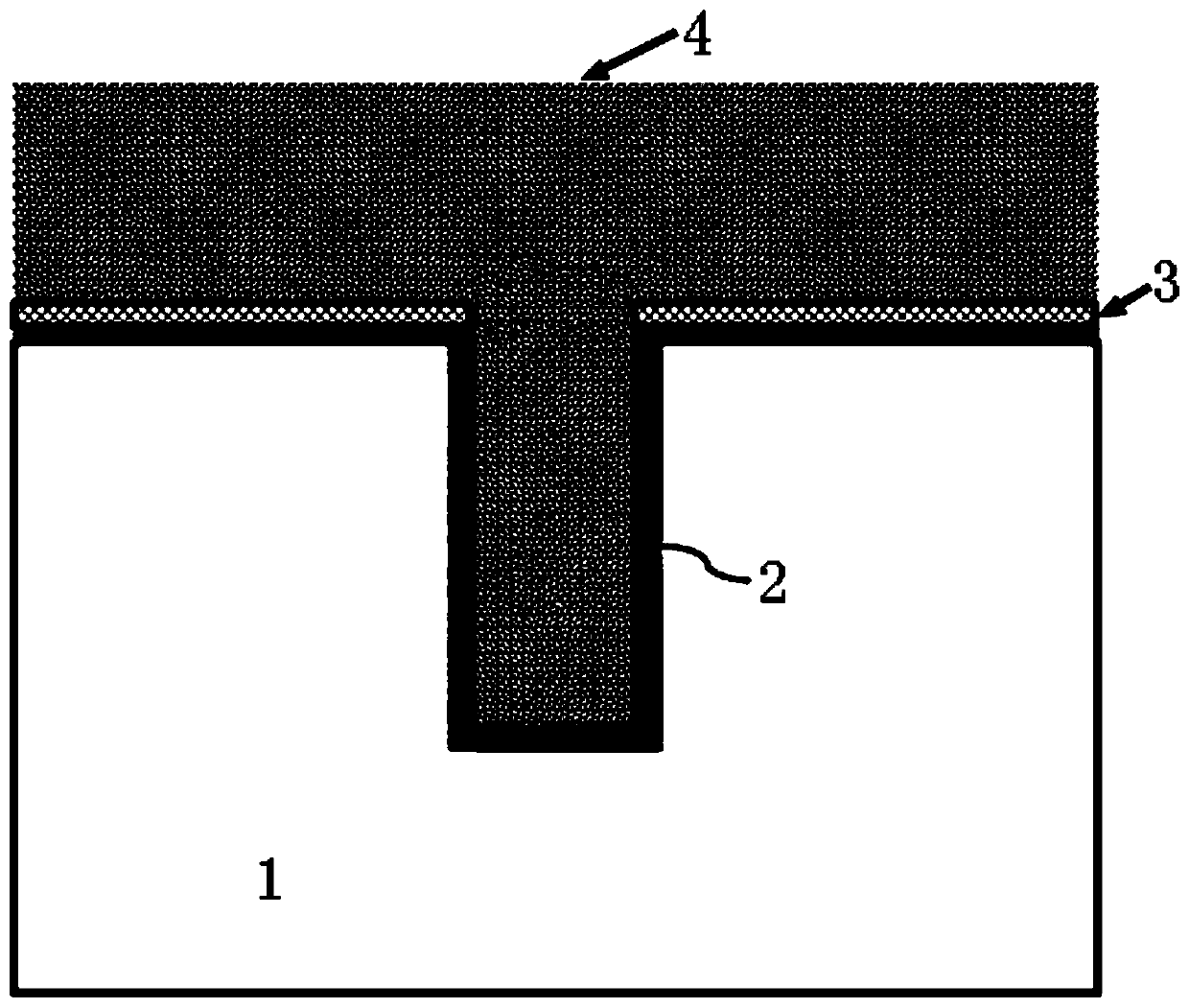
[0032] The deep trench isolation process method described in the present invention is described as follows in conjunction with the accompanying drawings, and each step corresponds to Figure 1 to Figure 10 , including the following process steps:

[0033] In step 1, a semiconductor substrate is provided, and a silicon oxide layer and a silicon nitride layer are sequentially formed on the surface of the semiconductor substrate, such as figure 1 shown. Forming the silicon oxide layer and the silicon nitride layer adopts a traditional deposition process to form a film layer with uniform thickness and good quality on the surface of the semiconductor substrate.

[0034] Step 2: Etch the silicon nitride layer and the silicon oxide layer through the definition of photoresist, open the area where the deep trench is to be formed, etch downward to form a trench with a certain depth, and the depth of the downward etching can be freely It is determined that the downward etching depth i...