
Preparation method of FeTeSe polycrystalline superconductor
A technology of superconductors and crystal blanks, which is applied in the field of preparation of FeTe1-xSex polycrystalline superconductors, can solve problems such as low critical current density, and achieve the effects of short microwave reaction process, low power consumption, and short synthesis time.
- Summary
- Abstract
- Description
- Claims
- Application Information
AI Technical Summary
Problems solved by technology
Method used
Image

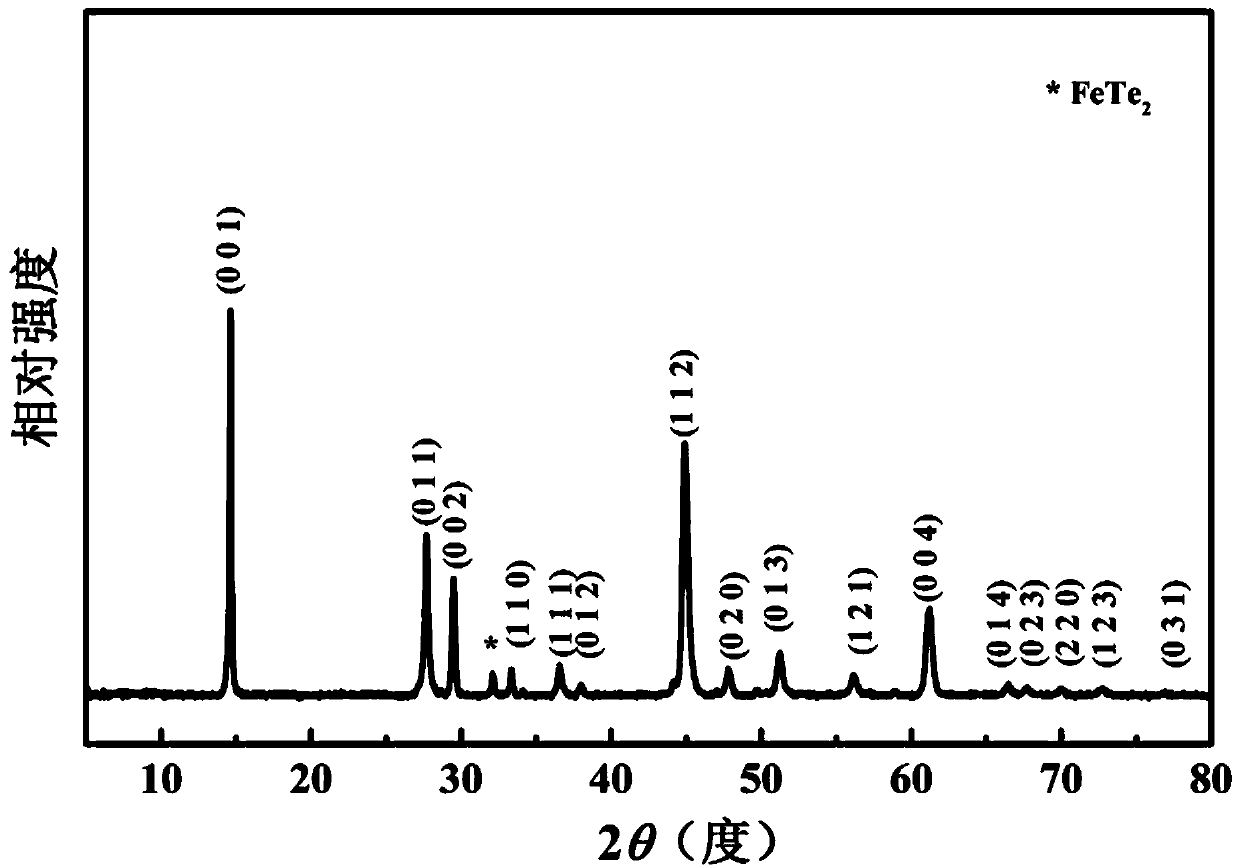
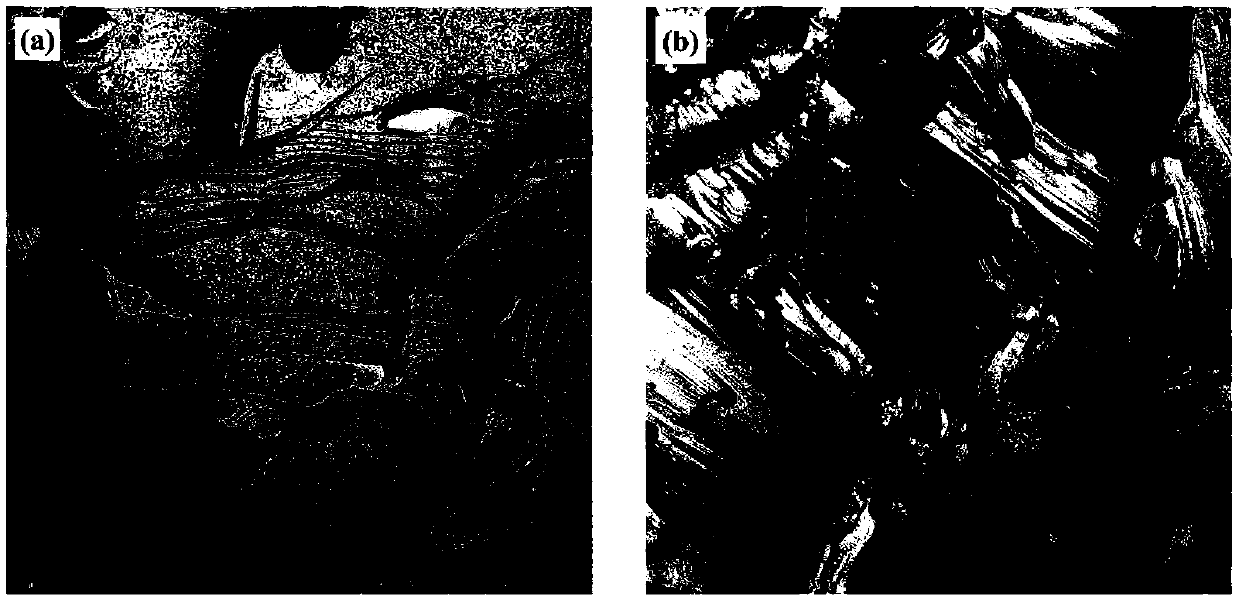
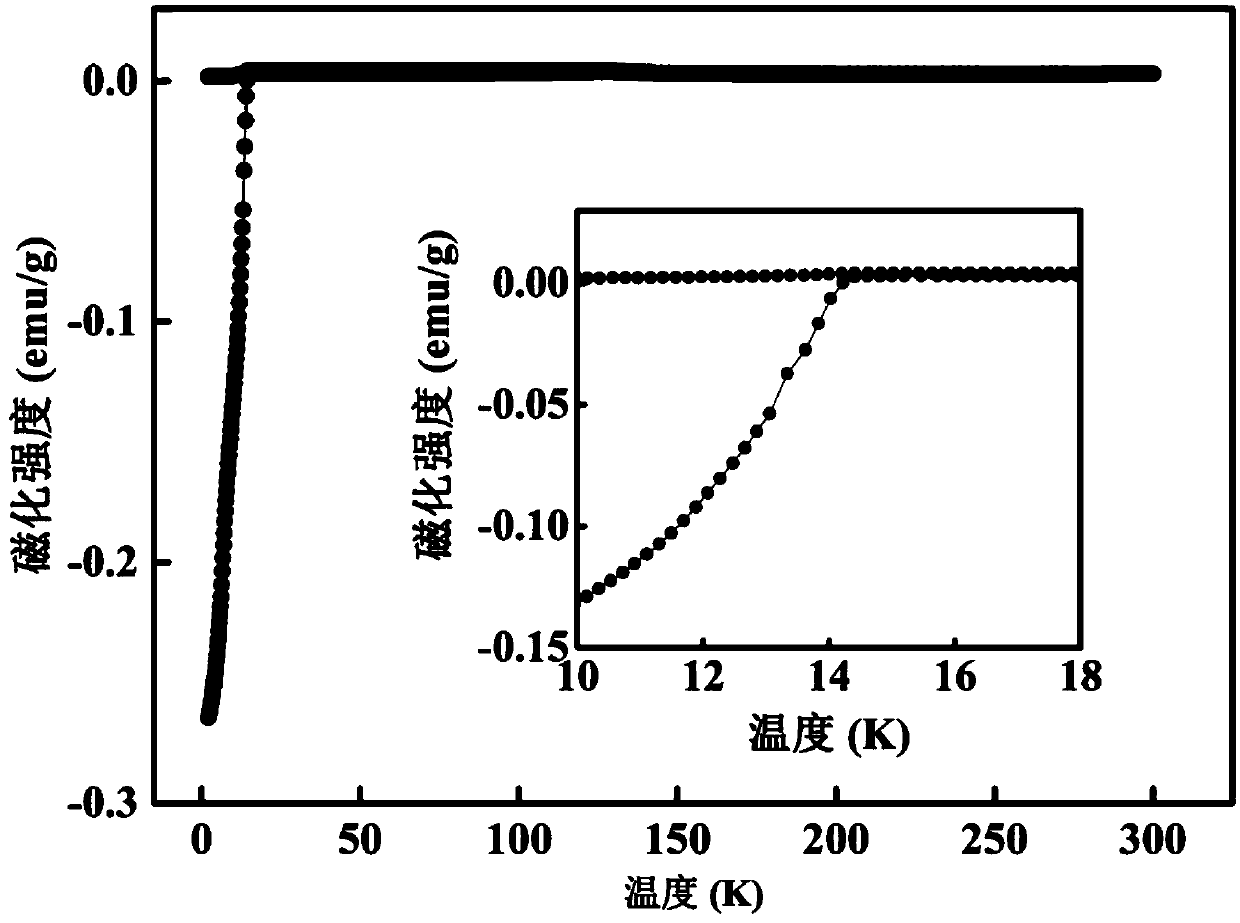
Examples
Embodiment 1
[0030] This example is used to specifically illustrate the preparation method of the FeTeSe polycrystalline superconductor of the present invention.
[0031](1) Mix Fe powder (purity 99.9%), Te powder (purity 99.999%) and Se powder (purity 99.999%) in an atomic ratio of 1:0.6:0.4 and grind them thoroughly for 30 minutes, take out 0.3 grams and put them in In a mold with a diameter of 8 mm, a small piece with a thickness of 1 mm is pressed through the mold under a pressure of 400 MPa, and the small piece is packed into a quartz tube with one end sealed. The quartz tube containing the raw material is evacuated by a molecular pump, and the vacuum degree is 10 -3 Pa or above, and seal the other port with a welding gun to ensure that the sample is in an oxygen-free environment.
[0032] (2) Put the quartz tube sealed with raw materials obtained in step (1) into the center of the cavity of a microwave oven (microwave oven model is EM-310BX, Sanyo), take out the microwave oven turnt...
Embodiment 2
[0050] This example is used to specifically illustrate the preparation method of the FeTeSe polycrystalline superconductor of the present invention.
[0051] (1) Mix Fe powder (purity 99.9%), Te powder (purity 99.999%) and Se powder (purity 99.999%) in an atomic ratio of 1:0.4:0.6 and grind them thoroughly for 30 minutes, take out 0.3 grams and put them in In a mold with a diameter of 8 mm, a small piece with a thickness of 1 mm is pressed through the mold under a pressure of 400 MPa, and the small piece is packed into a quartz tube with one end sealed. The quartz tube containing the raw material is evacuated by a molecular pump, and the vacuum degree is 10 -3 Pa or above, and seal the other port with a welding gun to ensure that the sample is in an oxygen-free environment.
[0052] (2) Put the quartz tube sealed with raw materials obtained in step (1) into the center of the cavity of a microwave oven (microwave oven model is EM-310BX, Sanyo), take out the microwave oven turn...
Embodiment 3
[0057] This example is used to specifically illustrate the preparation method of the FeTeSe polycrystalline superconductor of the present invention.
[0058] (1) Mix Fe powder (purity 99.9%), Te powder (purity 99.999%) and Se powder (purity 99.999%) in an atomic ratio of 1:0.5:0.5 and grind them thoroughly for 30 minutes, take out 0.3 grams and put them in In a mold with a diameter of 8 mm, a small piece with a thickness of 1 mm is pressed through the mold under a pressure of 400 MPa, and the small piece is packed into a quartz tube with one end sealed. The quartz tube containing the raw material is evacuated by a molecular pump, and the vacuum degree is 10 -3 Pa or above, and seal the other port with a welding gun to ensure that the sample is in an oxygen-free environment.
[0059] (2) Put the quartz tube sealed with raw materials obtained in step (1) into the center of the cavity of a microwave oven (microwave oven model is EM-310BX, Sanyo), take out the microwave oven turn...
PUM
| Property | Measurement | Unit |
|---|---|---|
| power | aaaaa | aaaaa |
| superconducting critical temperature | aaaaa | aaaaa |
| current density | aaaaa | aaaaa |
Abstract
Description
Claims
Application Information
 Login to View More