Self-adaptive amplitude-phase control method for variable-step-size hydraulic vibration table

A hydraulic vibration, amplitude and phase control technology, applied in the direction of adaptive control, vibration test, general control system, etc., can solve problems such as difficulty in ensuring real-time performance and complicated parameter setting

CN111795791AActive Publication Date: 2020-10-20ZHEJIANG UNIV
16 Cites 1 Cited by

Patent Information

Authority / Receiving Office
CN · China
Patent Type
Applications(China)
Current Assignee / Owner
Publication Date
2020-10-20

Smart Images

  • Figure 1
    Figure 1
  • Figure 2
    Figure 2
  • Figure 3
    Figure 3
Patent Text Reader

Abstract

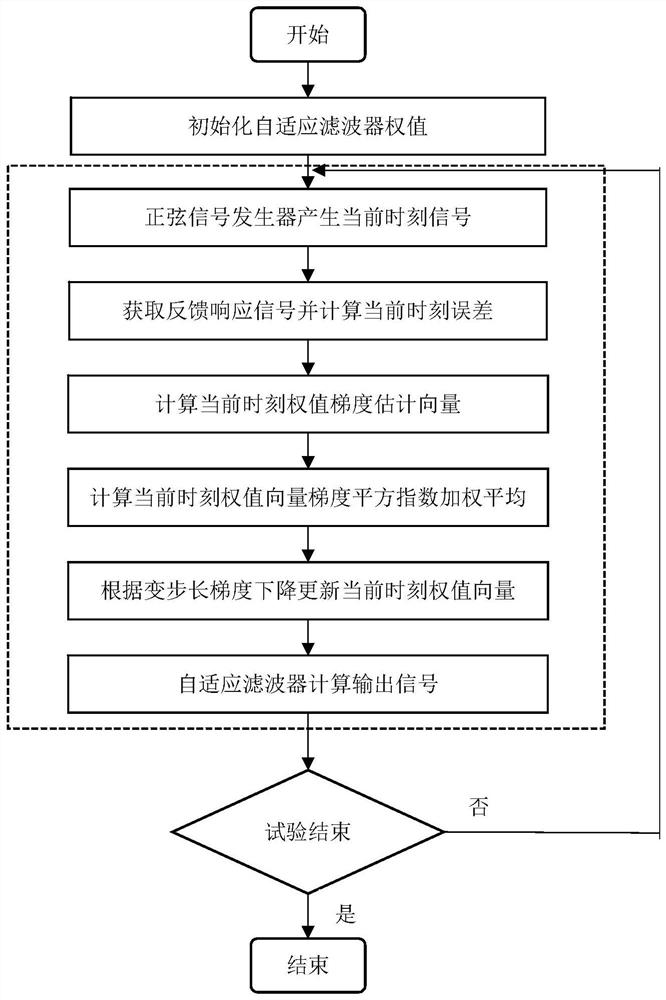
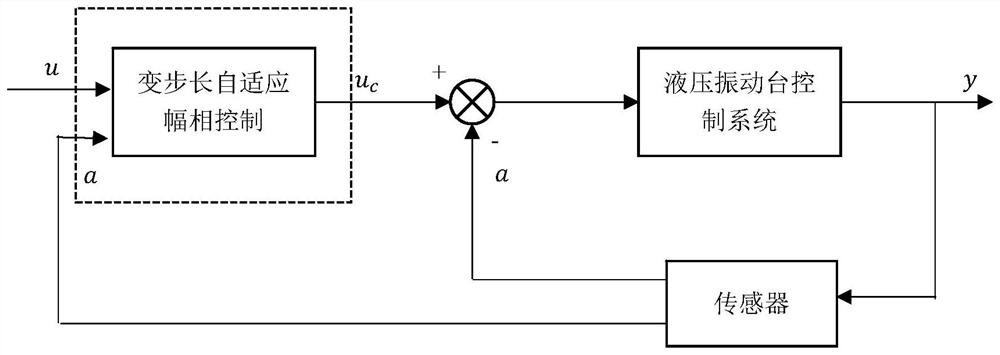
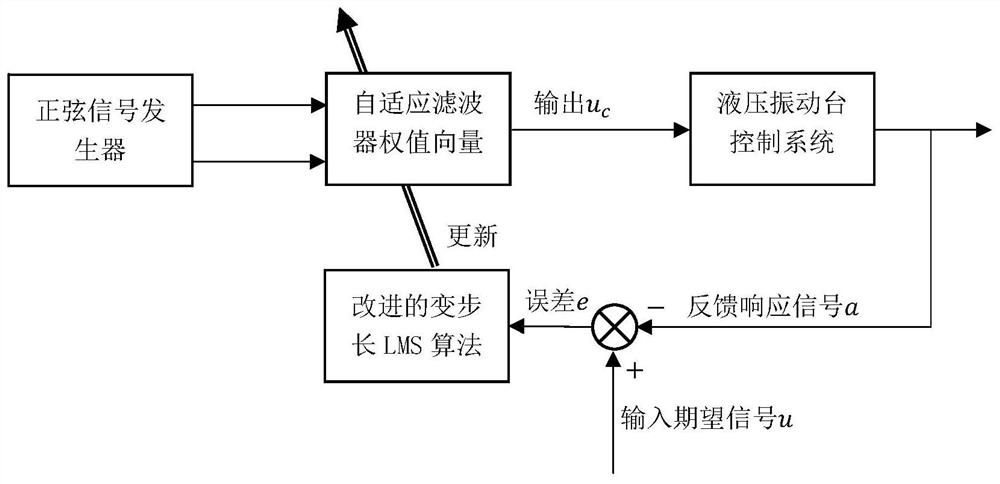
The invention discloses an self-adaptive amplitude-phase control method for a variable-step-size hydraulic vibration table, which is used for improving the tracking precision of sine response signalsof all frequency points in a hydraulic vibration table test. According to the method, a self-correcting network composed of a sinusoidal signal generator and a self-adaptive filter is designed to compensate an input expected signal of a hydraulic vibration table control system, and the weight of the correcting network is updated through an improved variable step size LMS algorithm according to thecurrent moment error; in each control cycle, the self-correcting network performs subtraction on a current input expected signal and a feedback real-time response signal to obtain a current moment error; the weight of the self-correcting network is updated by utilizing the improved variable step size LMS algorithm according to the error; an output signal of the self-correcting network is used asan actual input signal of the hydraulic vibration table control system, so that the error of a system response signal is reduced, the response error approaches 0 after final convergence; and the vibration table can reproduce sine expected waveform signals input at each frequency point with high precision through the online adjustment method.
Need to check novelty before this filing date? Find Prior Art

Description

technical field

[0001] The invention belongs to the technical field of self-adaptive control, and in particular relates to a control method for improving the response accuracy of a hydraulic vibration table's sinusoidal waveform. Background technique

[0002] The hydraulic vibration table has a wide operating frequency, large output thrust, and strong load capacity. It plays an important role in vibration tests. It is often used in fatigue vibration tests of various parts in the automotive industry, anti-vibration tests of building structures in civil engineering, and ships, Anti-vibration, vibration reduction, and vibration isolation tests for aerospace products. The hydraulic vibration table has a large hydraulic spring stiffness, small component inertia, and high hydraulic natural frequency, which makes the control system excellent in speed and response. It can be controlled by pole configuration and other control methods. Theoretically, the system can reproduce the input...

Examples

Embodiment Construction

[0036] In order to make the above objects, features and advantages of the present invention more comprehensible, specific implementations of the present invention will be described in detail below in conjunction with the accompanying drawings.

[0037] In the following description, a lot of specific details are set forth in order to fully understand the present invention, but the present invention can also be implemented in other ways different from those described here, and those skilled in the art can do it without departing from the meaning of the present invention. By analogy, the present invention is therefore not limited to the specific examples disclosed below.

[0038] figure 1 It is a flow chart of the self-adaptive amplitude and phase control method of a hydraulic vibration table with variable step size according to the present invention, and the online real-time operation process of each control cycle is shown in the dotted line frame; figure 2 It is the principle...