

Oriental acetic acid bacterium for cellulose degradation and application thereof
An acetic acid bacteria and cellulose-degrading technology, applied in the biological field, can solve problems such as lack of efficient cellulose degradation
- Summary
- Abstract
- Description
- Claims
- Application Information
AI Technical Summary
Problems solved by technology
Method used
Image

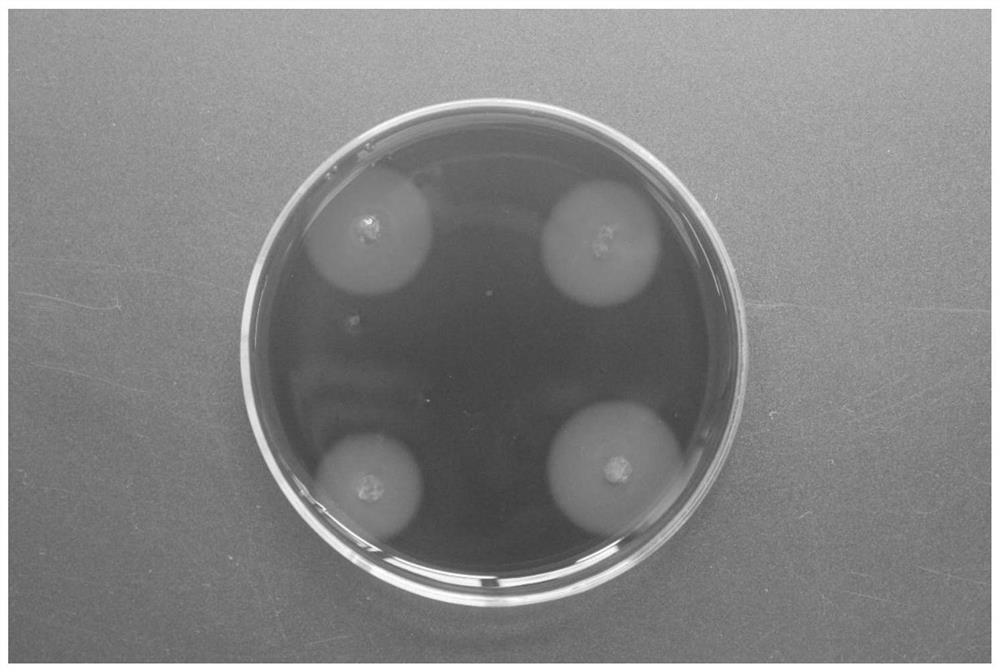
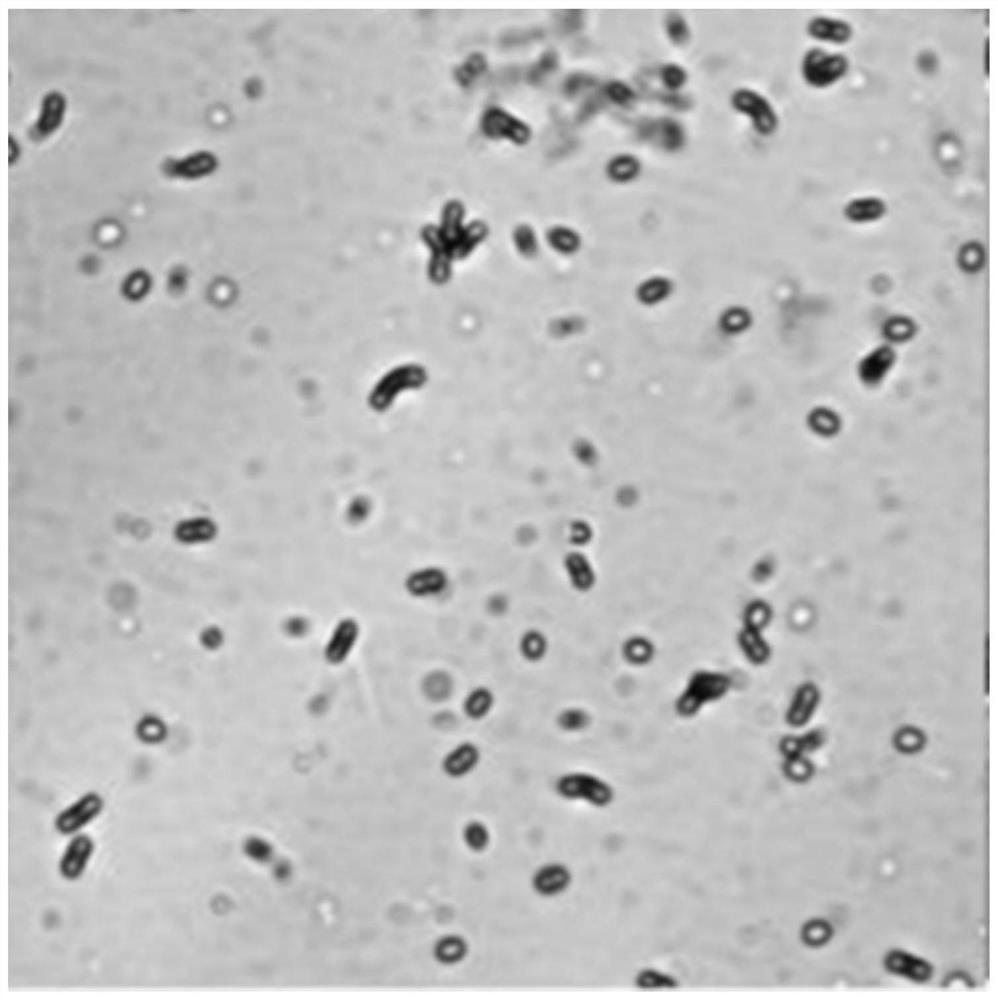
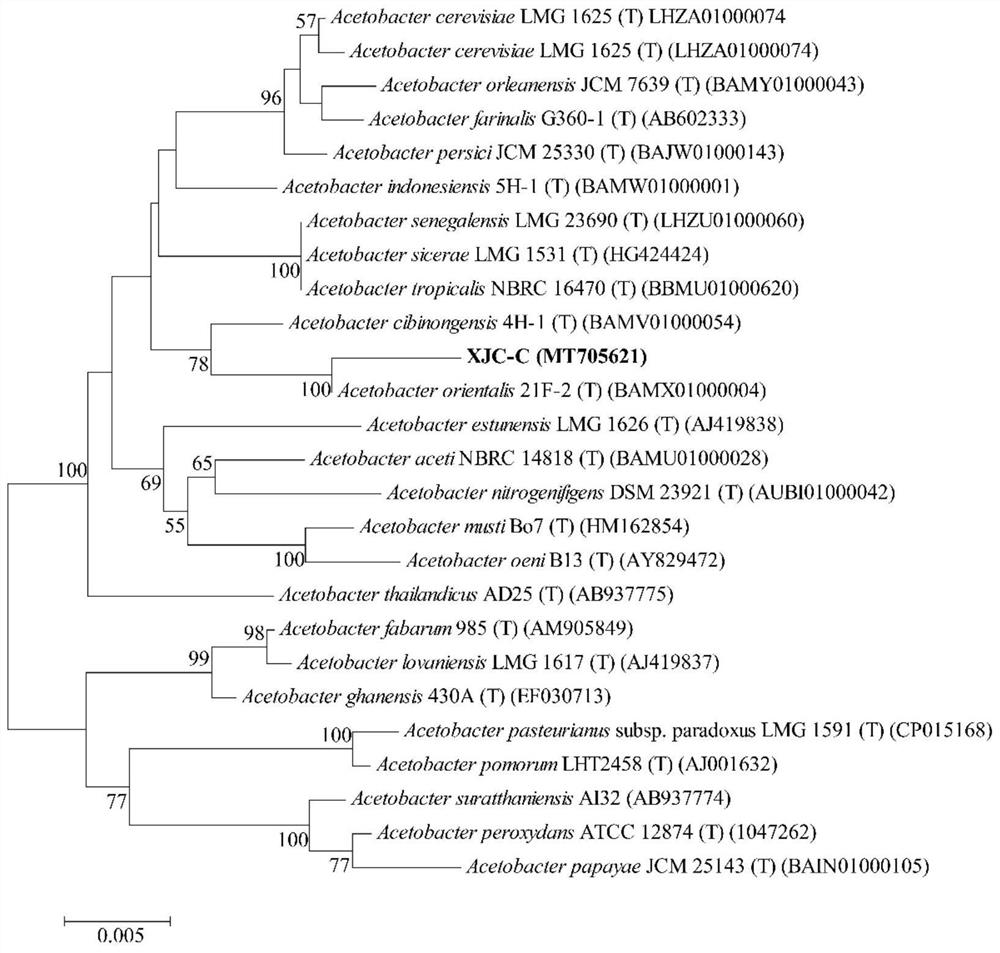
Examples
Embodiment Construction
[0034]The following will clearly and completely describe the technical solutions in the embodiments of the present invention with reference to the accompanying drawings in the embodiments of the present invention. Obviously, the described embodiments are only some, not all, embodiments of the present invention. Based on the embodiments of the present invention, all other embodiments obtained by persons of ordinary skill in the art without creative efforts fall within the protection scope of the present invention.
[0035] 1. Materials and methods
[0036] 1.1 Test material
[0037] 1.1.1 Soft coral isolation materials
[0038] The tested strains were isolated from soft corals in the South China Sea, and were stored in the Key Laboratory of Tropical Microorganism Resources of Hainan Province, Institute of Tropical Biotechnology, Chinese Academy of Tropical Agricultural Sciences, and stored at -20°C for future use.
[0039] 1.1.2 Main reagents and solutions
[0040] The main ...
PUM
 Login to View More
 Abstract
Description
Claims
Application Information
 Login to View More