
Nanometer gas sensor modeling method based on equivalent circuit
A gas sensor and equivalent circuit technology, applied in the fields of instruments, electrical digital data processing, computing, etc., can solve the problems of inability to obtain, cumbersome process, time-consuming and so on
- Summary
- Abstract
- Description
- Claims
- Application Information
AI Technical Summary
Problems solved by technology
Method used
Image

Examples
Embodiment Construction
[0030] The specific implementation manners of the present invention will be further described in detail below in conjunction with the accompanying drawings and embodiments. The following examples are used to illustrate the present invention, but are not intended to limit the scope of the present invention.
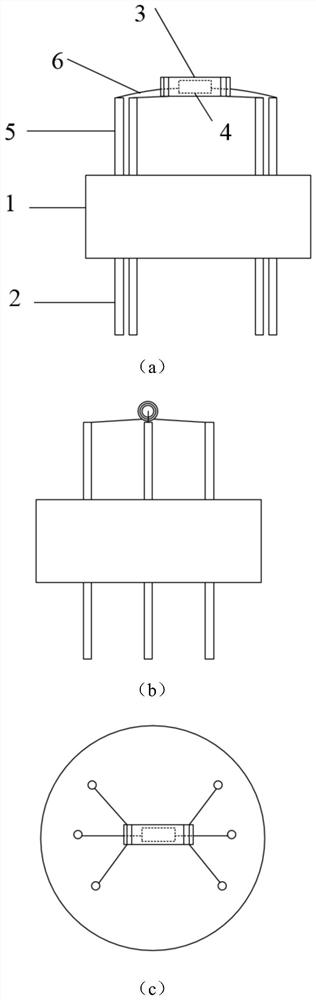
[0031] This example is for figure 1 The shown nanoscale gas sensor for model simulation. In the nano gas sensor, the gas sensitive material is diluted and evenly coated on the surface of the ceramic tube, and the resistance wire is placed inside the ceramic tube, and finally the two ends of the resistance wire and the four pins of the ceramic tube are welded to the base. By changing the voltage at both ends of the resistance wire, the power of the resistance wire is changed so that the temperature changes, and the change of the output current reflects the responsiveness of the material to the gas.
[0032] The response performance of nano gas sensors is affected by many ...
PUM
 Login to View More
 Abstract
Description
Claims
Application Information
 Login to View More