
Dynamic Simulation and Velocity Estimation Method of Complex Number Domain Structured SAR Ship Target
A technology of speed estimation and complex number domain, which is applied in the field of complex number domain structured SAR ship target dynamic simulation and speed estimation, can solve the problems of lack of a large number of simulation samples, failure to obtain ship targets, and failure to obtain ship target SAR images, etc. Achieve the effect of simplification of calculation process, simplification of complexity, and accurate acquisition
Patent Information
- Authority / Receiving Office
- CN · China
- Patent Type
- Patents(China)
- Current Assignee / Owner
- Publication Date
- 2022-06-17
Smart Images
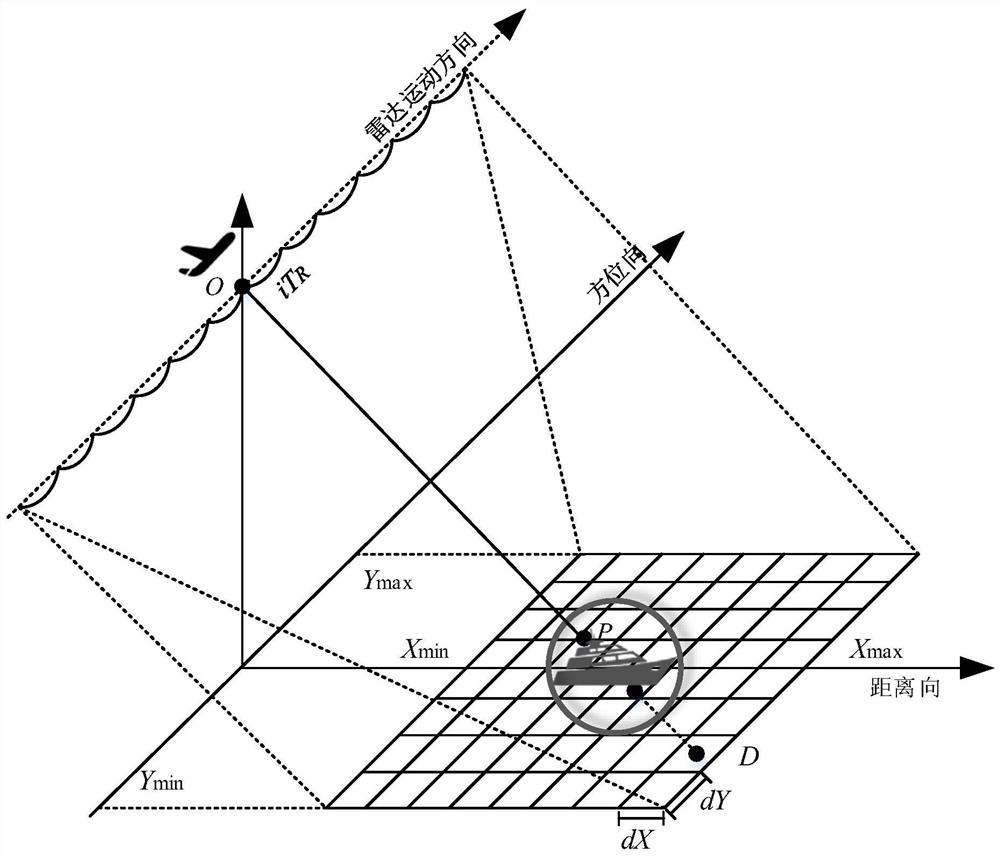
Figure 1 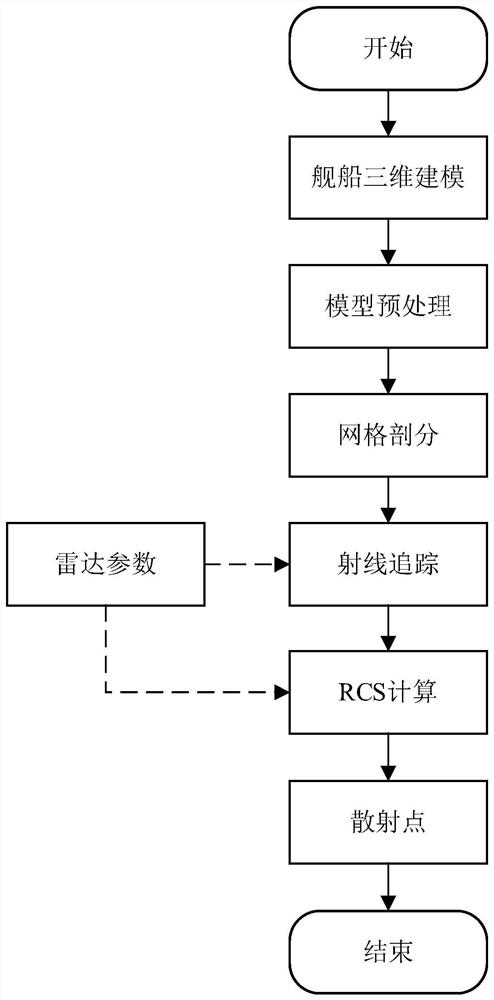
Figure 2 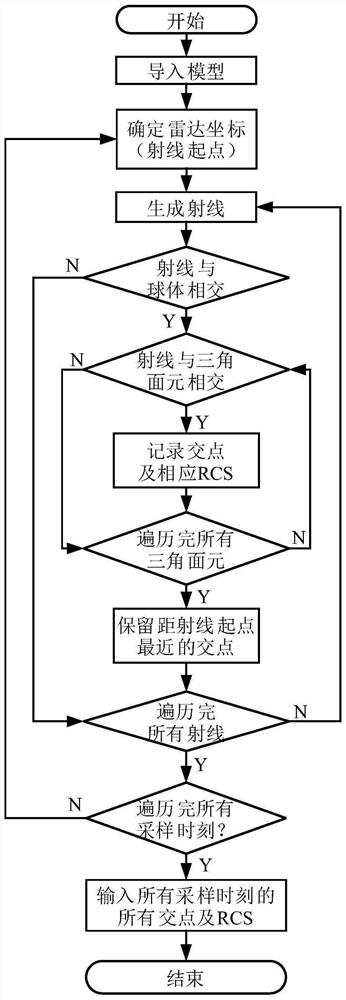
Figure 3
Abstract
Description
technical field
[0001] The invention relates to a complex number domain structured SAR ship target dynamic simulation and speed estimation method. It belongs to the field of SAR image processing. Background technique
[0002] Since synthetic aperture radar generally adopts side view, when the ship is illuminated by the radar beam, the ship target will scatter electromagnetic waves in all directions when it receives the radar irradiation. perspective shrinkage, etc. The RCS of the target is related to the incident angle of the electromagnetic wave, ship structure, material, etc. The speckle noise caused by random scattering also exists in the resolution unit illuminated by the electromagnetic wave, which makes the scattering model of the ship target more complicated. Therefore, in the traditional SAR ship target simulation method, multiple scattering points are used for simplified research, that is, several point targets are placed in the SAR irradiation area, and the basic...
Examples
specific Embodiment approach 1
[0028] Specific implementation mode 1: refer to Figure 1-7 Specifically describe this embodiment, the complex domain structured SAR ship target dynamic simulation and speed estimation method of this embodiment includes:
[0029] Step 1: Obtain the 3D model of the ship, preprocess the 3D model of the ship, and divide the preprocessed 3D model of the ship into multiple triangular surface elements;
[0030] Step 2: Set the radar parameters, perform ray tracing according to the set radar parameters, and obtain the space coordinates of the scattering point of the ship target;
[0031] Step 3: Image the ship target based on the space coordinates of the scattering point of the ship target in Step 2; the specific process is as follows:
[0032] Step 31, record in t i The set of ship target scattering points obtained at time is P i , then the ship target scattering point set P i It is expressed by the following formula:
[0033]
[0034] in, means t i The azimuth coordinate...
specific Embodiment approach 2
[0038] Embodiment 2: The difference between this embodiment and Embodiment 1 is that the step preprocesses the 3D model of the ship; the specific process is:
[0039] Remove the underwater mechanism of the 3D model of the ship, which includes propellers, anchors or flags; after preprocessing, it can be closer to the physical process of real SAR imaging of ship targets, and at the same time, it can reduce the division of triangular surface elements time.
[0040] Other steps and parameters are the same as in the first embodiment.
specific Embodiment approach 3
[0041] Embodiment 3: The difference between this embodiment and Embodiment 1 or 2 is that the side length of the triangular surface element divided in the step 1 takes one-sixth of the wavelength of the incident radar wave, and is expressed as:
[0042]
[0043] Among them, △l represents the side length of the triangular surface element; c represents the speed of light, and f represents the radar carrier frequency;
[0044] The quality and quantity of triangular surfels determine the length of time to calculate collision detection, so time cost and computer resource constraints should be considered first.
[0045] Other steps and parameters are the same as in the first or second embodiment.