Tubular heat exchanger for waste heat recovery of gypsum plaster board drying process

A technology of tubular heat exchangers and plasterboards, applied to the types of heat exchangers, heat exchanger shells, indirect heat exchangers, etc., which can solve difficulties in installation and transportation, blockage of plate heat exchangers, and increased production energy consumption and other problems, to achieve the effect of simple and reliable production method, short service life and remarkable heat exchange effect

CN113624033APending Publication Date: 2021-11-09CHINA NEW BUILDING MATERIALS DESIGN & RES INST +1
8 Cites 0 Cited by

Patent Information

Authority / Receiving Office
CN · China
Patent Type
Applications(China)
Current Assignee / Owner
Publication Date
2021-11-09

Smart Images

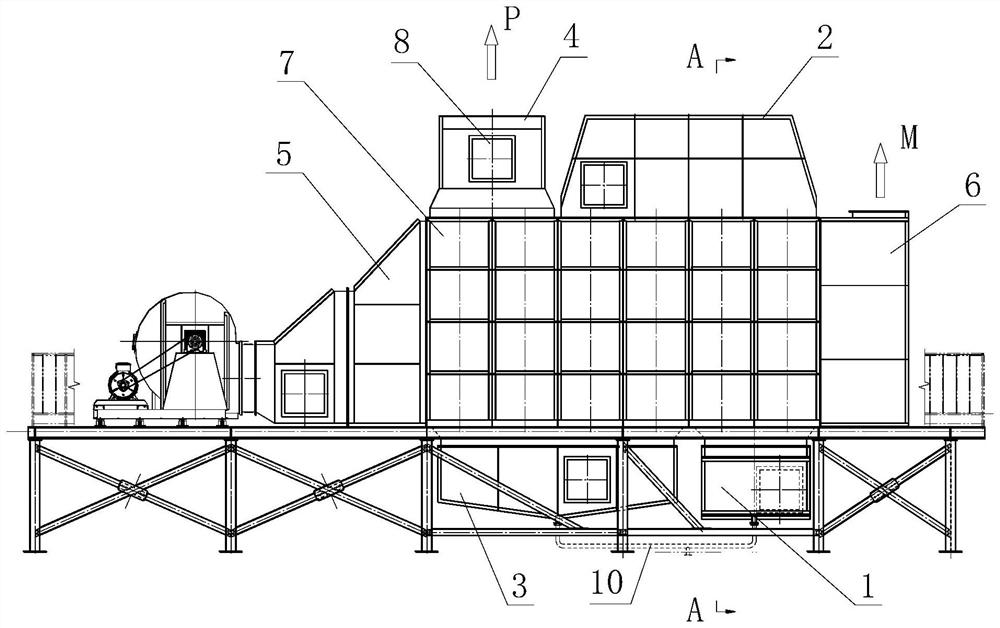
  • Figure 1
    Figure 1
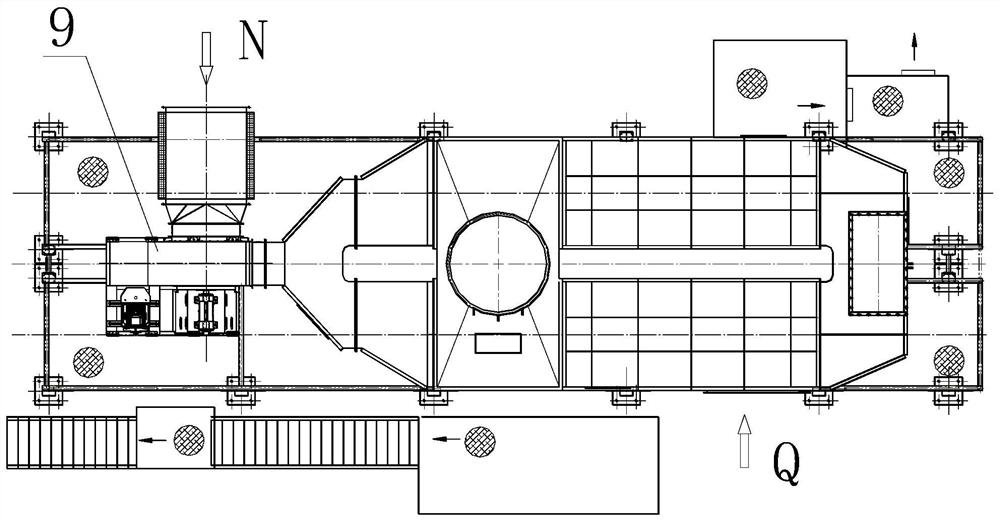
  • Figure 2
    Figure 2
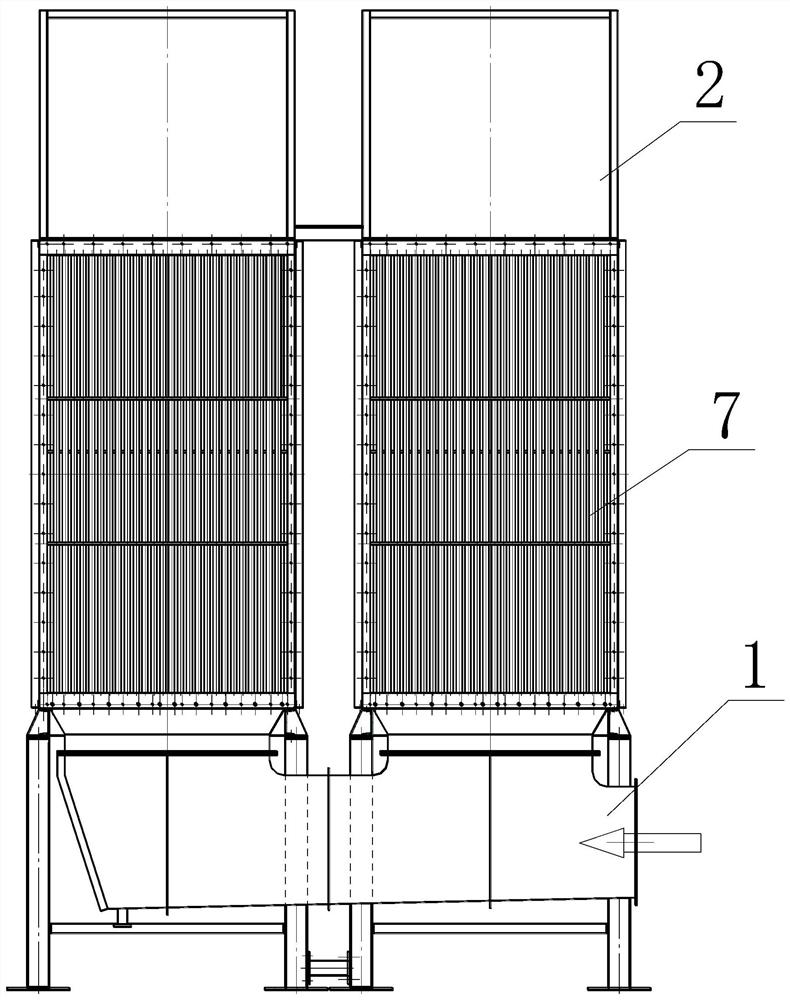
  • Figure 3
    Figure 3
Patent Text Reader

Abstract

The invention discloses a tubular heat exchanger for waste heat recovery in a gypsum plaster board drying process. The tubular heat exchanger for waste heat recovery in the gypsum plaster board drying process comprises an air blower and a heat exchange chamber, and is characterized in that the heat exchange chamber is a square matrix formed by a single group or a plurality of groups of heat exchanger units, and the number of the heat exchanger units is modularly combined according to the actual ventilation quantity; the high-temperature heat exchange side part is connected to a high-temperature waste flue gas inlet chamber, and the low-temperature heat exchange side part is connected to a waste flue gas outlet; and the air blower is connected with the heat exchanger units through a fresh air inlet chamber, and a fresh air outlet chamber is arranged on the tail heat exchanger unit. The tubular heat exchanger for waste heat recovery in the gypsum plaster board drying process is remarkable in heat exchange effect, and convenient to install and transport due to structure with the modular free combination of the detachable heat exchanger units; tube bundles are convenient to clean, so that the problem of blockage caused by running time extension in actual production is solved; and through reasonable tube bundle arrangement and a welding-free assembly process, a resistance value equal to a resistance value of a plate heat exchanger can be obtained, so that the defects that a traditional tubular heat exchanger is large in size, heavy in weight and large in resistance are overcome.
Need to check novelty before this filing date? Find Prior Art

Description

technical field

[0001] The invention relates to a gypsum board manufacturing technology, in particular to a tubular heat exchanger used for recovery of waste heat in the drying process of a paper-faced gypsum board. Background technique

[0002] In the gypsum board production process, using heat exchange technology to recover the waste heat of dehumidified waste (flue) gas for heating and drying the supplementary air source and batching water is an important process for energy saving and production cost reduction. At present, the waste heat recovery device widely used in the paper surface gypsum board production line is a plate heat exchanger, which has the advantages of small size and light weight, but has the disadvantages of easy blockage and incomplete cleaning. Because the gypsum board will be mixed with a small amount of Paper dust, glass fiber, gypsum dust and other sundries enter the passage of waste (smoke) gas waste heat recovery heat exchanger, causing the plate h...

Examples

Embodiment Construction

[0031] The technical solutions of the present invention will be further specifically described below through the embodiments and in conjunction with the accompanying drawings.

[0032] see Figure 1 to Figure 3 , this embodiment is a tubular heat exchanger used for recovery of waste heat in the drying process of gypsum boards. A frame with an inspection platform is provided. The blower 9 is arranged at one end of the frame, and the other end (the 7 parts of the tail heat exchanger) The fresh air outlet chamber 6 is set, the blower 9 is connected with a fresh air inlet N, and the fresh air intake chamber 5 output by the blower 9 is divided into two flange connection ports arranged in parallel.

[0033] The heat exchange chamber single group does not make a statement, taking two parallel arrays of heat exchanger units 7 composed of two groups (2 rows*3 pieces) as an example, and the two parallel flanges of the fresh air intake chamber 5 corresponding to the connection port. Th...