
Process for reducing heavy tail fraction formation and catalyst loss in hydroformylation processes
A technology for hydroformylation and heavy-end fractions, which is used in organic compound/hydride/coordination complex catalysts, physical/chemical process catalysts, chemical instruments and methods, etc.
Pending Publication Date: 2022-03-18
PERSTORP AB
View PDF10 Cites 0 Cited by
- Summary
- Abstract
- Description
- Claims
- Application Information
AI Technical Summary
Problems solved by technology
However, the patent does not address the heavy ends complication and how epoxides would affect the amount of heavy ends in a continuous hydroformylation process
Method used
the structure of the environmentally friendly knitted fabric provided by the present invention; figure 2 Flow chart of the yarn wrapping machine for environmentally friendly knitted fabrics and storage devices; image 3 Is the parameter map of the yarn covering machine
View moreImage
Smart Image Click on the blue labels to locate them in the text.
Smart ImageViewing Examples

Examples
Experimental program
Comparison scheme
Effect test
Embodiment 1
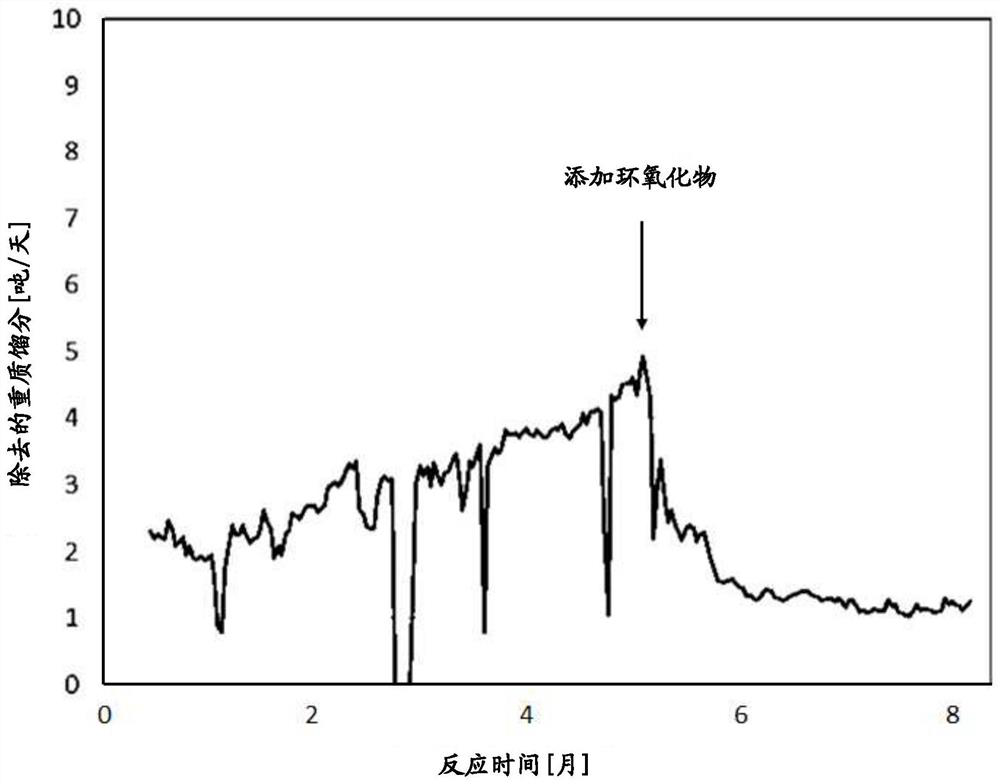
[0048] Example 1 illustrates the reduction in heavy ends formation when the process of the present invention is applied to a hydroformylation reaction mixture in a commercial process plant.
Embodiment 2
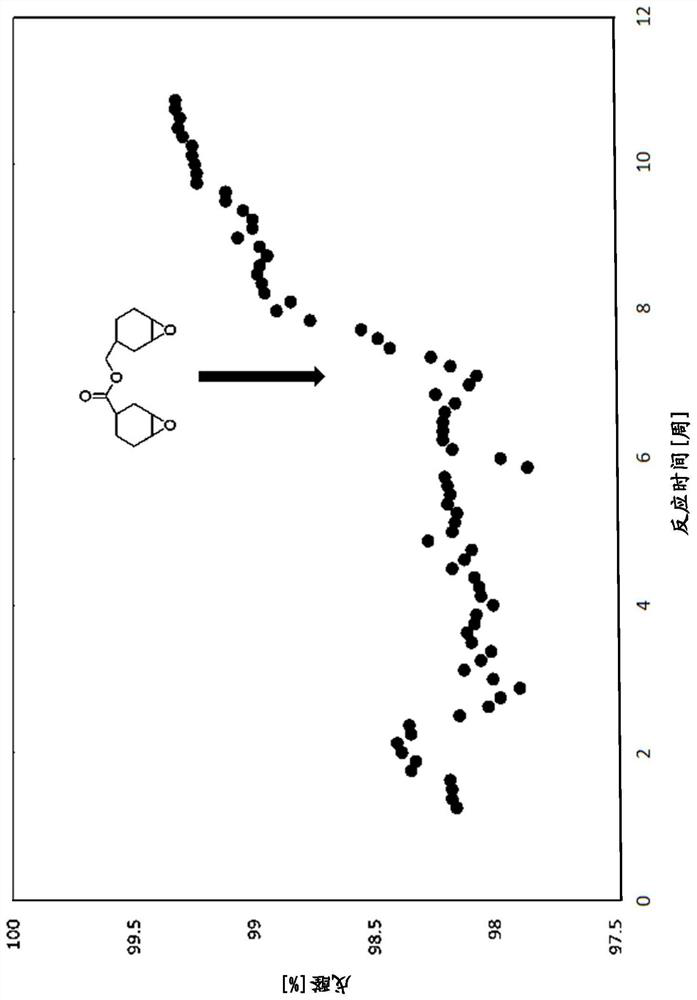
[0049] Example 2 illustrates the increased purity of the aldehyde product when the process of the present invention is applied to a hydroformylation reaction mixture in a commercial process facility.
Embodiment 3
[0050] Example 3 illustrates the effect of the process of the invention on a pilot scale, demonstrating a reduction in the rate of formation of heavy ends.
the structure of the environmentally friendly knitted fabric provided by the present invention; figure 2 Flow chart of the yarn wrapping machine for environmentally friendly knitted fabrics and storage devices; image 3 Is the parameter map of the yarn covering machine
Login to View More PUM
 Login to View More
 Abstract
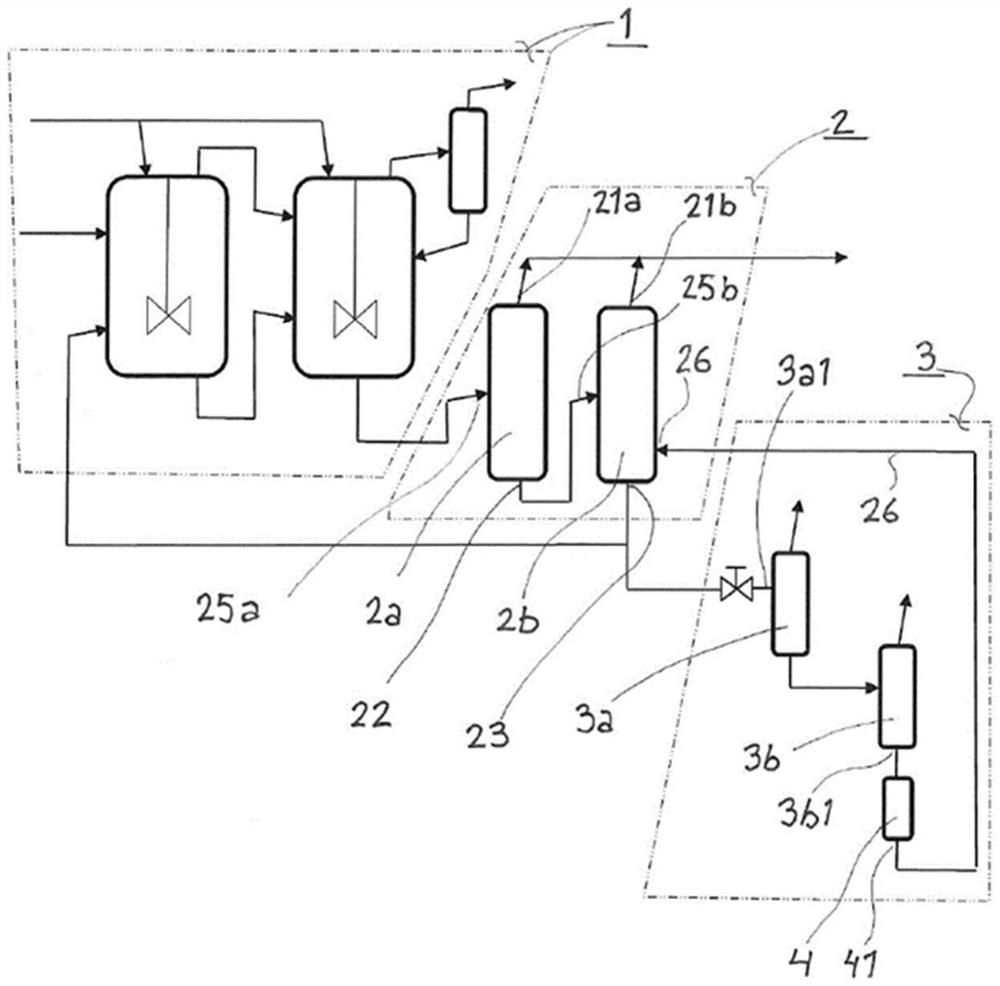
The present invention relates to a process for reducing heavy tail fraction formation and catalyst loss in a continuous hydroformylation process in which an olefin or olefin mixture is reacted with carbon monoxide and hydrogen in a reactor group (1) in the presence of a rhodium complex catalyst comprising at least one organobisphosphite ligand to produce an aldehyde. The process includes adding an epoxide to the reaction mixture and continuously or intermittently removing an early heavy tail fraction.
Description
technical field [0001] The present invention relates to a method for reducing the formation of heavy ends and the loss of catalyst in a continuous hydroformylation process in which olefins or mixtures of olefins are mixed with carbon monoxide and hydrogen in reactor group (1) The aldehyde is reacted in the presence of a rhodium complex catalyst comprising at least one organobisphosphite ligand. The process involves adding epoxides to the reaction mixture and removing early heavy ends continuously or intermittently. Background technique [0002] Hydroformylation, also known as oxo, is an important industrial process that produces aldehydes by reacting olefins with carbon monoxide and hydrogen in the presence of transition metal catalyst complexes. A known preferred process involves continuous hydroformylation and recycling of the catalyst solution containing the metal-organophosphorous ligand complex catalyst, wherein the metal is a Group VIII transition metal, preferably rh...
Claims
the structure of the environmentally friendly knitted fabric provided by the present invention; figure 2 Flow chart of the yarn wrapping machine for environmentally friendly knitted fabrics and storage devices; image 3 Is the parameter map of the yarn covering machine
Login to View More Application Information
Patent Timeline
 Login to View More
 Patent Type & AuthorityApplications(China)
IPC IPC(8): C07C45/50B01D1/06B01D3/42B01J31/22C07B41/06C07C45/86C07F15/00
CPCB01D3/42C07C45/50C07C45/86C07F9/145C07F15/0073C07C45/82B01D3/148B01D1/065B01D1/223B01J31/185B01J2231/321B01J2531/822C07C47/02
InventorM·坎加斯S·尼尔森
OwnerPERSTORP AB