
Pharmaceutical use of adenosine agonists
a technology of adenosine agonists and adenosine agonists, which is applied in the field of pharmaceutical use of adenosine agonists, can solve the problems of neutrophil count reduction, particularly of white blood cell count, and achieve the effect of reducing the number of white blood cells
- Summary
- Abstract
- Description
- Claims
- Application Information
AI Technical Summary
Benefits of technology
Problems solved by technology
Method used
Image

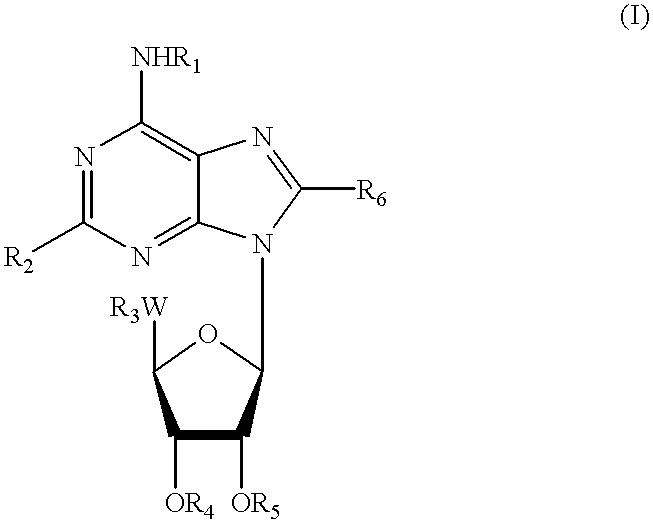
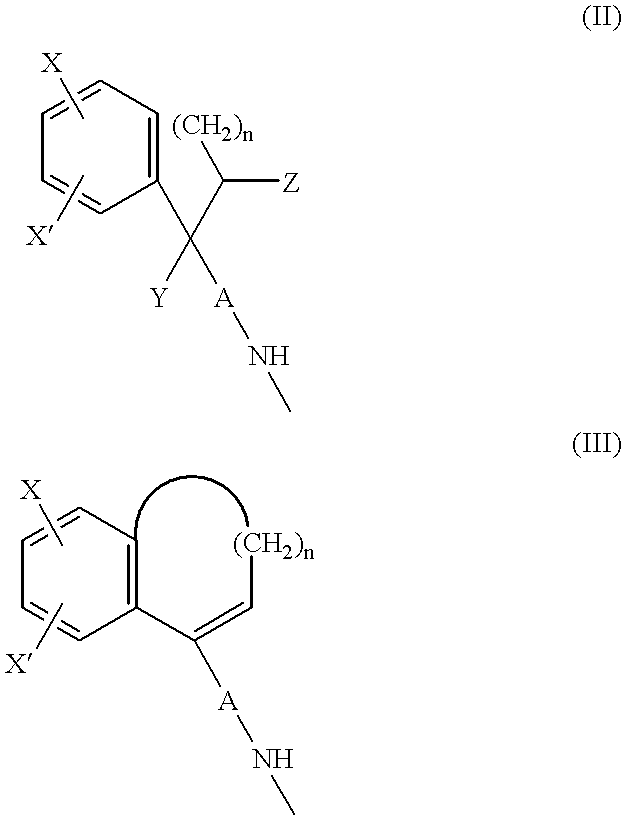
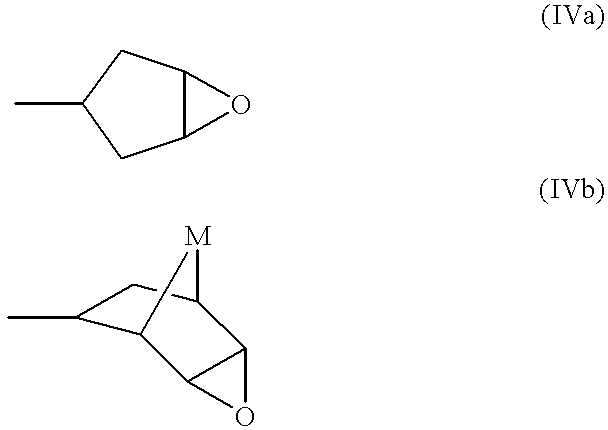
Examples
example 1
In Vivo Evaluation of A1RAg
[0069] Materials And Methods
[0070] Mice
[0071] Male ICR mice of the age of two months and weighing and average of 25 gr were employed. The mice were purchased from Harlan Laboratories, Jerusalem,, ISRAEL.
[0072] Drug
[0073] The cyclopentyl adenosine (CPA), an A1 adenosine receptor agonist, was used. This drug was purchased Sigma Chemical Co. (St. Louis, Mo., USA)
[0074] In vivo evaluation
[0075] Protection of CPA-treated mice against myelotoxic effects of chemotherapy was evaluated. To this end, mice were provided with a chemotherapeutic drug, a combination of the drug with CPA or with a vehicle only. The drug of choice was cyclophosphamide (CPY, given by intraperinoeal injection).
[0076] In particular, three test groups of mice were treated daily according to the following regimen:
[0077] 1. Control group--vehicle only.
[0078] 2. Chemotherapy--CYP (50 mg / kg body weight).
[0079] 3. Chemotherapy+chemoprotection--CYP (50 mg / kg body weight)+CPA (6 .mu.g / kg body weight...
PUM
| Property | Measurement | Unit |
|---|---|---|
| Volume | aaaaa | aaaaa |
| Volume | aaaaa | aaaaa |
| Volume | aaaaa | aaaaa |
Abstract
Description
Claims
Application Information
 Login to View More