

Glp-1 exendin-4 peptide analogs and uses thereof
a technology of exendin-4 and glucagon, which is applied in the field of glucagonlike peptide1 (glp1), exendin4 and their peptide analogs, and can solve the problems of diabetes mellitus, functional impairment, and absence of beta cells
- Summary
- Abstract
- Description
- Claims
- Application Information
AI Technical Summary
Problems solved by technology
Method used
Image

Examples
example 1
[0099] Peptide Design and Synthesis
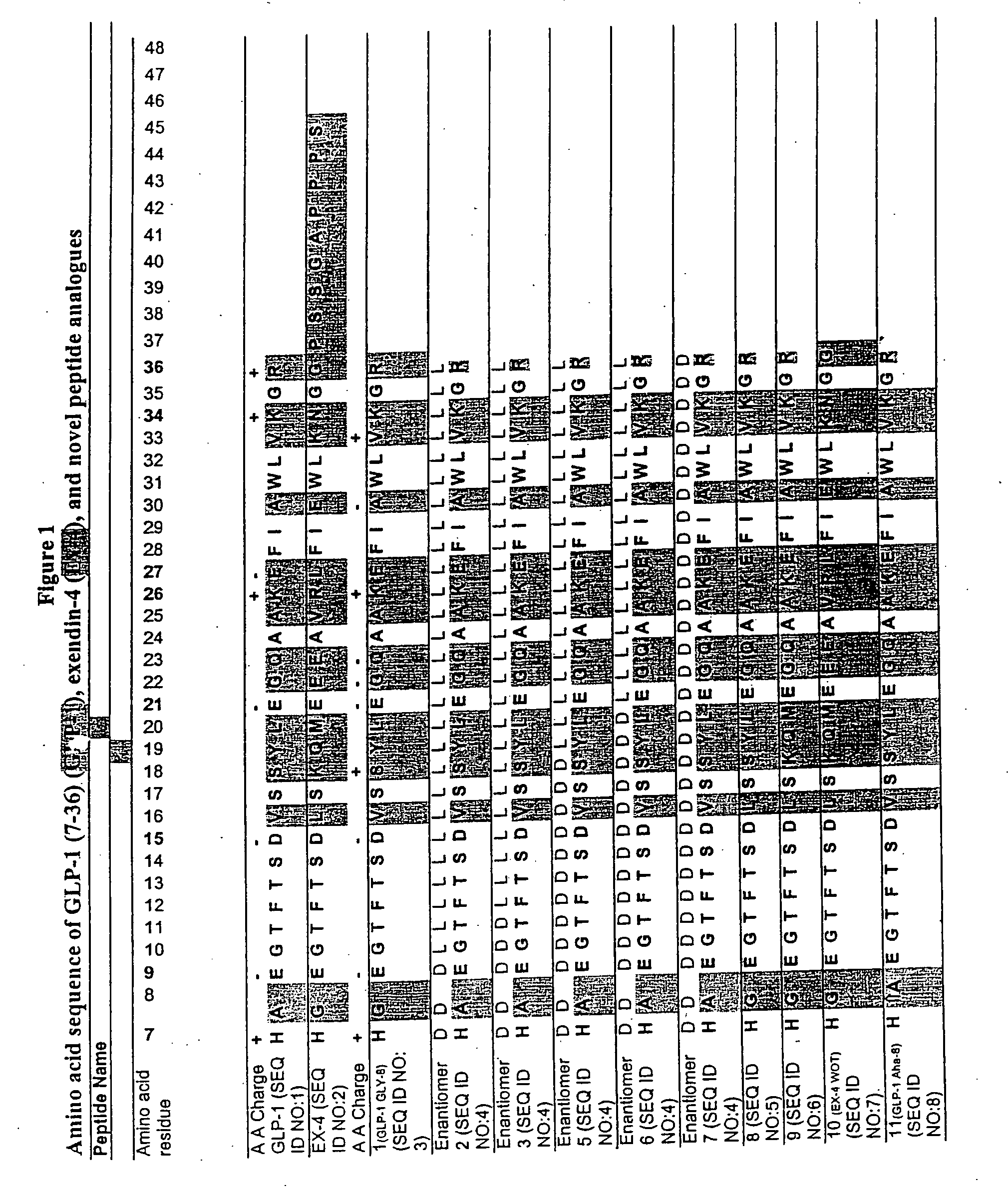
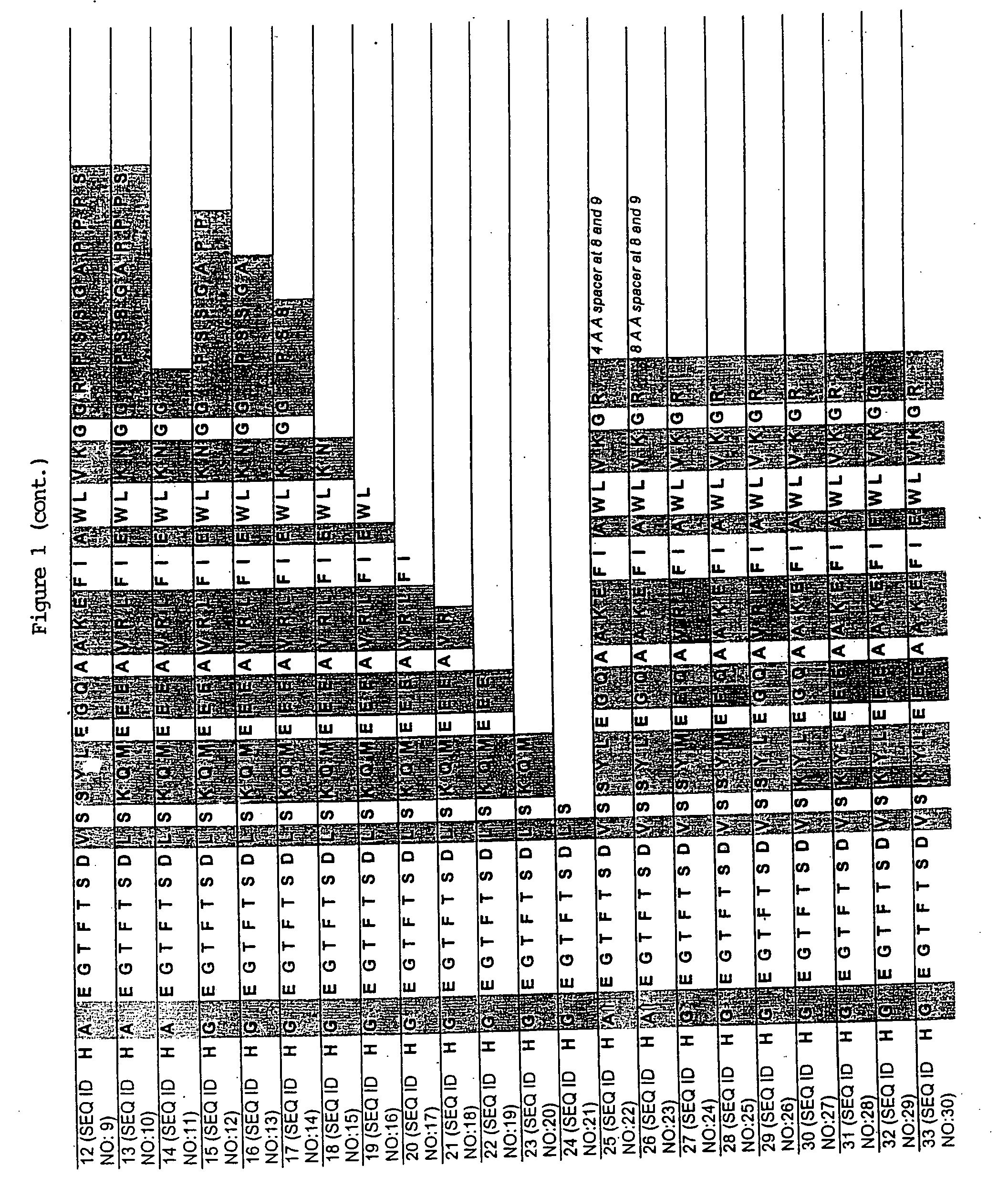
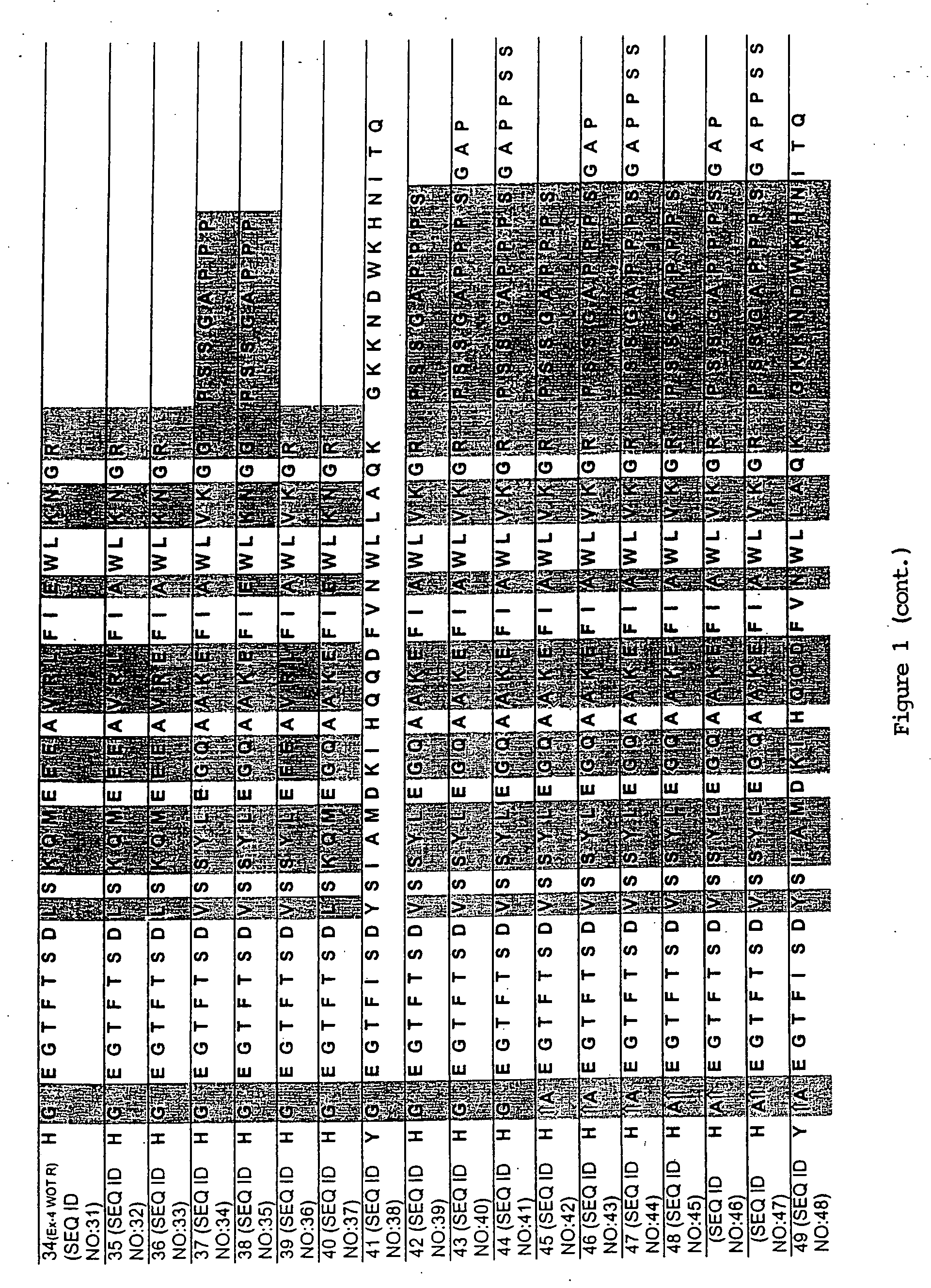
[0100] A series of chimeric peptides was designed that incorporated fundamental features of exendin-4 and GLP-1. The sequences of the 35 peptides are shown in FIG. 1, along with the sequence for GLP-1 (residues 7-36) and exendin-4 (residues 7-45 numbered according to the alignment of exendin-4 with the numbered GLP-1 residues). They were designed to (i) minimize the cleavage action of DDP1V between amino acids 8 and 9, (ii) assess the minimal requirement for insulinotropic action, and (iii) to assess which amino acid differences between exendin-4 and GLP-1 account for the former's 13-fold increase in potency versus GLP-1. The peptides shown in FIG. 1 utilized L- and D-amino acids in their synthesis.
[0101] Peptides were synthesized on a PEG-Polystyrene resin using Fmoc-derivatives of amino acids in a Applied Biosystems (Foster, Calif.) automated peptide synthesizer using piperidine-dimethyl formamide for deprotection and HOBt / HBTU for coupling. The ...
example 2
[0103] Insulin Secretion In Vitro
[0104] RIN 1048-36 cells, a gift from Dr. Samuel A. Clark (Bio Hybrid Technologies, Shrewsbury, Mass.) were used to monitor the action of GLP-1, exendin-4 and analogs on insulin secretion. Cells were seeded at a density of 2.5.times.10.sup.5 cells / cm.sup.2 on glass coverslips placed on the bottom of 12-well dishes and grown for 48 h. Thereafter, they were preincubated for 2 periods of 30 min each with glucose-free buffer (containing mM: 140 NaCl, 5 KCl, 1 NaPO4, 1 MgSO4, 2 CaCl, 20 HEPES buffer (pH 7.4), and 0.1% bovine serum albumin) in a 37.degree. C. humidified incubator. Thereafter, cells were incubated for 1 h at 37.degree. C. in the presence of 1 mL of the same buffer with 5 mM glucose and peptide (1.times.10-8 M). GLP-1 and exendin-4 (1.times.10-8 M) were used as standards in all assays. After 1 h the medium was removed and stored at -80.degree. C. prior to quantification of insulin levels by EIA (Crystal Chem, Chicago Ill.), and the cells wer...
example 3
[0111] Intracellular cAMP Determination
[0112] CHO cells stably transfected with the human GLP-1 receptor, GLP-1R cells, were grown to 60-70% confluency on 12-well plates, washed three times with Krebs-Ringer phosphate buffer (KRP), and incubated with 1 ml of KRP containing 0.1% bovine serum albumin (BSA) for 2 h at 37.degree. C. in a humidified air incubator. Cells were then incubated in 1 ml of KRP supplemented with 0.1% BSA with Isobutylmethylxanthine (IBMX) (1 mM; Calbiochem, La Jolla, Calif.) in the presence or absence of the peptides under study. The reaction was stopped 30 min later by washing the intact cells three times with ice-cold phosphate buffered saline (PBS). The intracellular cAMP was extracted by incubating the cells in ice-cold perchloric acid (0.6M, 1 ml, 5 min). After adjusting the pH of the samples to 7 using potassium carbonate (5M, 84 .mu.l), sample tubes were vortexed and the precipitate formed was sedimented by centrifugation (5 min, 2000.times.g, 4.degree. ...
PUM
| Property | Measurement | Unit |
|---|---|---|
| pH | aaaaa | aaaaa |
| weight | aaaaa | aaaaa |
| volume | aaaaa | aaaaa |
Abstract
Description
Claims
Application Information
 Login to View More