In particular, in the case where the adherence provided by insert molding is poor and a required air-tightness cannot be attained, use was made of a method of
welding a connector pipe to a blow-molded product.
In this manner, since such a blow-molded portion which has been increased in outer
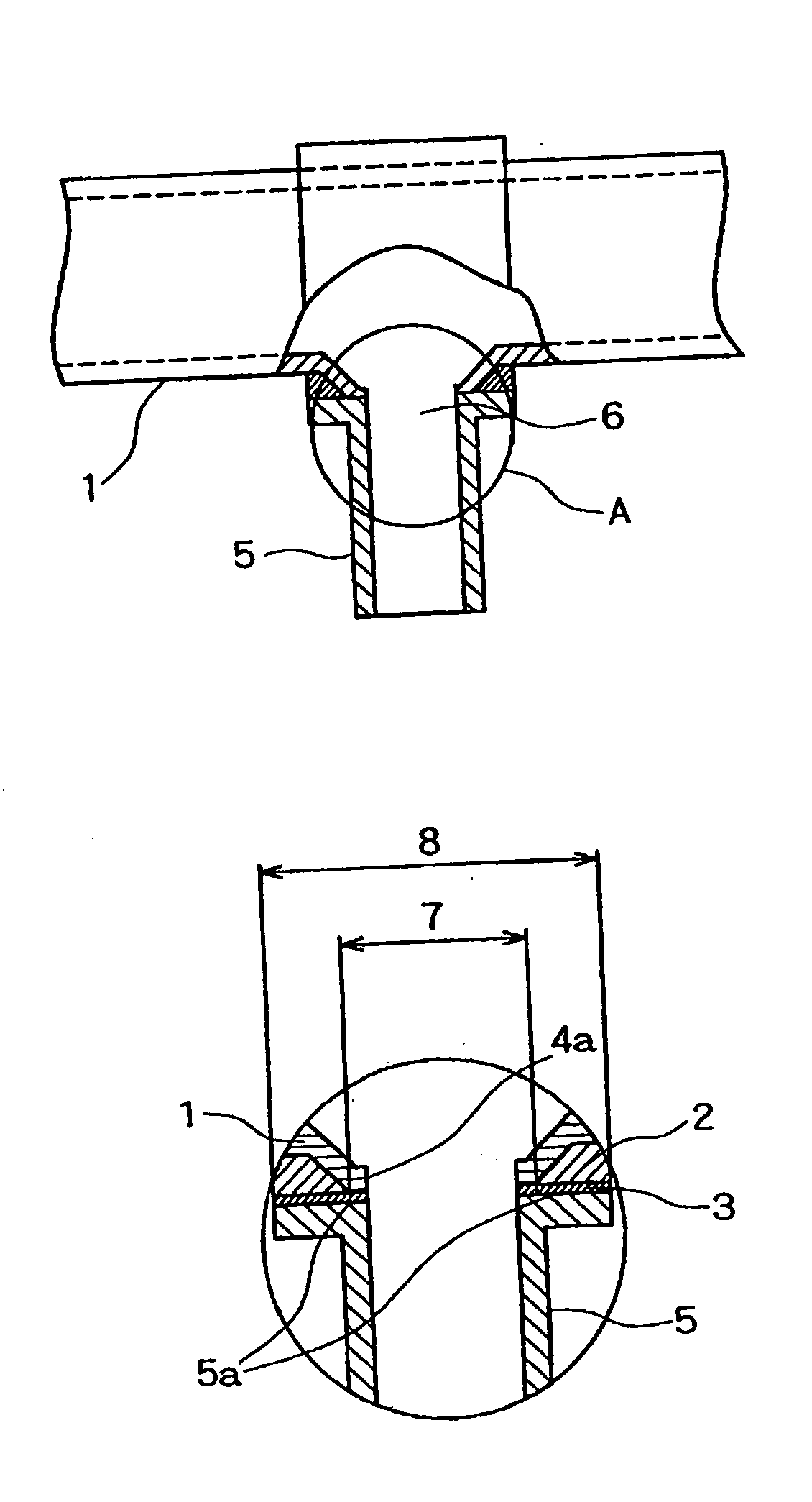
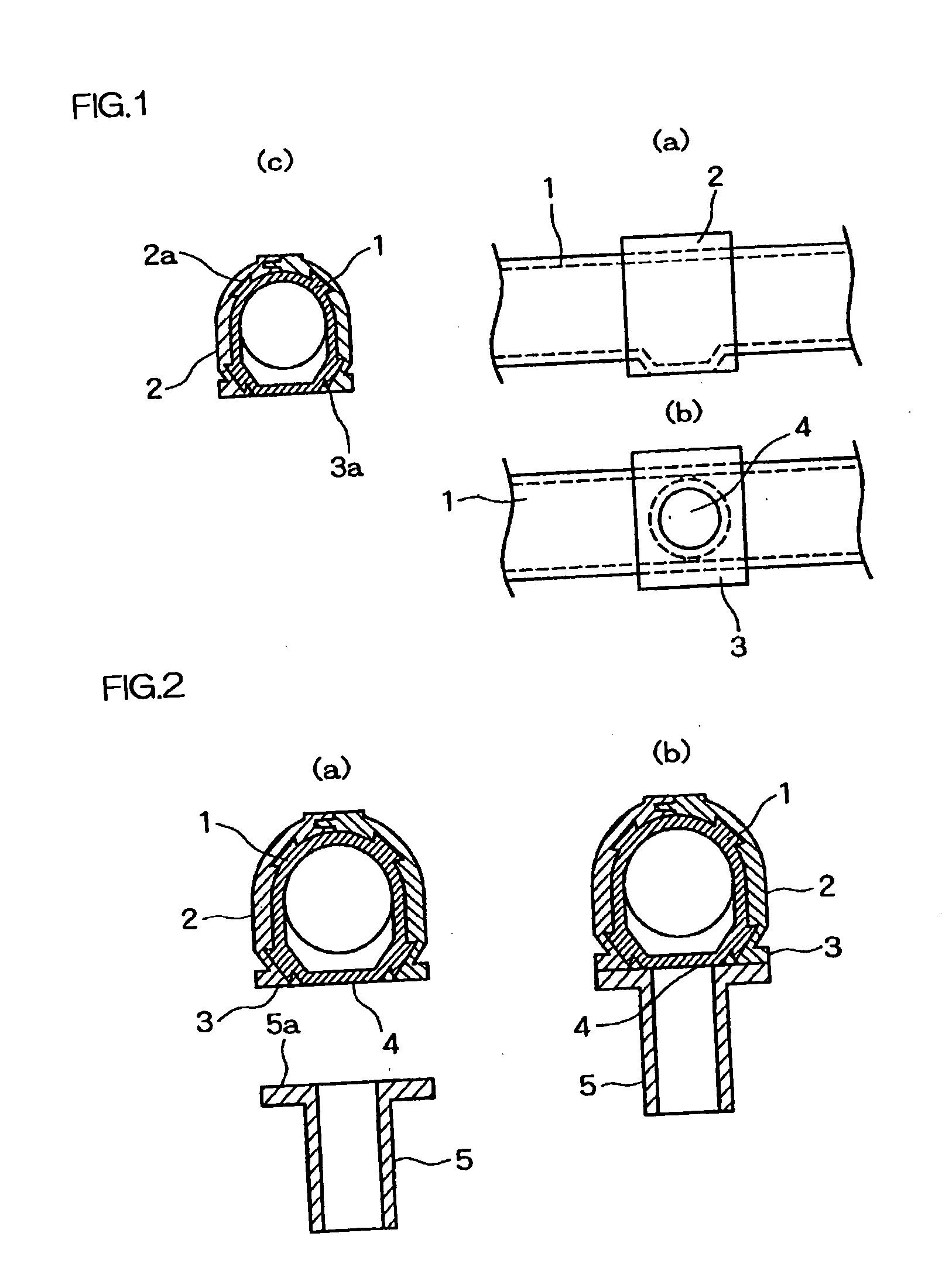
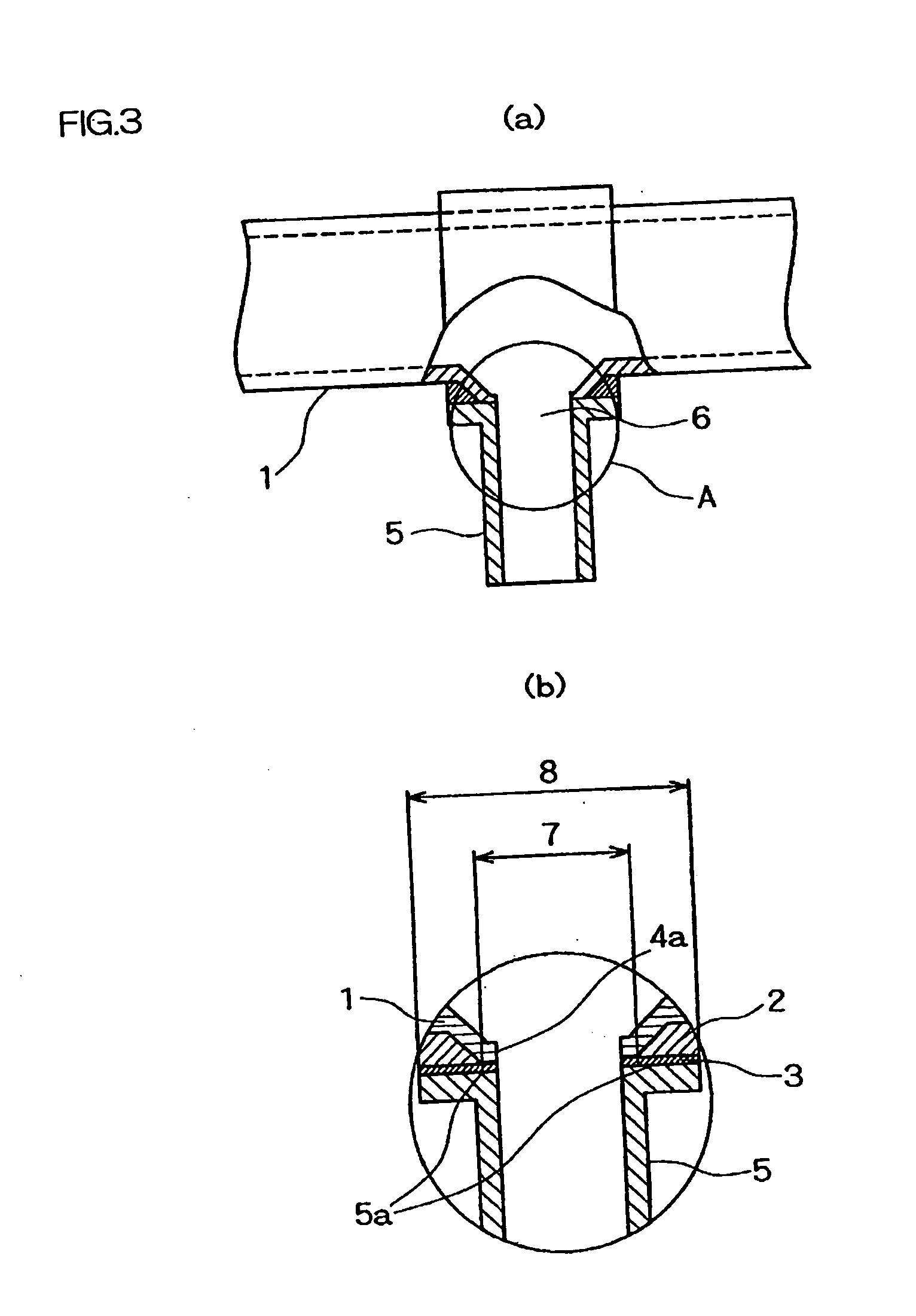
diameter becomes thinner, if, for example, a connector pipe is to be added to that portion by insert molding, the adherence strength of the insert becomes poor so that there is an increased chance for the insert to be disassembled, or, in some cases, the parison, when blown up, breaks to thereby form a hole.
In addition, in the case of adding a connector pipe by thermal
welding, a thin portion of a blow-molded product may become so deformed due to the heat at a melting step of thermal welding that it is impossible to complete the thermal welding.
In this case, since use is made of a soft resin in forming a main body to be blow molded, if a connector pipe is to be added to such a flexible duct, hose or a tube, it will easily fall off because of
poor adherence strength if added by insert molding, and thermal welding cannot be used because the flexible blow-molded main body would become softer and deform undesirably during the pressure bonding stage of thermal welding.
In such conventional methods as described above, if a connector pipe was added to a blow-molded hollow product of a duct, pipe or tube, in particular, both comparable in
diameter, the portion of the product to which the connector pipe was added became thinner, so that such problems as reductions of adherence strength, formation of holes and incapability of using thermal welding were brought about.
The structure and size of a connector pipe to be added to a blow-molded hollow product was limited.
Moreover, in the case of a blow-molded duct, hose or tube having flexibility, since the main body of such a product was made of a soft resin, there was a
disadvantage of
poor adherence strength of a connector pipe when added and there was also a problem of incapability of using thermal welding because the main body became too soft when heat was added during thermal welding.
Thus, the material to be used for the main body was also limited.
Thus, the design of connector pipe 55 is limited and there is a case in which a desired product cannot be produced.
In addition, since the welding portion 33 of blow-molded hose 11 is defined by a portion where the parison is enlarged during a blow-molding process, it becomes thinner, which tends to make it difficult to carry out thermal welding properly.
Furthermore, if the blow-molded hose 11 is made of a soft resin material, there may be a case where thermal welding cannot be applied since the hose 11 may become too soft when heat is applied, thereby causing the hose to be deformed.


 Login to View More