

Methods of fabricating a semiconductor device using a dilute aqueous solution of an ammonia and peroxide mixture
a technology of ammonia and peroxide, which is applied in the direction of detergent compositions, crystal growth processes, rotary drilling, etc., can solve the disadvantages of silicon oxide layers being vulnerable, affecting the performance characteristics of the resulting transistor, and causing excessive etching of silicon oxide layers by ammonium hydroxid
- Summary
- Abstract
- Description
- Claims
- Application Information
AI Technical Summary
Benefits of technology
Problems solved by technology
Method used
Image

Examples
Embodiment Construction
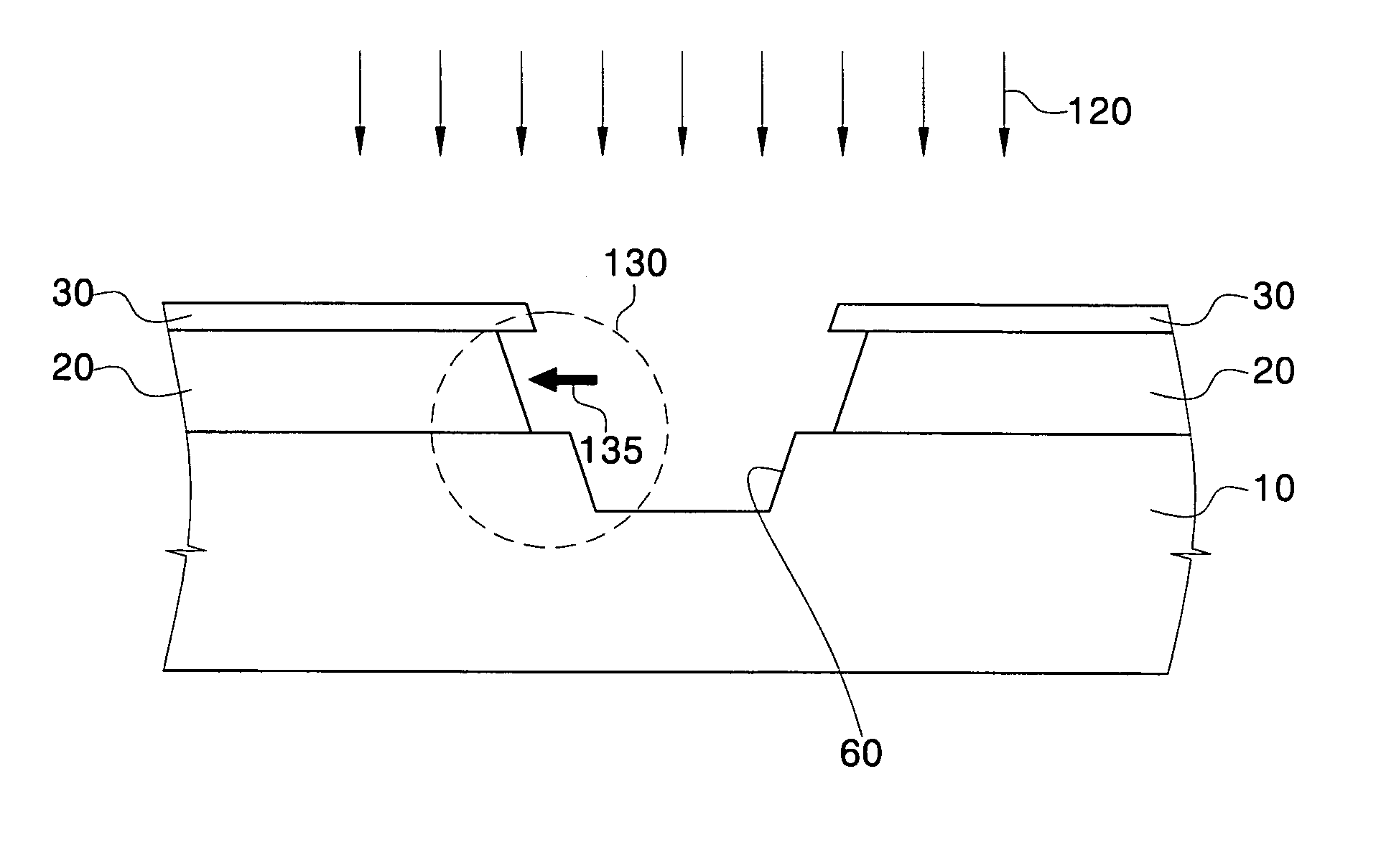
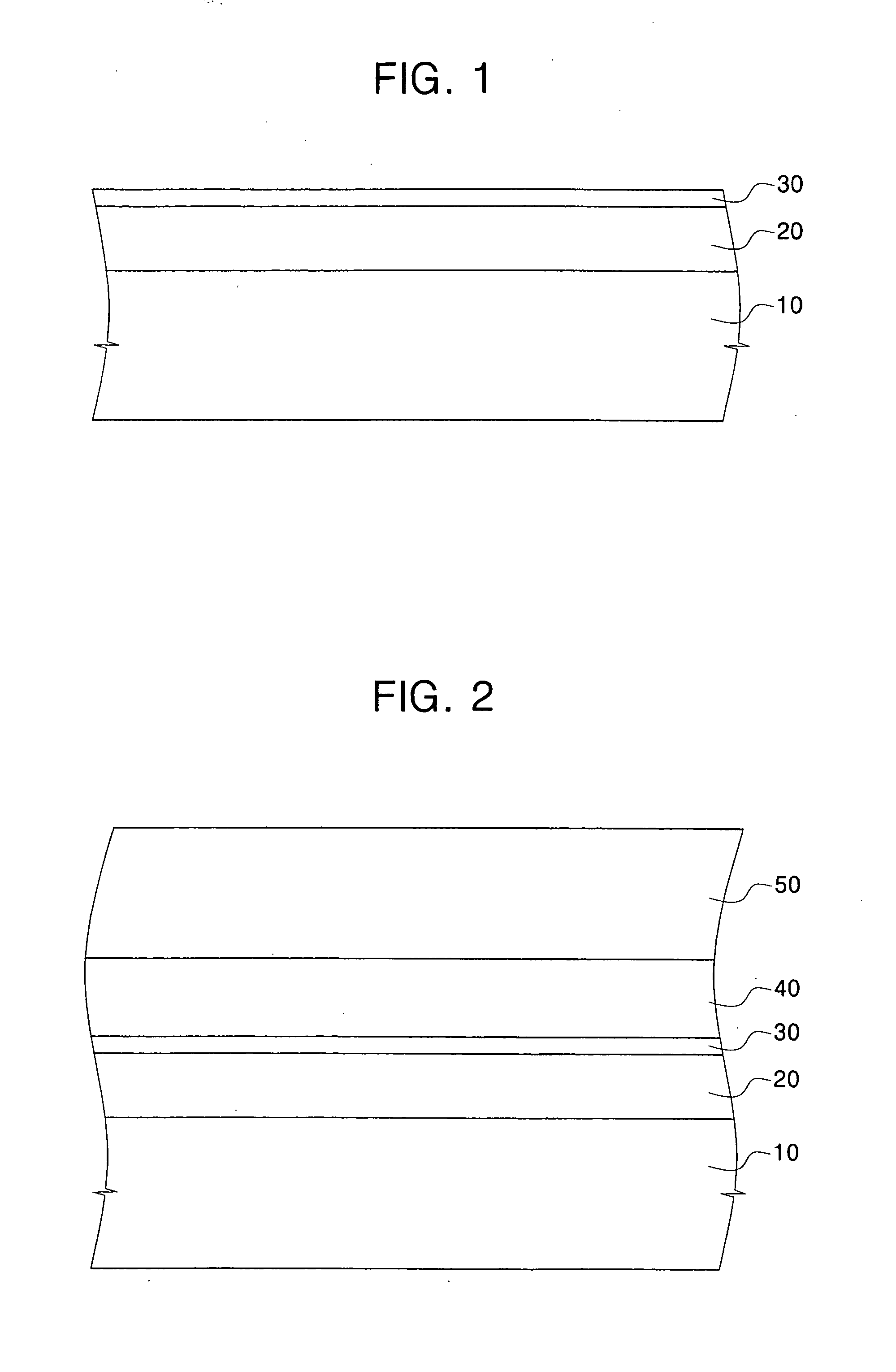
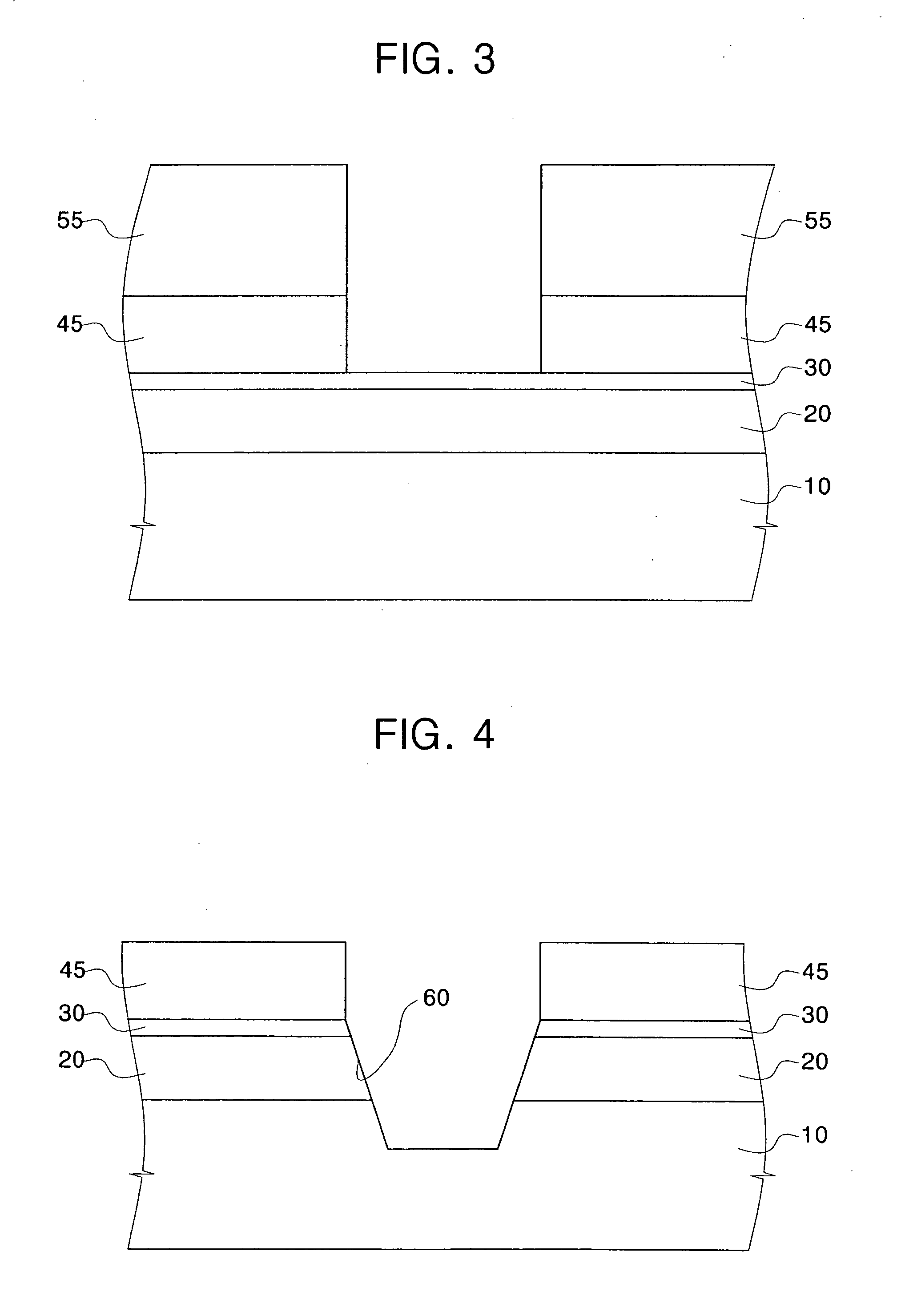
[0021]FIGS. 1 through 5 are schematic cross-sectional views of portions of semiconductor devices illustrating a method of forming a trench in a substrate having a silicon-germanium alloy layer and another material layer according to an embodiment of the invention, respectively.
[0022] Referring to FIGS. 1 through 5, an alloy layer 20 and a material layer 30 are sequentially formed on a suitable semiconductor substrate 10. The material layer 30 may be formed, for example, of a strained silicon layer by using an epitaxial process. The alloy layer 20 is formed of a silicon-germanium (Si1-xGex) alloy layer such that germanium atoms are present in alloy layer 20 in the range of greater than 0 to about 99% by atomic weight with respect to the presence of silicon atoms. The alloy layer 20 having suitable proportions of silicon and germanium may be formed, for example, by using a chemical vapor deposition process. The substrate 10 is preferably formed of a single crystalline silicon layer, ...
PUM
| Property | Measurement | Unit |
|---|---|---|
| temperature | aaaaa | aaaaa |
| temperature | aaaaa | aaaaa |
| temperature | aaaaa | aaaaa |
Abstract
Description
Claims
Application Information
 Login to View More