[0012] If the
present method is used in the burner
system of a gas
turbine installation, the
inlet temperature of a premixed combustible fluid mixture is typically between 400 and 500° C., i.e. below the spontaneous ignition threshold value for a lean mix with, for example, λ=2. The use of the abovementioned burner
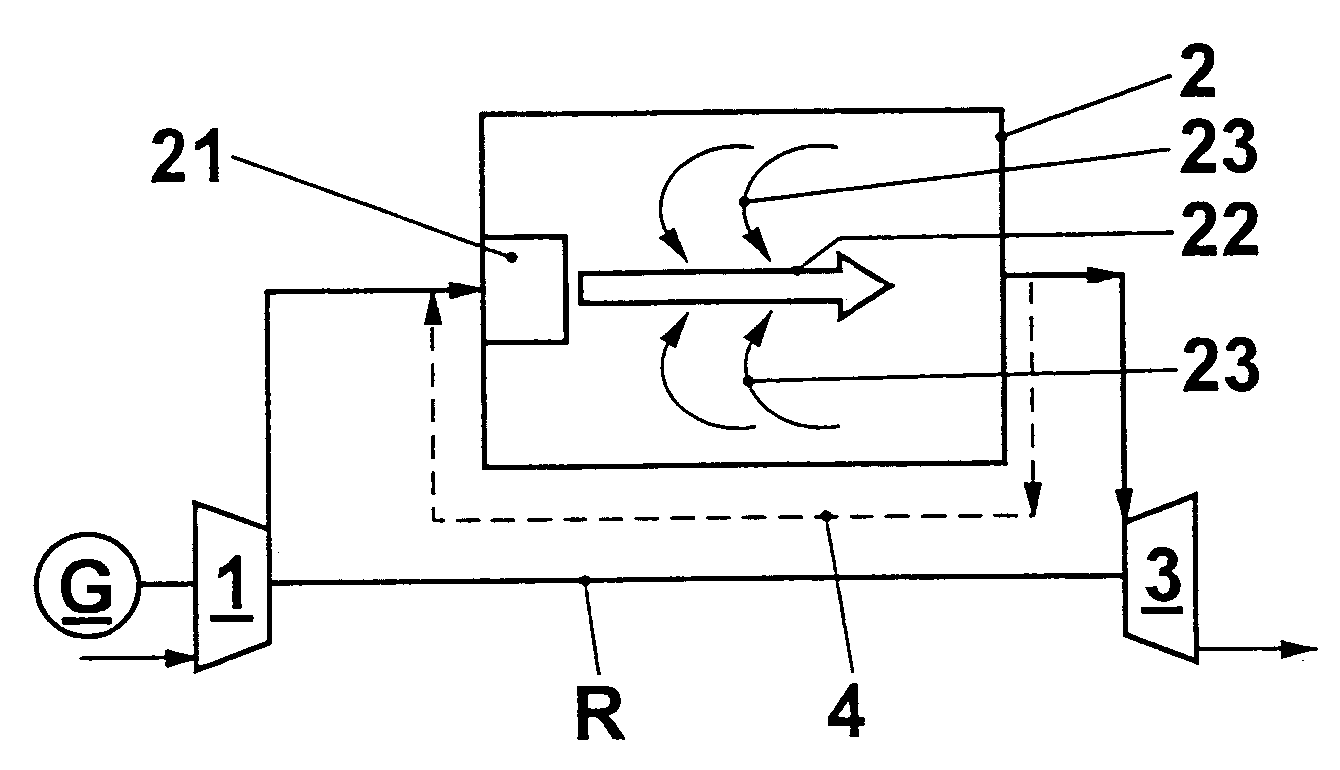
system and of the feed of the reactants involved in an open jet with a sufficiently
high velocity produces a strong jet-induced recirculation of the
flue gas in the combustion space, with part of the flue gas being entrained with the emerging jets, and the reaction mixture being highly diluted as a result. At the same time, jet-induced recirculation internally within the combustion space increases the temperature of the reaction mixture to above the spontaneous ignition threshold value, so that the reaction mixture ignites spontaneously, and on account of the strong
dilution combustion takes place with an invisible volumetric flame. This leads to very robust and reliable combustion with a uniform temperature profile and the potential for greatly reduced
pollutant emissions. Furthermore, this combustion technique has the potential to interrupt the Rayleigh mechanism, so that pressure pulses, as occur with the
lean combustion which has hitherto been used in gas
turbine installations, are suppressed. By suitable selection or alteration of injection parameters, the
present method allows a gas
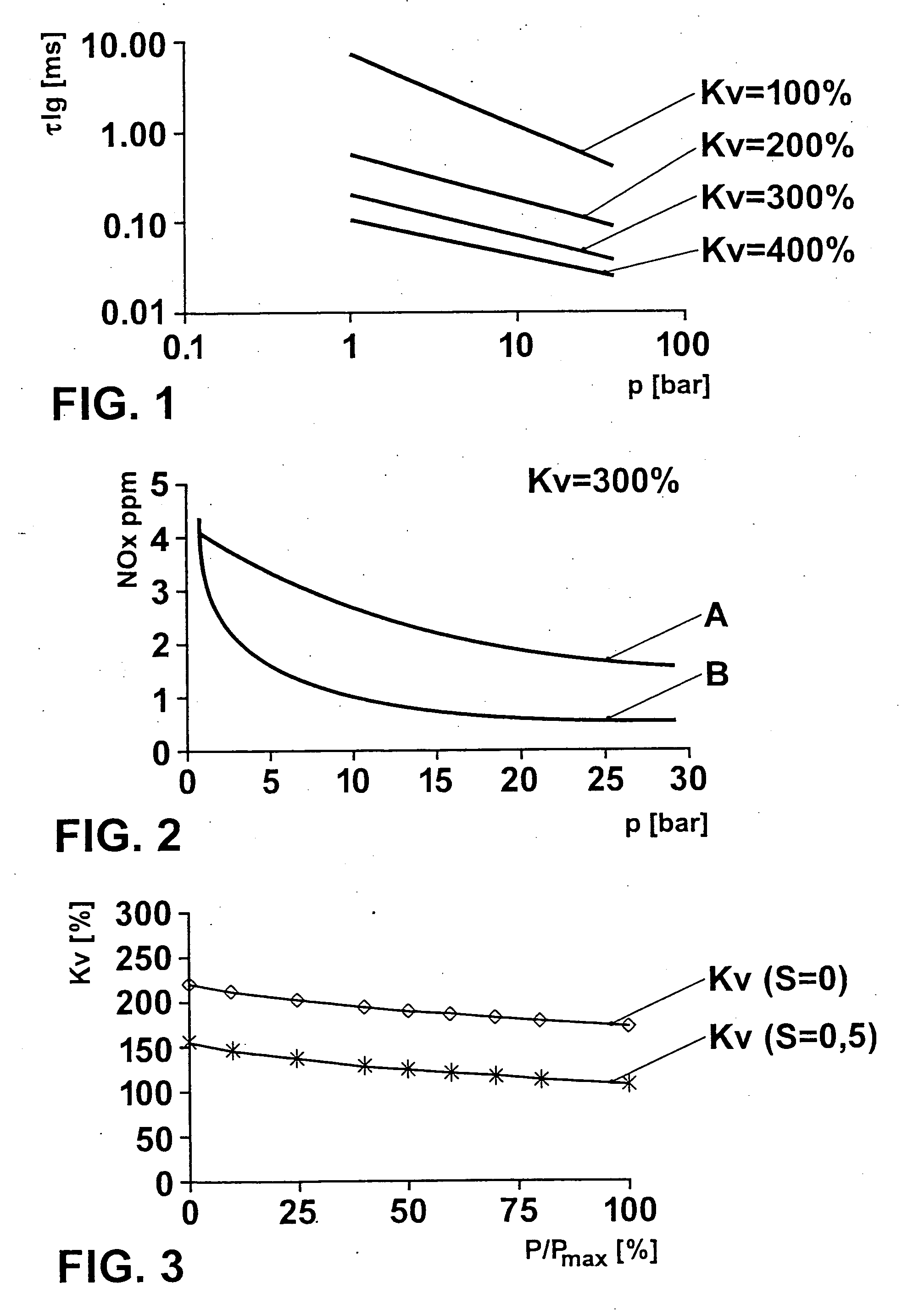
turbine installation to operate stably over a wide load range. Tests have shown that in gas turbine installations, at the high-pressure conditions prevailing therein-together with low-fuel conditions, for example λ=2, even a flue gas recirculation rate in the region of 100% is sufficient to generate the flameless combustion mode. The recirculation rate KV is in this context defined as the ratio between the
mass flow of the recirculated flue gas and the
mass flow of the fresh combustible fluid fed to the
combustion chamber: KV=GIR+GERF+Ox
[0019] High flue gas recirculation rates cause a not inconsiderable increase in the levels of H2O in the
combustion system; Similarly to the injection of water or steam into a
combustion system, this increase has an additional positive influence on suppressing the formation of
NOx, since the result is the formation of a
heat sink, keeping the process temperature controllable. Furthermore, the dissociation of H2O in the hot
reaction zone is likely to lead to a higher level of OH radicals, which therefore increases the destruction of N2O.
[0040] With the
present method and the associated burner, it is possible, in part in combination with the particular embodiments, to completely exhaust the chemical kinetic potential of the flameless combustion for a gas turbine installation. This relates in particular to achieving high recirculation rates at low pressure losses, a high degree of mixing upstream of the combustion, reliable combustion, a high flame stability, low emissions and low combustion oscillations. The method according to the invention can be realized very successfully in a gas turbine installation with a recirculation rate KV of 100%<KV<200%. It is preferable for the method to be operated with a recirculation rate of 100%<KV<150%. It is preferable for the majority, and very particularly preferably all, of the flue gas to be admixed to the combustible fluid open jet by the jet-induced recirculation internally within the combustion space which has been described above. This means that there is no need for complex structural means for external recirculation of flue gas in an apparatus for carrying out the method.
[0043] The choice of geometric arrangement and configuration of the individual entry nozzles of the present burner
system and of the mode of operation in accordance with the variant embodiments explained above or presented in the exemplary embodiments is in each case selected as a function of the geometry of the combustion chamber and the required
residence time in the combustion chamber, in order to achieve complete combustion over the widest possible operating or load range. Significarit objectives in this context are to widen the flame volume and to minimize the
residence time as well as the risk of pressure pulses.
[0045] According to the invention, therefore, a method of the type described in the introduction, on account of the use of the jet-induced flue gas recirculation internally within the combustion space, can be operated without flue-gas recirculation apparatus of complex design, and allows extremely flexible
adaptation to a wide operating range.


 Login to View More
  Login to View More