[0012] It is an object of the invention to provide a means to inhibit ice accumulations on system component areas of any
refrigerant-based
heat transfer system or evaporative cooling system where accumulated frozen moisture, such as frozen
humidity, frozen rain,
snow, or hail, would decrease system operational design efficiencies for any reason. One such decrease in system operational efficiencies, for example, would be occasioned by the necessity for an air-source heat pump system to operate in a defrost mode.
[0013] This objective is accomplished by means of applying a non-stick
coating to the exterior portion of any
refrigerant-based or evaporative cooling based heating or cooling system where undesirable ice accumulation could occur. The non-stick
coating will prevent ice from adhering to the exterior finned
heat transfer tubing, or to any other air-exposed system surface areas desired. In turn, this will provide advantages such as eliminating the need for a defrost or a de-
icing cycle, thereby increasing system operational efficiencies and decreasing system
operational costs.
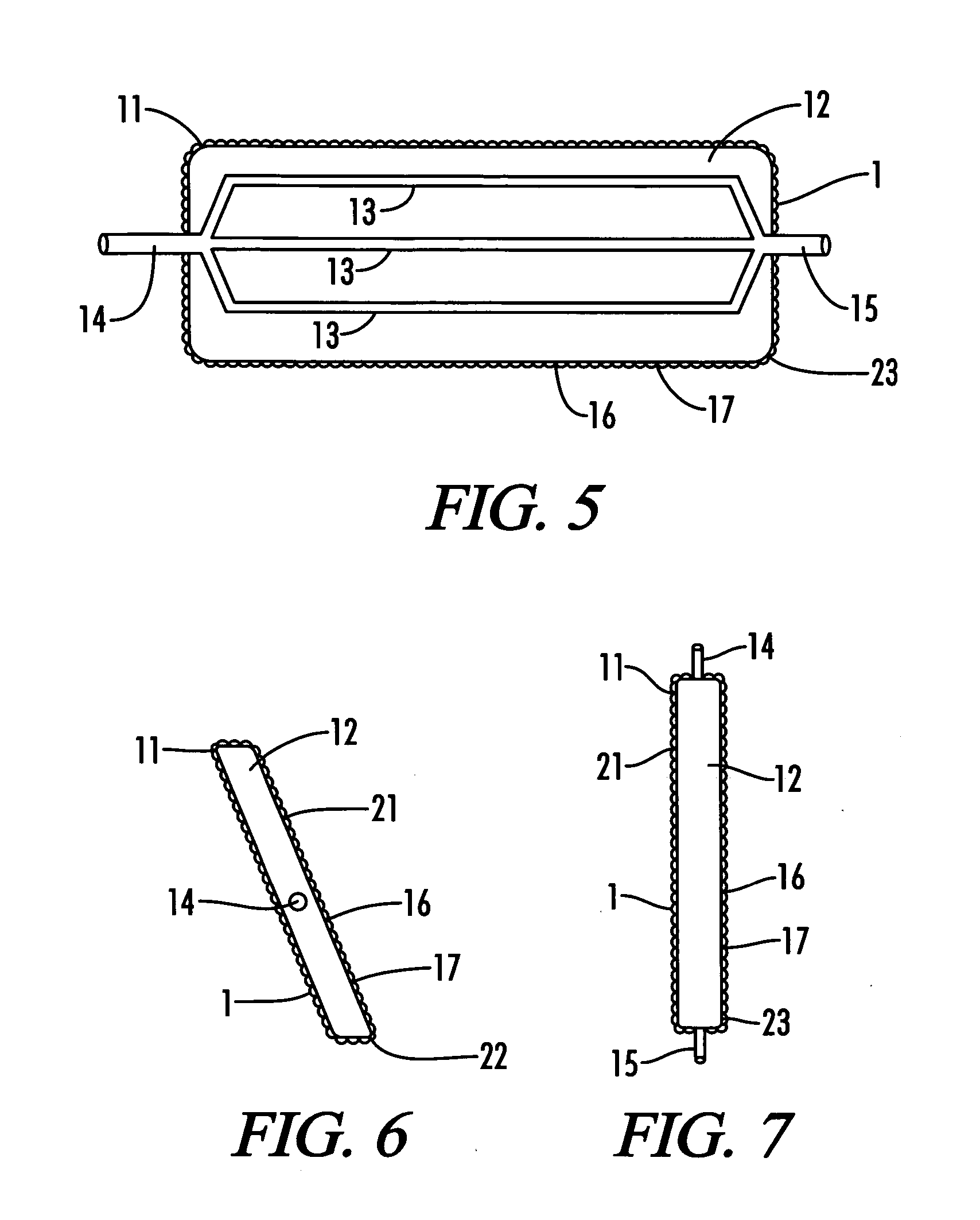
[0017] To achieve a more reliable ice removal method, in conjunction with the non-stick
surface coating, a fin design should be utilized whereby the fins are sloped, or are spiraled, downwardly, or are in a vertical position such that the fins extend in a substantially parallel direction to the longitudinal axis of the tubes transporting the refrigerant fluid, so that gravity alone will
pull off any ice forming on the non-stick surface.
[0019] By applying a non-stick coating to the exterior air heat exchange unit, with an appropriately sized and / or with an oversized (oversized from present customary
sizing) array of downwardly or vertically sloped fins and / or plates, which fins and / or plates serve to increase the surface area exposed to the air, the electric fan on a conventional air-source heat pump system can be either reduced in size or eliminated on the exterior air heat exchange unit, thereby creating enhanced operational efficiencies. The
sizing of the exterior air heat exchange unit fins, plates, or the like, necessary to at least one of reduce the size of conventional system exterior fans and to eliminate the exterior fans altogether is well understood by those skilled in the art.
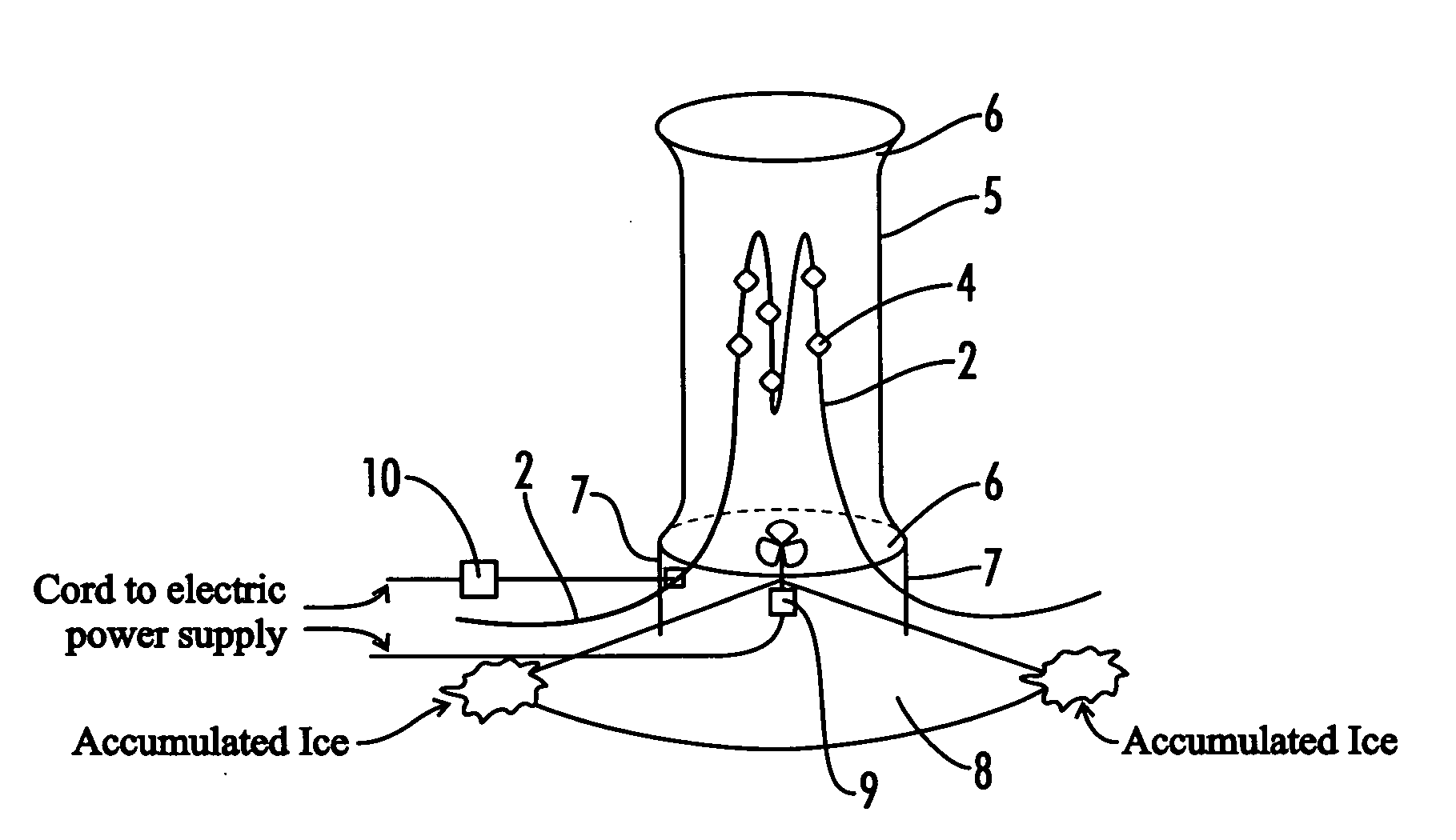
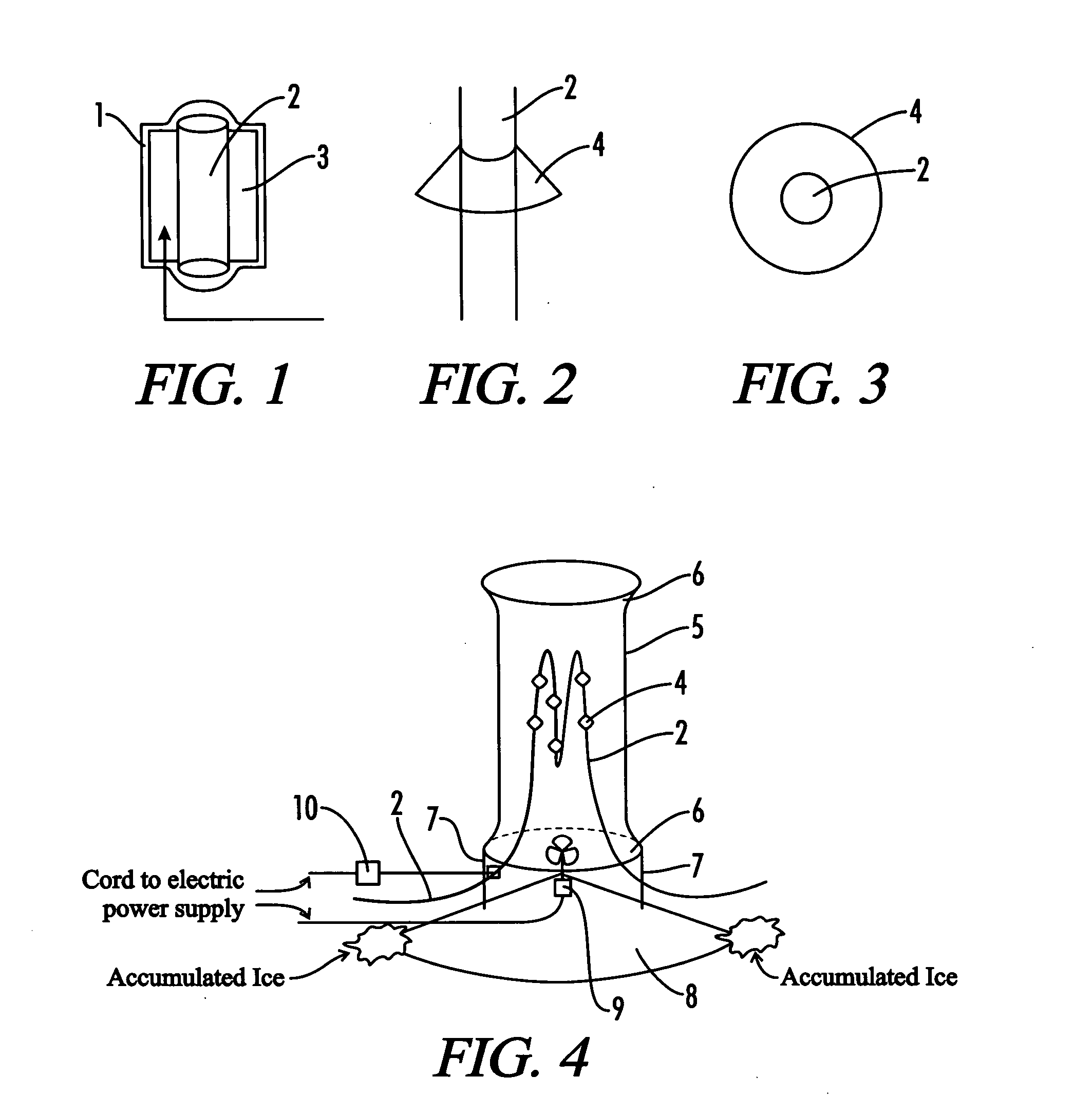
[0020] In such an enhanced efficiency design, the non-stick coated finned tubing and / or plates in the exterior air heat exchange unit may be surrounded with a protective shell, which would also be coated with a non-stick coating, with flared openings at the top and at the bottom so as to create a natural vena contracta effect. Thus, as the heat is transferred into the exterior air in the cooling mode, since hot air rises, the natural upward flow will pull cooler outside air in from the bottom, thereby creating a natural air flow over the non-stick coated finned tubing. In the heating mode, since air from which heat is extracted becomes cooler and heavier, the cooled air will naturally fall and will pull warmer air in from the top, again creating a natural air flow. Because of this naturally induced air flow, the conventionally used electric fan can be either eliminated or reduced in size, thereby increasing system operational efficiencies.
[0021] The exterior non-stick coated air heat exchange unit must be sufficiently elevated so as to allow falling ice to accumulate underneath the unit without building up from below so as to hamper the heat exchange ability of the refrigerant system. Further, the exterior unit should be furnished with a non-stick coated downwardly sloped base, cone-shaped base, or the like, so falling ice will slide harmlessly to the side, at a sufficient distance away from the unit to avoid any
airflow obstruction or any other decrease in system operational efficiencies. Additionally, the exterior unit may be equipped with an optional vibrator, which may be programmed to periodically vibrate the finned heat exchange tubing as appropriate, to further enhance the ability of the non-stick
surface coating to remove any ice, or other frozen moisture, build-up. The electrical power required to periodically operate a relatively small vibrator is significantly less than the power required by a conventional defrost cycle.



 Login to View More
  Login to View More