
Conjugated linolenic acids and methods for commerical preparation and purification
a technology of conjugated linolenic acid and fatty acid, which is applied in the preparation of fatty acid compounds, biocide, fatty acid chemical modification, etc., can solve the problems of high cost of tung oil for many industrial applications, inability to ensure that individual or animal doses are optimum, and other methods which utilize metal catalysts, but are not as efficient for conjugated double bonds. , to achieve the effect of high selectivity
- Summary
- Abstract
- Description
- Claims
- Application Information
AI Technical Summary
Benefits of technology
Problems solved by technology
Method used
Image

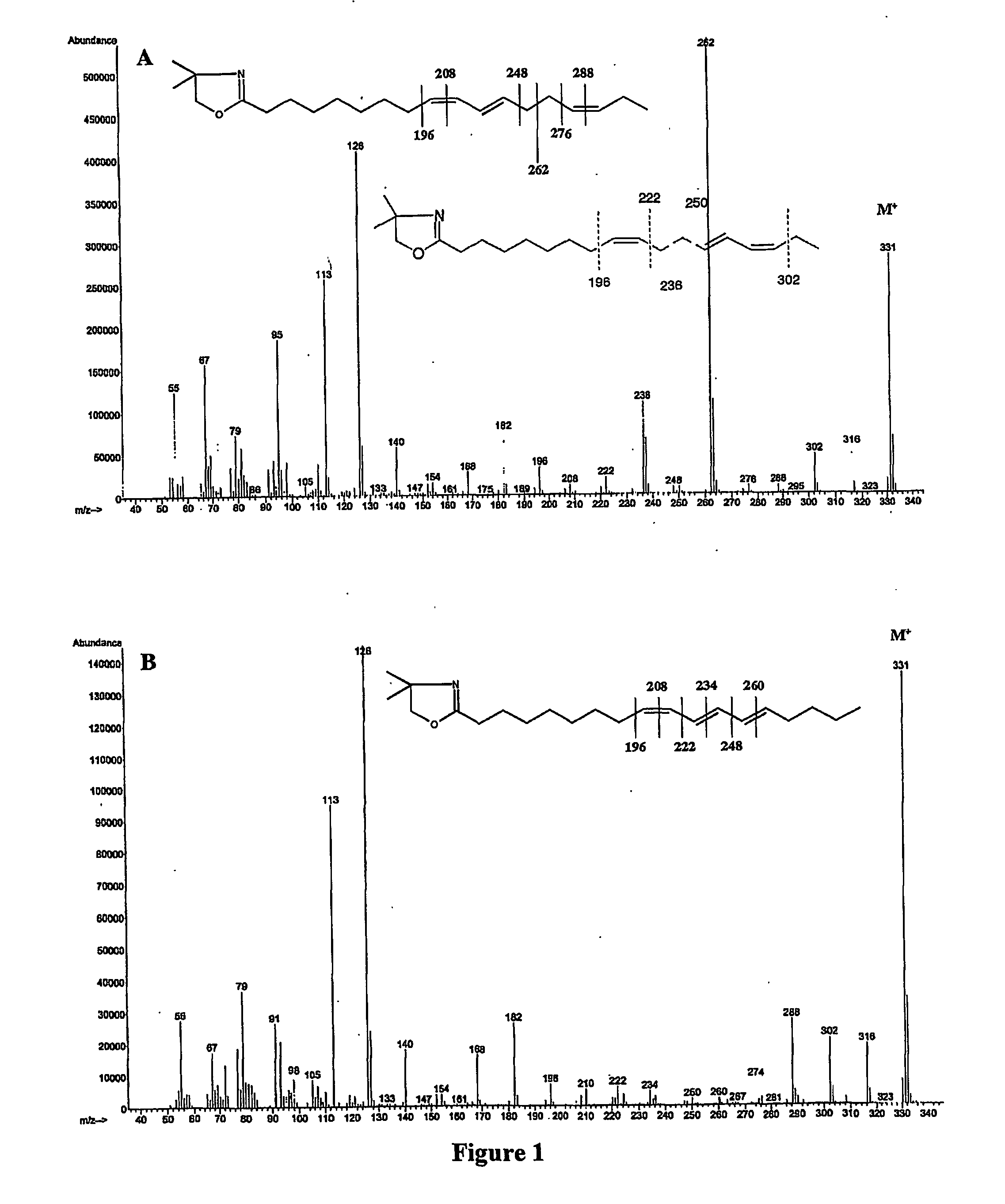
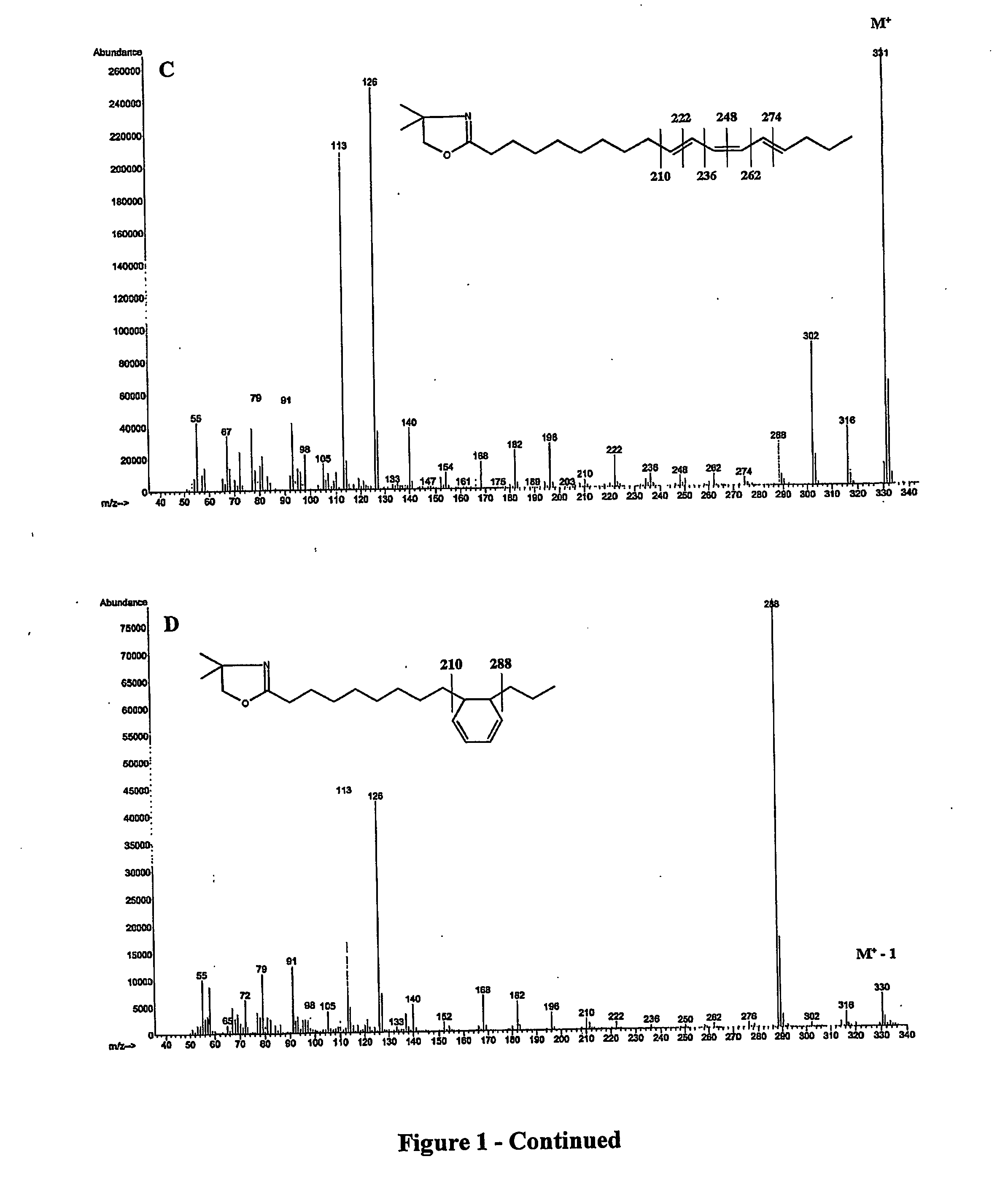
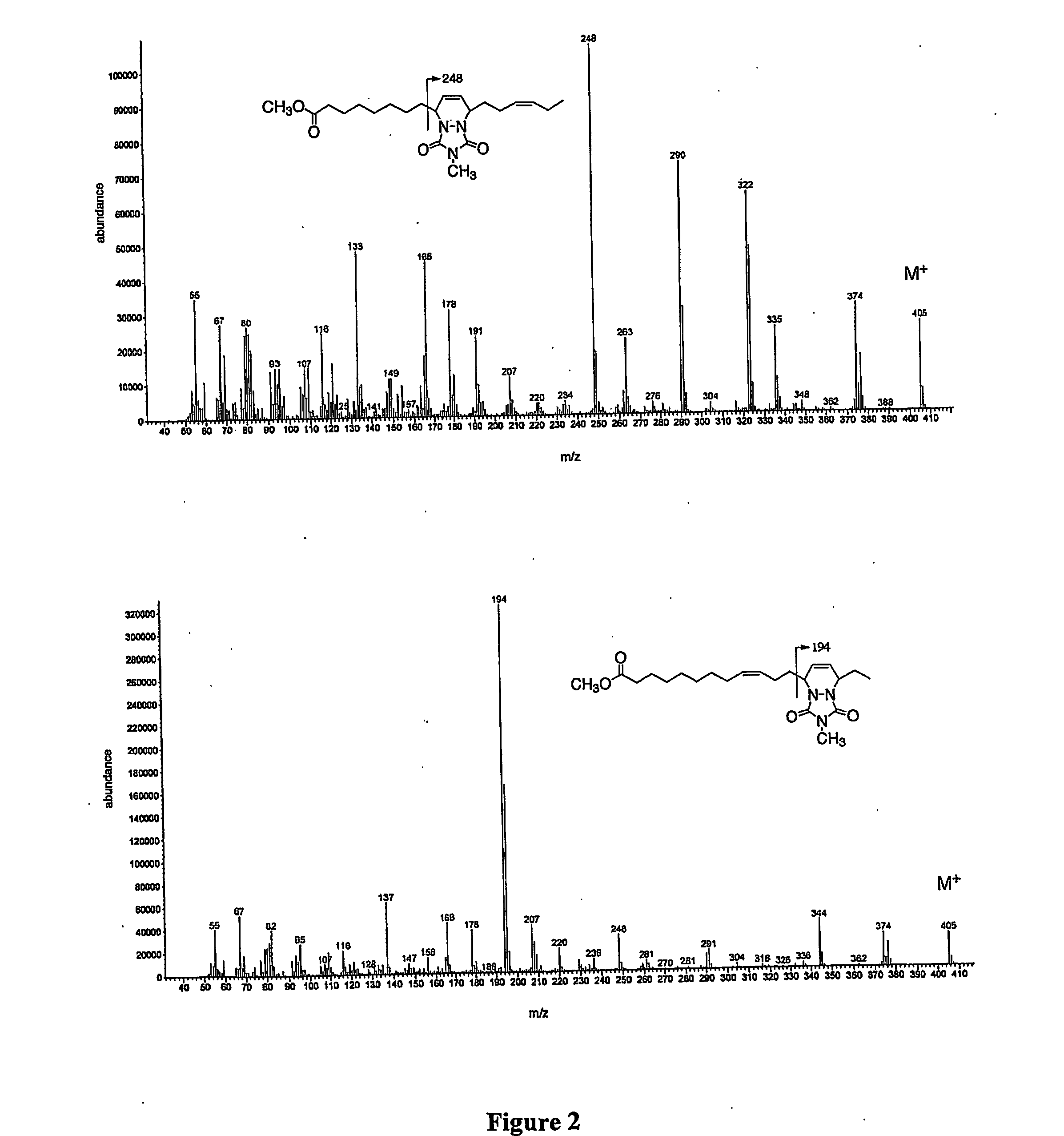
Examples
Embodiment Construction
[0040] The oils and fats, alone or as mixtures, containing alpha-linolenic acid may include but are not limited to amebia, basil, candelnut, flax (linseed), linola, gold of pleasure, hemp, mustard, perilla, soybean, canola, walnut, chia, crambe, echium, hop, kiwi, pumpkin, black currant and purslane seed oils, or any other oil, wax, ester or amide that is rich in linolenic acid.
[0041] The oils and fats, alone or as mixtures, containing gamma-linolenic acid may include but are not limited to borage, evening primrose and black currant seed oils, or any other oil, wax, ester or amide that is rich in linolenic add.
[0042] The disclosed method converts double bonds of α- and γ-linolenic acid isomers into partly and / or fully conjugated systems as well as into cyclic fatty acid isomers. The process, which can be performed both in batch and continuous modes, involves blending one or a mixture of vegetable oils with various concentrations of alpha or gamma linolenic acids or both or partial...
PUM
| Property | Measurement | Unit |
|---|---|---|
| temperatures | aaaaa | aaaaa |
| temperature | aaaaa | aaaaa |
| temperature | aaaaa | aaaaa |
Abstract
Description
Claims
Application Information
 Login to View More