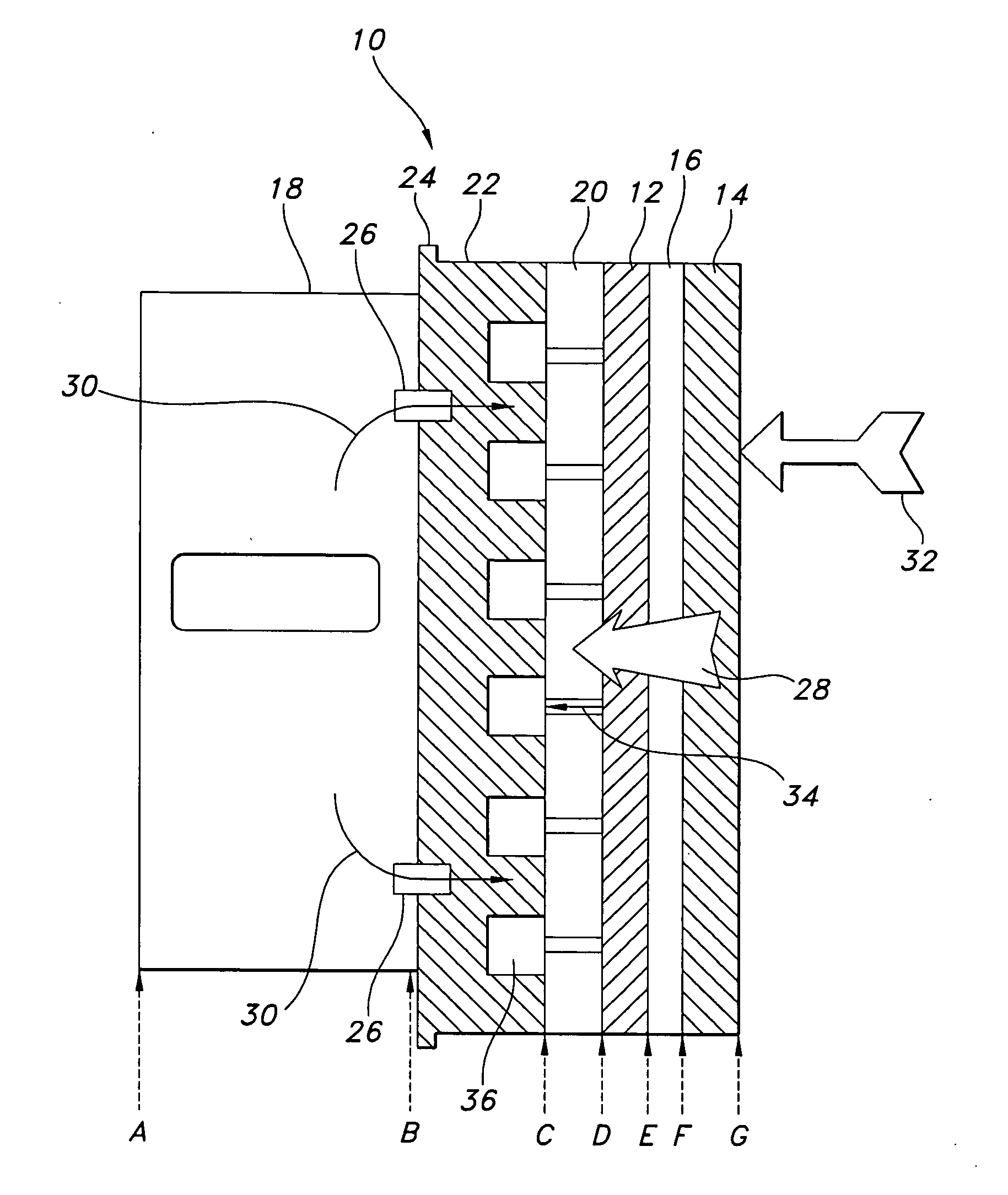
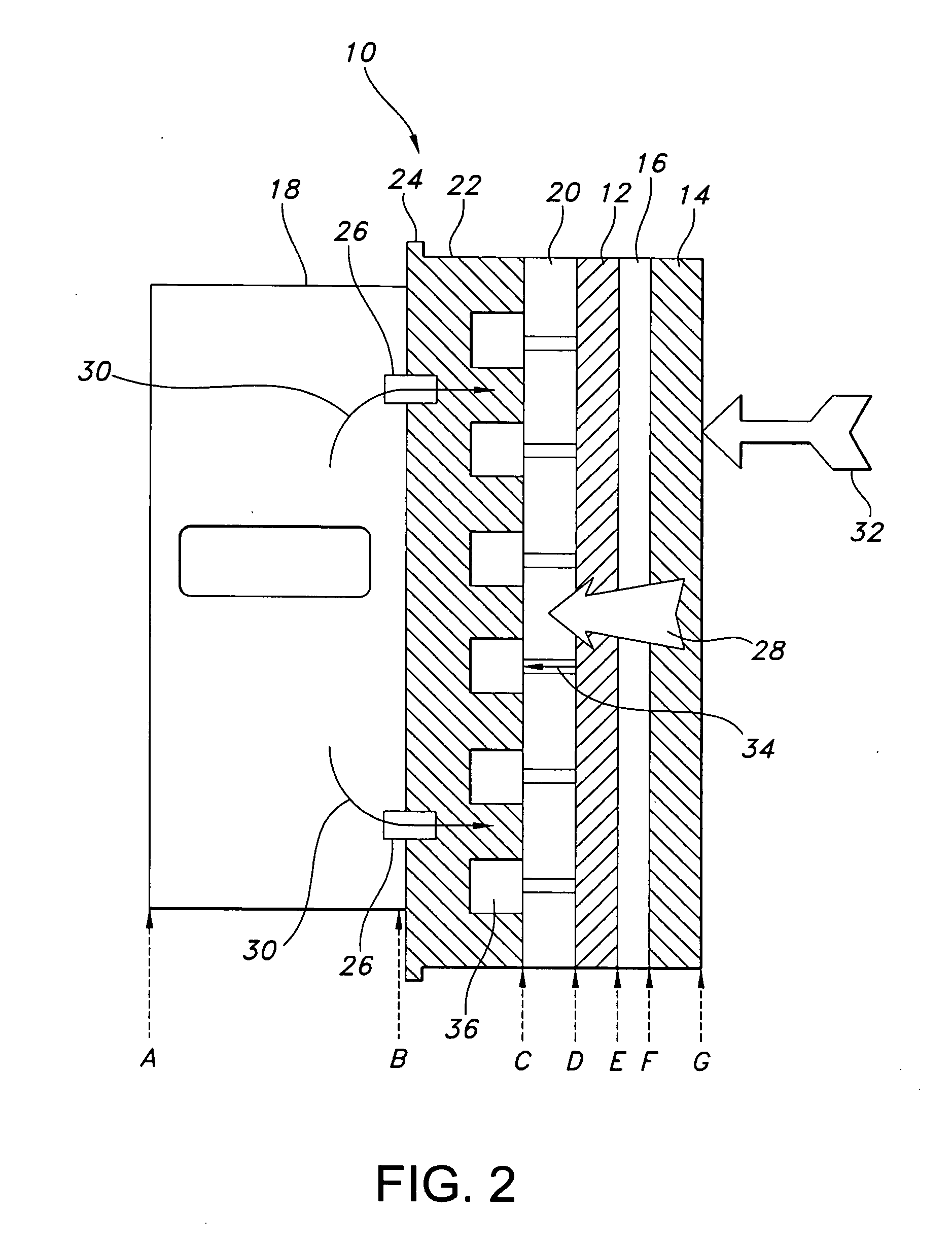
[0015] In particular, a system in accordance with the present invention as described herein provides a thermal-fluids
management system for a DMFC. It provides passive methods to transport reactants and byproducts, a mechanism to store the reactants (methanol and water) and methods for controlling methanol concentration in the catalyst layer.
Methanol and water are stored in hydrophobic and hydrophilic media, respectively. A methanol
concentration gradient, established between the neat methanol storage medium and the
anode catalyst layer, delivers methanol to the
anode catalyst layer.
Capillary action dominates the liquid movement in the porous media, which provides for uniform distribution throughout the DMFC. Furthermore, gravity and orientation have no effect on operationally efficiency, enabling the DMFC to function in any physical direction with high stability. Preferably, the system and methods of the present invention are used in conjunction with smaller DMFCs (i.e., about 0 to about 10
Watt power output), but can be expanded to DMFCs of various sizes, such as about 10 to about 20
Watt or more
power output cells.
[0016] A thermal-fluids
management system constructed in accordance with the present invention further provides for the proper transport of fluids (e.g., methanol, water,
oxygen, and
carbon dioxide) within the DMFC. Preferably, the system of the present invention is incorporated in a small DMFC, as described above. In particular, the present invention provides a system and method, which can be ancillary or incorporated into a DMFC, for passively supplying neat methanol to the cell with uniform distribution across the cell, achieving passive transport of water within the cell from the
cathode (air) side to the anode (fuel) side, passively supplying
oxygen to the cell with uniform distribution, passively releasing
carbon dioxide out of the cell, storing neat methanol in the cell, storing water in the cell, ensuring the cell works efficiently and with high stability in various physical orientations (such as for example, in small DMFCs which are usually used as
portable power sources, requiring the cell to work with high stability in various orientations), and controlling methanol concentration in the
anode catalyst layer, among other things.
[0020] In another embodiment, the aforementioned system can include a layer disposed adjacent the methanol storage medium which is configured to alter the characteristics of methanol flow between the methanol storage medium and the methanol distribution medium. Preferably, the layer is substantially
solid and restricts methanol flow, and may also include a porous conduit disposed therein for facilitating methanol transfer.
[0023] The present invention can also include devices or systems for supplying
oxygen to the DMFC or for releasing
carbon dioxide from the cell. A layer disposed adjacent the methanol storage medium and the methanol distribution medium that is configured to adjust methanol flow between the methanol storage medium and the mixing medium can also be included in the aforementioned DMFC. The layer may be substantially
solid and
restrict methanol flow from the methanol storage medium to the methanol distribution medium. In addition, a porous conduit can be disposed in the layer for facilitating methanol transfer therethrough.
[0025] In yet another aspect, the present invention is directed to a DMFC having anode and
cathode gas
diffusion layers, a porous hydrophobic methanol storage medium configured and dimensioned for containing a supply of neat methanol therein, a porous hydrophobic methanol distribution medium in fluid communication with the methanol storage medium, which is configured and dimensioned for uniformly distributing methanol to the anode
gas diffusion layer, and a porous hydrophilic mixing medium positioned between the anode and the methanol distribution medium which is configured and dimensioned for receiving methanol from the methanol distribution medium and water as a byproduct of fuel cell operation and facilitating mixing of the water and methanol therein.
[0026] Embodiments of this DMFC can also include a substantially liquid impervious layer positioned between the methanol storage medium and the methanol distribution medium, and at least one conduit extending through the liquid impervious layer configured to facilitate methanol flow between the methanol storage medium and the methanol distribution medium. The conduit can be porous and hydrophobic Embodiments of this DMFC can further include a sensing device positioned adjacent the anode for collecting data that facilitates determining methanol concentration, and a device or system for restricting the flow of methanol from the methanol storage medium based on measurements obtained from the sensing device. In addition, the methanol storage medium of this DMFC can be in fluid communication with a methanol supply source.


 Login to View More
  Login to View More