
Method and apparatus for directional and controlled cooling in vacuum furnaces
- Summary
- Abstract
- Description
- Claims
- Application Information
AI Technical Summary
Benefits of technology
Problems solved by technology
Method used
Image

Examples
Embodiment Construction
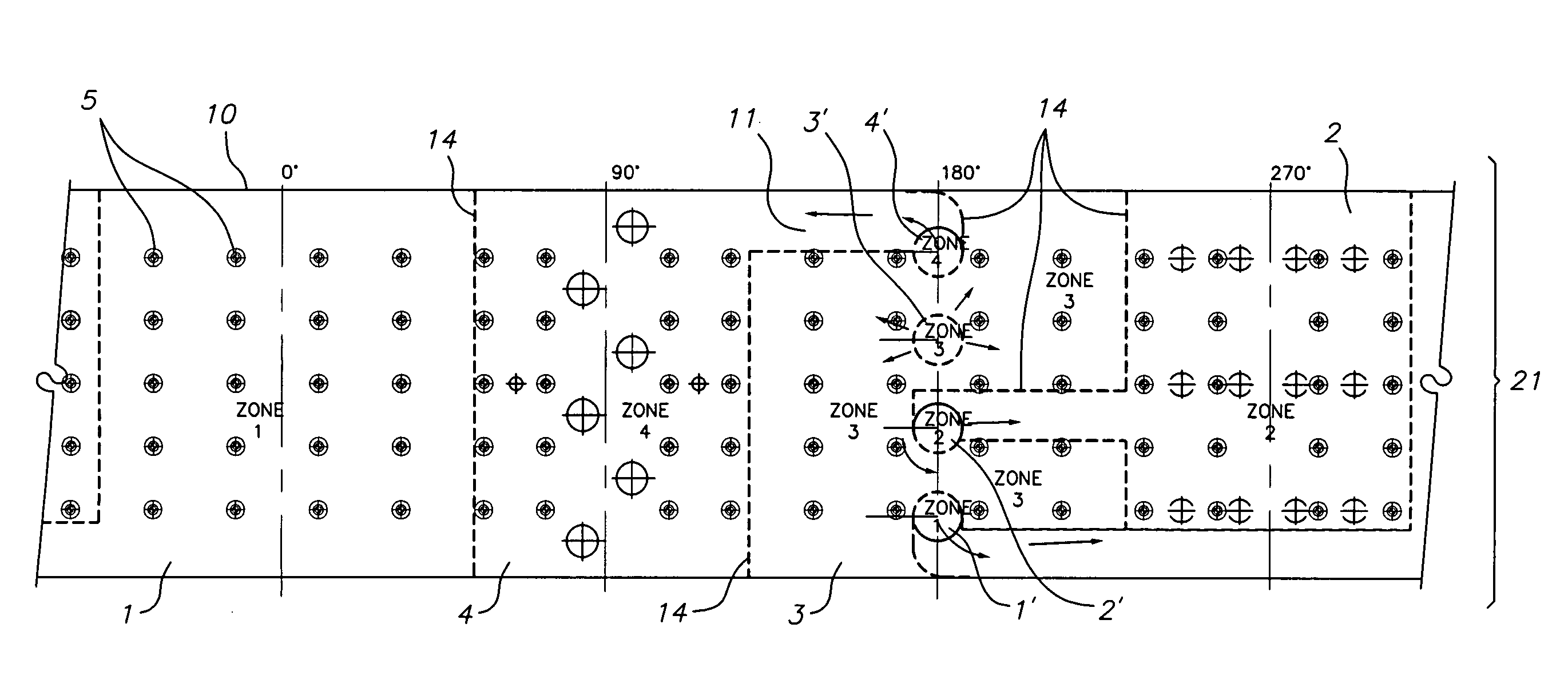
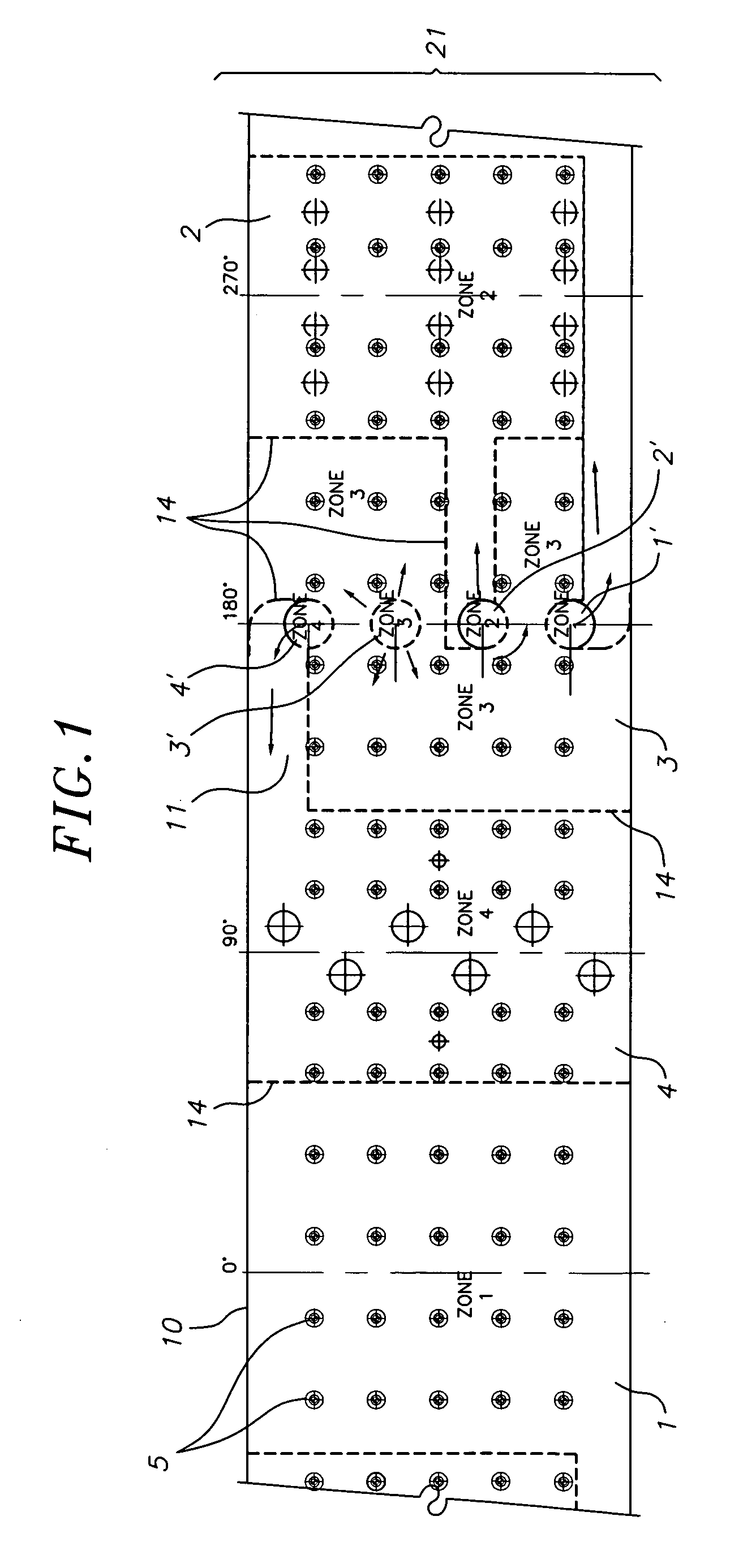
[0034]FIG. 1 is a flat layout of the wall of the inner plenum 10 of the furnace. The plenum contains a series of gas restrictor walls 14 that may, in one embodiment, run perpendicular to the inner wall 21 and outer wall of the plenum and that, in the preferred embodiment, divide the inner chamber of the plenum 10 into four sectors or zones 1, 2, 3, and 4. In alternate embodiments, the inner chamber of the plenum may have any number of zones that best suits the needs of the user.
[0035] For instance, the plenum may be designed to have anywhere between two and eight zones, or it may even have more zones. To further illustrate, if a manufacturer needs to have a level of cooling along the bottom third of the load that is different from the top two-thirds, then a two zone plenum could be manufactured at a cost less expensive than that of a four or eight zone plenum. In manufacturing the plenum, any number of gas restrictor walls 14 can be fixed, such as through welding to the inner wall ...
PUM
| Property | Measurement | Unit |
|---|---|---|
| Time | aaaaa | aaaaa |
| Flow rate | aaaaa | aaaaa |
| Area | aaaaa | aaaaa |
Abstract
Description
Claims
Application Information
 Login to View More