

Antibodies as T cell receptor mimics, methods of production and uses thereof
a technology of t cell receptor and antibody, applied in the field of methods of producing antibodies, can solve the problems of inability to describe how (or if), inability to accurately predict the effect of antibody treatment, and significant number of patients (up to 70%) refractory to treatment with these antibody molecules, and achieve the effect of higher binding affinity
- Summary
- Abstract
- Description
- Claims
- Application Information
AI Technical Summary
Benefits of technology
Problems solved by technology
Method used
Image

Examples
example 1
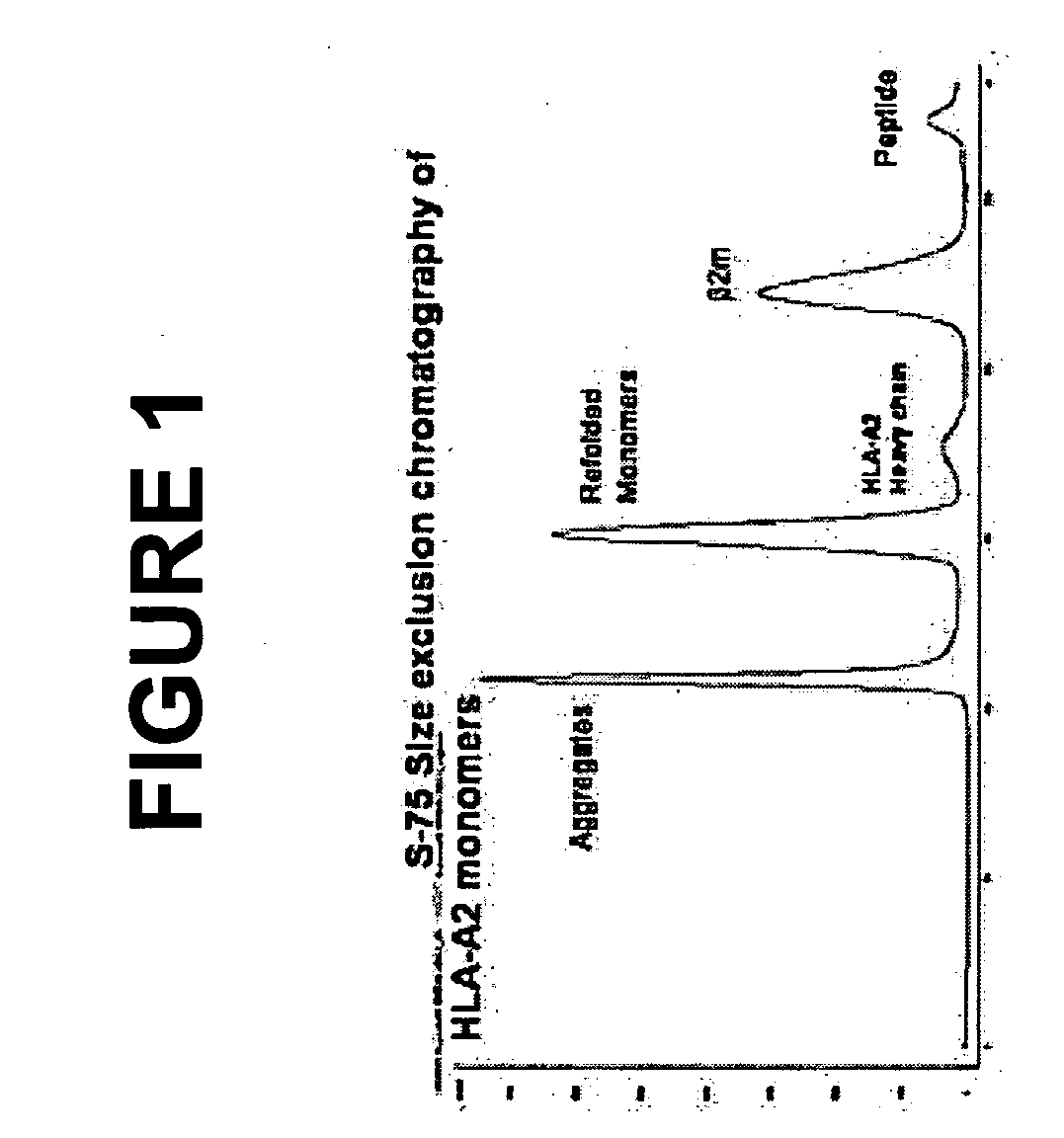
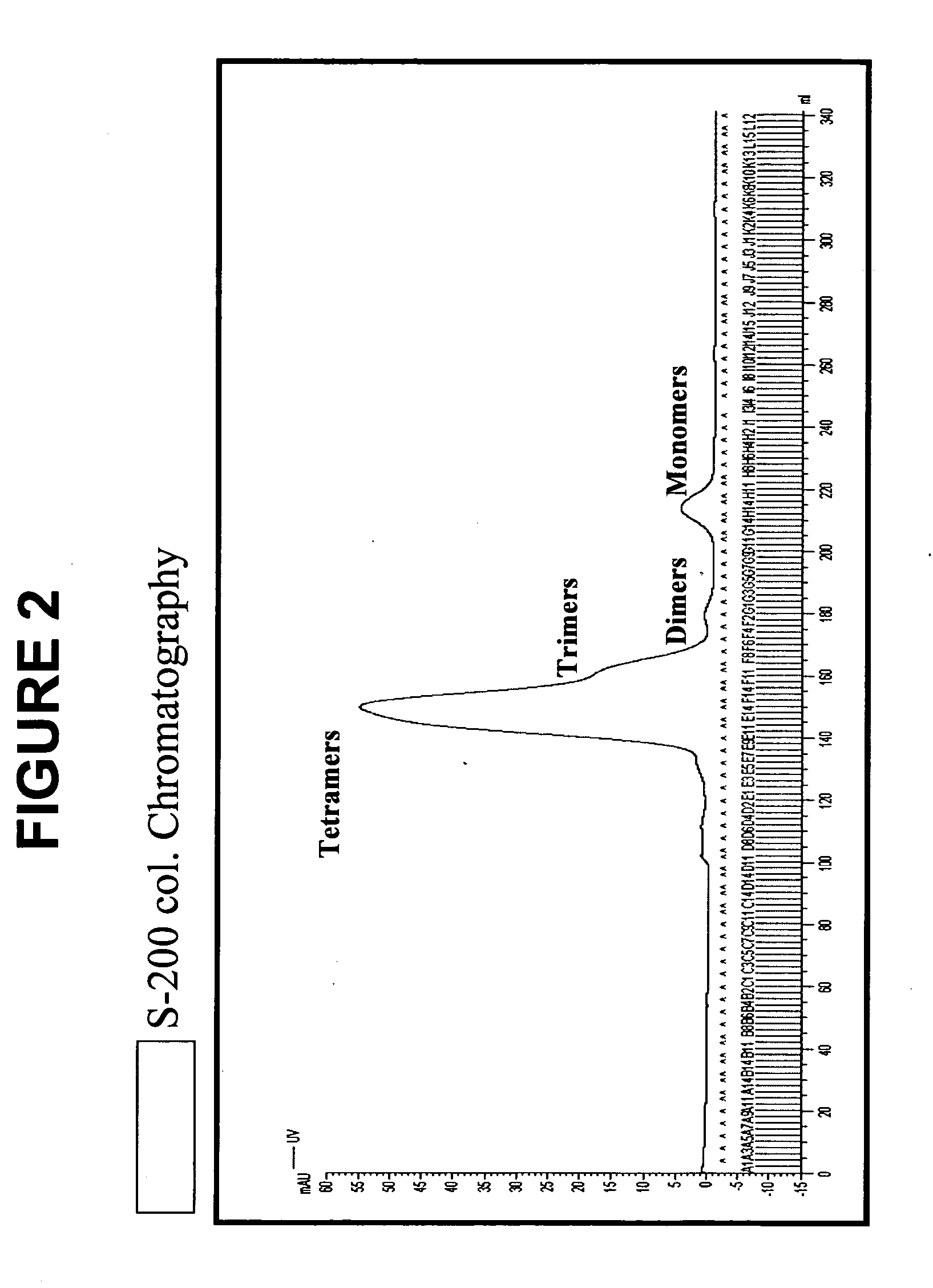
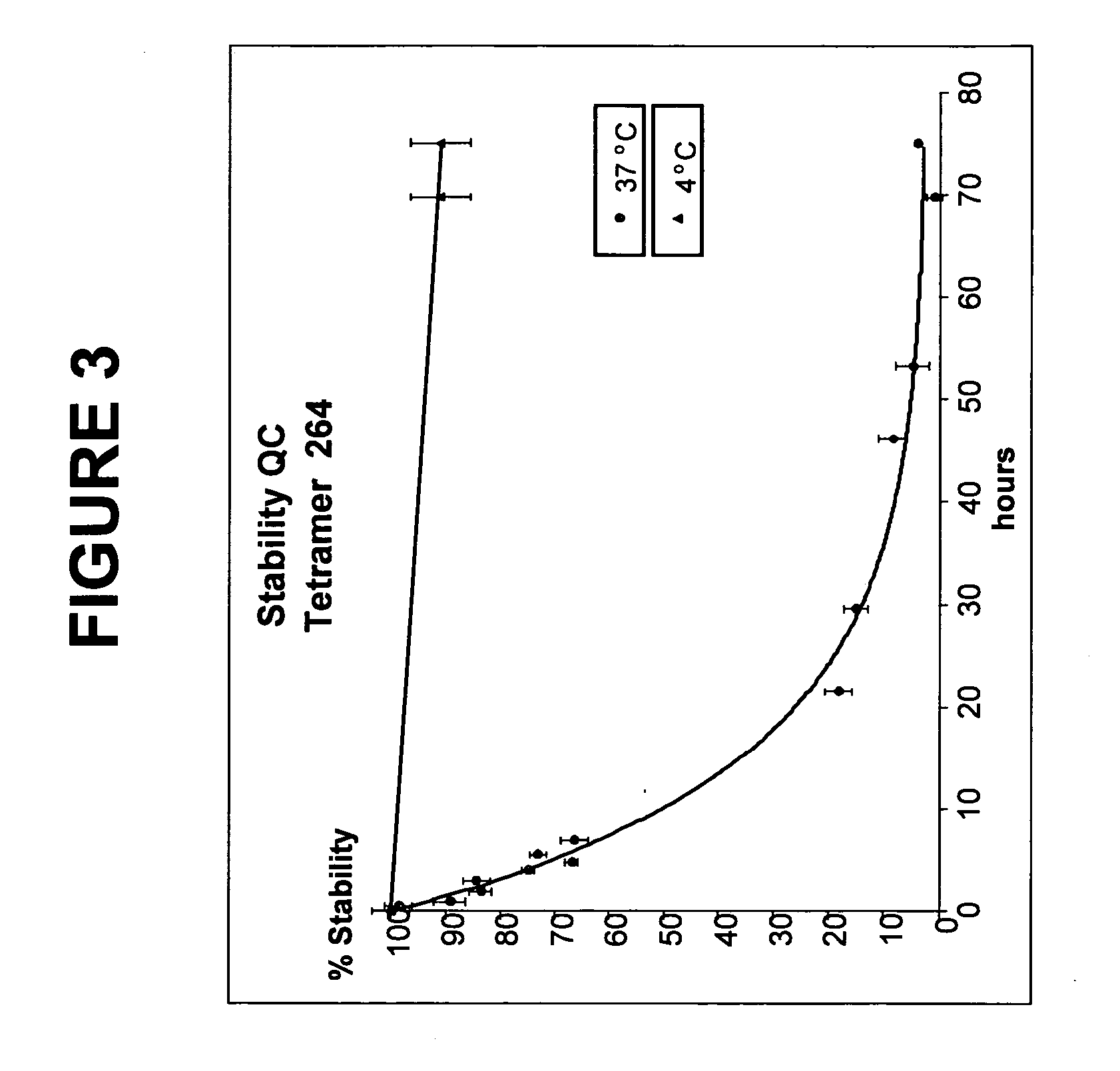
[0166] The human p53 protein is an intracellular tumor suppressor protein. Point mutations in the p53 gene inactivate or reduce the effectiveness of the p53 protein and leave cells vulnerable to transformation during progression towards malignancy. As cells attempt to compensate for a lack of active p53, over production of the p53 protein is common to many human cancers including breast cancer, resulting in cytoplasmic increases in p53 peptide fragments such as the peptide 264-272. There are many reports demonstrating that surface HLA-A2 presents the 264-peptide epitope from wild-type p53 (Theobald et al., 1995; and Theobald et al., 1998). Cytotoxic T lymphocytes have been generated against the 264-peptide-HLA-A2 complexes (referred to herein as 264p-HLA-A2) on breast cancer cells from peripheral blood monolayer cells (PBMC) of healthy donors and individuals with breast cancer (Nikitina et al., 2001; Barfoed et al., 2000; and Gnjatic et al., 1998). Further, several studies have repo...
example 2
[0187] The eukaryotic translation initiation factor 4 gamma (eIF4G) is a protein which is part of a complex of molecules that are critical in regulating translation. When breast carcinoma cell lines (MCF-7 and MDA-MB-231) were stressed with serum starvation, the eIF4G protein degrades into smaller peptide fragments (Morley et al., 2000; Morley et al., 2005; Bushell et al., 2000; and Clemens, 2004). A peptide of eIF4G has been identified as being presented by HLA molecules on HIV infected cells at a higher frequency than in uninfected cells by the epitope discovery method of Hildebrand et al. (US Patent Application Publication No. US 2002 / 0197672 A1, which has previously been incorporated herein by reference). The epitope discovery methodology is shown in FIG. 15. Briefly, an expression construct encoding a secreted HLA molecule is transfected into a normal cell line and an infected, diseased or cancerous cell line (in this case, an HIV infected cell line), and the cell lines are cul...
example 3
[0206] Her-2(9369) represents a common epitope expressed by various tumor types including breast carcinomas (Brossart et al., 1999). Approximately 20-30% of primary breast cancers express Her-2. The Her-2 / neu receptor protein is a member of the tyrosine kinase family of growth factor receptors (Coussens et al., 1985) that is frequently amplified and overexpressed in breast cancer (Slamon et al., 2001). The Her-2 / neu protein is generally displayed on the surface of cells and, during malignancy, is detected at high levels on tumor cells. Although its precise anti-tumor mechanism(s) remain unknown, Herceptin, an anti-Her-2 / neu antibody, is used in breast cancer treatment to target the receptor on the surface of tumor cells. In addition to using antibodies to attack tumors expressing Her-2 / neu receptor on their surface, Her-2 / neu oncoprotein contains several HLA-A2-restricted epitopes that are recognized by CTL on autologous tumors. The most extensively studied Her-2 epitope (and the on...
PUM
| Property | Measurement | Unit |
|---|---|---|
| time | aaaaa | aaaaa |
| size exclusion column | aaaaa | aaaaa |
| pH | aaaaa | aaaaa |
Abstract
Description
Claims
Application Information
 Login to View More