Solar cell having doped semiconductor heterojunction contacts

a semiconductor heterojunction and contact technology, applied in the field of photovoltaic solar cells, can solve the problems of limited commercialization of ibc solar cells, limited efficiency of silicon photovoltaic cells in directly converting solar energy to electricity, and low cost effectiveness of process for conventional low-cost flat-plate solar panels

a semiconductor heterojunction and contact technology, applied in the field of photovoltaic solar cells, can solve the problems of limited commercialization of ibc solar cells, limited efficiency of silicon photovoltaic cells in directly converting solar energy to electricity, and low cost effectiveness of process for conventional low-cost flat-plate solar panels

US20070256728A1Active Publication Date: 2007-11-08MAXEON SOLAR PTE LTD

Image

Smart Image Click on the blue labels to locate them in the text.
Viewing Examples
Smart Image
  • Solar cell having doped semiconductor heterojunction contacts
  • Solar cell having doped semiconductor heterojunction contacts
  • Solar cell having doped semiconductor heterojunction contacts

Examples

Experimental program
Comparison scheme
Effect test

Embodiment Construction

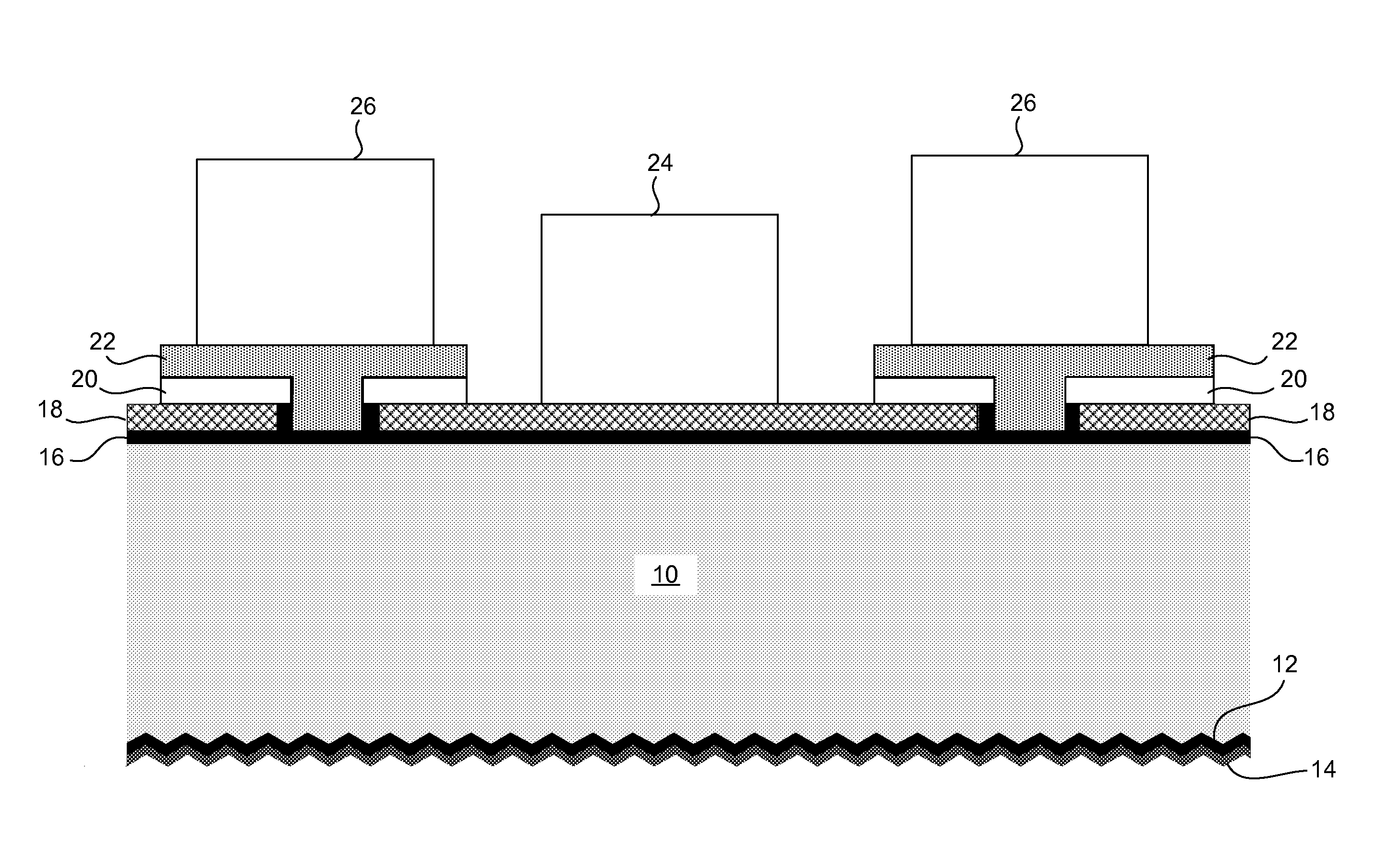
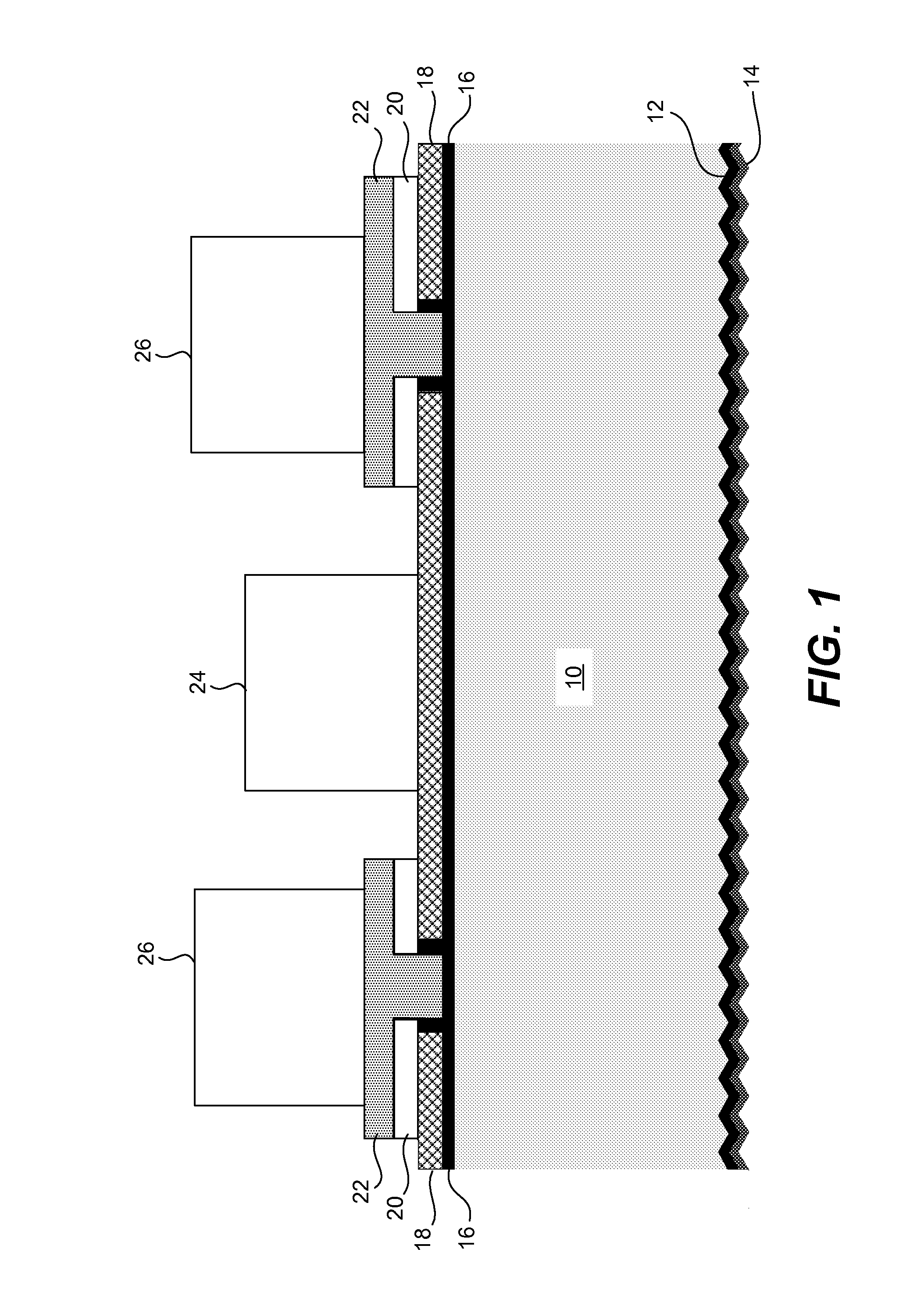
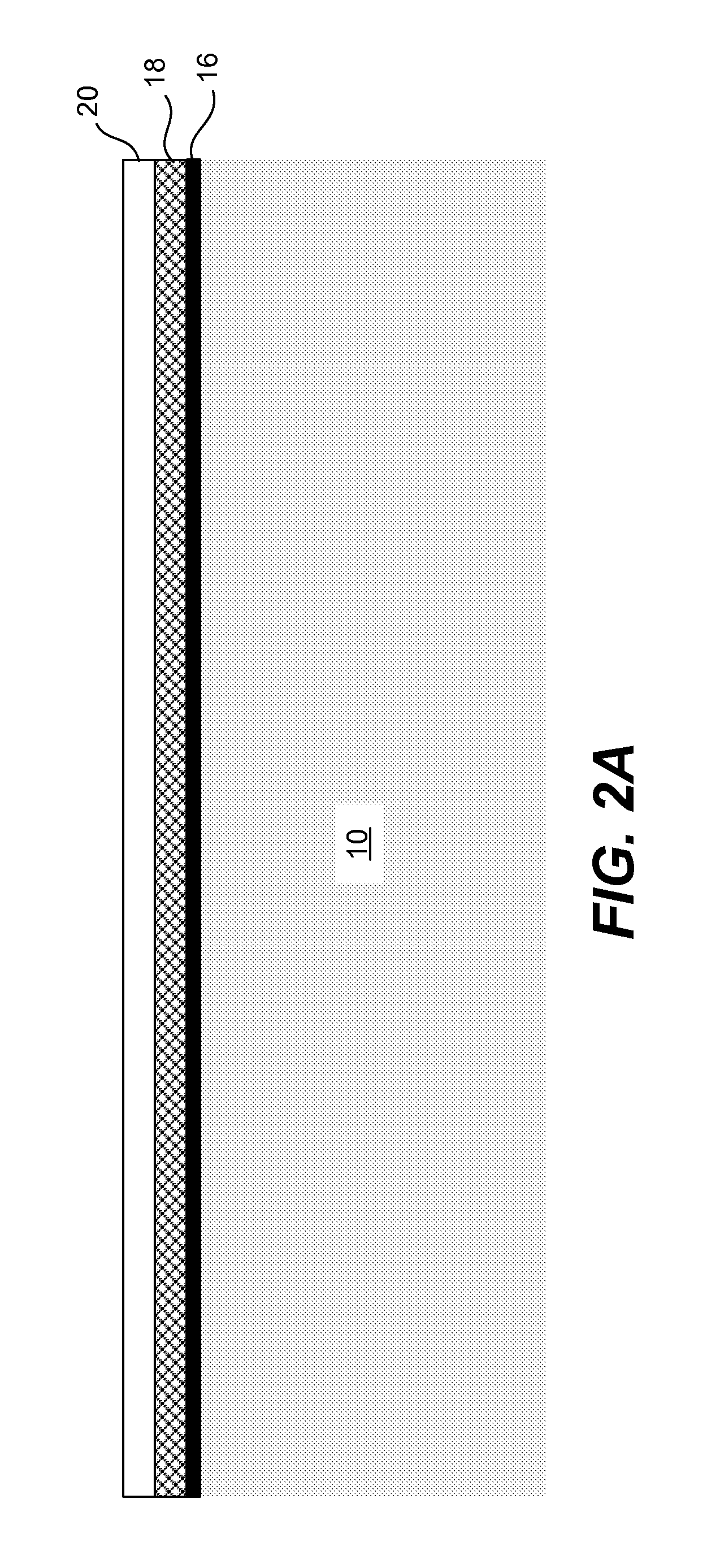
[0013] In accordance with one embodiment of the invention, an interdigitated back contact (IBC) solar cell comprising a silicon semiconductor body having first and second opposing major surfaces receives radiation through the first surface and has first and second patterns of acceptor doped amorphous silicon and donor doped amorphous silicon, respectively, on the second or back surface for receiving electron and hole carriers created in the silicon substrate by radiated photons. The structure is similar to prior art back contact solar cells which utilize doped P and N conductivity contacts formed in the substrates for receiving the holes and electrons created by radiation. However, the use doped P and N contacts in the substrate requires photoresist masking, etching, dopant diffusion, and high temperature processing in the fabrication of the solar cell. The use of acceptor and donor amorphous silicon contacts on the structure, in accordance with an embodiment of the invention, obvia...

the structure of the environmentally friendly knitted fabric provided by the present invention; figure 2 Flow chart of the yarn wrapping machine for environmentally friendly knitted fabrics and storage devices; image 3 Is the parameter map of the yarn covering machine
Login to View More

PUM

No PUM Login to View More

Abstract

A silicon solar cell has doped amorphous silicon contacts formed on a tunnel silicon oxide layer on a surface of a silicon substrate. High temperature processing is unnecessary in fabricating the solar cell.

Description

BACKGROUND OF THE INVENTION [0001] This invention relates generally to photovoltaic solar cells, and more particularly the invention relates to a solar cell structure which is efficient in operation and economical to manufacture. [0002] The use of photovoltaic cells for the direct conversion of solar radiation into electrical energy is well known, see Swanson, U.S. Pat. No. 4,234,352 for example. Briefly, the photovoltaic cell comprises a substrate of semiconductive material having a p-n junction defined therein. In the planar silicon cell the p-n junction is formed near a surface of the substrate which receives impinging radiation. Radiated photons create mobile carriers (holes and electrons) and the substrate which can be directed to an electrical circuit outside of the cell. Only photons having at least a minimum energy level (e.g., 1.1 electron volt for silicon) can generate an electron-hole pair in the semiconductor pair. Photons having less energy are either not absorbed or ar...

Claims

the structure of the environmentally friendly knitted fabric provided by the present invention; figure 2 Flow chart of the yarn wrapping machine for environmentally friendly knitted fabrics and storage devices; image 3 Is the parameter map of the yarn covering machine
Login to View More

Application Information

Patent Timeline
08 Nov 2007
Publication
US20070256728A1
IPC
H01L31/00; H01L31/062
CPC
H01L31/062; H01L31/0745; Y02E10/50; H01L31/022441; H01L31/1804; H01L31/022425; H01L31/03762; H01L31/03921
Inventors
COUSINS, PETER JOHN