
Variable Compression Ratio Internal Combustion Engine
a compression ratio and internal combustion engine technology, applied in the direction of electrical control, process and machine control, instruments, etc., can solve the problems of long time delay between the pressing of the accelerator pedal and the rising of the supercharging pressure, and it is difficult to achieve satisfactory acceleration performance. achieve the effect of reducing the response delay of the supercharger
- Summary
- Abstract
- Description
- Claims
- Application Information
AI Technical Summary
Benefits of technology
Problems solved by technology
Method used
Image

Examples
first embodiment
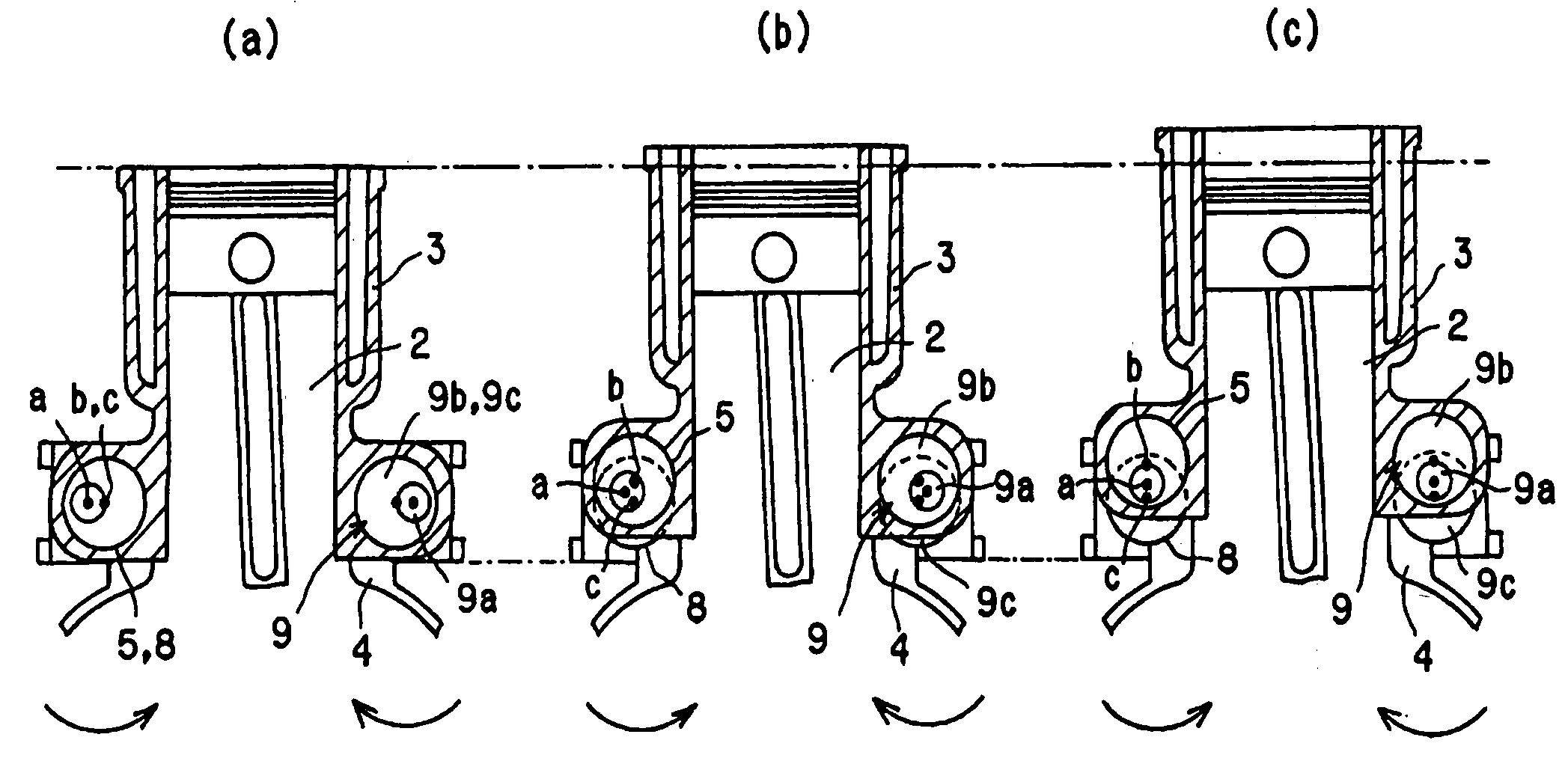
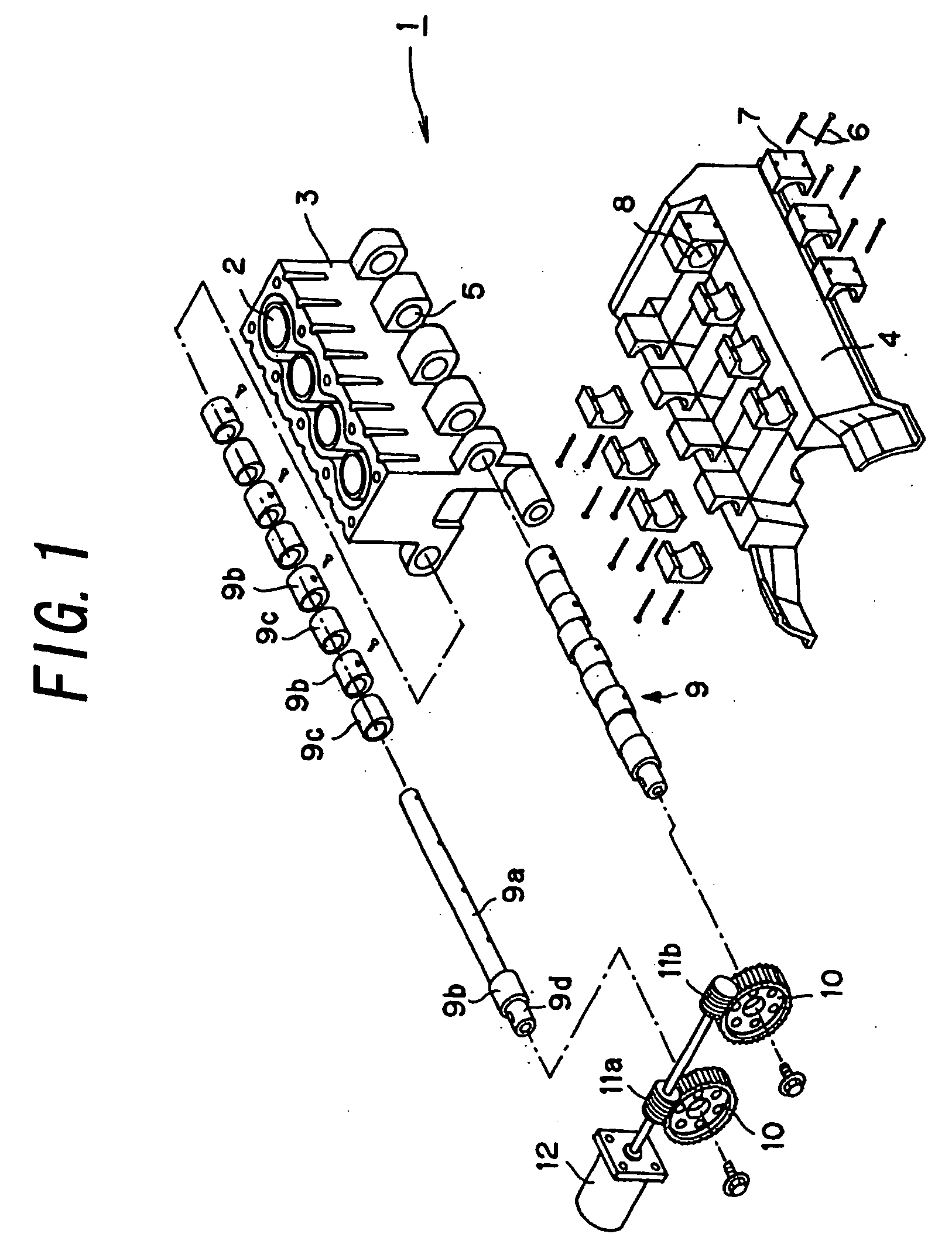
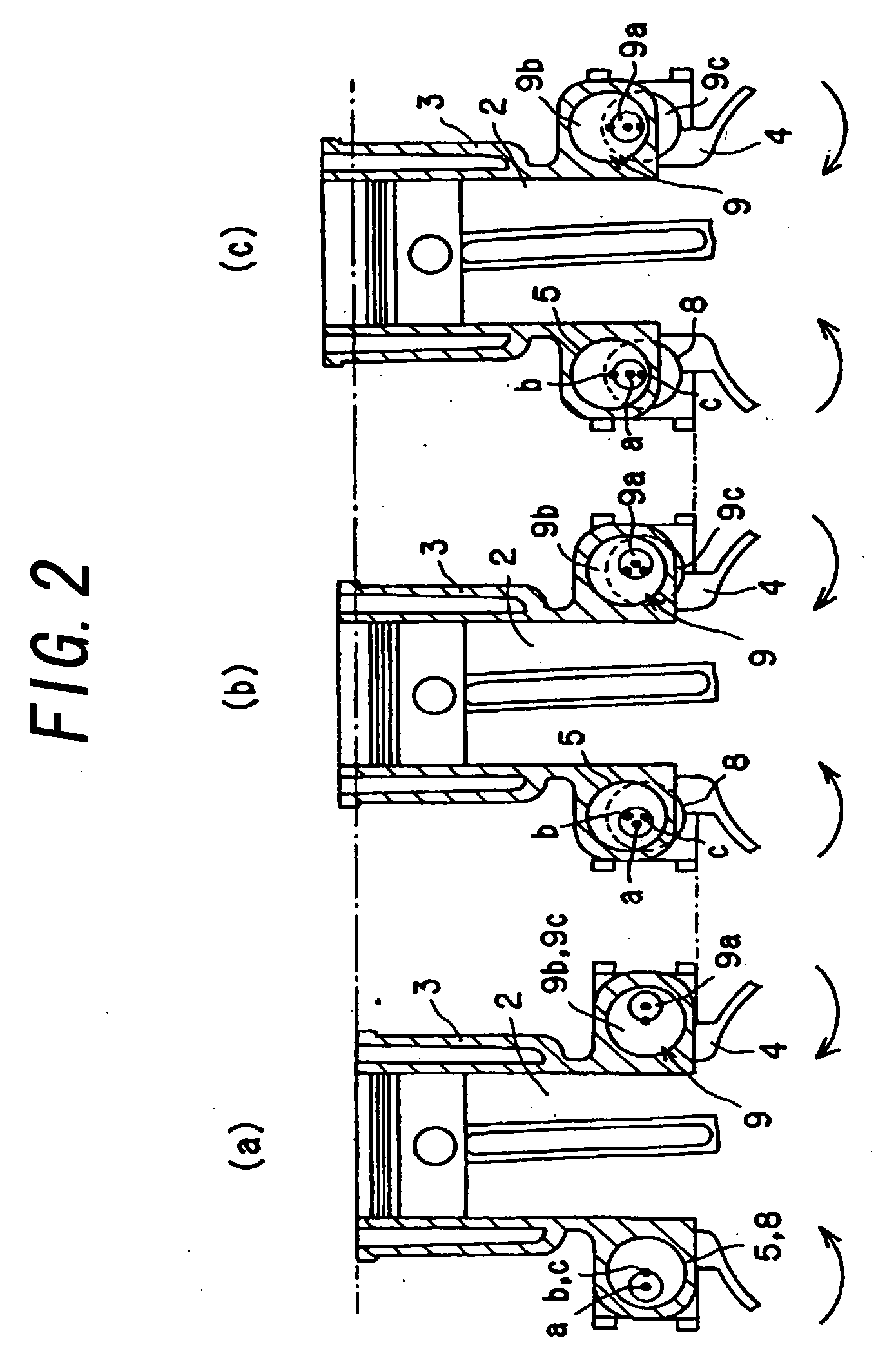
[0042]The internal combustion engine 1 that will be described in the following is a variable compression ratio internal combustion engine, in which the compression ratio is changed by displacing a cylinder block 3 having cylinders 2, along the direction of the center axes of the cylinders 2, relative to a crankcase 4 to which pistons are linked.
[0043]First, the structure of the variable compression ratio internal combustion engine according to this embodiment will be described with reference to FIG. 1. As shown in FIG. 1, the cylinder block 3 has a plurality of projecting portions formed on both the lower sides thereof. Each projecting portion has a bearing receiving bore 5 formed therein. The bearing receiving bore 5 is cylindrical in shape and extending perpendicularly to the axial direction of the cylinders 2 and parallel to the direction of arrangement of the multiple cylinders 2. The bearing receiving bores 5 on one side are arranged coaxially, and a pair of axes of the bearing...
second embodiment
[0074]In the following, a second embodiment will be described. In the second embodiment, when a request for acceleration is made to the internal combustion engine 1, the optimum compression ratio with which the engine torque becomes maximum is estimated and the compression ratio is changed to the optimum compression ratio while the accelerator pedal is depressed.
[0075]FIG. 7 is a flow chart of a compression ratio changing routine upon acceleration in this embodiment. This routine is a program stored in the ROM of the ECU 35, and executed at predetermined intervals after the internal combustion engine 1 is activated.
[0076]When this routine is executed, firstly in step S101, a determination is made as to whether a request for acceleration is made to the internal combustion engine 1 or not. Specifically, the depression stroke of the accelerator pedal 21 is detected by the accelerator position sensor 22, and a determination is made as to whether the detected value is larger than or equa...
PUM
 Login to View More
 Abstract
Description
Claims
Application Information
 Login to View More