

Solid Joint Obtained by Heat Projection
- Summary
- Abstract
- Description
- Claims
- Application Information
AI Technical Summary
Benefits of technology
Problems solved by technology
Method used
Image

Examples
Embodiment Construction
[0012]One object of this invention consists of providing a composite material element having a surface provided with a gas-tight barrier.
[0013]Another object of this invention consists of providing a solid joint procuring an effective seal.
[0014]Another object of this invention consists of providing a leakproof solid joint different from those of the prior art.
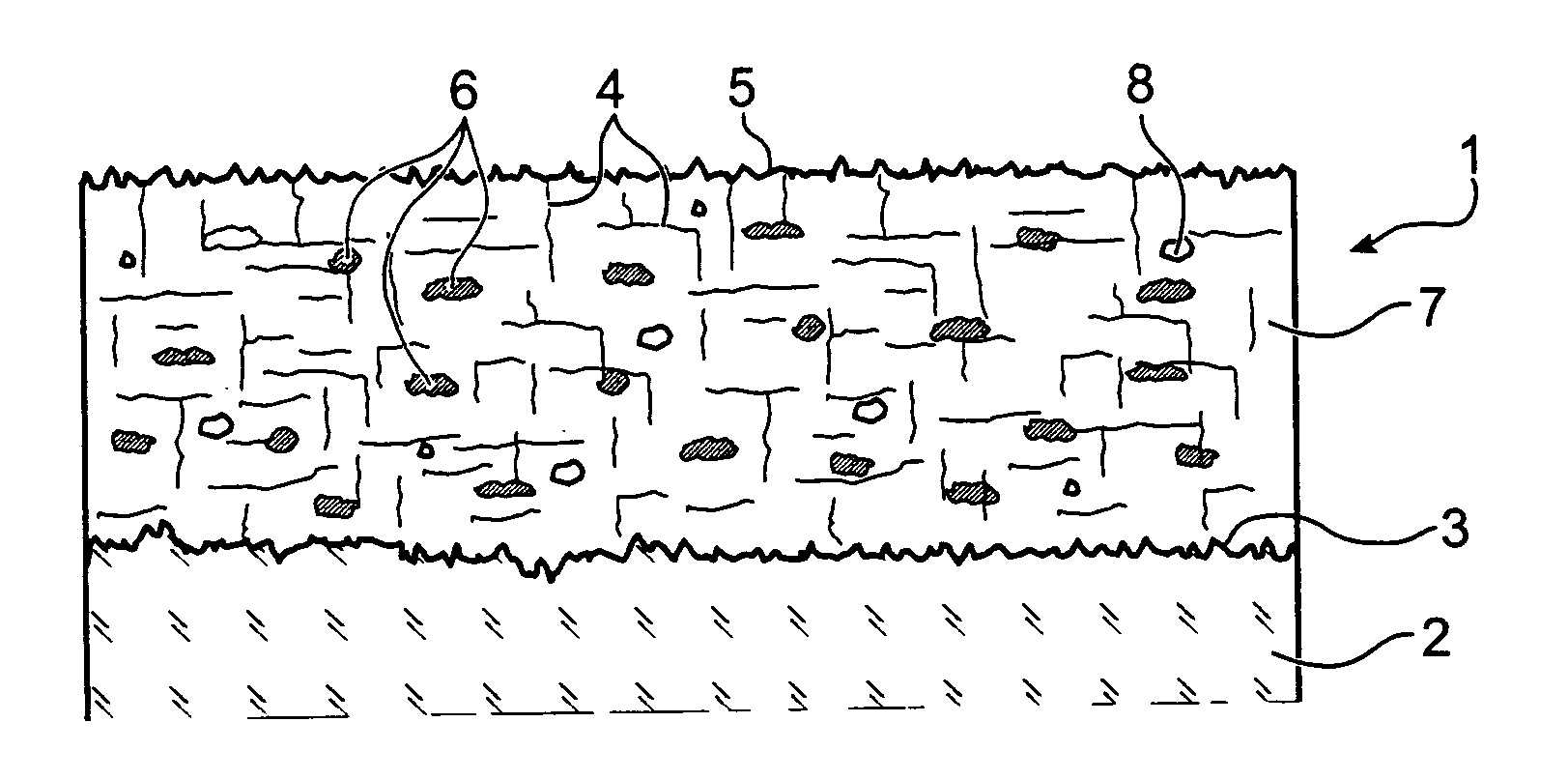
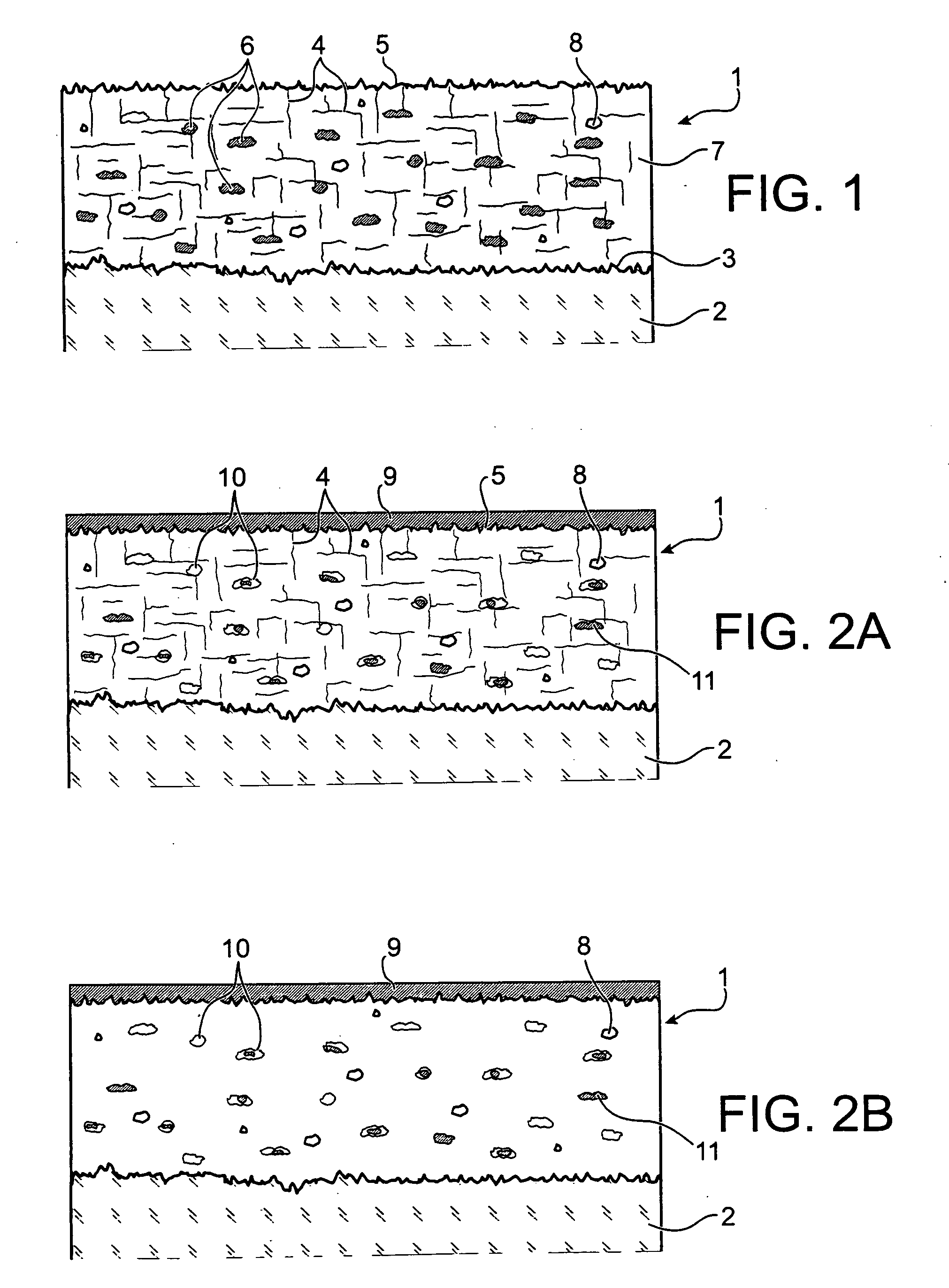
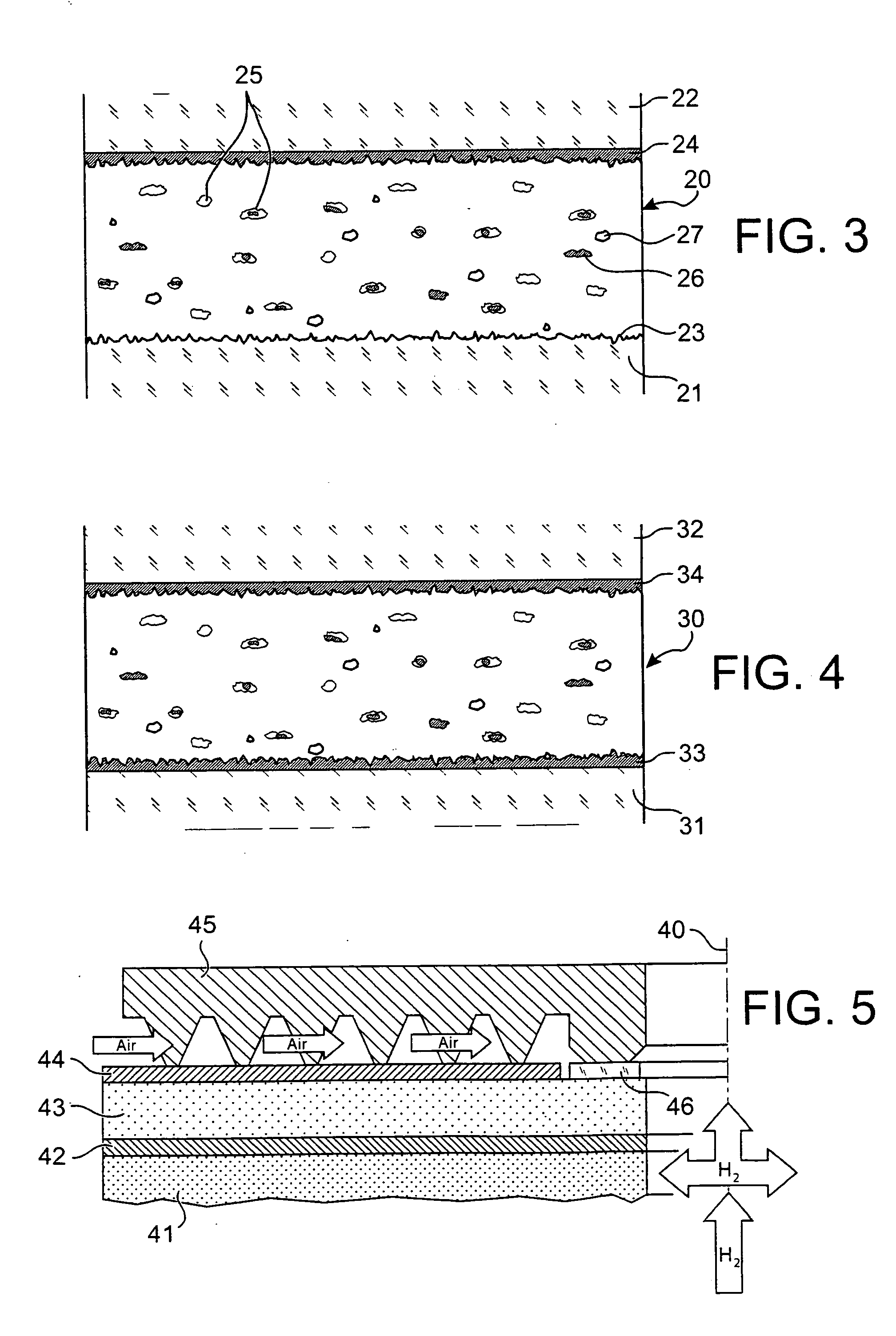
[0015]In this case, a solid joint with a ceramic matrix, loaded with glass or ceramic flux particles, produced by thermal spraying. This can produce effective sealing between two layers forming a SOFC-type solid fuel cell. The solid joint can, for example, be produced by plasma spraying on one or both sides of the layers to be assembled. The joint is solid, non-deformable and adheres to its support at ambient temperature. It is formed and acquires its properties during commissioning at the temperature of the SOFC by means of a migration mechanism in the vitreous phase by capillarity in the volume of the ceramic matrix, prefera...
PUM
| Property | Measurement | Unit |
|---|---|---|
| Temperature | aaaaa | aaaaa |
| Temperature | aaaaa | aaaaa |
| Fraction | aaaaa | aaaaa |
Abstract
Description
Claims
Application Information
 Login to View More