
Prophylactic/therapeutic agent for neurodegenerative disease
a neurodegenerative disease and therapy agent technology, applied in the direction of drug compositions, peptides, biological testing, etc., can solve the problem that the actual clinical use of apoptosis inhibitors is associated with considerable difficulty
- Summary
- Abstract
- Description
- Claims
- Application Information
AI Technical Summary
Benefits of technology
Problems solved by technology
Method used
Image

Examples
examples
1. Methods
(1) Preparation of Primary Neuron Culture and Nuclear Extraction
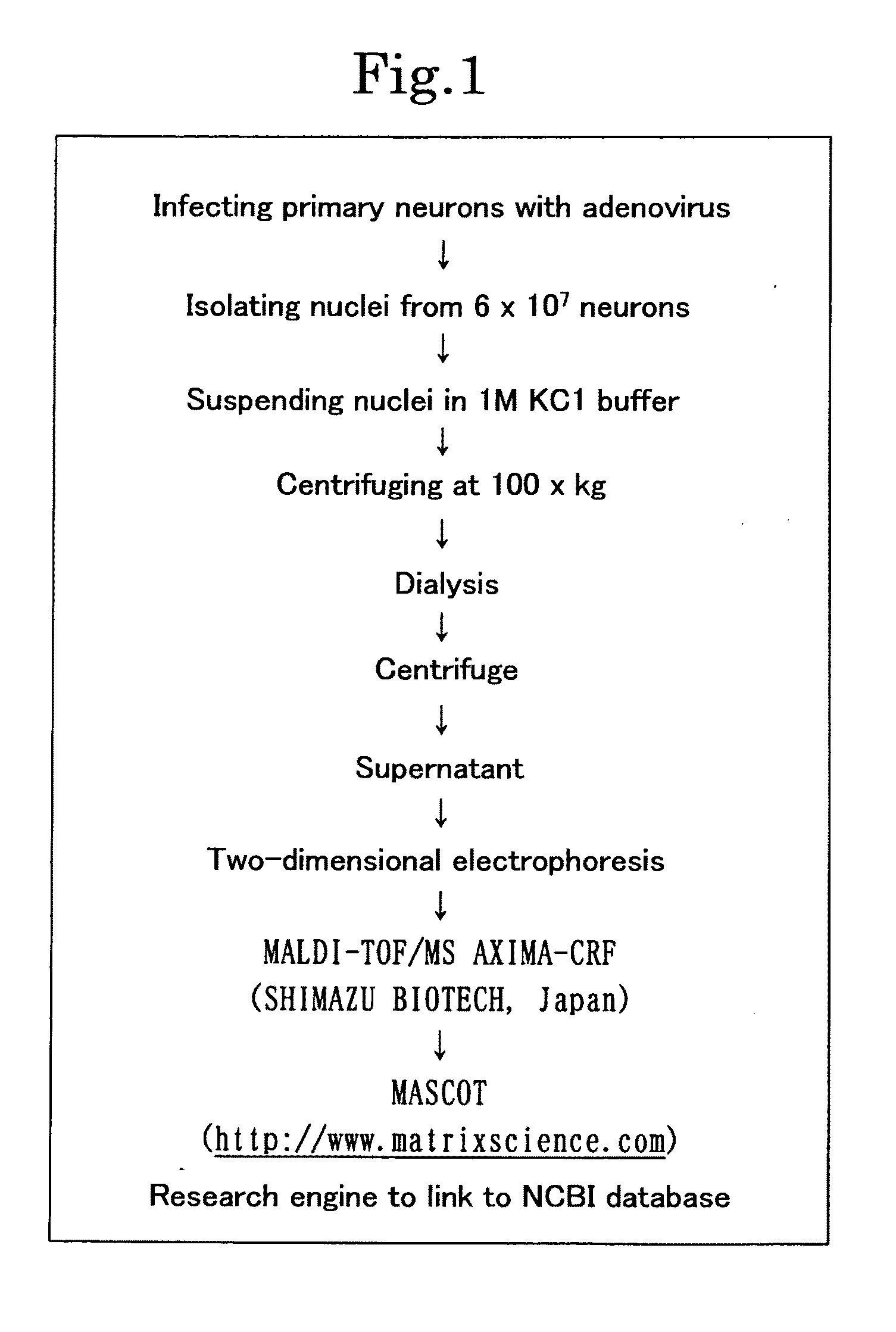
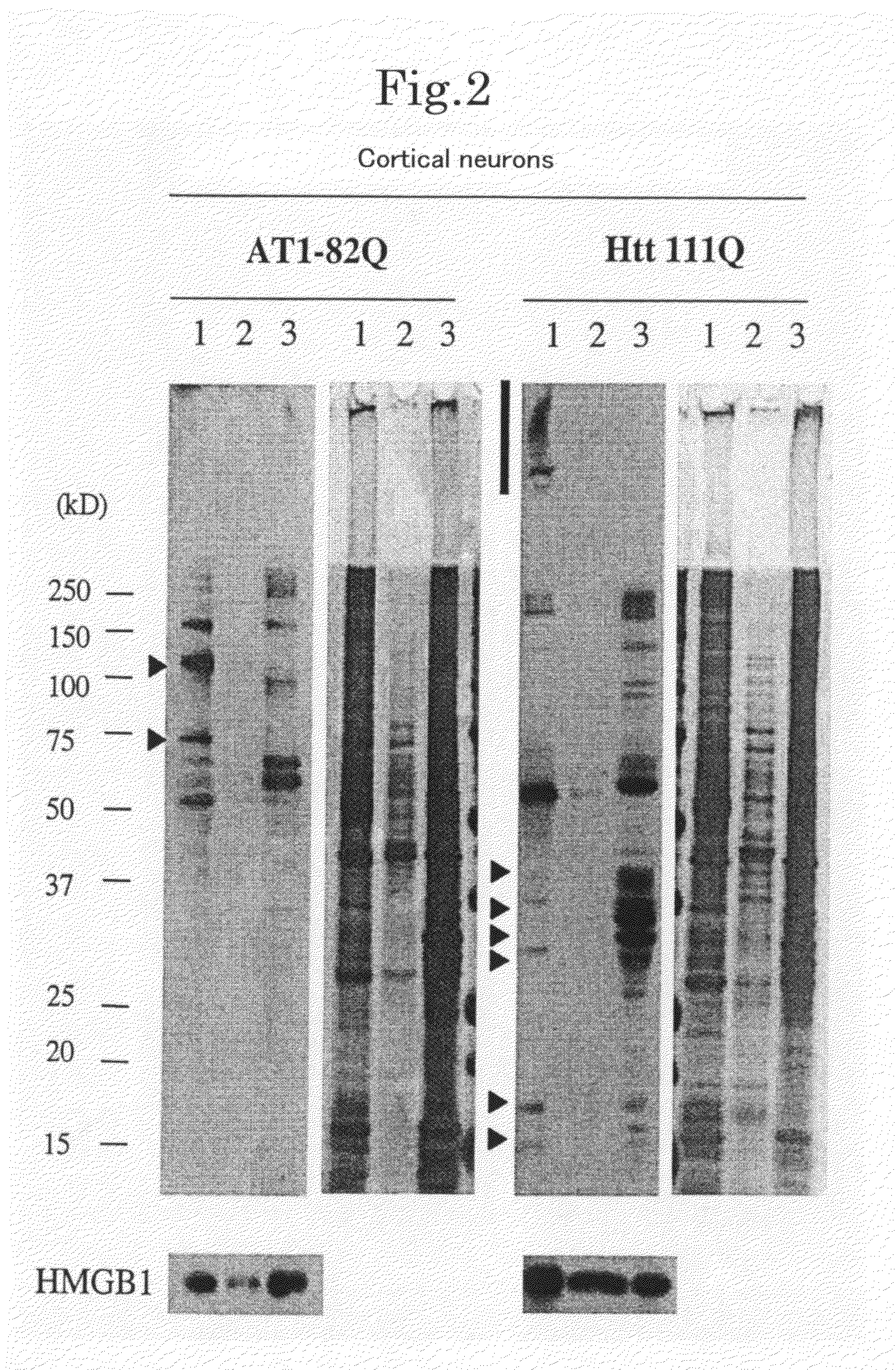
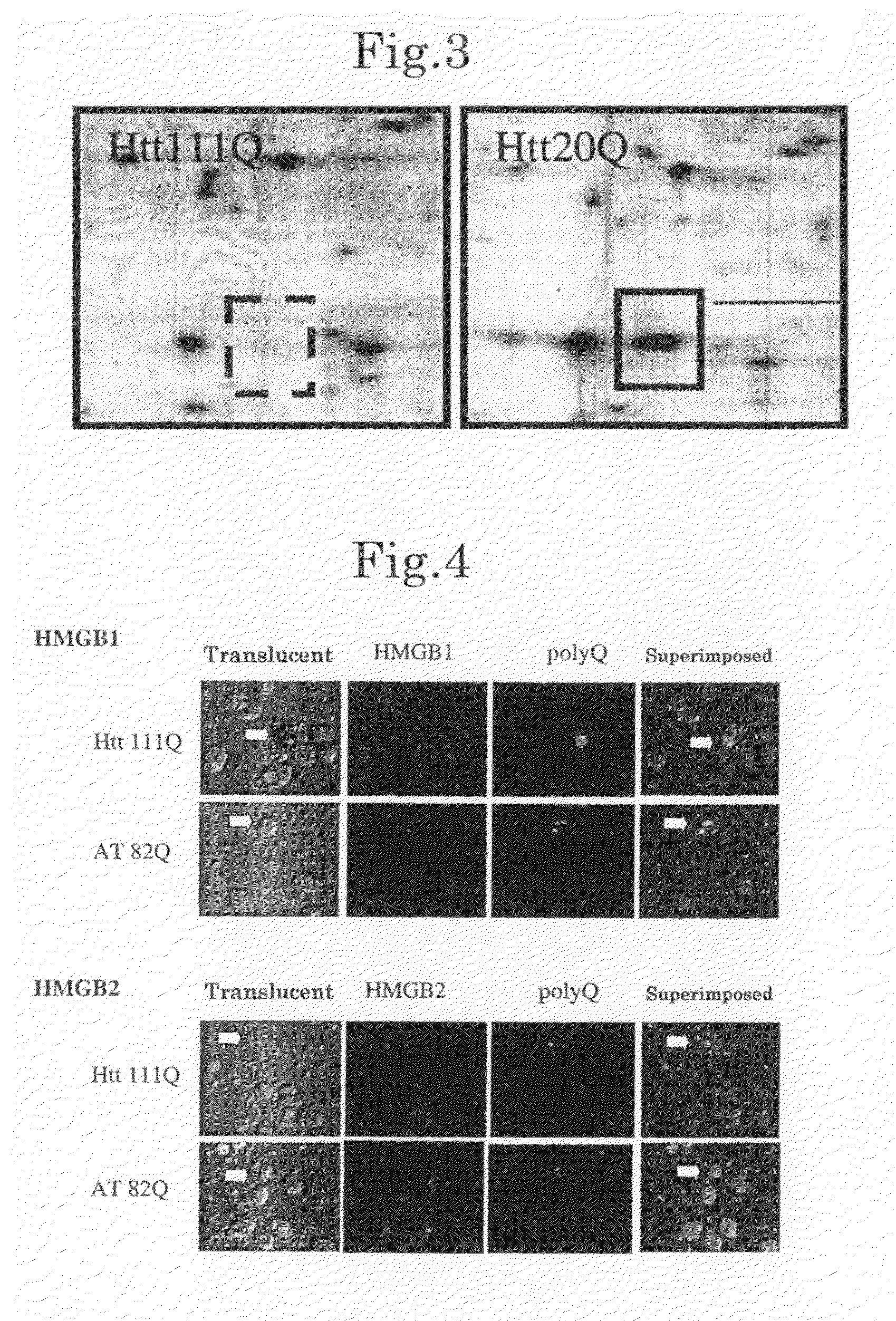
[0160]Cortical neurons and cerebellar neurons were prepared and cultured according to a known technique (Tagawa, K. et al., J. Neurochem. 89, 974-987. (2004); Fernandez-Funez, P. et al., Nature 408, 101-106. (2000)). The cells were infected with AxCAwt, AxCAwt-HMGB1, AxCAwt-HMGB2, AxCA-htt20Q, AxCA-Htt111Q, AxCA-AT1-30Q or AxCA-AT1-82Q and harvested after 2 days. According to a known technique (Dignam, J. D. et al., Nucleic Acids Res. 11, 1475-1489 (1983); Okamoto, K. et al., Cell 60, 461-472 (1990)), a nuclear extract was prepared from 6×10⁷ cells of the primary neuron culture. Specifically, the cells were suspended in 8 times as much (by volume) of a lysis buffer (20 mM HEPES (pH 7.9), 1 mM EDTA (pH 8.0), 1 mM DTT, 10% glycerol, 0.5 mM spermidine, 1 mM phenylmethylsulfonyl fluoride, 1 μg / ml leupeptin, 1 μg / ml pepstatin A, 0.3 μg / ml antipain and 0.3% NP-40) and homogenized with a Dounce homogenizer type B. Th...
PUM
| Property | Measurement | Unit |
|---|---|---|
| Cell death | aaaaa | aaaaa |
Abstract
Description
Claims
Application Information
 Login to View More